Pork — Primal & Subprimal
Coppa / Pork Collar (Capicola)
Also: coppa, capicola, capocollo, capicolla, moksal, pork collar, neck collar, collar butt, lonza di testa
The neck-to-shoulder collar muscle seam-separated from the Boston butt — prized for extraordinary fat marbling in Italian charcuterie, Korean BBQ, and Iberian butchery.
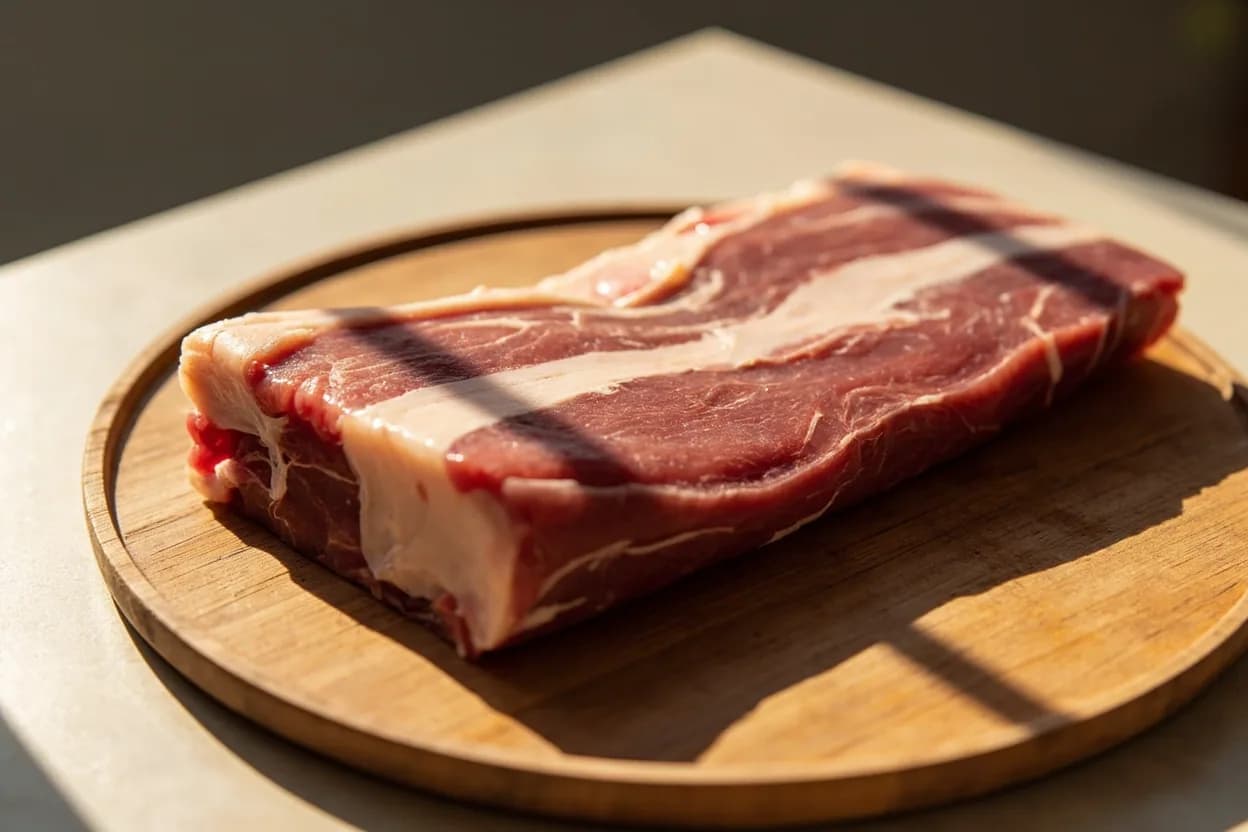
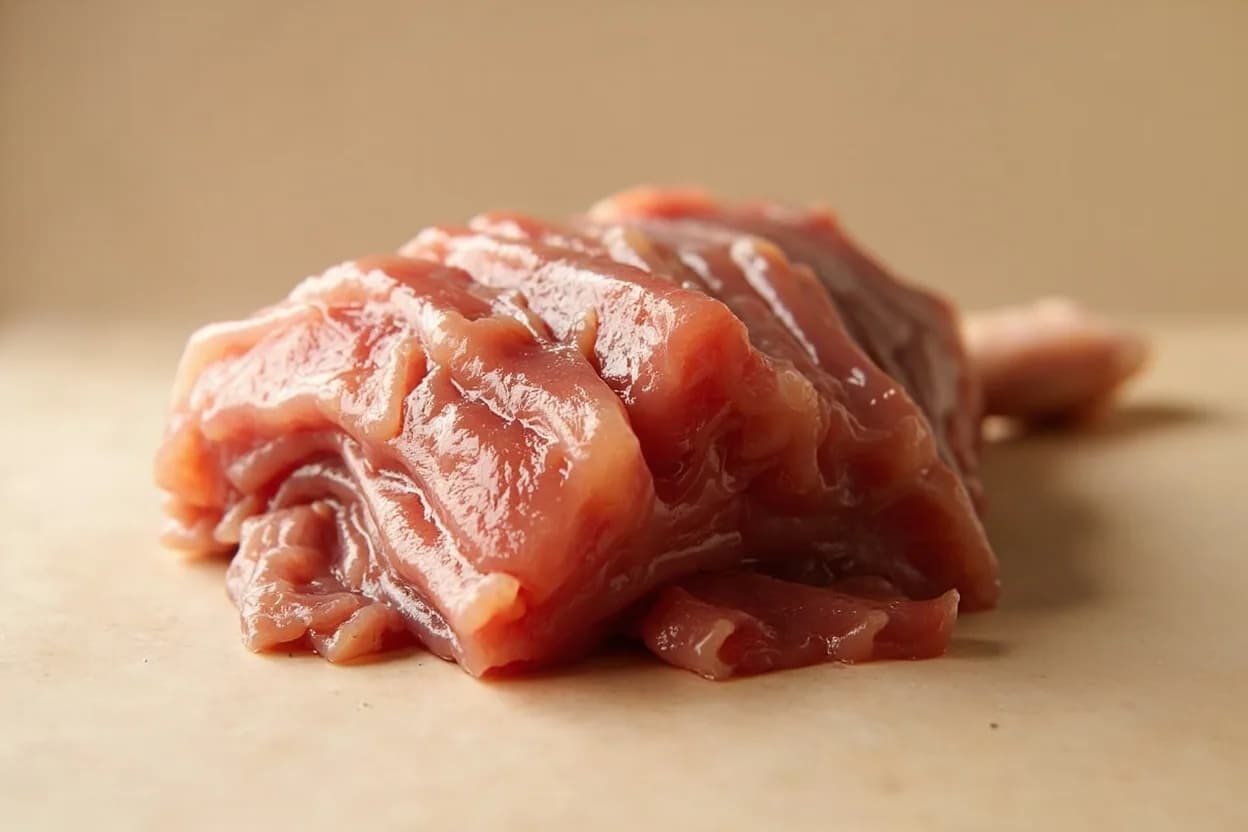
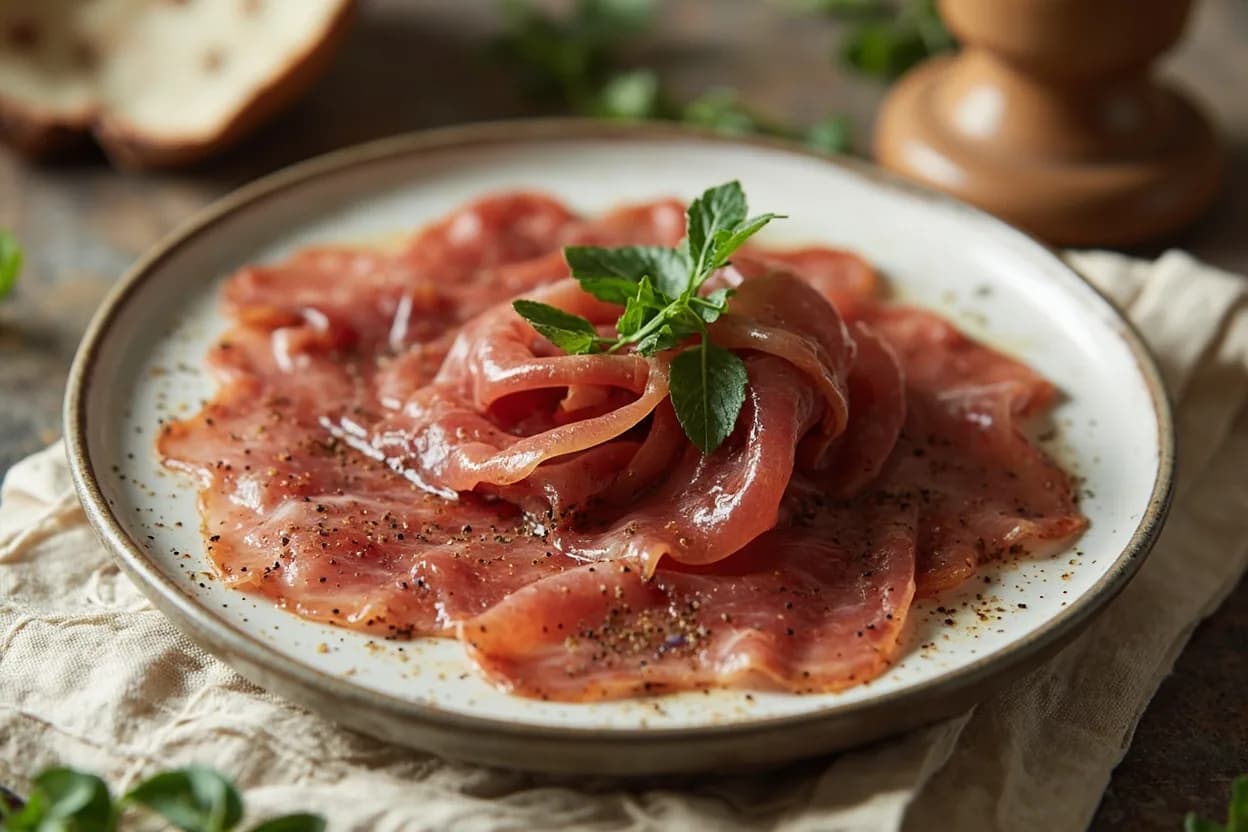
Coppa (Italian) or capicola (American Italian variant; also capocollo, 'head-to-neck') is the cylindrical muscle group running from the 4th–5th cervical vertebra through the blade of the Boston butt — specifically the trapezius, splenius capitis, and rhomboideus muscles of the neck and upper shoulder. It is seam-separated from the surrounding shoulder muscles as a self-contained muscle log, roughly 4–6 inches in diameter, with abundant intramuscular fat and intermuscular fat seams. In Korean butchery it is called moksal (목살) and is a primary BBQ cut. In Italian salumi, it is cured whole and sliced thin — one of the most fat-rich and flavourful of all cured meats.
In photos
Where it comes from
Originates from the dorsal neck (colla in Italian, 'neck') running into the upper blade of the shoulder primal. The muscle group sits between the spine and the scapula, protected from heavy locomotion — this relative inactivity and rich blood supply produce extraordinary marbling. The seam between the coppa and the surrounding shoulder muscles is clearly visible as a fat seam and can be followed by hand with a boning knife.
Best for
How to cook it
- 1For coppa (cured): rub the trimmed log with a cure of kosher salt (3% by weight), pink curing salt #2 (0.25%), black pepper, red wine, and spices (fennel, chilli, nutmeg); cure refrigerated 10–14 days turning daily; rinse, re-season, truss tightly, and hang at 55–60 °F (13–16 °C) / 70–80% humidity for 60–90 days minimum until firm and developed.
- 2For Korean moksal BBQ: slice 6–8 mm thick against the grain; cook directly on a cast iron grill or charcoal barbecue at high heat; 2–3 minutes per side; serve with ssamjang, perilla leaves, garlic, and kimchi.
- 3For collar steak: cut 2.5 cm (1-inch) thick steaks; season simply with salt and pepper; grill over high charcoal heat 3–4 minutes per side; rest 5 minutes. The fat renders and bastes the meat as it cooks.
- 4For braised collar roast: season whole collar, sear hard in a Dutch oven; deglaze with white wine; add aromatics and stock; braise at 300 °F (150 °C) covered for 3–3.5 hours until completely tender and probe-reading 195 °F (91 °C).
- 5Seam separation: follow the natural fat seam between coppa and surrounding shoulder muscles using a flexible boning knife; the seam follows the edge of the trapezius fascia and separates cleanly with minimal waste.
Prep & butchery
- Seam-separate from the Boston butt by identifying the fat seam on the outer face of the butt and following it with a flexible boning knife around the trapezius muscle group.
- Remove the cervical vertebra bones if present (some butchers leave a few neck vertebrae attached — these must be removed for charcuterie).
- Trim any thick exterior fat patches to a uniform ¼-inch cap for even cure penetration and drying; leave the natural seam fat intact as it bastes the muscle during aging.
- For Korean moksal: slice against the grain (the grain runs lengthwise along the neck); 6–8 mm is the standard restaurant slice — thicker than a conventional pork chop.
- For whole-muscle charcuterie: the coppa log must be trussed tightly every 2–3 cm with butcher's twine to maintain circular cross-section during curing and drying.
Substitutes
- Boston butt (unseparated)
The coppa muscle is embedded within the butt; an unseparated butt provides the same flavour but different form — suitable for pulled pork and braises but not for whole-muscle curing.
- Pork loin (for Korean BBQ)
Leaner and milder; can be grilled similarly to moksal but lacks the fat content that makes collar slices self-basting and richly flavoured.
Comparable anatomy (neck collar muscles, high collagen and fat); suitable as a collar roast or braise substitute with a different flavour profile.
Related cuts
- Boston Butt
Parent subprimal from which the coppa is seam-separated; the remaining butt muscles are used for pulled pork and grinding.
- Pork Jowl (Guanciale)
Adjacent cut — the cheek/jowl sits just anterior to the coppa; both are high-fat collar-region muscles used in Italian charcuterie.
- Pork Loin (Lonza)
Italian lonza is the cured loin — often confused with coppa in American Italian delis; a leaner, different muscle entirely.
- Pork Collar Steak
Thick-cut collar steaks from the same coppa muscle; popular in Spanish and Korean direct-grill traditions.
Appears in
References
- 1.Charcuterie: The Craft of Salting, Smoking, and Curing — Michael Ruhlman & Brian Polcyn (W. W. Norton, 2005)
- 2.Salumi: The Craft of Italian Dry Curing — Michael Ruhlman & Brian Polcyn (W. W. Norton, 2012)
- 3.The Whole Beast: Nose to Tail Eating — Fergus Henderson (Ecco, 2004)
- 4.Korean BBQ: Master Your Grill in Seven Sauces — Bill Kim (Ten Speed Press, 2019)
- 5.NAMP Meat Buyer's Guide, 8th ed. — North American Meat Processors Association (2010)
Confidence: high
Notes
Coppa vs. capicola: naming confusion
In Italy, the cured whole-muscle product is called coppa in the north and capocollo or capicolla in the south (Calabria, Campania, Basilicata). 'Capocollo' literally means 'head-to-neck' (capo = head, collo = neck), describing where the muscle sits. American Italian delis use 'capicola' or 'gabagool' (a southern Italian dialectal pronunciation). In Korean, the same anatomical muscle is called moksal (목살), where mok means neck — the same etymological logic across languages.
Why coppa is special for charcuterie
The coppa muscle's geometry is almost purpose-built for whole-muscle curing: it is cylindrical, consistently sized across animals, self-contained within a clean seam, and uniformly marbled. The fat-to-lean ratio means the muscle stays moist during the months of drying that would desiccate a leaner cut. The pinwheel cross-section when sliced thin is one of the most visually distinctive presentations in Italian salumi — alternating white fat and rose-pink lean in a circular pattern that signals the cut's identity immediately.