Lamb & Goat — Primal & Subprimal
Lamb Neck
Also: neck of lamb, col d'agneau, gerdane-ye bareh, رقبة خروف
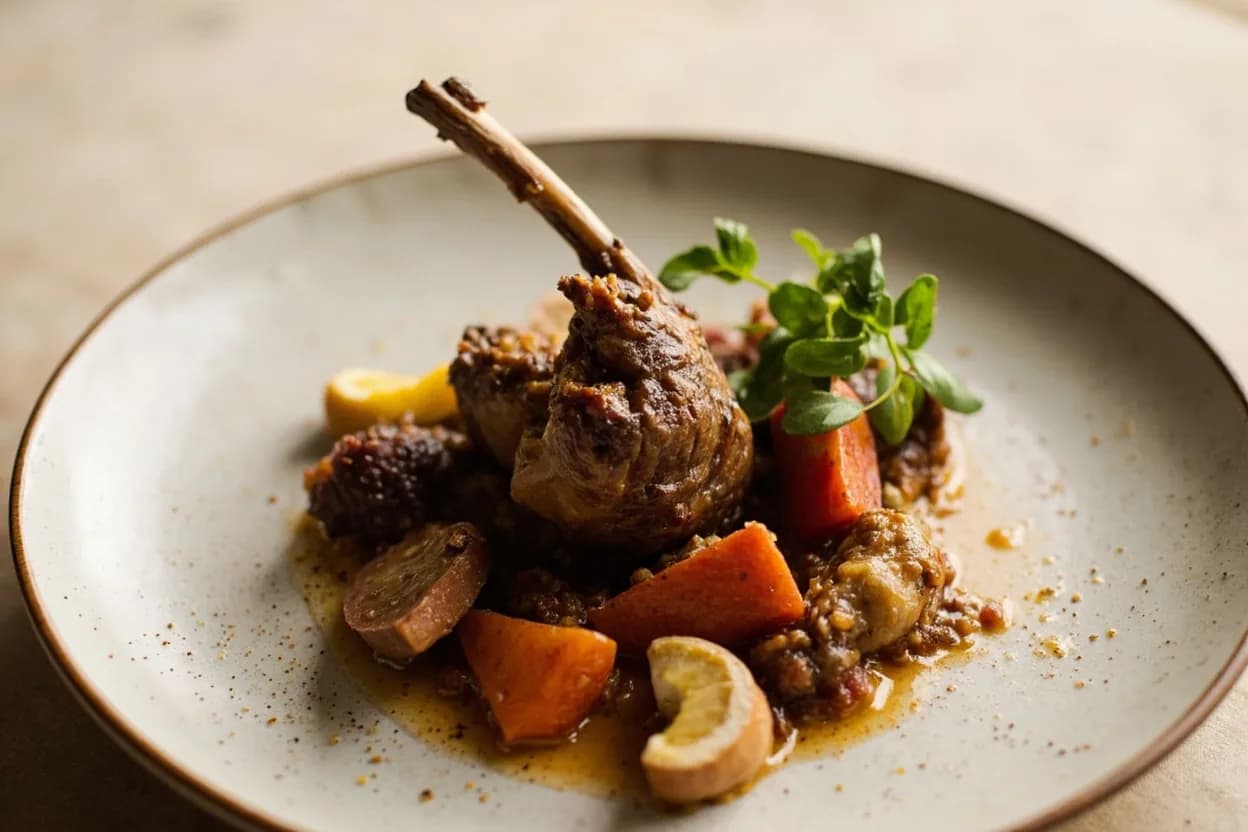
A heavily worked, collagen-rich cut from the cervical vertebrae that dissolves into unctuous, deeply flavoured stew meat with long, slow cooking.
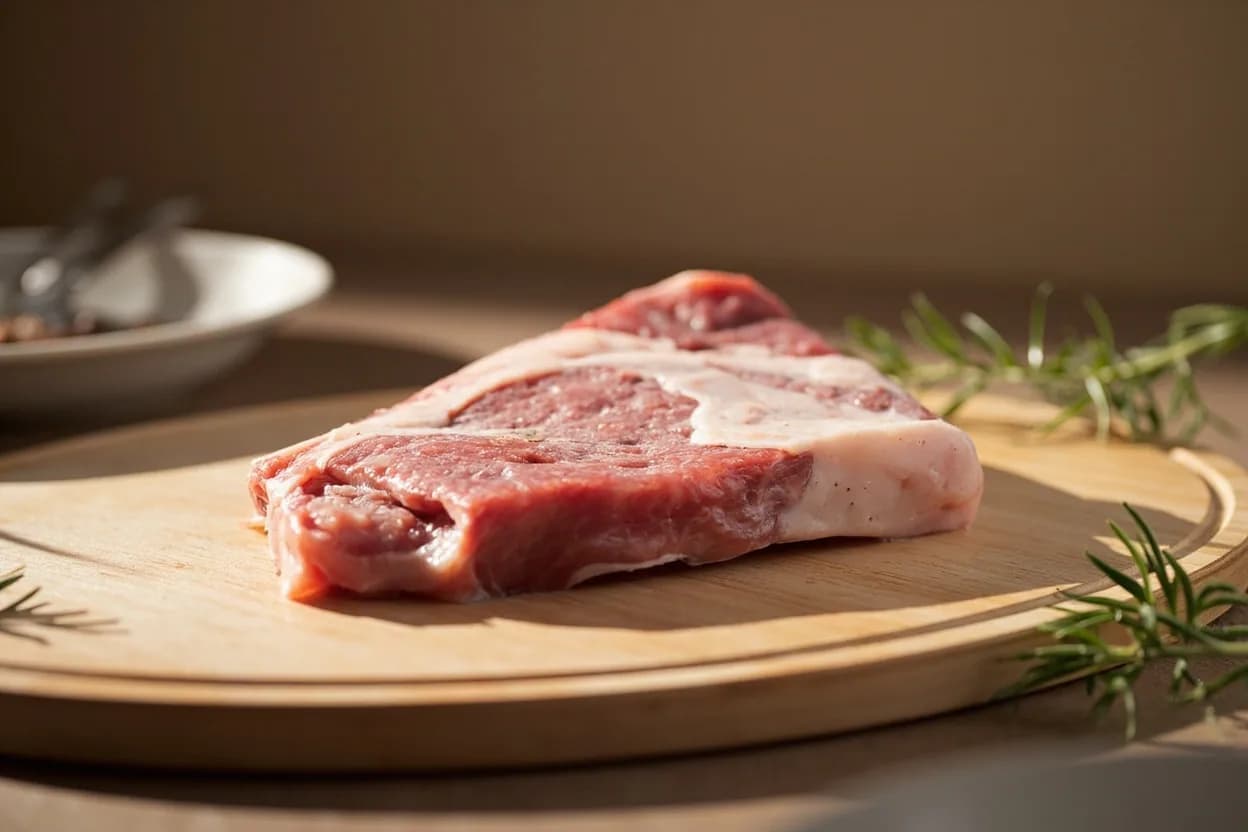
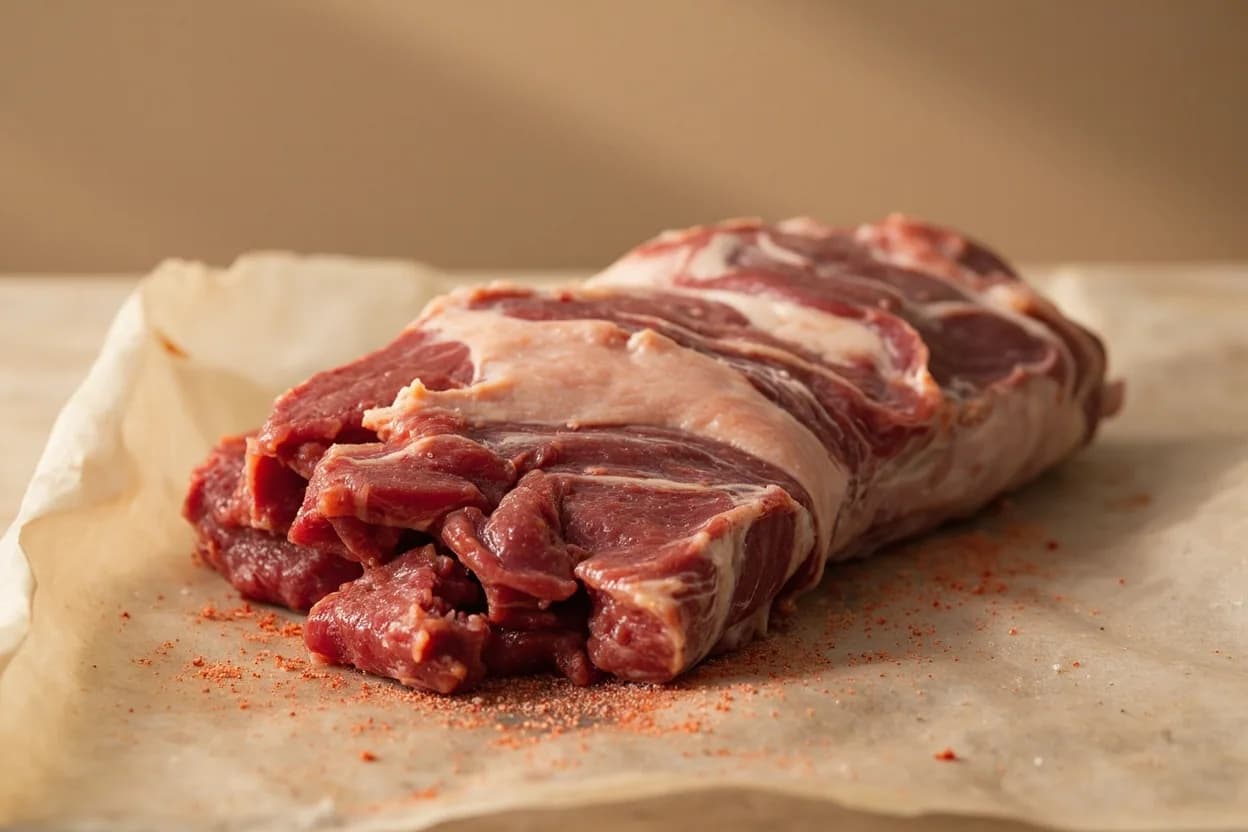
Lamb neck comprises the seven cervical vertebrae and the surrounding collar muscles — the sternocleidomastoid, splenius, and semispinalis capitis — interlaced with connective tissue and seams of fat. Because the neck is in near-constant motion, the fibres are dense and tightly bundled, making the cut tough raw but extraordinarily gelatinous and flavourful once braised. It is sold as whole bone-in cross-slices (about 3–4 cm thick) called neck rounds, or as a whole unsplit neck for pot-roasting, or occasionally boned and rolled. Butchers sometimes include the atlas and axis joints, which add extra marrow.
In photos
Where it comes from
The cervical (neck) section of the lamb carcass, between the head and the first rib. Comprises 7 cervical vertebrae, spinal cord channel, and multi-layered collar muscles running from the poll to the shoulder junction.
Best for
How to cook it
- 1Pat dry and season aggressively with salt at least 30 minutes ahead; neck meat can absorb seasoning deeply.
- 2Sear in a heavy pot or Dutch oven over high heat until dark mahogany on both cut faces — the Maillard crust is essential for depth in a long braise.
- 3Build the aromatics: onion, whole spices (cinnamon stick, cardamom, dried limes for Persian), tomato paste, and enough liquid (stock, water, or wine) to come two-thirds up the slices.
- 4Braise covered at 150–160 °C (300–320 °F) for 2–2.5 hours, or low simmer on the stovetop; the collagen should fully melt and the meat should yield easily to a spoon.
- 5For whole neck pot-roast, allow 3 hours at 150 °C; rest 20 minutes before carving around the bone.
- 6Skim fat from the surface after resting; reduce braising liquid if needed to a glossy, coating sauce.
- 7Check doneness by inserting a skewer — no resistance — before serving.
Prep & butchery
- Ask the butcher to cross-cut the neck into 3–4 cm rounds on a band saw; home cleaver cuts are imprecise and can splinter bone.
- Rinse slices and pat very dry; moisture on the cut face inhibits searing.
- Trim only the thickest outer fat cap to 3–4 mm; leave the rest to enrich the braise.
- For whole neck, ask the butcher to remove the trachea and excess glands from the underside.
- If boning for a roll, use a thin flexible knife tracing the curve of each vertebra; tie at 3 cm intervals.
Substitutes
- Lamb Shoulder (bone-in)
Similar collagen and flavour; slightly less gelatinous but more widely available; adjust braising time to 2–2.5 hours.
Leaner and more elegant presentation; lacks neck's gelatin yield but works in any khoresh or tagine.
- Goat Neck
Virtually identical anatomy; slightly leaner and more assertively flavoured — interchange 1:1 in Levantine recipes.
Related cuts
- Lamb Shoulder
The next primal down the backbone; shares the collagen-rich, long-cook character.
Also a high-collagen braising cut from a working limb; cleaner presentation.
- Osso Buco (veal shin)
Cross-cut bone-in braising reference; neck rounds cook and serve in the same style.
Appears in
References
- 1.Nose to Tail Eating — Fergus Henderson
- 2.The Complete Meat Cookbook — Bruce Aidells & Denis Kelly
- 3.Zaitoun: Recipes from the Palestinian Kitchen — Yasmin Khan
- 4.Food of Life: Ancient Persian and Modern Iranian Cooking — Najmieh Batmanglij
Confidence: high
Notes
Cross-slice vs whole neck
Cross-sliced neck rounds are the everyday Persian and Levantine choice — the exposed marrow enriches the sauce, and diners gnaw around the bone. Whole unsplit necks suit Sunday pot-roasts where a single dramatic piece is carved at table. Boned and rolled neck is fashionable in bistro cooking but sacrifices the gelatin contribution of the bone.
Persian khoresh context
In Iranian khoresh cookery, neck is prized over shoulder precisely because its gelatin thickens the sauce without added starch. The dried limes (limoo omani) and turmeric that anchor most khoresh recipes are complementary to lamb neck's fatty richness; the acid in the limes cuts through the fat while the collagen rounds out the tart base.