Lamb & Goat — Primal & Subprimal
Lamb Shank
Also: jarret d'agneau, stinco di agnello, مرق لحم الغنم, jaret de cordero
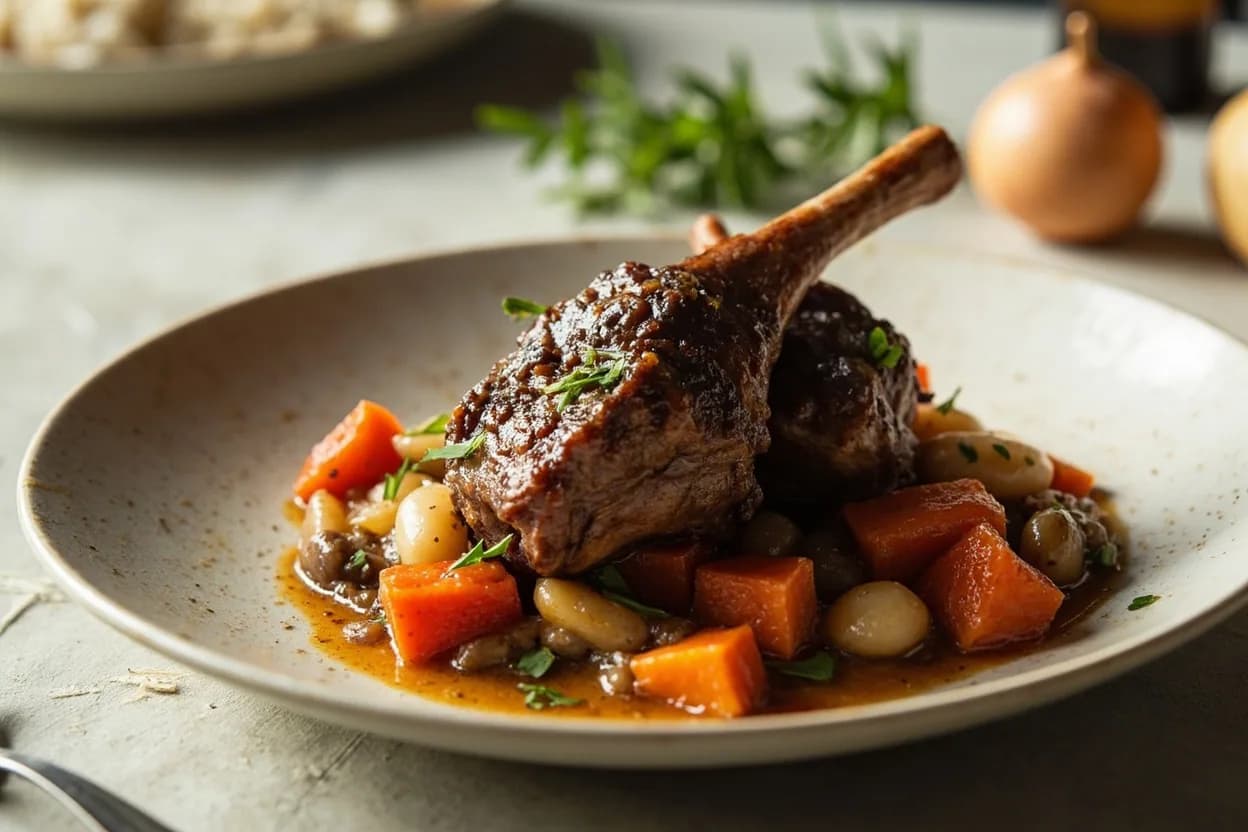
The meaty, bone-in lower leg of lamb — one of the great braising cuts worldwide, yielding silky, fall-off-the-bone meat and a naturally gelatinous sauce.
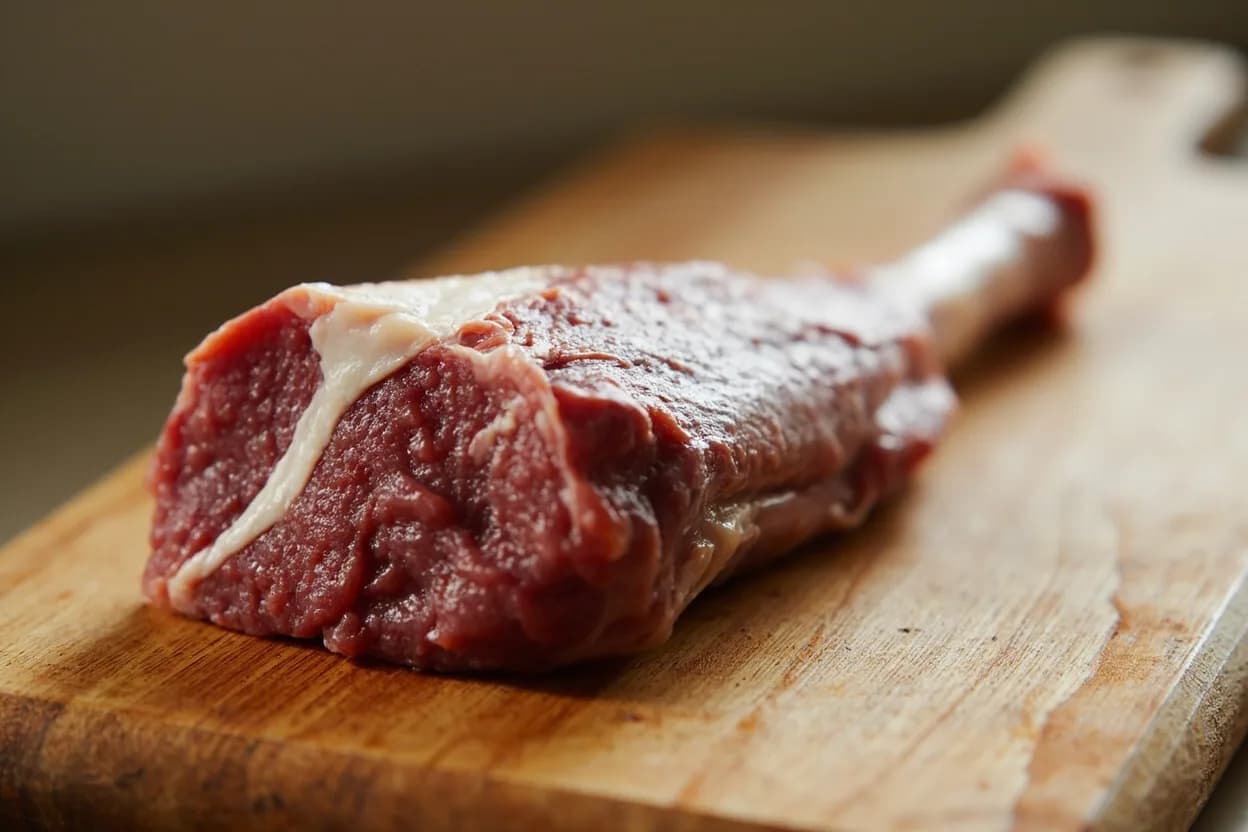
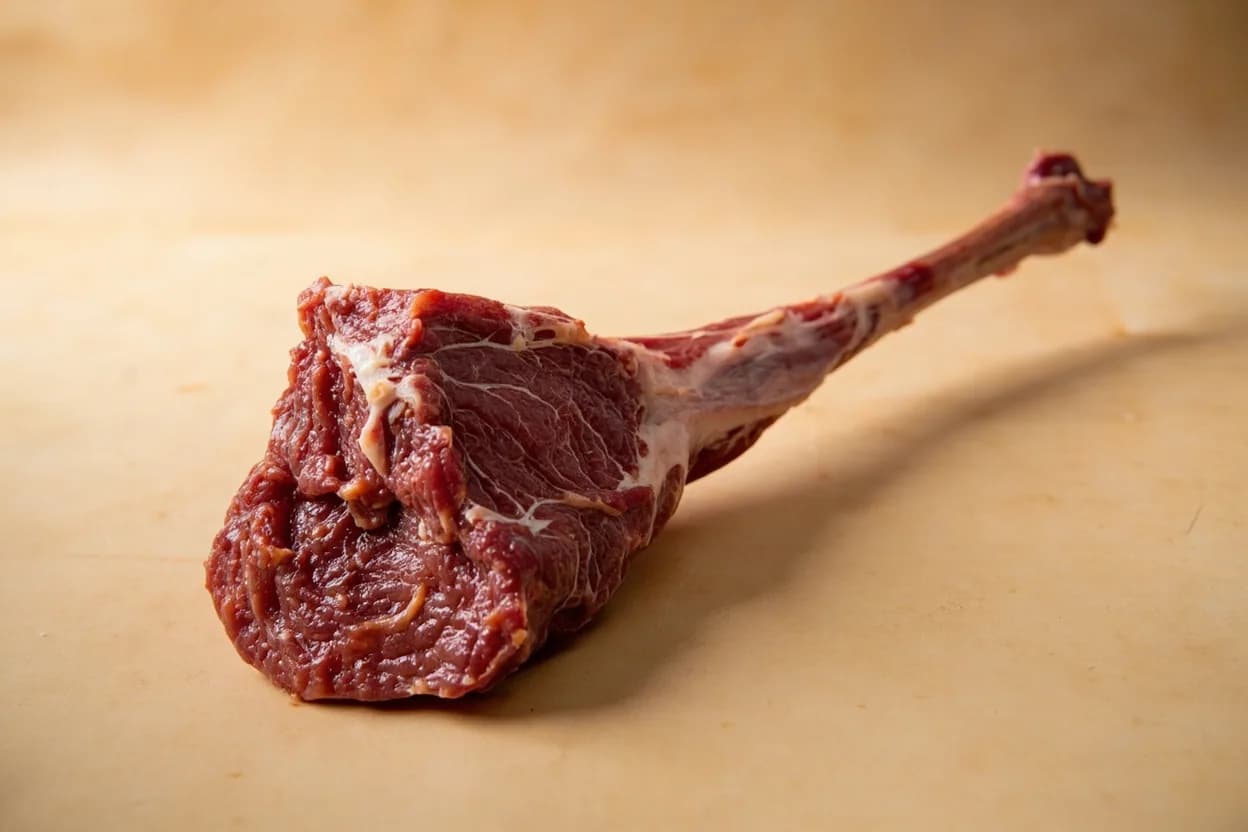
The shank is the lower portion of the leg, encompassing the radius and ulna (foreshank, from the foreleg) or the tibia and fibula (hindshank, from the hind leg), encased in a cylinder of dense working muscles — primarily the digital flexors and extensors — with a heavy wrapping of collagenous fascia. A single shank typically weighs 350–600 g and contains a large central marrow-filled bone. Braised, the collagen converts to rich gelatin that thickens the cooking liquid; the marrow can be scooped and spread on bread as a cook's treat.
In photos
Where it comes from
Below the knee joint on the foreleg (foreshank / radius-ulna) or below the stifle joint on the hind leg (hindshank / tibia-fibula). The hindshank is meatier and more prized; the foreshank leaner and slightly smaller.
Best for
How to cook it
- 1French-trim the bone by scoring the meat 4–5 cm from the knuckle and scraping it clean with the back of a knife — purely aesthetic but striking on the plate.
- 2Season generously and sear in a deep Dutch oven or braiser over high heat, turning every 2 minutes until deeply browned on all sides including the meat end; expect 8–10 minutes total.
- 3Deglaze with wine, pomegranate juice, or stock, scraping up all fond.
- 4Add aromatics — onion, garlic, carrot, herbs, whole spices — and enough liquid to come two-thirds up the shank.
- 5Braise covered in a low oven (150–160 °C / 300–325 °F) for 2–2.5 hours; hindshank may need up to 3 hours.
- 6The shank is done when the meat shrinks back from the bone and a skewer meets no resistance near the thickest muscle.
- 7Remove shanks and rest covered; reduce the braising liquid over high heat until glossy and coating, then strain and season.
- 8For cross-cut osso-buco style, ask the butcher to slice the shank into 4 cm rounds on a band saw; cook as above but reduce braising time by 30 minutes.
Prep & butchery
- Remove the fell (the papery outer membrane) if still attached — it can tighten during cooking and hold in off-flavours.
- Score the thick muscle seams lightly so marinade penetrates; do not cut through to the bone.
- For French-trimmed presentation, strip meat cleanly from the last 4 cm of the bone; wrap exposed bone in foil during braising to prevent charring.
- For cross-cut (osso-buco style), request the band saw from your butcher; tie each round with kitchen twine to hold shape during cooking.
- Marinating overnight in yogurt, lemon, and spices (as in Persian abgoosht) tenderises the outer muscle layers and seasons deeply.
Substitutes
- Lamb Neck (cross-cut)
Higher collagen, equally dramatic; less visually clean but more gelatinous sauce.
- Goat Shank
Leaner, slightly more gamey; interchange 1:1 in any recipe; popular in Caribbean and South Asian cooking.
- Veal Osso Buco
Cross-cut veal shin; same cooking geometry when using cross-cut lamb shank; lighter flavour.
Related cuts
Higher-collagen braising companion; less refined presentation.
- Lamb Shoulder
Same braising approach but boneless-friendly; feeds a crowd rather than individual portions.
- Veal Shin (Osso Buco)
Identical cross-cut braising technique; the archetype for cross-cut shank cookery.
Appears in
References
- 1.The Complete Meat Cookbook — Bruce Aidells & Denis Kelly
- 2.Plenty More — Yotam Ottolenghi
- 3.Jerusalem — Yotam Ottolenghi & Sami Tamimi
- 4.The River Cottage Meat Book — Hugh Fearnley-Whittingstall
- 5.Food of Life: Ancient Persian and Modern Iranian Cooking — Najmieh Batmanglij
Confidence: high
Notes
Foreshank vs hindshank
Hindshank is the default in most restaurant cooking: it is meatier, more symmetrical, and makes a better single-serving presentation. Foreshank — from the front leg — is slightly shorter, leaner, and cheaper; it suits braised dishes where the meat is shredded off the bone rather than plated whole. Both are anatomically interchangeable for any recipe.
The osso-buco cross-cut option
Asking the butcher to cross-cut the shank into 3–4 cm rounds on a band saw creates the lamb equivalent of osso buco. Each round has a central marrow core, and the exposed cross-section of muscle colours beautifully in the pan. Tie each round with twine before braising to prevent the outer muscle unwinding. Popular in Persian abgoosht and Levantine soup dishes.