Lamb & Goat — Primal & Subprimal
Lamb Riblets
Also: lamb breast riblets, lamb flap ribs, spare riblets, breast ribs, costolette di pancia d'agnello
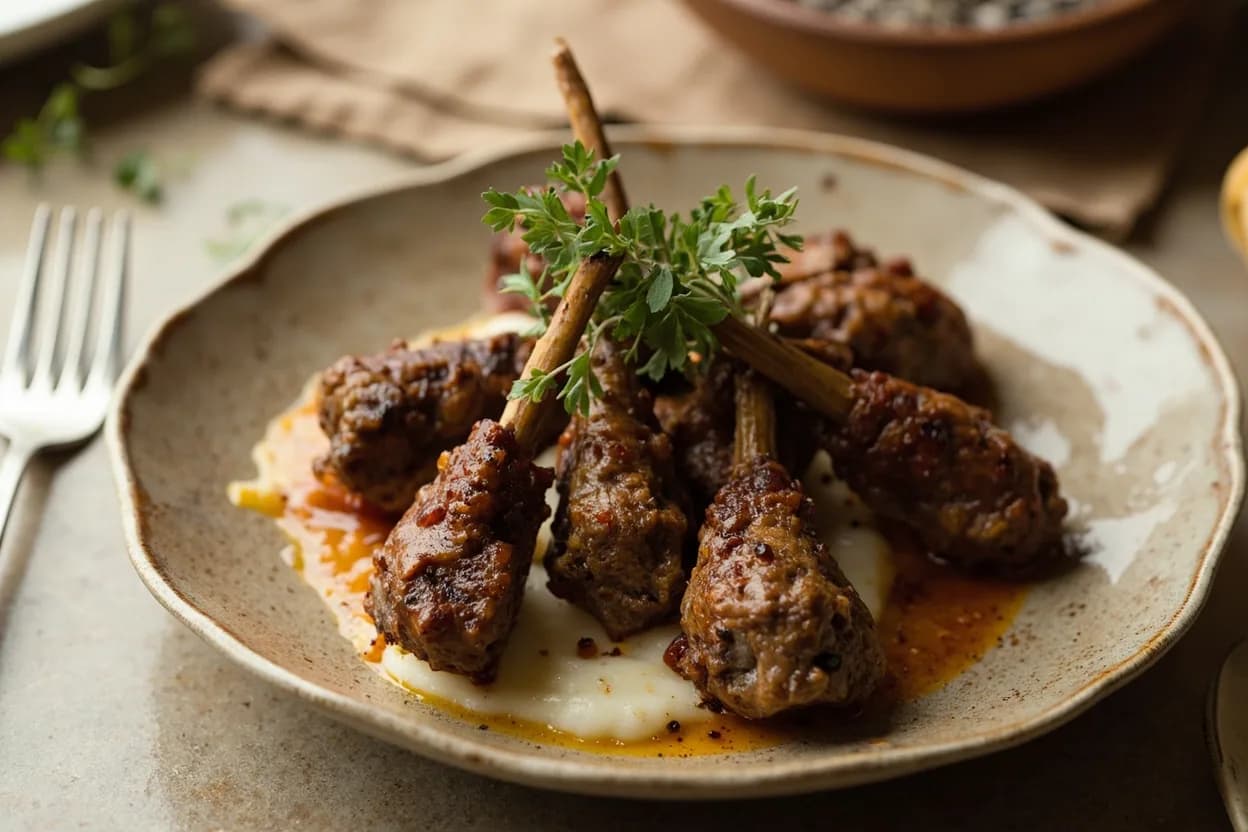
The thin, fatty rib strip cut from the lamb breast and flap — scored, marinated, and grilled or braised to crackling-edged, intensely flavoured strips.
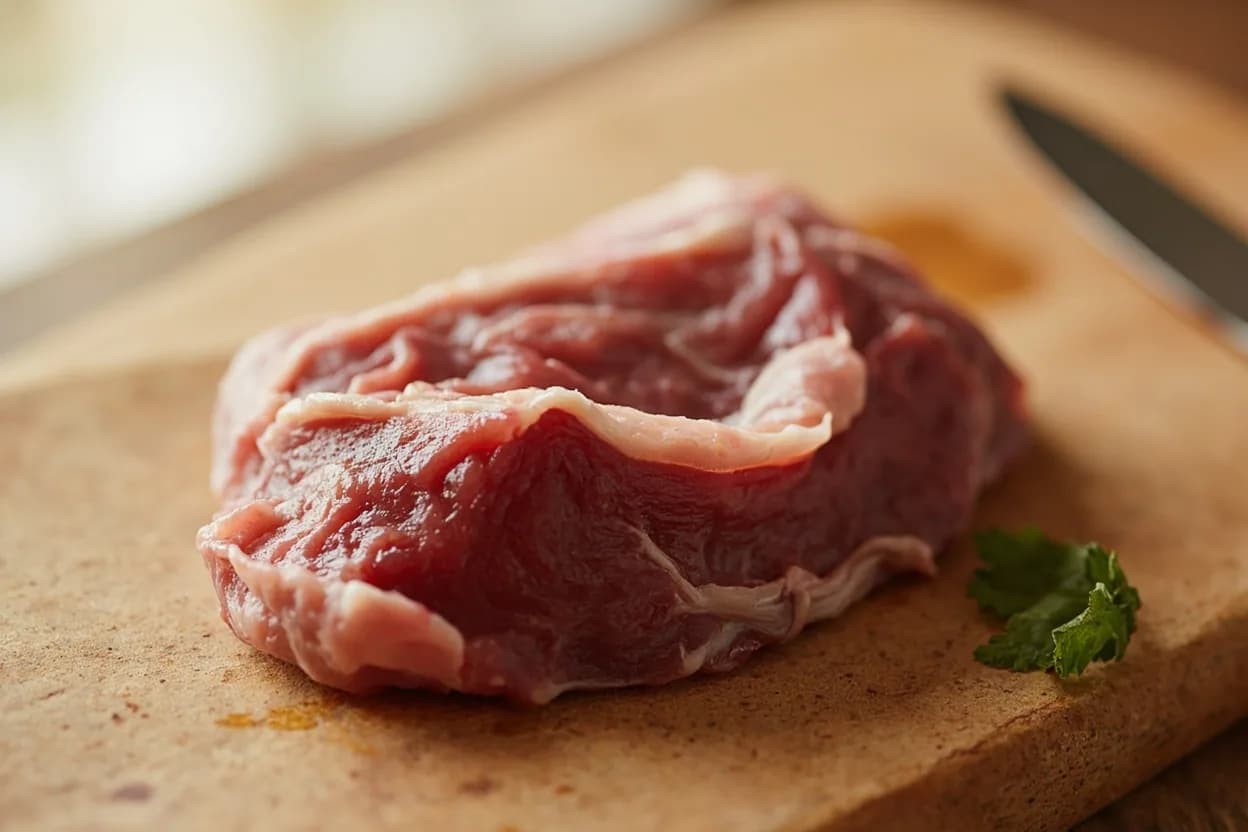
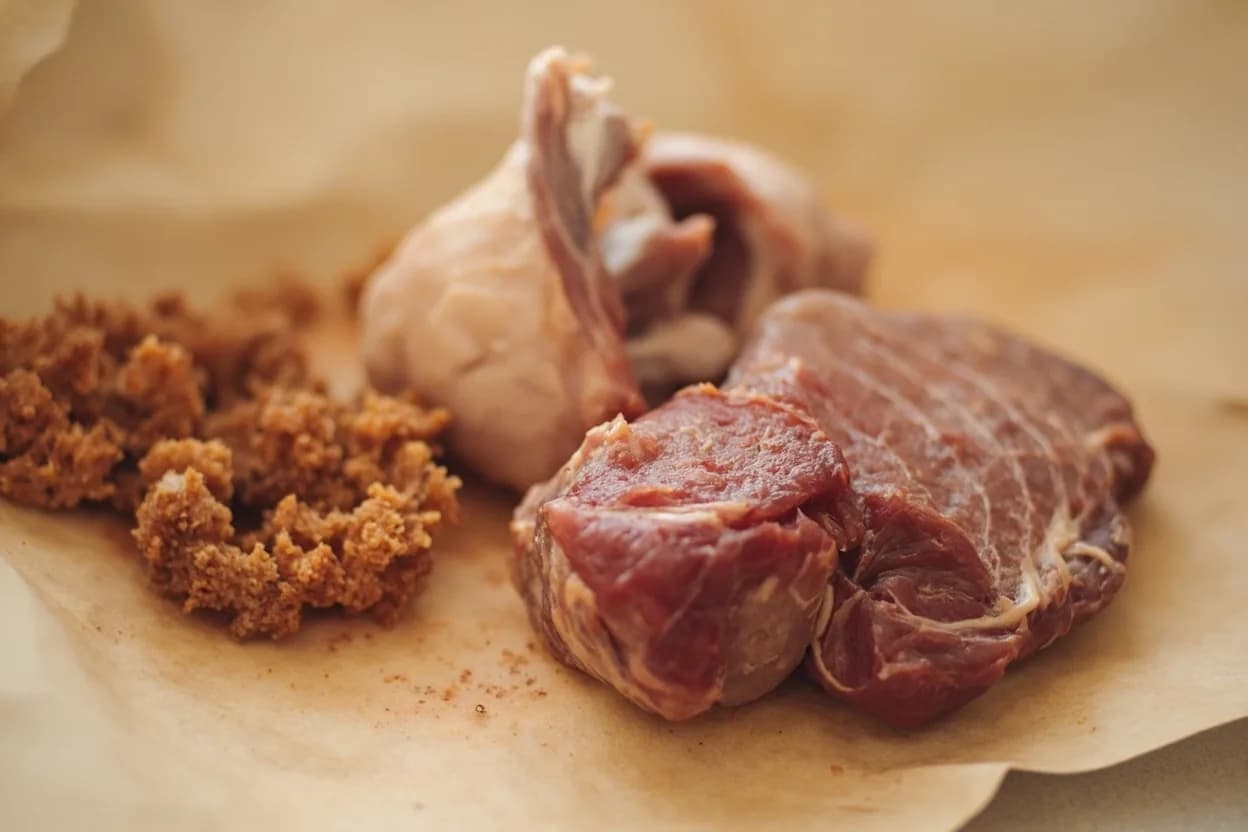
Lamb riblets are cut from the breast (brisket equivalent) and the flap (the continuation of the abdominal wall past the rack), comprising the lower portions of ribs 1–13 plus the cartilaginous costal extensions and the thin, multi-layered intercostal and abdominal muscles sandwiched between them. The cut is essentially the lamb equivalent of pork spareribs — though considerably smaller, fattier, and more assertively flavoured. Riblets are the full breast left as a rack-shaped slab, or cut crosswise into individual rib strips 2–3 cm wide. The high fat content makes them particularly suited to the aggressive heat of grilling and broiling, where the fat renders and crisps.
In photos
Where it comes from
The inferior (ventral) surfaces of the thoracic ribs — the rib ends below the rack — plus the costal cartilages and the flap (flank), which extends beyond the last rib toward the belly. The lamb breast sits between the foreleg and the belly on the underside of the carcass.
Best for
How to cook it
- 1Score the fat cap deeply in a 2 cm crosshatch through to the first layer of meat; this is essential to allow rendering and prevent the exterior from curling.
- 2Marinate for at least 4 hours (ideally overnight) in a mixture appropriate to the tradition: yogurt, turmeric, onion, and saffron for Persian dandeh; pomegranate molasses, cumin, and garlic for Levantine; sumac, lemon, and olive oil for a lighter grill.
- 3Option A — direct grill: cook riblets over medium-high charcoal, fat-side down first, until the fat renders and chars at the edges, then flip; total 15–20 minutes, turning frequently.
- 4Option B — braise then grill: cover riblets with water or stock and simmer for 45–60 minutes until the cartilage softens; drain, pat dry, marinate, then grill over high heat for 8–10 minutes for crackling crust.
- 5Option C — low slow oven: season, place fat-side up on a rack, roast at 150 °C / 300 °F for 2 hours until the fat has rendered and the meat is tender; blast under the broiler for 5 minutes to char.
- 6Rest 5 minutes before cutting into individual riblets along the bones.
Prep & butchery
- Remove the fell (membrane) from the bone-side surface; grip it with a dry cloth and pull in one motion — it peels cleanly.
- Score the fat cap in a deep crosshatch (2 cm grid) before marinating to ensure both penetration and rendering.
- Cut between every second or third rib for manageable pieces, or leave as a full breast slab for slow-roasting and carve later.
- Trim only the thickest flaps of subcutaneous fat to 5–6 mm; do not trim all fat or the result will dry out.
- For Persian dandeh kabab, the riblets are typically cut into individual single-rib strips about 10 cm long and threaded onto flat skewers.
Substitutes
- Lamb Rack (inferior rib ends)
The rack is the upper portion of the same rib bones; less fatty and more expensive but cooks similarly over high heat.
- Pork Spareribs
Same anatomy at a larger scale; similar fat content; cook with the same techniques though flavour profiles diverge.
- Beef Short Ribs (thin-cut)
Meatier and more robust; substitute in braised-then-grilled applications.
Related cuts
- Lamb Breast (whole)
The unsplit primal from which riblets are derived; often stuffed and rolled before braising.
- Lamb Rack
The upper rib portion — leaner and more expensive; the two cuts come from the same rib cage divided horizontally.
- Pork Spareribs
The porcine equivalent: same anatomy, same high-fat character, same grill-and-render technique.
Appears in
References
- 1.The Complete Meat Cookbook — Bruce Aidells & Denis Kelly
- 2.Zaitoun: Recipes from the Palestinian Kitchen — Yasmin Khan
- 3.Saffron in the Souks — John Gregory-Smith
- 4.Food of Life: Ancient Persian and Modern Iranian Cooking — Najmieh Batmanglij
Confidence: high
Notes
Fat management is the central challenge
The breast is the fattiest part of the lamb, and unmanaged fat makes riblets greasy and unpleasant. Three approaches work: (1) score and grill over high heat so fat continuously drips away; (2) pre-braise in water to remove excess rendered fat before finishing on the grill; (3) salt-cure overnight and roast low on a rack so fat drips into a tray. All three yield crackling-edged, lean meat next to the bone — the goal of every riblet preparation.
Persian dandeh kabab
Dandeh (دنده) literally means 'rib' in Farsi. The canonical preparation is individual ribs marinated in grated onion, salt, and black pepper — nothing more — threaded onto wide flat skewers and grilled over live charcoal until the fat chars at the edges. Saffron butter is brushed on in the last 30 seconds. Served with lavash and fresh herbs, it demonstrates that the best riblet cookery requires minimal seasoning and maximum fire.