Lamb & Goat — Primal & Subprimal
Lamb Rack — French Trim (Carré)
Also: carré d'agneau, rack of lamb, best end of neck, frenched rack, crown roast
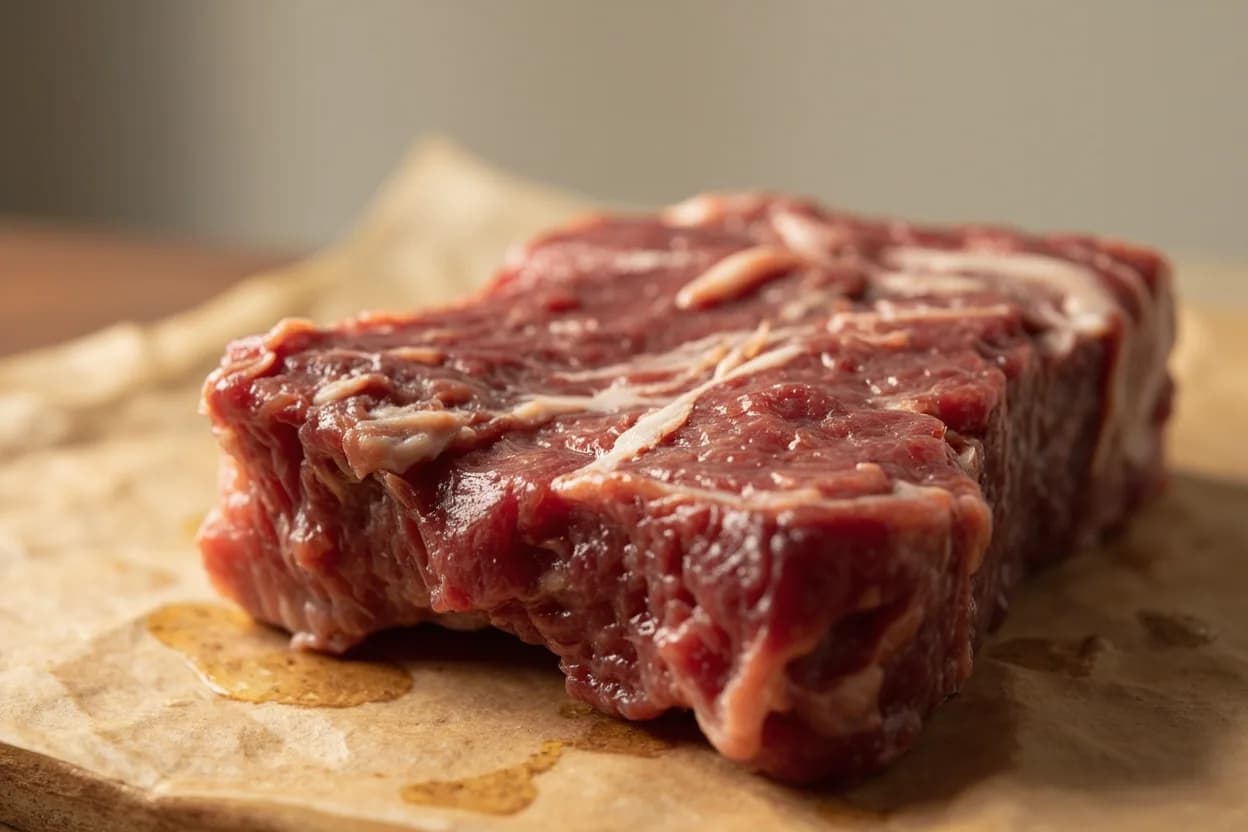
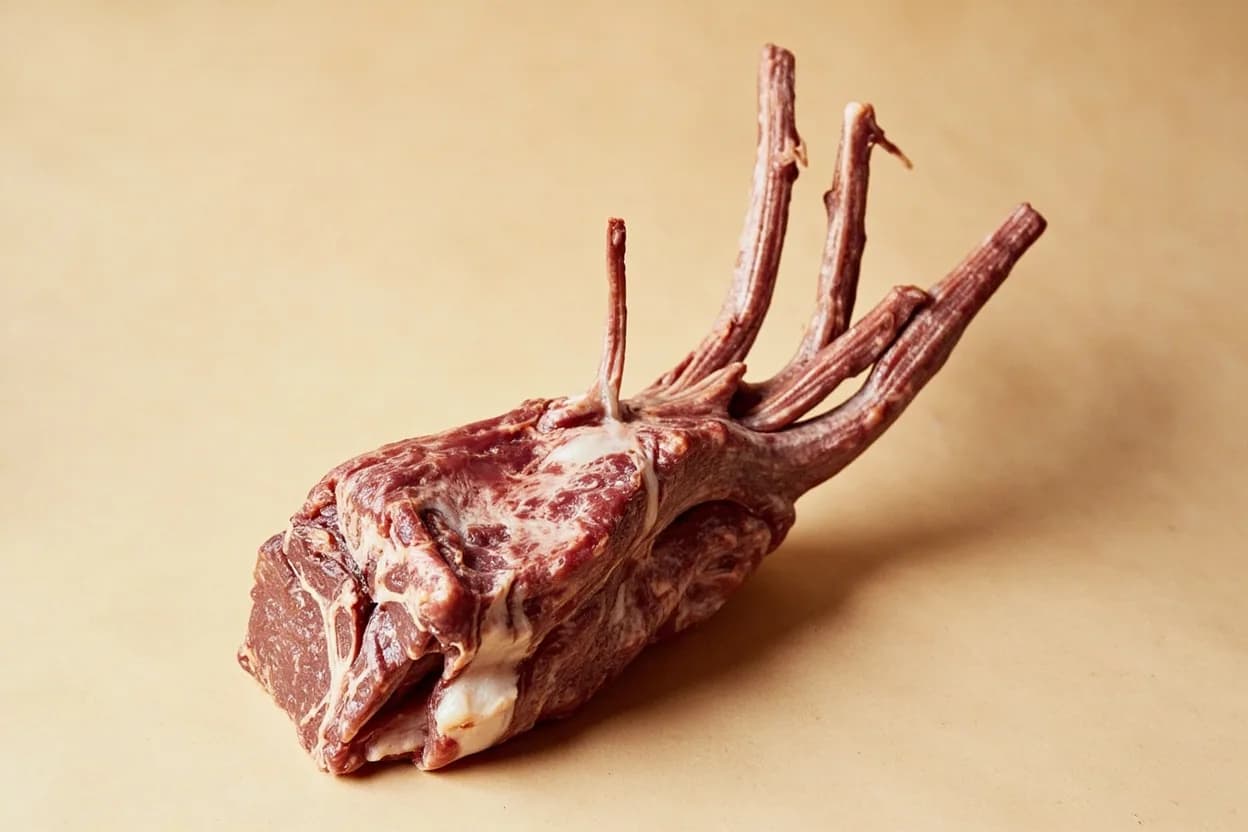
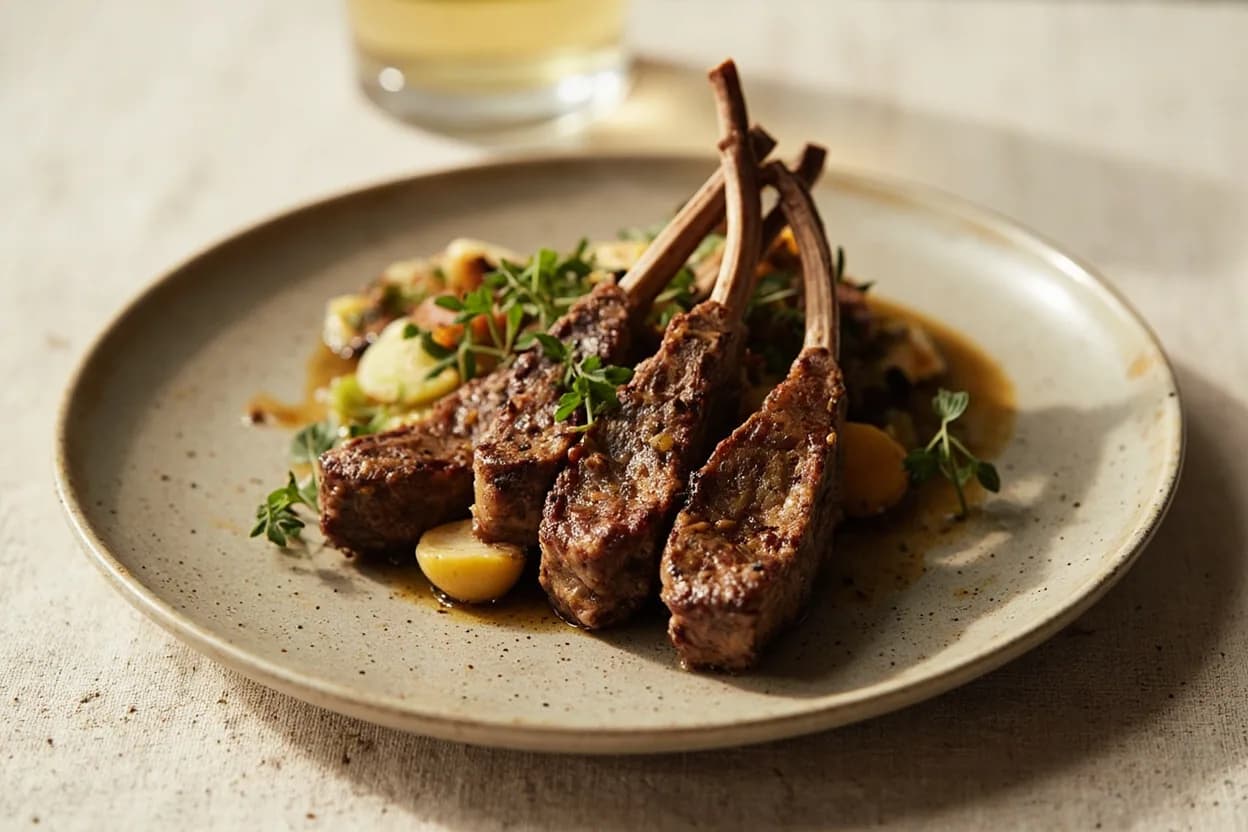
The eight-rib best-end rack of lamb, frenched to expose gleaming white bones — one of the most elegant roasting cuts in the classical repertoire.
The lamb rack, known as carré d'agneau in French, is the eight-rib section from the best end of the neck, sitting between the shoulder and the loin. A full rack carries seven or eight ribs depending on how the carcass is divided; the most prized two-rack presentations use eight ribs per side. French trimming (frenching) involves scraping all fat, meat, and connective tissue from the exposed rib bones to produce the signature clean white handles. The eye of meat — the longissimus dorsi — is small but intensely flavored and very tender, protected by a fat cap that bastes the meat during roasting.
In photos
Where it comes from
Best-end primal, rib bones 6–12 (counting from the neck), situated between the 5th and 13th ribs. The longissimus dorsi (eye muscle) runs parallel to the spine; the spinalis dorsi (cap muscle) wraps over the top. The chine bone (backbone vertebrae) is removed or sawn through to allow post-roast carving between ribs.
Best for
How to cook it
- 1Remove the rack from the refrigerator 30–40 minutes before cooking to temper.
- 2Score the fat cap in a 1 cm crosshatch pattern without cutting into the meat; season generously with salt and pepper.
- 3Heat an oven-safe pan over high heat; sear the fat cap down for 2–3 minutes until golden and rendered, then sear the meat side briefly.
- 4Roast fat-cap up at 220°C for 15–20 minutes until the internal temperature reaches 57°C (medium-rare) or 63°C (medium).
- 5Rest on a rack for 8–10 minutes — internal temperature will rise 3–5°C. The bones make excellent handles when presenting at table.
- 6To carve: stand the rack bone-side up and slice down between each rib bone with a sharp boning knife for individual cutlets.
Prep & butchery
- To french the ribs: starting 5 cm from the eye of meat, use a boning knife to score through the fat and silver skin between each rib bone
- Scrape all fat and meat from the exposed rib bones using the back of the knife and a clean cloth; bones should be completely white
- Remove the chine bone with a cleaver or band saw, or ask the butcher to crack it — this is essential for post-roast carving
- Trim the fat cap to a uniform 0.5–1 cm thickness; excessive fat can be rendered off but too-thin a cap leaves the eye exposed and prone to drying
- For a crown roast: french two racks, then curve each rack into a semicircle (bones pointing outward) and tie the two racks together with butcher's twine to form a complete crown
Substitutes
- Veal rack (carré de veau)
Larger eye, milder flavor; requires longer roasting time
- Pork rack (côtes premières)
Widely available and less expensive; cook to higher internal temperature (63–68°C)
- Venison rack
Leaner, more gamey; similar frenching technique; watch carefully for overcooking
Related cuts
- Lamb Loin Chop
Cut from the adjacent loin primal; larger eye, T-bone shape
- Lamb Cutlet (Côtelette)
Individual rib slice from the frenched rack
- Lamb Shoulder — Bone-In (Épaule)
The primal immediately anterior to the rack; contrasting braise cut
- Lamb Saddle (Selle d'Agneau)
Both loin primals left on the backbone; double the eye muscle of a single rack
Appears in
References
- 1.Le Guide Culinaire — Auguste Escoffier
- 2.The River Cottage Meat Book — Hugh Fearnley-Whittingstall
- 3.Meat: A Kitchen Education — James Peterson
- 4.USDA IMPS Lamb Series 200 — USDA Agricultural Marketing Service
Confidence: high
Notes
The Chine Bone Problem
Many racks arrive from the butcher with the chine bone still attached or only partially cracked. If the backbone is not removed before serving, carving between ribs at the table is impossible. Always verify the chine is fully removed or cracked all the way through before the rack goes in the oven — attempting to remove it after roasting is a messy, impractical task.
Doneness and the Small Eye
The eye muscle on a lamb rack is typically only 4–6 cm in diameter. Because of its small mass, it moves through temperature zones very quickly. Pull at 57°C for a rosy medium-rare; the carry-over during a 10-minute rest will bring it to 60–62°C. Beyond 65°C the eye becomes grey and dry. A probe thermometer is not optional for professional consistency.