Lamb & Goat — Primal & Subprimal
Lamb Primal Cuts
Also: lamb primal map, whole lamb breakdown, agneau découpe primaire
The seven foundational primal sections of a whole lamb carcass, each with distinct musculature, collagen content, and ideal cooking method.
A whole lamb carcass is divided into seven recognized primals: neck, shoulder, rack (best end), loin, leg, breast/flap, and shank. Each primal reflects the underlying muscle's workload during the animal's life — heavily exercised muscles (shoulder, shank, neck) are collagen-rich and demand slow, moist cooking to dissolve connective tissue into gelatin, while lightly worked muscles (loin, rack) are tender and suit dry-heat methods. Understanding the primal map is the foundation of informed butchery, cost management, and menu planning.
In photos
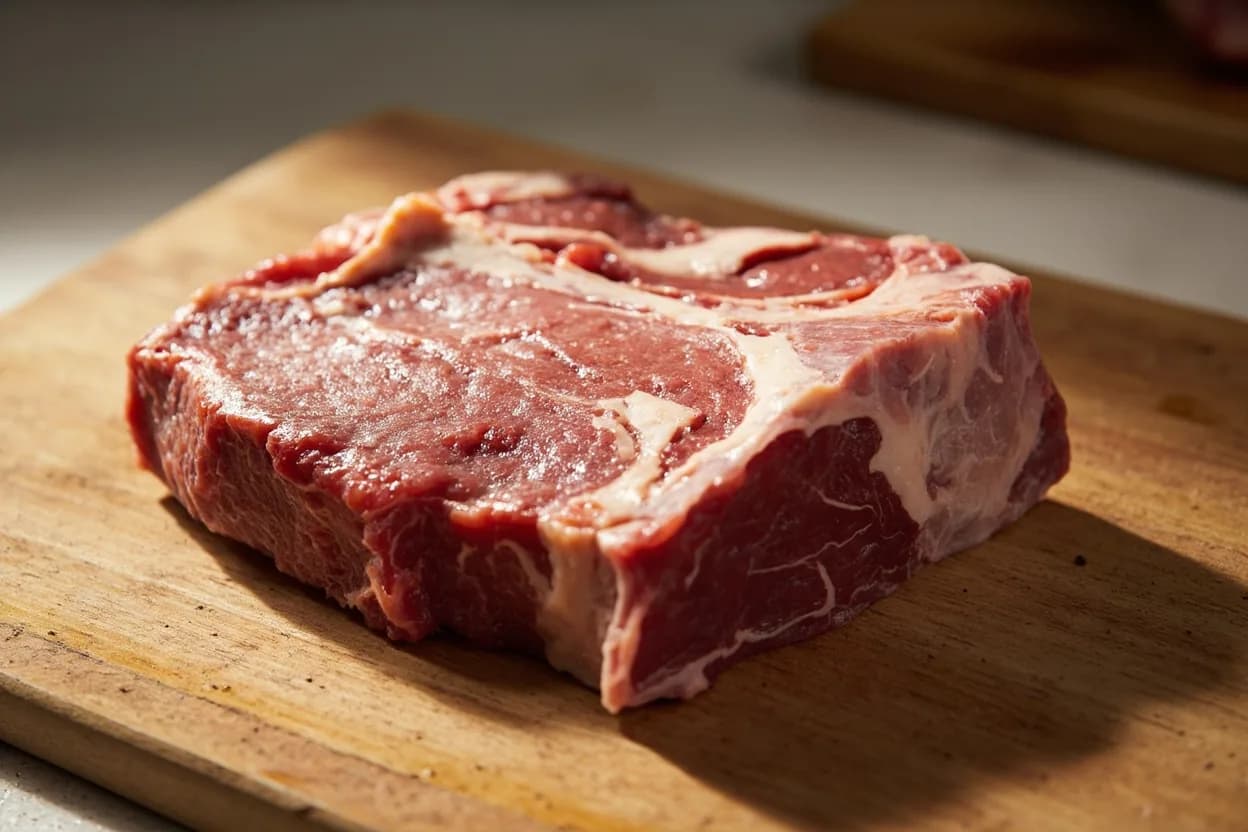
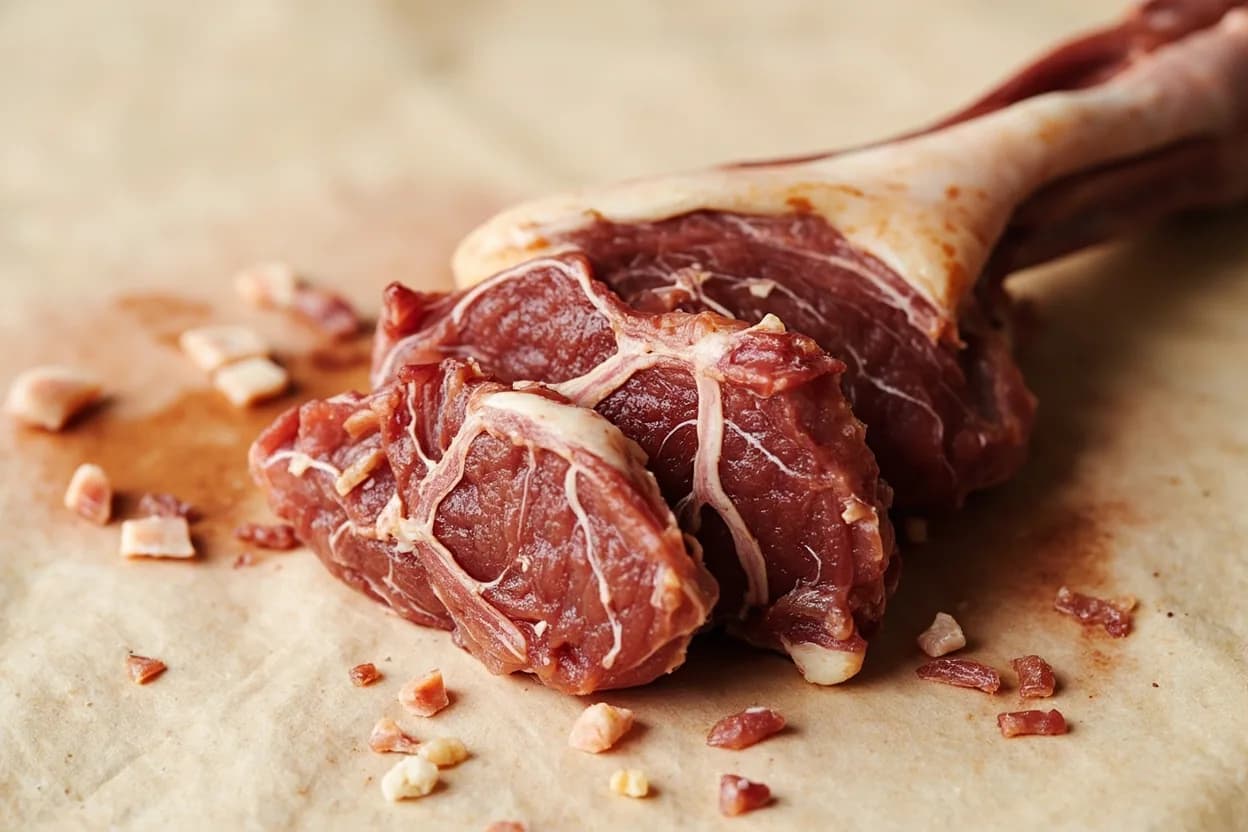
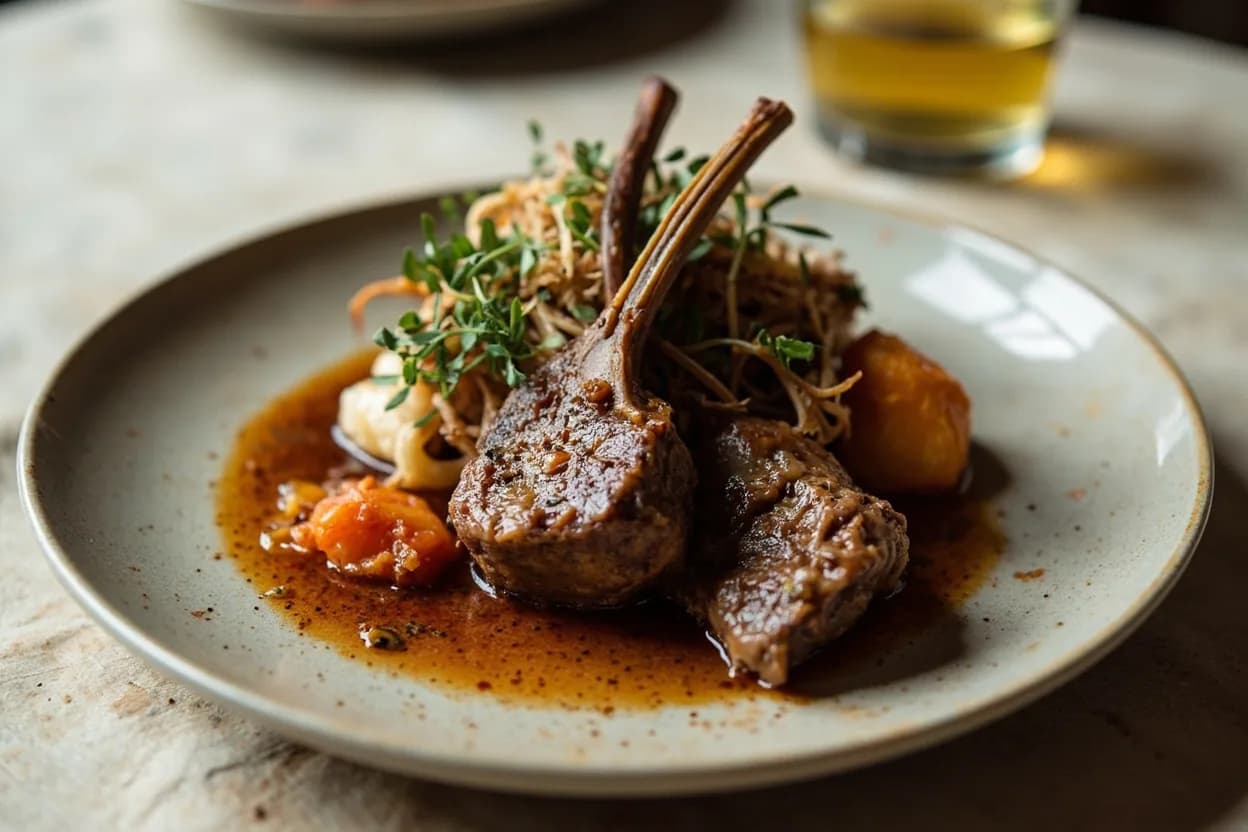
Where it comes from
Entire lamb carcass post-slaughter, typically a 12–25 kg dressed carcass (lighter milk-fed lambs are 8–12 kg). The carcass is split longitudinally and further divided at natural seam lines between primals.
Best for
How to cook it
- 1Neck (collo): braising, stewing, or slow-roasting; high collagen yields rich, gelatinous sauces. Yield roughly 8–10% of carcass weight.
- 2Shoulder (épaule): bone-in slow-roast, braising, or boneless roll; seam-butchered shoulder yields blade and arm muscles. Yield roughly 20–22%.
- 3Rack / Best End (carré): roast or grill as a rack, or butcher into individual cutlets; 8 ribs per side. Yield roughly 8–10% per side.
- 4Loin (selle): chops, saddle roast, or noisettes; the most prized, most tender primal. Yield roughly 10–12%.
- 5Leg (gigot): bone-in roast, butterflied grill, or seam-butchered into topside, silverside, and rump muscles. Yield roughly 28–30%.
- 6Breast / Flap (poitrine): slow braise, rolled and stuffed, or boned out for faggots and sausage meat; very fatty and flavourful. Yield roughly 10–12%.
- 7Shank (jarret): braise or slow-cook; front (forequarter) shanks are smaller than hind shanks. Yield roughly 6–8%.
Prep & butchery
- Split carcass along the spine with a band saw or cleaver before further breakdown
- Remove the fell (papery outer membrane) from the leg and shoulder for cleaner presentation
- Chine bone (backbone along the rack and loin) must be removed or cracked before roasting to allow carving
- Identify the natural seam between the shoulder and rack at the 5th rib — the break point varies slightly by carcass
- For whole-carcass yield analysis: weigh each primal immediately after separation and track against dressed carcass weight
Substitutes
- Goat primals
Structurally identical primal map; goat is leaner with more robust flavour and often older at slaughter
- Young mutton primals
Same primals as lamb but from an older animal (1–2 years); more flavour, more chew, longer cooking times required
Related cuts
Subprimal detail of the rack primal
Subprimal breakdown of the leg
Subprimal detail of the shoulder
Individual retail cut derived from the shank primal
- Lamb Loin Chop
Retail cut from the loin primal
Appears in
References
- 1.The River Cottage Meat Book — Hugh Fearnley-Whittingstall
- 2.Meat: A Kitchen Education — James Peterson
- 3.The Professional Chef, 9th ed. — The Culinary Institute of America
- 4.USDA Institutional Meat Purchase Specifications (IMPS) — Lamb Series 200
Confidence: high
Notes
Yield Realities
On a 20 kg dressed carcass, the two legs together represent the single largest primal by weight (~6 kg combined). The two racks, despite commanding the highest per-kilogram price, account for only about 3.5 kg total — roughly 17% of the carcass. This yield asymmetry is why whole-carcass butchery programs depend on creative use of shoulder, breast, and neck to generate margin on the expensive rack and loin cuts.
Milk-Fed vs. Pasture Lamb
Milk-fed (agneau de lait, lechazo) lambs slaughtered at 4–6 weeks have underdeveloped connective tissue throughout; even the shoulder and shank can be roasted without braising. Standard pasture lambs slaughtered at 4–9 months follow the conventional primal cooking-method guide above.