Lamb & Goat — Primal & Subprimal
Lamb Shoulder — Bone-In vs. Boneless (Épaule)
Also: épaule d'agneau, shoulder of lamb, rolled shoulder, Boston shoulder lamb, blade shoulder
The hardest-working primal on the lamb carcass — collagen-rich, deeply flavored, and the true backbone of slow-roasting and braising traditions worldwide.
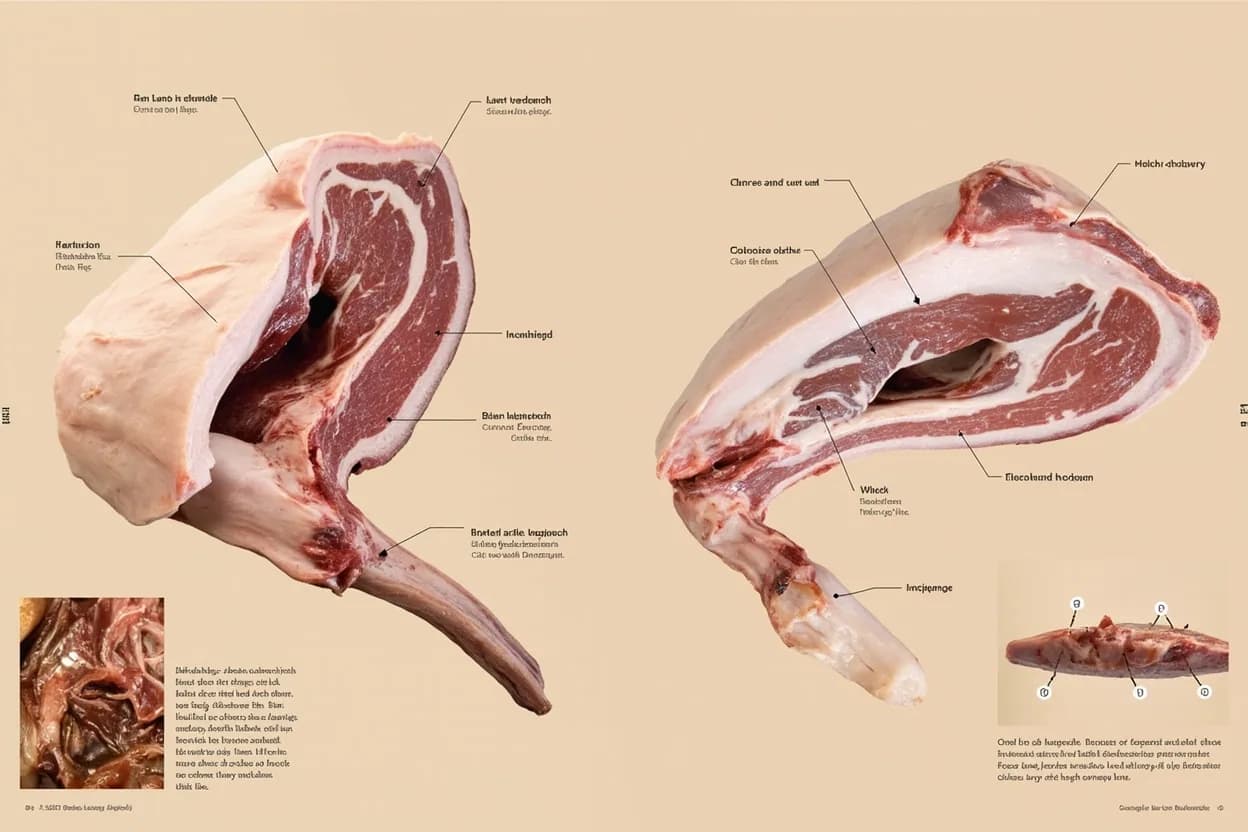
The lamb shoulder (épaule) is the forequarter primal comprising the blade and arm sections of the foreleg, encompassing the scapula (shoulder blade), humerus, and associated muscles. It is structurally one of the most complex primals: the blade section contains interwoven muscles including the supraspinatus, infraspinatus, and triceps, while the arm section includes the brachialis and biceps brachii. This complex muscle architecture, combined with high collagen content from the constant movement of a forelimb-bearing animal, makes the shoulder naturally tougher than the leg but ultimately richer and more flavorful when cooked low and slow. Bone-in, it makes an extraordinary slow-roast that falls from the bone; boned and rolled, it becomes a tidy joint for uniform braising or a butterflied surface for stuffed preparations.
In photos

Where it comes from
Forequarter primal, immediately anterior to the rack. Runs from the neck attachment at the 1st–4th rib down to the elbow joint. Blade section (upper shoulder) surrounds the scapula; arm section (lower shoulder) surrounds the humerus. Typical bone-in weight: 1.8–2.5 kg; boneless 1.2–1.8 kg.
Best for
How to cook it
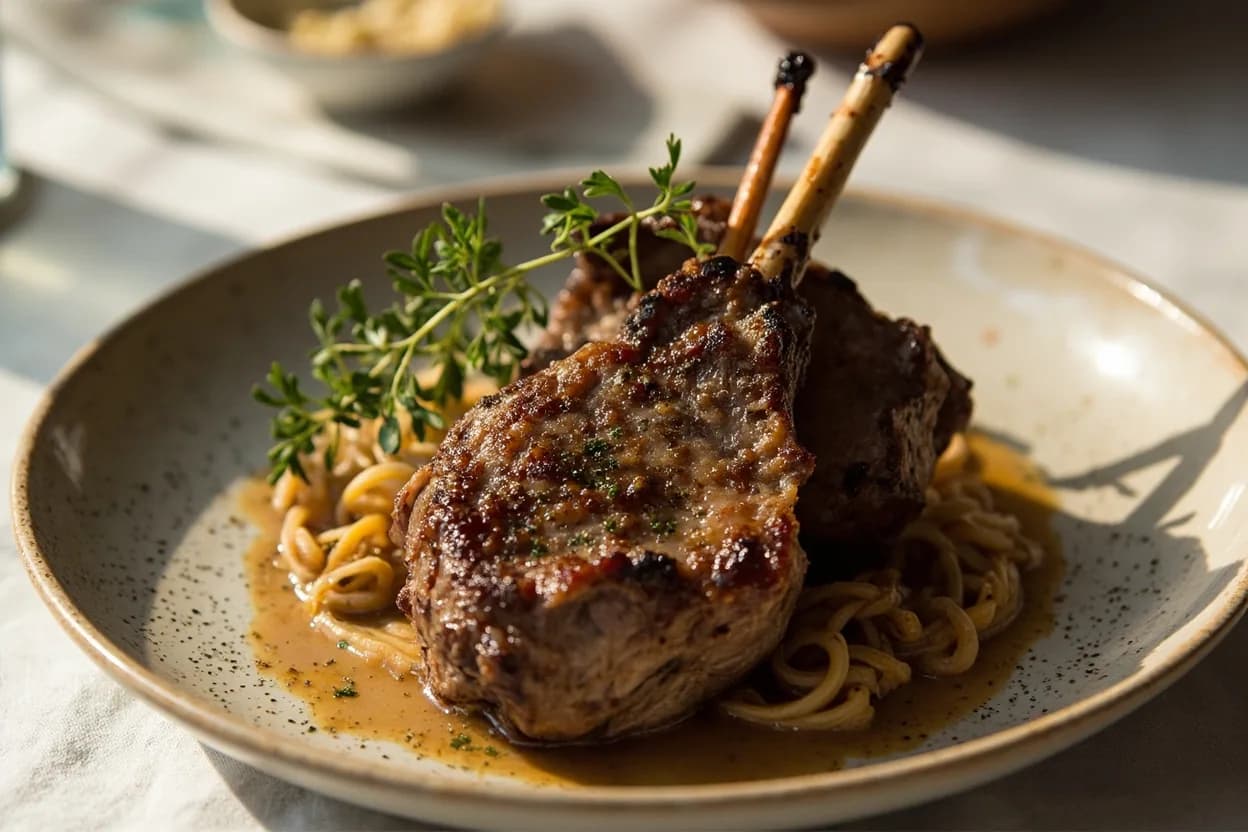
- 1Bone-in slow-roast: place shoulder in a deep roasting tray, season generously, add aromatics (garlic, rosemary, thyme, white wine), cover tightly with foil, and roast at 150°C for 5–6 hours until the bone pulls free cleanly. Uncover and increase to 220°C for 20 minutes to crisp the surface.
- 2Braise: sear the shoulder (bone-in or boneless) on all sides in a heavy-bottomed pot until deeply browned. Remove; build a base with onion, celery, carrot, garlic. Deglaze with white or red wine, add stock to half-depth, return the shoulder, cover tightly, and braise at 150°C for 3.5–4.5 hours.
- 3To bone out for a rolled shoulder: lay the shoulder flat, skin-side down. Using a boning knife, locate the scapula spine and cut along it, working the blade under the flat of the bone in short strokes. Remove the scapula; locate and follow the humerus out through the arm section. Remove the elbow joint. Roll the boned shoulder and tie at 3 cm intervals with butcher's twine.
- 4For kleftiko-style: marinate bone-in shoulder overnight in lemon, olive oil, garlic, and oregano, then seal in a parchment-paper parcel and slow-roast at 170°C for 4 hours.
- 5For pulled lamb: remove all bones, shred the slow-roasted meat with two forks, toss in the reduced cooking juices, and serve with flatbread.
Prep & butchery
- The shoulder blade (scapula) has a raised ridge on one side — begin boning along this ridge to find a clean plane; work in short, controlled strokes keeping the knife pressed against bone
- The humerus runs at an angle; the elbow joint at the base of the arm section is held by tough cartilage — cut directly through the joint cartilage with a firm stroke
- Remove any large fat pockets from inside the boned shoulder before rolling to prevent fat pockets from pooling during braise
- Score the external fat cap in a crosshatch pattern before slow-roasting to encourage even rendering
- The shoulder contains a blade cartilage (part of the scapula) near the top that is easy to miss — run fingers over the boned meat to feel for and remove it
Substitutes
- Bone-in lamb leg
More tender, less collagen; cook times are shorter; the flavor is similar but less complex
- Goat shoulder
Nearly identical structure; leaner and more pungent; identical cooking method, extend time slightly
- Bone-in pork shoulder (Boston butt)
Structurally similar collagen content; substitute in slow-roast and pulled preparations; cook to 88–93°C internal
Related cuts
Adjacent primal toward the head; even more collagen-rich; used for similar low-and-slow applications
The primal immediately posterior to the shoulder; contrasting quick-cook cut
The full primal map providing anatomical context
Lower foreleg section, often sold separately from the shoulder; a pure braise cut
- Lamb Blade Chop
Cross-section steak cut through the blade section; quick-cook retail derivative
Appears in
References
- 1.The River Cottage Meat Book — Hugh Fearnley-Whittingstall
- 2.Jerusalem — Yotam Ottolenghi & Sami Tamimi
- 3.Meat: A Kitchen Education — James Peterson
- 4.Modernist Cuisine: The Art and Science of Cooking — Nathan Myhrvold et al.
Confidence: high
Notes
Why the Shoulder Outperforms the Leg for Slow Cooking
The shoulder's higher collagen-to-muscle ratio means that at low sustained temperatures (130–160°C), the connective tissue dissolves over 4–6 hours into gelatin, enriching the cooking liquid and basting the meat from within. The leg, while also responsive to slow-roasting, has less collagen and can dry out if cooked too long. The shoulder is almost indestructible by overcooking — an extra hour only improves it.
The Boning Complexity
The shoulder is anatomically the most complex bone-out in the lamb repertoire. The scapula's irregular shape, combined with the multiple muscle seams running in different directions, means there is no single clean plane of separation. Professional butchers develop a feel for the bone through repeated practice. For home cooks, asking the butcher to bone and roll the shoulder while leaving it for slow-cooking is a perfectly reasonable option that sacrifices nothing in the final dish.