Knife Cuts — Classical French
Lardons
Also: lardoons, bacon lardons, lard paysan, smoked lard strips
Short, thick strips of pork belly or back fat cut from a slab — the workhorse pork garnish of classical and bistro French cooking.
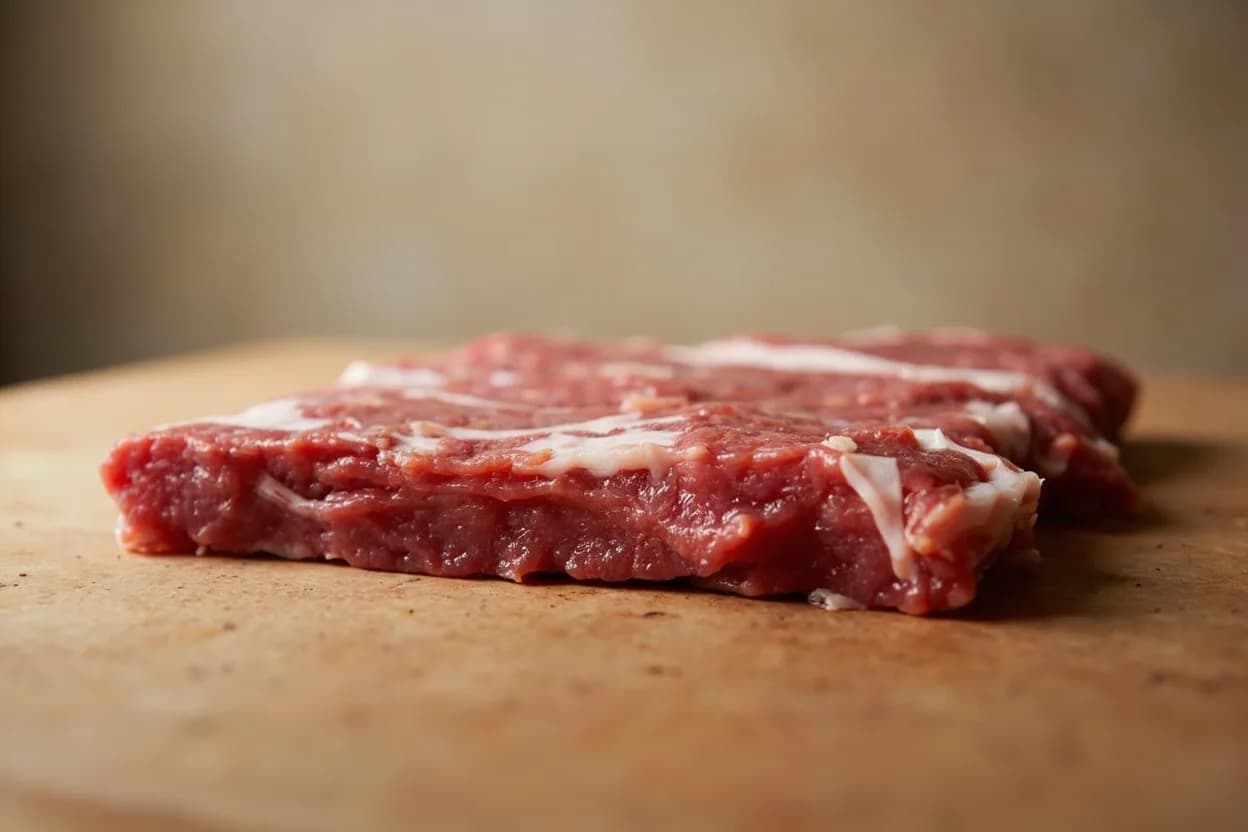
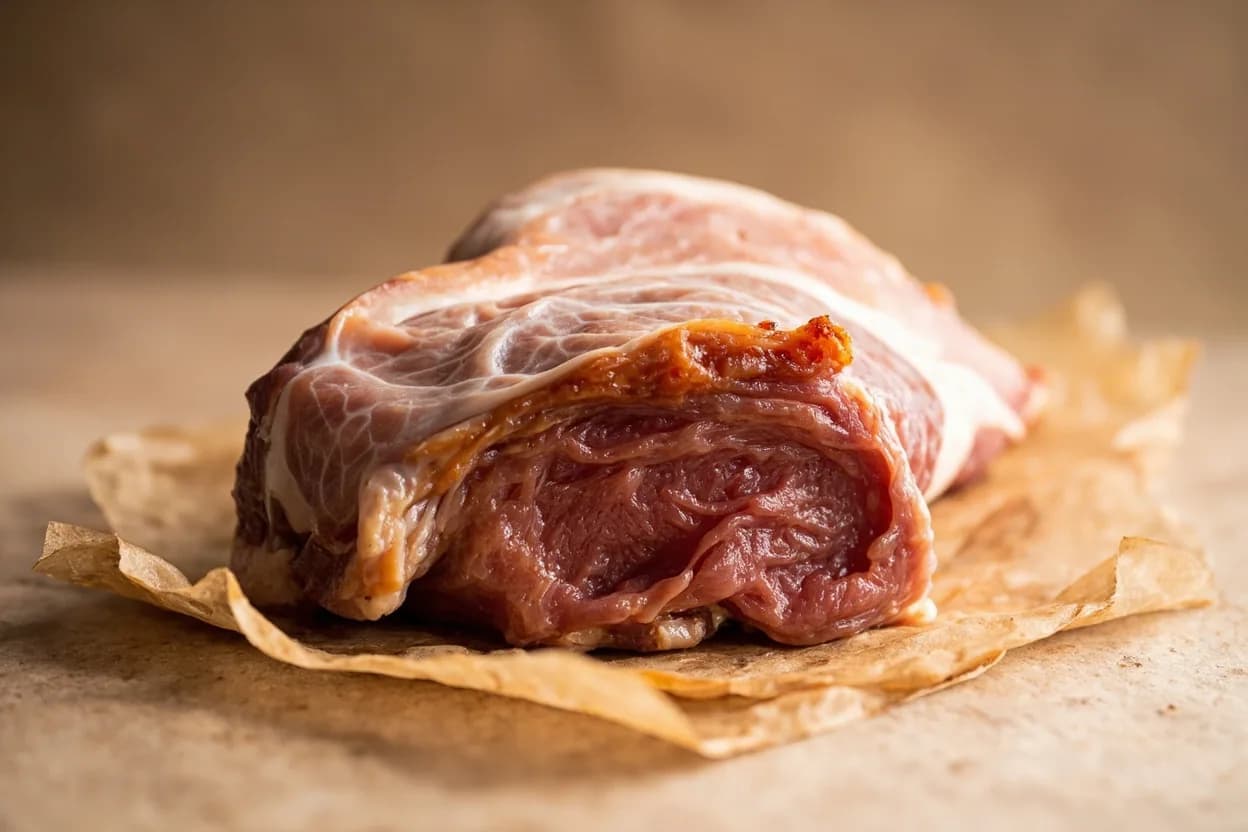
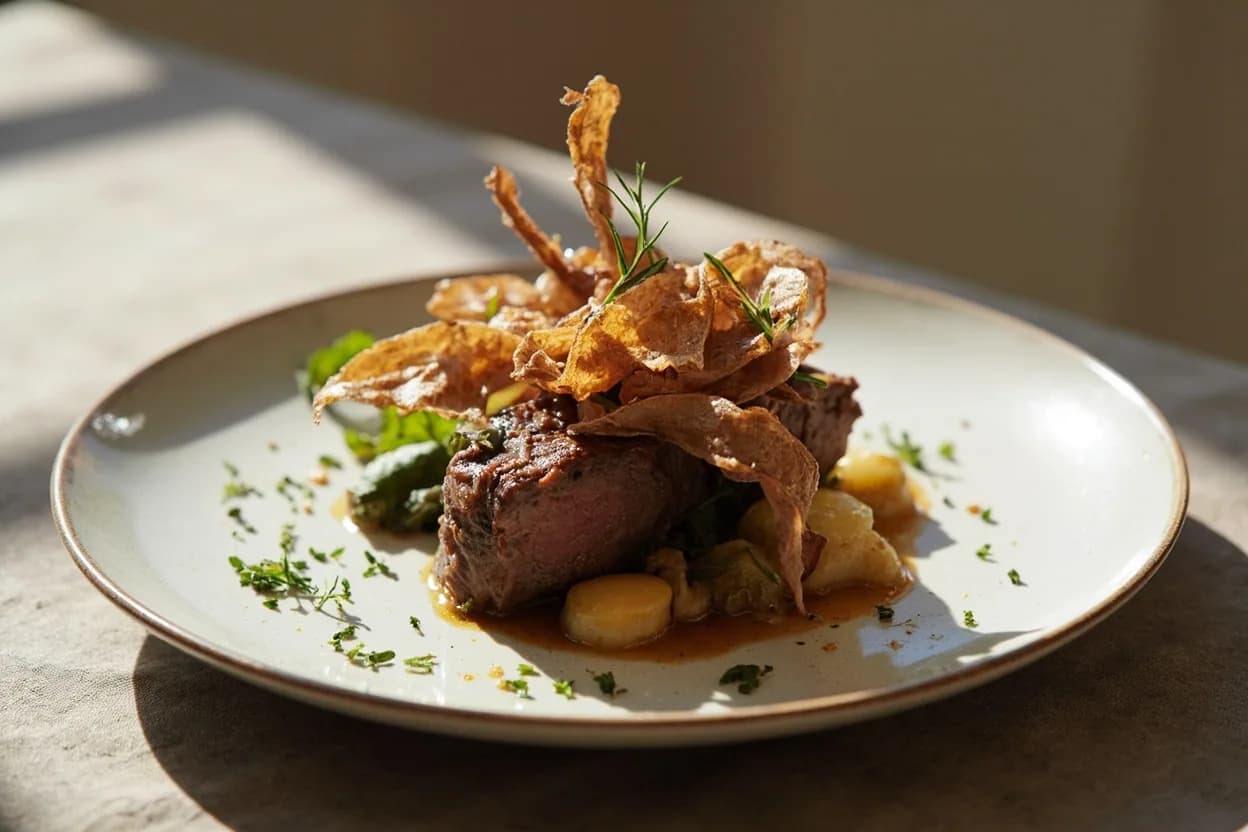
Lardons are uniform rectangular strips of cured pork belly (poitrine fumée), salt pork, or fatback cut from a solid slab, typically 5–8 mm square in cross-section and 2–4 cm long. They serve two distinct purposes in classical cookery: small slim strips are threaded into lean meats with a larding needle to self-baste from within during roasting; larger dice are rendered in a pan to provide fat, crispy pork pieces, and flavoured drippings as a garnish base for braises, salads, and egg dishes.
In photos
Where it comes from
Pork belly (poitrine) — cured and usually smoked; sometimes uncured back fat for larding applications.
Best for
How to cook it
- 1Start with a solid slab of cured pork belly; slice the skin off if present.
- 2Slice the slab into planks of the target thickness (e.g. 6–8 mm), then cut planks into batons of the same width, then cut batons to length (3–4 cm). All three dimensions should be consistent.
- 3For salt-cured or heavily smoked lardons, blanch in cold water brought to a boil, drain, and pat dry before frying — this reduces excess salt and prevents overly harsh smoke.
- 4To render for a garnish: place lardons in a cold, dry pan and set over medium heat. As fat melts, the pieces will first poach in their own fat, then fry in it. Continue until deeply golden and crispy on the outside, about 8–12 minutes.
- 5Remove with a slotted spoon, leaving the rendered fat to sauté aromatics or dress salad greens.
- 6For larding (larder): load thin lardons into a larding needle (lardoire), thread through the grain of the meat at regular intervals, and leave a short tail visible at each entry and exit.
Prep & butchery
- Always cut from a slab — pre-sliced bacon is too thin and will crisp into fragments rather than yielding proper meaty strips.
- Chill the slab in the freezer for 15 minutes before slicing to firm the fat and enable cleaner cuts.
- For larding needles, the lardons must be cut to exactly the diameter of the needle channel — measure the needle bore before cutting.
- Blanching cold-start (cold water to boil) removes more surface salt than dropping into boiling water.
- Pat completely dry before frying — water causes violent spatter in hot fat.
Substitutes
- Pancetta cubetti
Italian equivalent; unsmoked and milder. Swap 1:1 for unsmoked lardons in most dishes.
- Guanciale (cubed)
Richer and more funky than pancetta; good in braised legumes but dominant in delicate preparations.
- Thick-cut bacon (cut into batons)
Widely available substitute; tends to be sweeter (sugar-cured) and less refined than a proper slab lardon.
- Speck (cubed)
Smoked and juniper-cured; excellent in Alsatian dishes as a direct substitute for fumée lardons.
Related cuts
- Batons (bâtonnets)
The general French term for a stick-shaped cut; lardons follow the same geometry applied to cured pork.
- Lardoire strips
Extra-thin lardons, 3–4 mm wide and up to 6 cm long, designed specifically for threading through a larding needle.
A finer matchstick cut sometimes used for rapid-frying as a crispy garnish on salads.
- Pork rind (couenne)
The skin removed before cutting lardons; itself a braising enrichment and collagen source.
Appears in
References
- 1.Charcuterie: The Craft of Salting, Smoking, and Curing — Michael Ruhlman & Brian Polcyn (2005)
- 2.Escoffier: The Complete Guide to the Art of Modern Cookery — Auguste Escoffier (1903; English trans. H.L. Cracknell & R.J. Kaufmann, 1979)
- 3.The Professional Chef, 9th ed. — The Culinary Institute of America (2011)
- 4.Larousse Gastronomique — Prosper Montagné (2001 English edition)
Confidence: high
Notes
Larding versus garnish: two different sizes, two different jobs
In classical texts, 'lardons' and 'lardons de garniture' are sometimes conflated but serve entirely different functions. Thin lardons (3–4 mm) fed through a larding needle (lardoire) self-baste a lean roast from within as the fat slowly melts during cooking. Thick garnish lardons (6–8 mm) are rendered hard in a pan, removed, and added back at the end of a braise for textural contrast. Size determines purpose; never try to thread a garnish-sized lardon through a larding needle, or use a larding-sized strip as a pan garnish — it will disappear entirely.
Blanching: the professional default
In professional kitchens, salt-cured lardons are almost always blanched before the final render, even when the finished dish will be well-seasoned. Blanching clears the exterior salt, allows precise seasoning at the end, and produces a cleaner rendered fat (graisse de lardon) that does not scorch or taste harsh. Home recipes often skip this step, which is why bistro cassoulet often tastes noticeably rounder than its home-cooked equivalent.