Knife Cuts — Regional & Global
Leek Cleaning & Fine Ring Cut
Also: leek rings, leek rondelles, leek slicing
Split, fan, rinse, then slice: the two-step process of purging grit from leek layers before cutting them into fine rings or rough rounds for any application.
Leek preparation involves two distinct operations: cleaning and cutting. Cleaning is non-negotiable — sand and grit are trapped between the concentric tubular layers and invisible from the outside. The standard method splits the leek lengthwise from the green top down to (but not through) the root, fans the layers under cold running water, and shakes them dry. Once clean, the leek is cut into fine rings (2–3 mm for garnish or vinaigrette use), medium rings (5–8 mm for braises and soups), or rough chunks depending on application. The white and pale-green portions are mild and melt into sauces; the dark green tops are tougher and more strongly flavored.
In photos
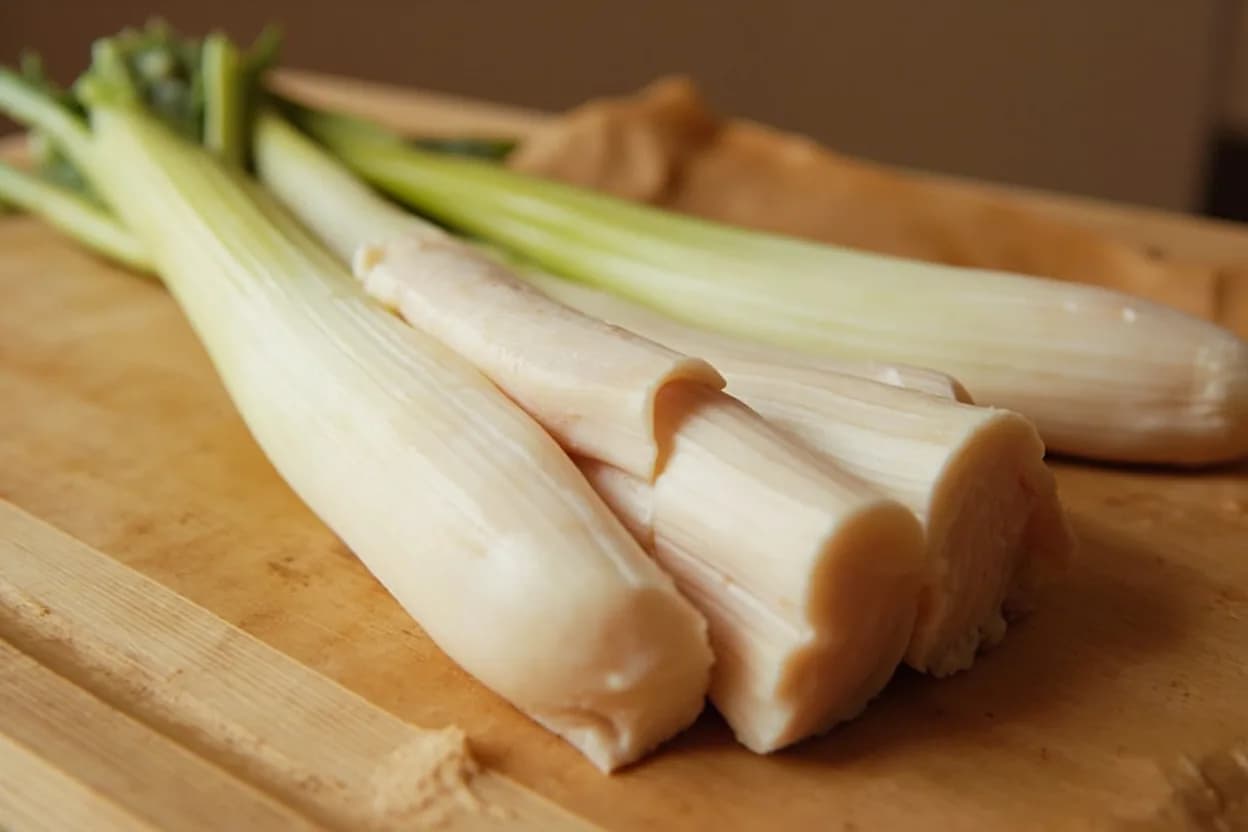
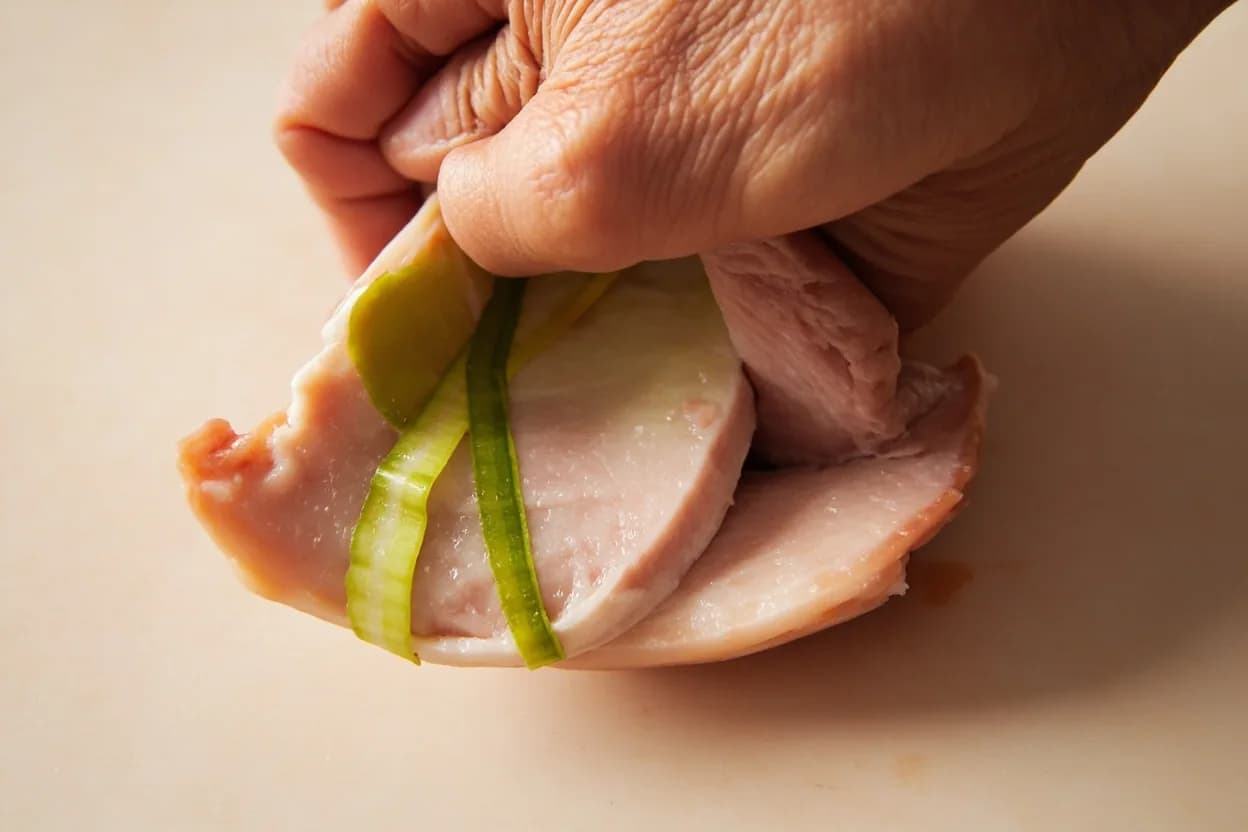
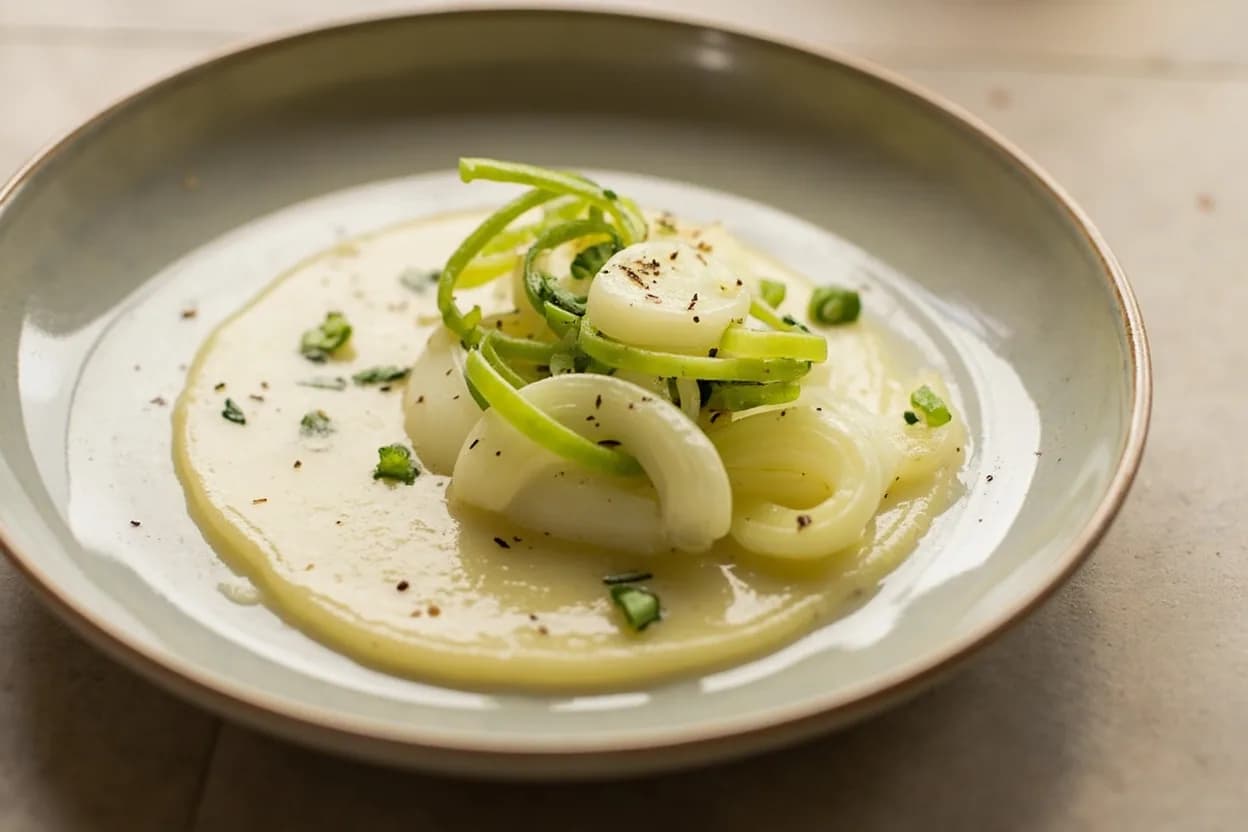
Where it comes from
Allium porrum — a long cylindrical allium with tightly wrapped concentric leaf sheaths. The edible portions are the white base (blanched underground, mildest and most prized), the pale-green middle, and the darker green upper leaves (strongest, often used only for stock). Sand and soil enter between the sheath layers during growth and irrigation.
Best for
How to cook it
- 1Trim the root end and remove any yellowed or slimy outer leaves
- 2Trim the dark green tops to where the leaf sheaths turn distinctly pale green; reserve tops for stock
- 3Split the leek lengthwise from the top down, stopping about 5 cm from the root base so the layers remain connected at the bottom — this lets you fan the sheaths without the leek falling apart
- 4Hold the leek root-end up under cold running water, fanning the split layers to flush out sand and grit; repeat until no grit falls from between the layers
- 5Shake dry or pat with a towel; check a random inner layer by pressing it — any grit remaining will be felt between the fingers
- 6For fine rings: lay the leek flat and slice across at 2–3 mm intervals using a sharp chef's knife with a single rocking motion
- 7For medium rings: slice at 5–8 mm; rings will partially separate and cook evenly
- 8For rough cuts (stock or long braise): cut into 4–5 cm lengths
Prep & butchery
- The root base can be left slightly intact during the split-and-fan cleaning step — it acts as a hinge keeping the layers together for easier rinsing
- Cut the root off cleanly only after cleaning, just before slicing
- A very sharp knife is essential for fine rings; a dull knife compresses the layers and squeezes out moisture, giving a bruised rather than clean cut
- If pre-cutting for service, store sliced leeks in cold water to prevent oxidation and keep them crisp; drain and dry before using
Substitutes
- Spring onion / scallion
Milder, no cleaning needed; use in equal quantity for texture but expect less sweetness and body
More pungent, no grit issue; finer dice substitutes in sauces and vinaigrettes
- Onion
More assertive flavor; use in half the quantity and cook longer for equivalent sweetness in braises
Related cuts
Fine ribbon cut applied to greens; the fine leek ring is the allium equivalent in scale and use
- Fennel Fine Shave
Another aromatic vegetable requiring similar attention to cleaning (though fennel's structure is more open) and fine slicing for salads
Appears in
References
- 1.Vegetables — James Peterson
- 2.The French Laundry Cookbook — Thomas Keller
- 3.Jacques Pépin: New Complete Techniques — Jacques Pépin
- 4.Larousse Gastronomique — Prosper Montagné (ed.)
Confidence: high
Notes
Why splitting before rinsing is not optional
The cylindrical leek grows underground with the outer sheaths wrapping tightly around the inner ones. As water is applied — from rain, irrigation, or field washing — fine particles of sand and grit are carried down between the sheaths and lodge at the base where the layers are tightest. These particles are completely invisible from outside and cannot be rinsed away by running water over the whole leek. The split-and-fan method opens each layer individually and allows water to dislodge trapped grit. Grit in a bowl of vichyssoise is a serious professional failure — and the only way to avoid it is to clean the leek correctly.
White vs. pale green vs. dark green — three ingredients
French classical cooking uses the white and pale-green portions almost exclusively in finished dishes because they are the mildest, have the highest sugar content, and cook to a uniformly creamy texture. The dark green tops are woodier, more chlorophyll-forward, and require significantly longer cooking to tenderize. Most French chefs tie the green tops into a bouquet garni with thyme and bay leaf and use them only for stock, discarding them before service. In British cooking (cock-a-leekie, cawl) and some Asian preparations, the green tops are used in the pot but removed at table.