Offal & Variety Meats
Corazón de Res (Beef Heart for Anticuchos)
Also: beef heart anticucho cut, corazón anticuchero, anticucho de corazón
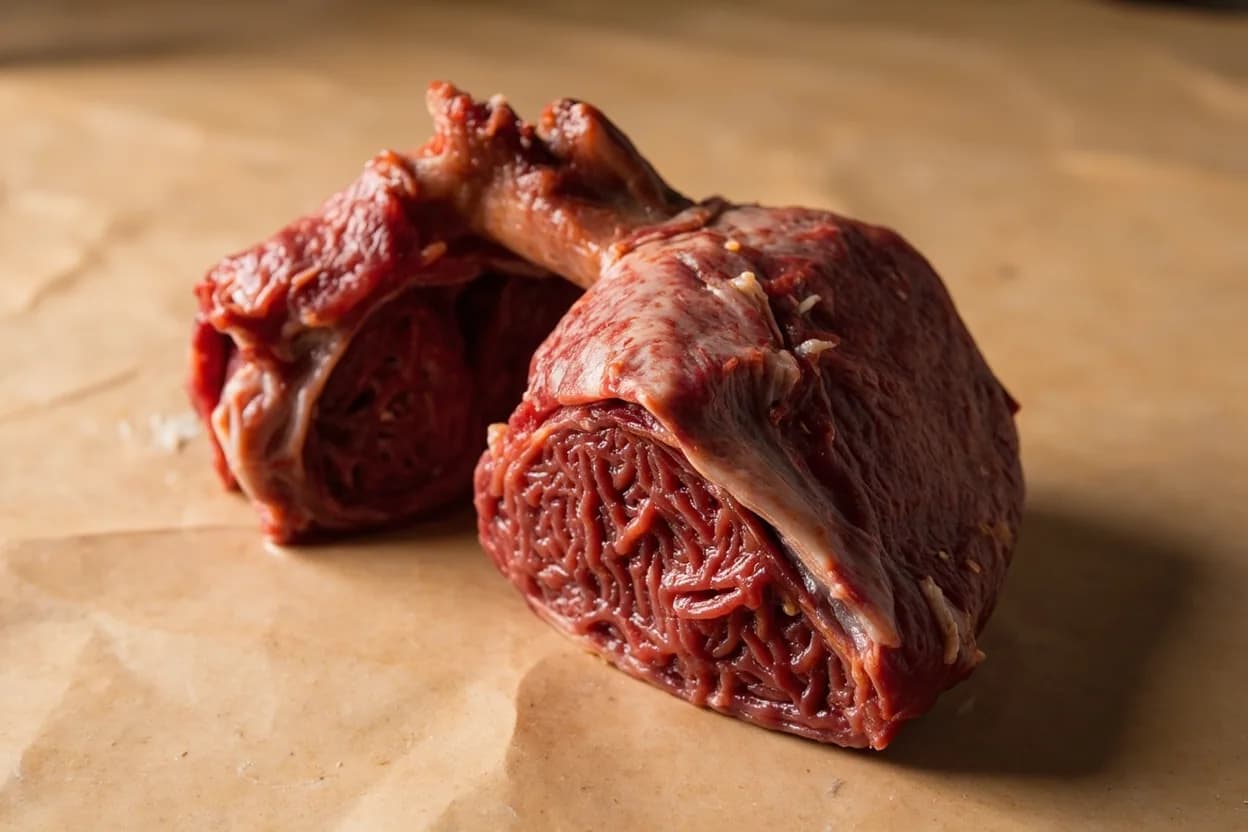
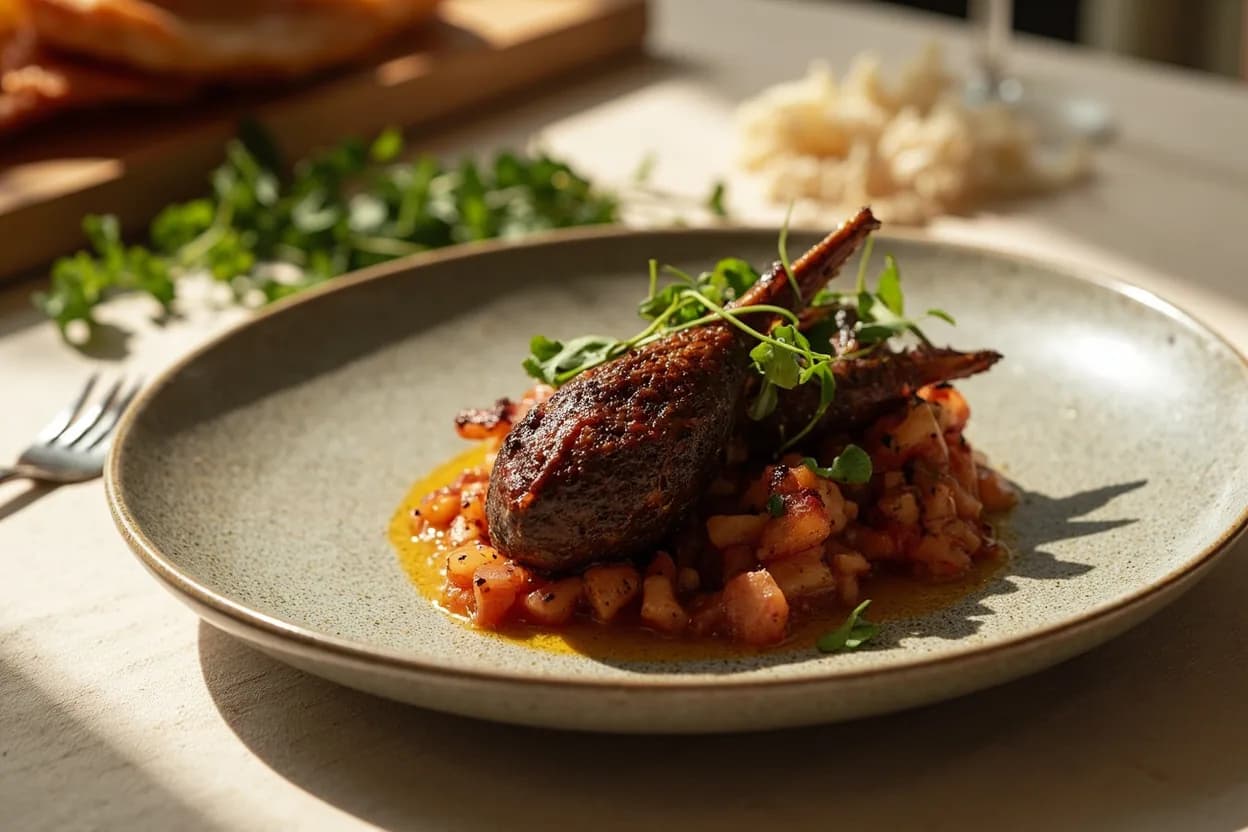
Beef heart cleaned of valves, fat, and arteries, then sliced into flat chamber pieces for Peru's definitive street-food skewer.
Anticucho preparation reduces a whole beef heart (typically 1.5–2 kg) to uniform skewerable slabs through systematic cleaning and slicing. The four chambers are separated along natural seams, each chamber flattened by butterfly-cutting, then cut into rectangular tiles roughly 4 cm × 5 cm × 1 cm — thick enough to stay juicy on an open charcoal grill, thin enough to cook through in two minutes per side.
In photos

Where it comes from
The whole bovine heart: four chambers (two atria, two ventricles) separated by the interventricular septum. The left ventricle provides the thickest, most uniform wall muscle and is prized for anticuchos. The aorta, pulmonary artery, tricuspid and mitral valves, chordae tendineae, and exterior fat pad are all removed.
Best for
How to cook it
- 1Remove the pericardial sac and all visible exterior fat using a boning knife, following the contours of the heart.
- 2Cut away the aorta and pulmonary artery at the top; open the atria with a lengthwise cut and pull out any blood clots.
- 3Locate and cut out the mitral and tricuspid valve rings and the fibrous chordae tendineae inside each ventricle — these are tough and must be removed.
- 4Separate the interventricular septum (the thick muscular wall dividing left and right ventricles) — slice it free along both sides; it yields excellent, extra-thick pieces.
- 5Butterfly each chamber wall open and slice into rectangular tiles approximately 4–5 cm wide, 5 cm long, and 1 cm thick, cutting against the grain of the muscle fibres.
- 6Marinate in ají panca paste, red wine vinegar, cumin, garlic, salt, and vegetable oil for a minimum of 4 hours, ideally overnight.
- 7Thread 2–3 pieces per skewer; grill over intense charcoal heat 2–3 minutes per side, basting with annatto oil, until charred at the edges and just cooked through.
Prep & butchery
- Soak cleaned heart pieces in cold salted water with a splash of vinegar for 30 minutes to remove residual blood before marinating.
- Cut uniformly — thickness consistency is critical so all pieces reach the same doneness simultaneously on the skewer.
- Use bamboo skewers soaked 30 minutes or flat metal skewers to prevent pieces from spinning when turned.
- Do not marinate in metal containers — the vinegar and ají acids will react with reactive metals; use glass or ceramic.
Substitutes
- Lamb heart
Smaller (250–350 g each); same cleaning process at reduced scale; slightly more gamey
- Pork heart
Softer texture, milder flavour; good substitute if beef heart is unavailable
- Beef sirloin tips
Used by restaurants serving timid diners; loses the authentic character entirely but accepts the marinade
Related cuts
- Beef Chuck Flat Iron
Similar fine-grained, lean character; closest beef muscle substitute
- Beef Diaphragm (Entraña)
Another Andean street-grill favourite from less-common butchery
- Lamb Heart
Direct structural analogue at smaller scale
Appears in
References
- 1.The Food of Peru — Flor Arcaya de Deliot (2012)
- 2.Peru: The Cookbook — Gastón Acurio (2015)
- 3.Nobu's Vegetarian Cookbook — Nobu Matsuhisa (heart technique cross-reference)
- 4.Gran Cocina Latina — Maricel Presilla (2012)
Confidence: high
Notes
The Soul of Lima Street Food
Anticuchos de corazón originated as Afro-Peruvian street food during the colonial era, when enslaved cooks received offal and organ cuts discarded by Spanish colonisers. The ají panca marinade — earthy, mildly smoky, barely hot — was developed specifically to complement heart's mineral lean character. Today anticucheras cook over charcoal on street corners throughout Lima, and the dish is considered the city's most beloved street food across all social classes.
Why Heart Works
The cardiac muscle works continuously without rest, so it develops extremely fine, tightly organised fibres with no connective tissue interspersed — the result is a cut that grills as cleanly as a steak, takes char without turning rubbery, and has a mineral depth that no skeletal muscle can match. The key is aggressive cleaning (valves and fibrous rings removed) and high heat — heart cannot be coddled.