Regional Meat Cuts
Ear-Sheet Slice (Er Pian)
Also: 耳片, er pian, ear-sheet cut, ear-shaped slice
A Sichuan wide, thin pork or beef slab whose oval silhouette mimics the shape of a human ear — essential to cold-dressed dishes and fast stir-fries.
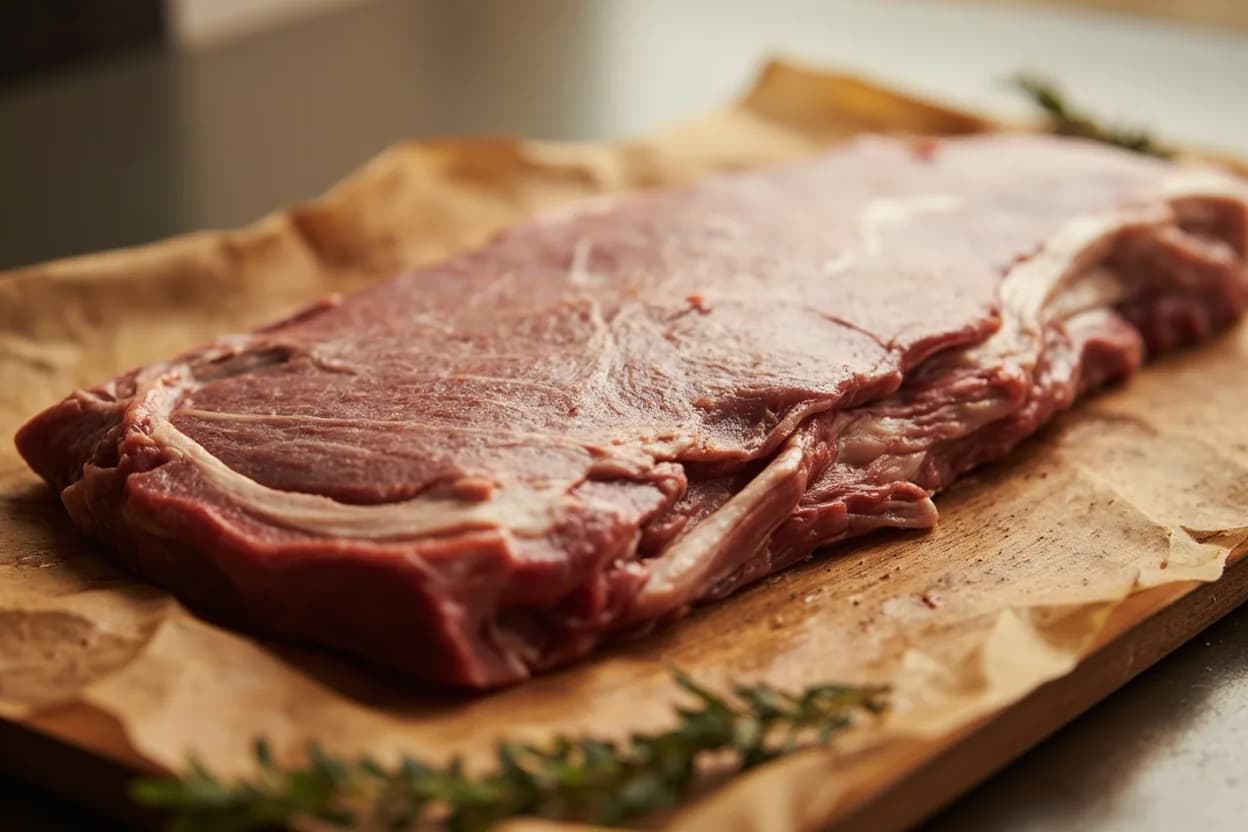
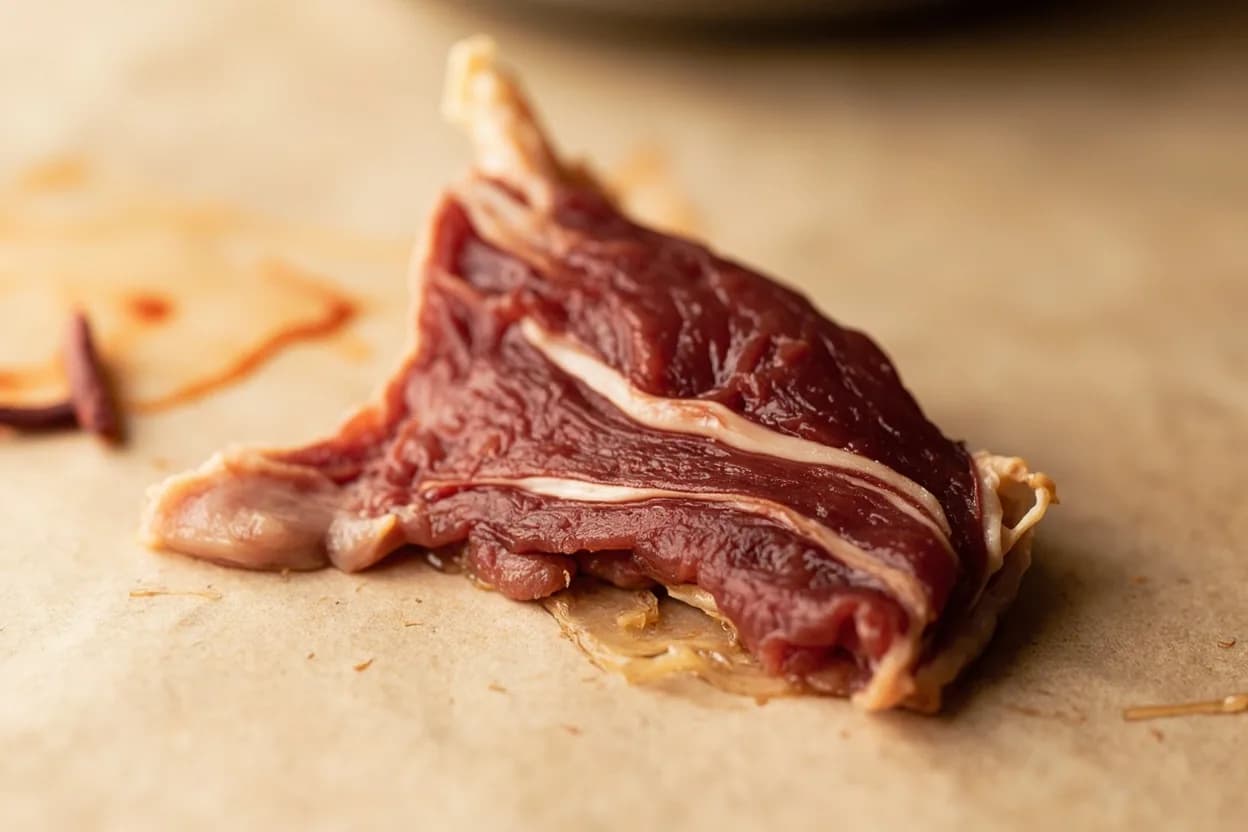
Er pian (耳片, literally 'ear slices') are wide, translucent-thin sheets of pork belly, shoulder, or lean beef sliced against the grain at a low oblique angle so each piece fans out into a broad oval roughly the size and shape of a human ear — typically 6–9 cm long and 0.2–0.3 cm thick. The large surface area is what defines the cut; it maximises sauce contact in cold dishes and ensures near-instant heat penetration in wok cooking.
In photos
Where it comes from
Most commonly cut from boneless pork belly (五花肉, wǔhuā ròu) or pork shoulder for cold dishes; lean beef sirloin or flank is used when a lighter, less fatty version is wanted. The meat is often par-cooked, chilled to firm it, then sliced.
Best for
How to cook it
- 1Par-cook whole muscle in seasoned water (pork: bring to boil, simmer 20–25 min until just cooked through; beef: blanch 2–3 min for stir-fry, longer for cold salads). Remove and chill uncovered until fully cold and firm — ideally 1–2 hours in refrigerator.
- 2Place chilled block on board. Hold the knife at a 20–30° angle to the cutting surface (not 90°) and draw it toward you in a single smooth stroke, yielding wide ear-shaped ovals 6–9 cm across. Each slice should peel away cleanly without tearing.
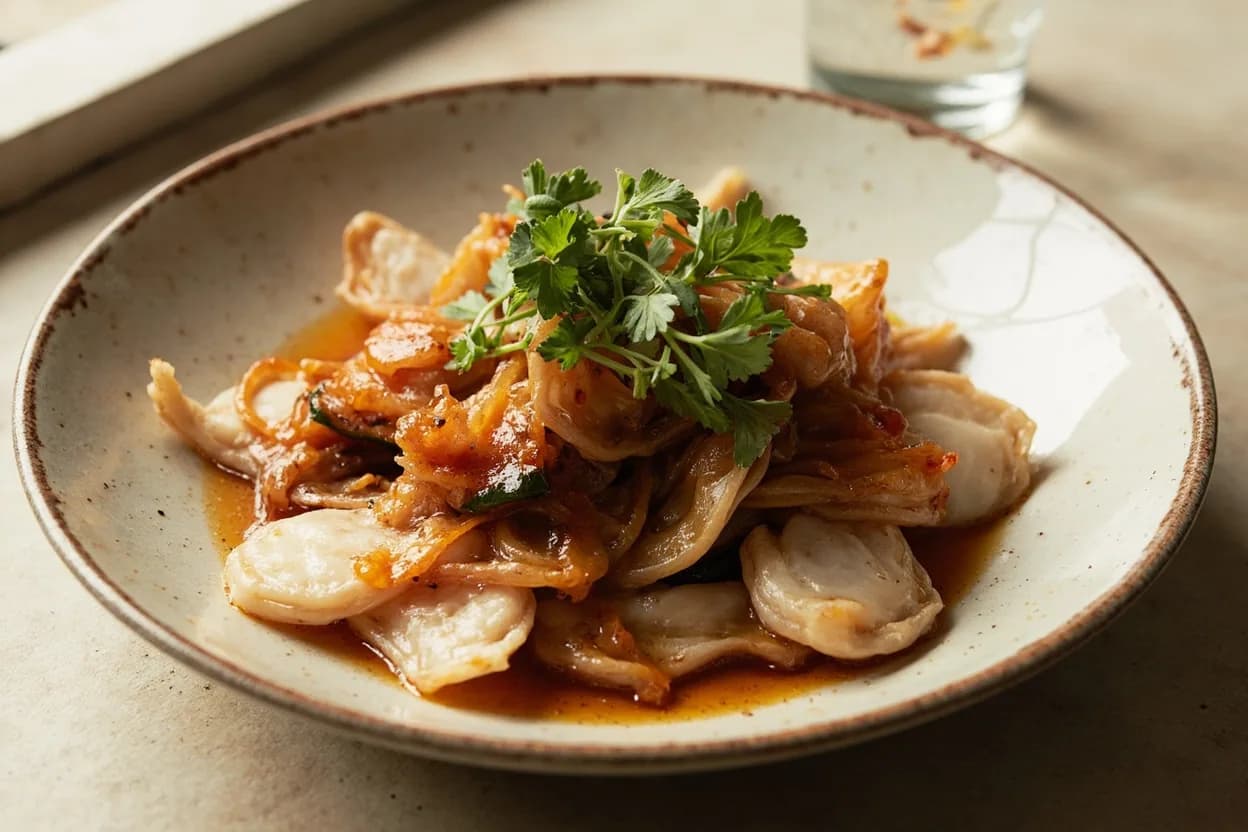
- 3For cold dishes, arrange overlapping slices on a plate and dress with Sichuan numbing-spicy sauce: chilli oil, light soy, black vinegar, minced garlic, crushed roasted peanuts, coriander.
- 4For stir-fry, keep slices separated and add to a screaming-hot wok with a little oil — they cook in 30–45 seconds. Overcrowding kills the wok heat; work in small batches.
- 5Do not attempt the cut on warm or room-temperature meat — the slice will crumble or tear. Firmness from chilling is non-negotiable.
Prep & butchery
- Chill the protein to near-freezing before slicing — 1 hour in the fridge after par-cooking is the minimum
- Use a long, thin Chinese cleaver or a slicing knife with minimal flex; a thick chef's knife drags and tears
- Lay the muscle block so its grain runs perpendicular to the knife path; the oblique angle does the rest
- Aim for uniform thickness (2–3 mm) so pieces dress and cook evenly
- If slicing raw beef for stir-fry, a 30-minute freeze partially firms the meat and makes wider oblique slices possible
Substitutes
- Standard bias slice
Thinner but narrower; lacks the dramatic ear shape — acceptable in stir-fries but loses visual impact in cold dishes
- Vietnamese bánh thịt nguội thin pork slices
Similar oblique cold-pork slice technique; cross-culturally comparable but dressed differently
- Shabu-shabu machine-cut pork belly
Achieves the right thinness but sliced straight-across; substitute in stir-fries, not cold salads where the shape matters
Related cuts
- Fuqi feipian slice
Same wide oblique technique applied to braised beef shank and offal for the eponymous Chengdu cold dish
- Pork belly slab (wuhua rou block)
The starting material before slicing into er pian
- Shabu thin slice
Machine equivalent — thinner and straight-cut but shares the large-surface-area philosophy
Appears in
References
- 1.Land of Plenty — Fuchsia Dunlop (2003)
- 2.The Food of Sichuan — Fuchsia Dunlop (2019)
- 3.Chinese Cuisine (中国烹饪) — Chinese Culinary Association, standardised knife-work chapters
Confidence: high
Notes
Why the shape matters
The ear silhouette is not decorative whimsy. The large face-to-thickness ratio means cold sauces cling to every millimetre of surface, delivering more flavour per bite than a compact cube or narrow strip. In stir-fry, the same geometry ensures that the centre of the slice is never more than 1–2 mm from the wok surface — effectively eliminating the risk of raw centres in fast-cooked beef.
Cold-dish vs. stir-fry distinctions
For cold dishes, pork belly is preferred: the fat striations soften further as the chilled slice warms in the mouth, creating the silky 'melt' that defines liangban roupian. For stir-fry, lean beef or pork loin is standard — fat renders unevenly at high heat in thin sheets and can cause the slices to curl and toughen.