Fish — Fabrication & Breakdown
Engawa (Flounder Fin Muscle) Separation
Also: engawa, fin muscle, hirame engawa, flounder fin frill
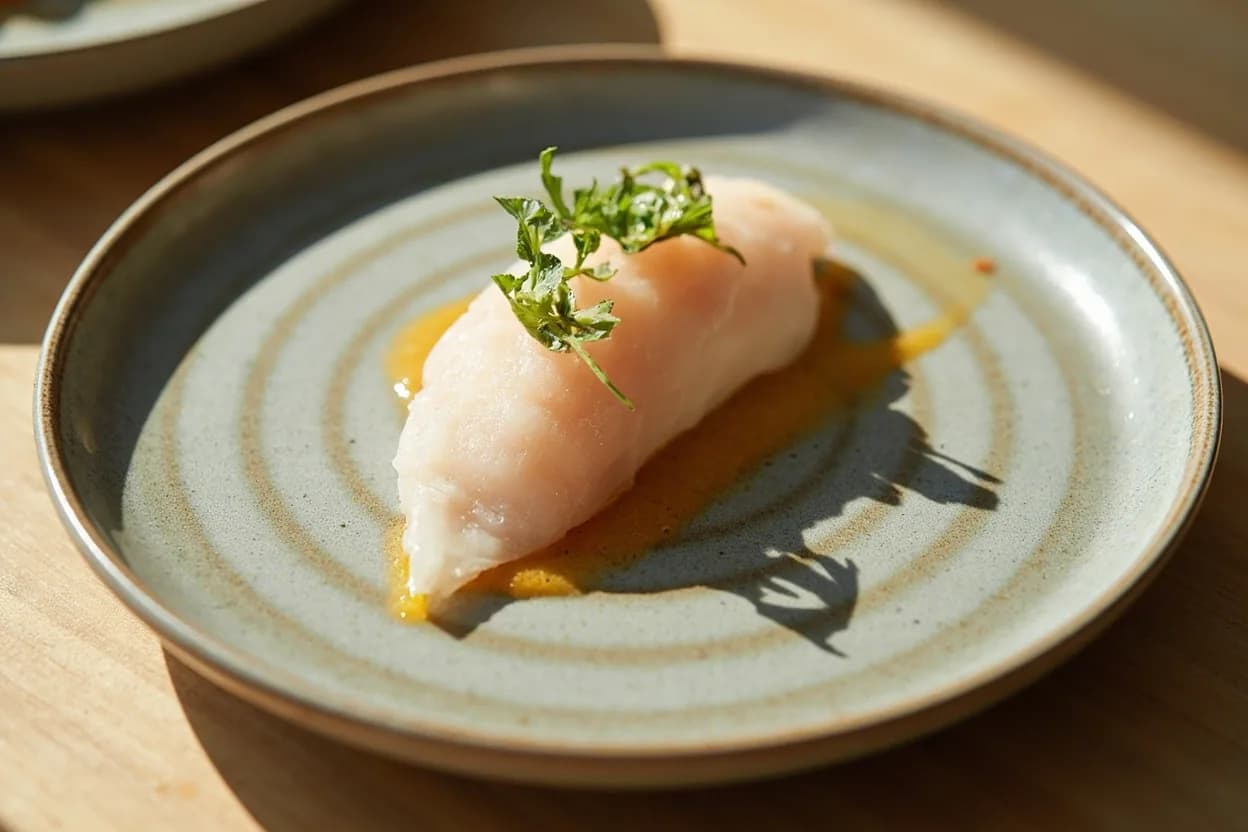
The delicate, richly marbled fringe muscle that borders a flounder's fins, prized in Japanese sushi for its chew and fat.
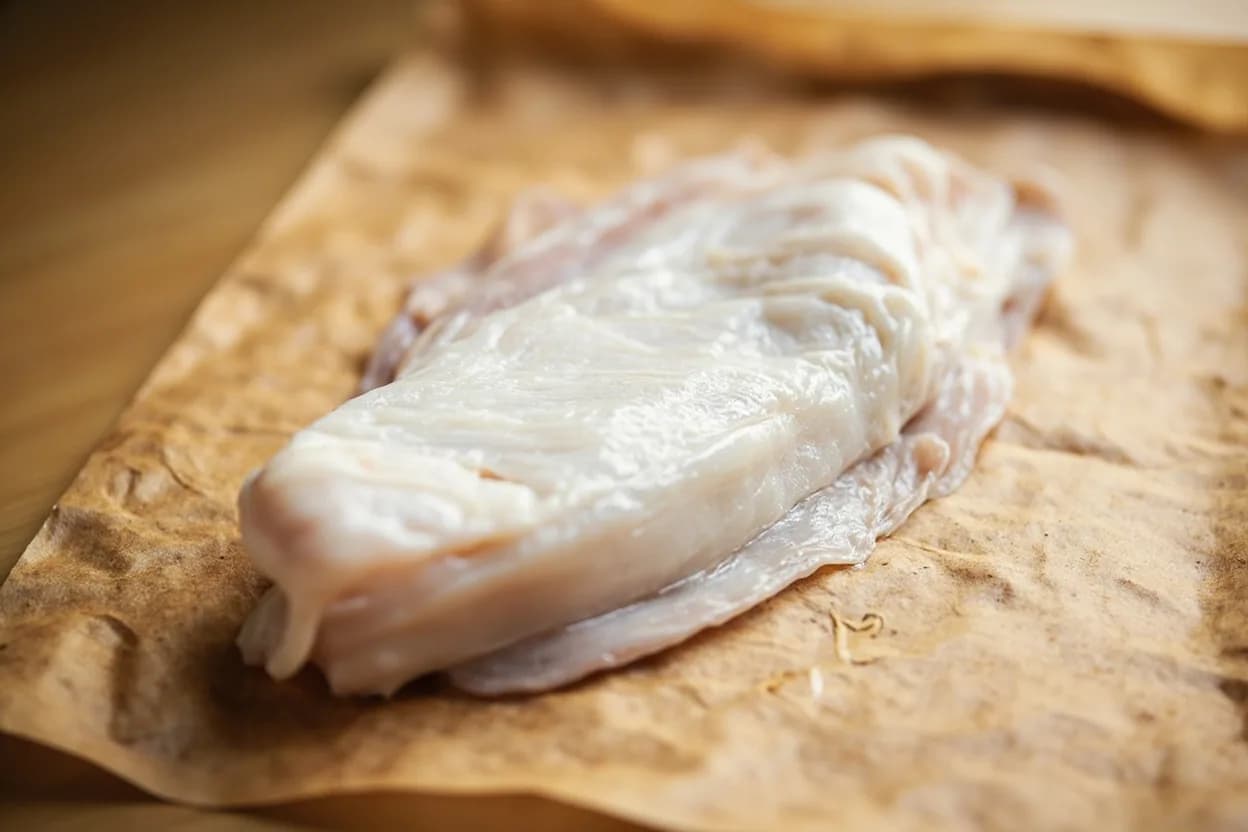
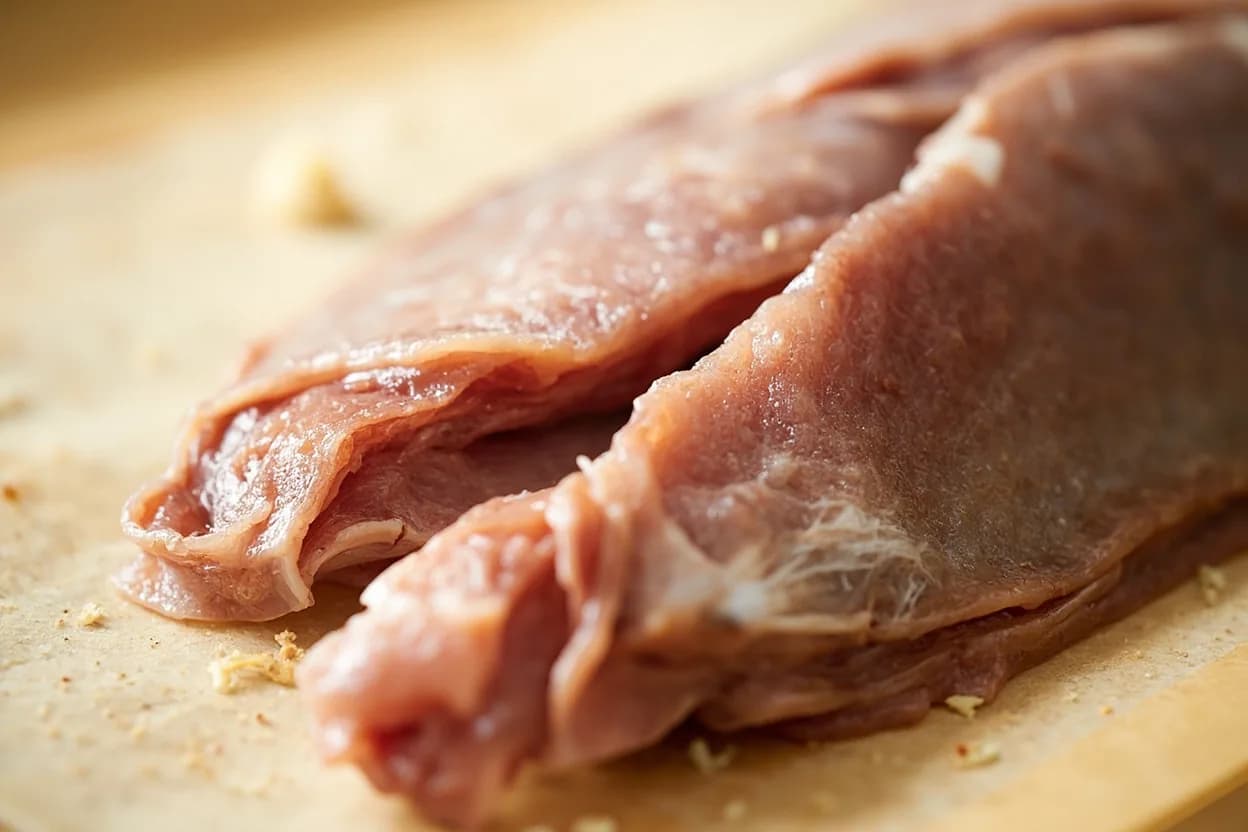
Engawa is the thin strip of muscle that runs along the outer edge of a flat fish — most prized from hirame (olive flounder, Paralichthys olivaceus) — controlling fin movement. It lies between the skin and the main white fillet, forming a scalloped fringe of interlocking fast-twitch fibers. Because these muscles work constantly to undulate the fins, they develop more fat and a distinctive chewy-yet-tender bite completely unlike the mild white flesh of the body fillets.
In photos
Where it comes from
The fin-fringe margin of a flat fish (hirame/flounder, karei/halibut, or turbot). On a 2 kg flounder, all four engawa strips together yield roughly 60–80 g of usable meat. The strip is removed after the fish has been filleted in the standard go-mai (5-piece) break: the two main dorsal and ventral fillets are lifted first, then the engawa is peeled or scraped from the skin edge with a flexible knife.
Best for
How to cook it
- 1Fillet the flounder using go-mai oroshi (5-piece breakdown): head off, two top fillets lifted, two bottom fillets lifted, leaving the skeleton.
- 2Lay one fillet skin-side down. Locate the engawa strip — the narrow, finely ribbed band running the full length of the outer edge.
- 3Slide a thin flexible knife (yanagiba or deba) between the engawa and the main fillet, keeping the blade nearly flat; separate in one clean draw toward you.
- 4Peel the engawa strip away from its skin by pressing the skin flat and scraping with the knife heel, working from tail to head.
- 5Trim any residual membrane or dark bloodline with the tip of the knife.
- 6Score the outer surface lightly (kazari-bocho) to prevent curling when served or briefly seared.
- 7Serve raw within minutes of separation, or store on ice no longer than the day of butchery — engawa oxidizes and loses textural appeal quickly.
Prep & butchery
- Use a freshly sharpened yanagiba — a dull blade crushes the fine fibers and ruins the texture.
- Keep the fish at 0–2 °C throughout; engawa softens and tears at room temperature.
- On large turbot or halibut, the engawa may need a secondary membrane removal on the flesh side before slicing.
- For aburi service, pat the strip completely dry before torching to achieve clean caramelization rather than steaming.
Substitutes
- Turbot engawa (mako-karei)
Larger fringe muscle, similar fat profile; often used in high-end European-Japanese fusion contexts.
- Halibut collar (kama)
Not anatomically equivalent but delivers similar rich, chewy fat; grill instead of serving raw.
- Flounder body fillet (hirame)
Milder and more delicate; loses the characteristic chew but works when engawa supply is limited.
Related cuts
- Hirame (flounder fillet)
The main body fillet the engawa borders; ethereally delicate and mild, the textural opposite of engawa.
- Karei (halibut/plaice fillet)
Closely related flat-fish fillet; its engawa is interchangeable in sushi contexts.
- Kama (collar/shoulder)
Another high-fat, high-collagen section of flat fish often prepared by grilling or broiling.
Appears in
References
- 1.Sushi Neta Zukan (Sushi Topping Encyclopedia), Shinji Nohara, Shibata Shoten
- 2.The Japanese Kitchen, Hiroko Shimbo, Harvard Common Press
- 3.Nagazumi Ichiro, Kappo Ryori no Gihō (Techniques of Kappo Cuisine), Shibata Shoten
- 4.Nobu: The Cookbook, Nobu Matsuhisa, Kodansha International
Confidence: high
Notes
Seasonal peak
Winter hirame (December–February, Japan) are the most prized because cold water causes the fish to store more subcutaneous fat, making the engawa richer and more unctuous. Summer engawa is leaner and considered of secondary quality at top-tier sushi counters.
Etymology
Engawa (縁側) literally means 'veranda' or 'border corridor' in Japanese — a poetic reference to the strip's position at the very edge of the fish, just as a veranda runs along the perimeter of a traditional house.