Fish — Fabrication & Breakdown
Flat Fish Filleting — Four-Fillet Method (Sole & Flounder)
Also: four-fillet break, flatfish filleting, sole filleting, flounder filleting
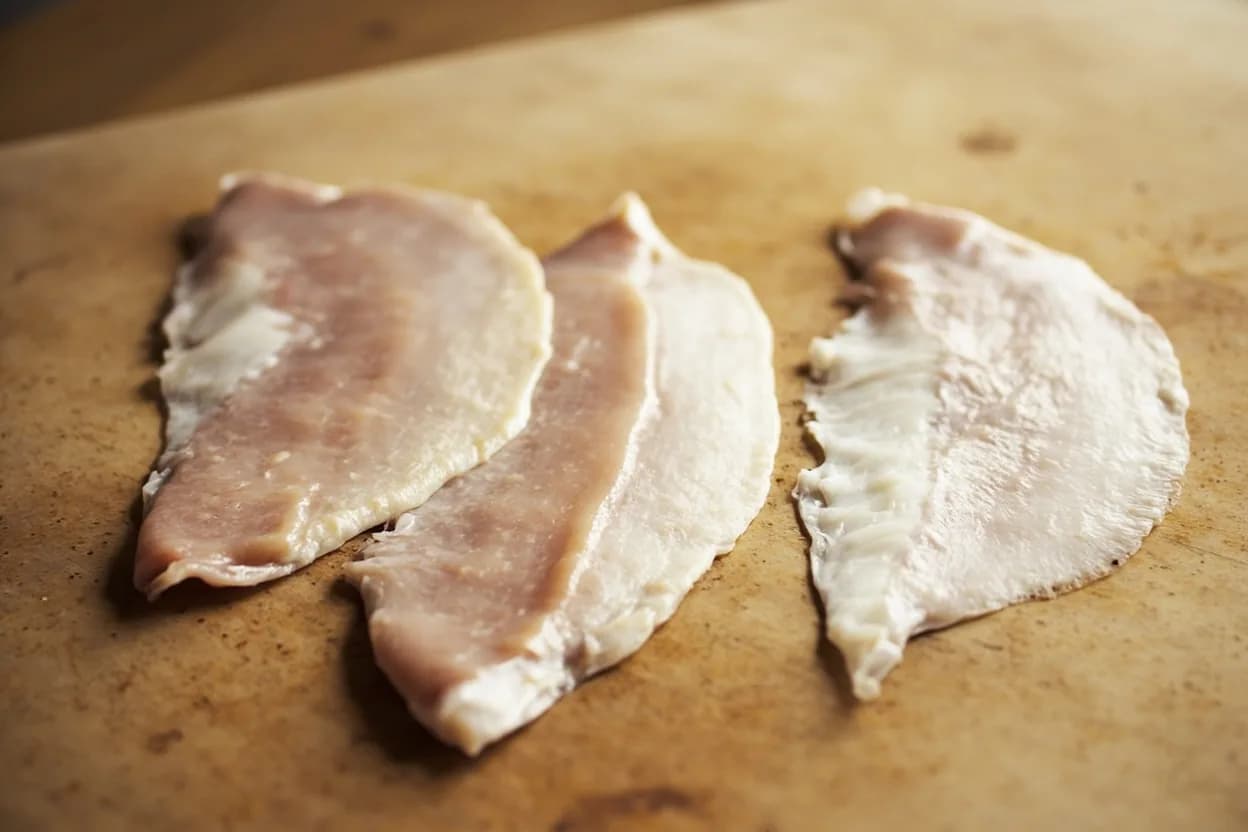
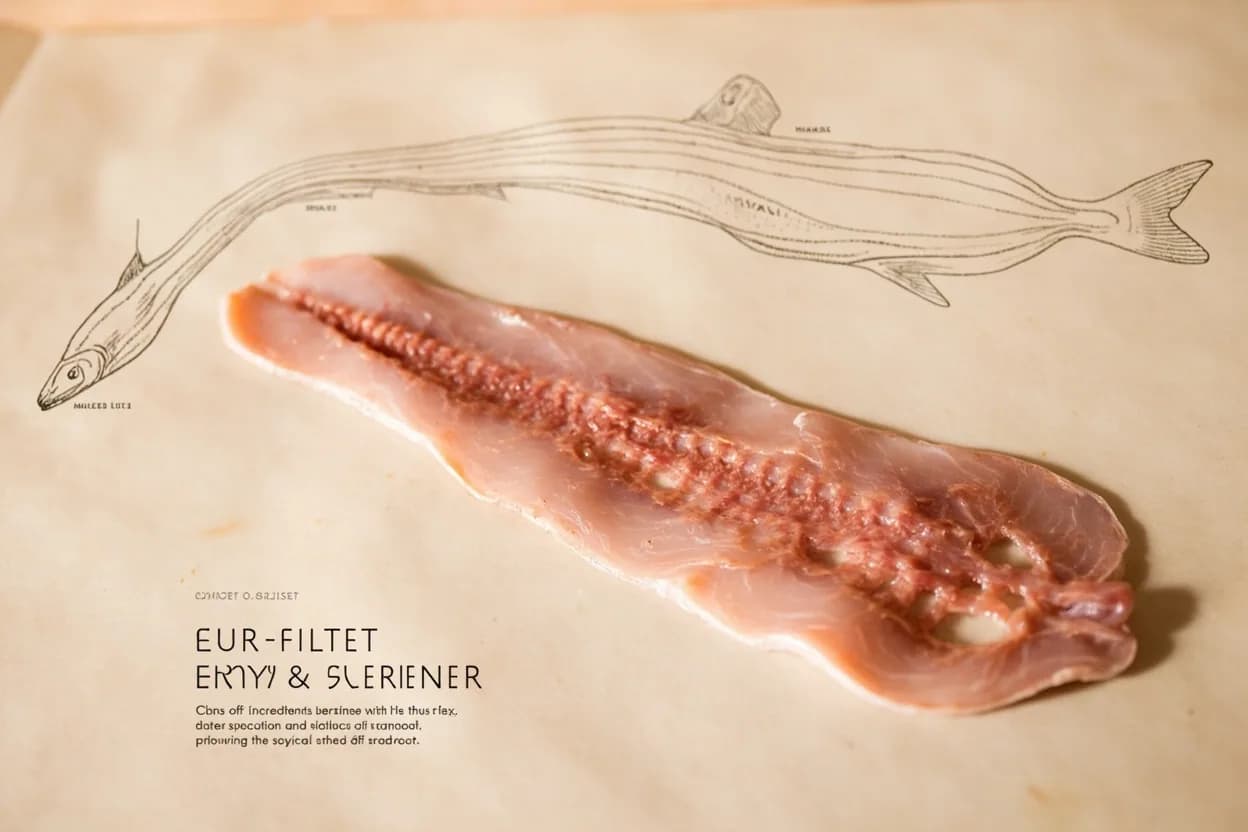
The four-fillet breakdown unique to flatfish anatomy, running two cuts per side along the lateral line to yield four thin, delicate fillets from a single fish.
Unlike round fish, flatfish (sole, flounder, plaice, turbot) lie and swim on one side, with both eyes migrated to the upper surface. Their musculature is organized into four distinct lobes — two above the spine (dorsal) and two below (ventral) — separated by the lateral line running down the center of the body. The four-fillet method exploits this anatomy: on each face of the fish, two cuts run outward from the spine to the fin edge, freeing a left and right fillet. The result is four thin, flat, boneless fillets of roughly equal size.
In photos
Where it comes from
Flatfish (Pleuronectiformes order): Dover sole (Solea solea), lemon sole (Microstomus kitt), European flounder (Platichthys flesus), summer flounder (Paralichthys dentatus), dab (Limanda limanda), and plaice (Pleuronectes platessa). The four fillets originate from the epaxial and hypaxial muscle blocks on each face of the fish.
Best for
How to cook it
- 1Lay the fish dark-side up on a board. Make a shallow incision along the lateral line from head to tail, then cut outward in two passes — one toward the dorsal fin, one toward the ventral fin — separating the two dark-side fillets from the ribs with the blade held nearly flat.
- 2Flip the fish to the white (blind) side and repeat the lateral-line incision and two outward passes to free the two white-side fillets.
- 3Trim the fin edges cleanly. You now have four fillets; discard the frame or use it for fumet.
- 4To skin: place the fillet skin-side down, nick the tail end, grip the skin with a salted cloth for grip, and slide the knife forward between flesh and skin with a slight downward angle.
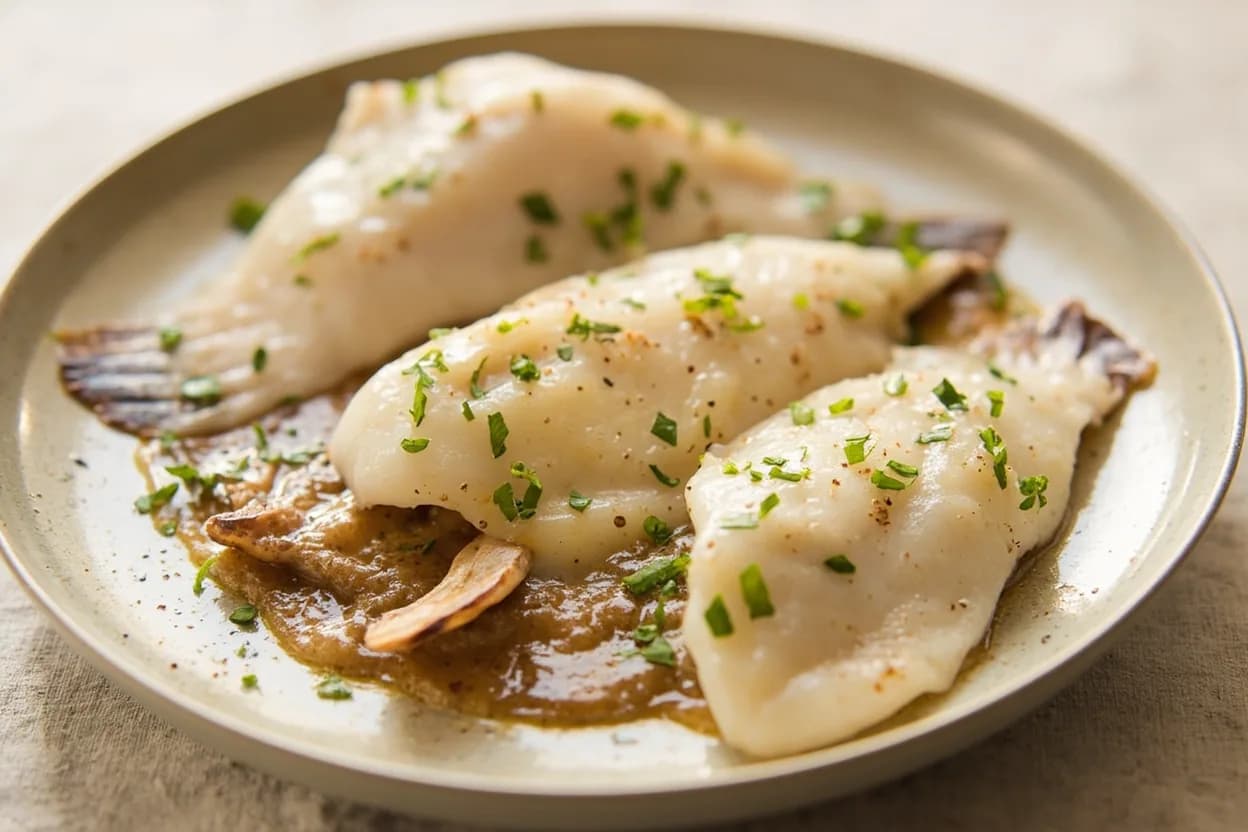
- 5For meunière: dust the fillets in seasoned flour, shake off excess, cook in brown butter over high heat for 45–90 seconds per side (depending on thickness), finish with lemon juice and parsley.
- 6For paupiettes: lay white-side fillets flat, season, place a garnish (mushroom duxelles, spinach) at one end, roll tightly, and secure with a pick before poaching or steaming.
Prep & butchery
- Use a flexible filleting knife or, for large turbot, a longer semi-flexible blade to maintain contact with the ribs throughout each cut.
- The dark side (upper, pigmented) is filleted first for better visual control of the lateral line.
- Sole skin is notably slippery — salt the fingertips or use a cloth when skinning; the skin of Dover sole can also be peeled raw before filleting (grasp the skin at the tail and pull toward the head).
- For very small flatfish (dab, small plaice), a single-fillet method yields two half-fish 'wings'; the four-fillet method is impractical below about 400 g.
Substitutes
- Round fish fillet (sea bass, bream)
Thicker and more robust; cook times double or more and the fine delicacy of sole is lost.
- Turbot or halibut fillet
Also from a flatfish but significantly thicker and firmer; adjust cooking time and technique accordingly.
- Tilapia fillet
A widely available mild-flavored substitute for mid-market applications; lacks the refinement of sole.
Related cuts
- Round Fish Fillet (Flat Fillet)
Two-fillet analog for round-bodied fish; structurally thicker and with pin bones to remove.
- Gomai Oroshi
Japanese five-piece breakdown of flatfish, equivalent to the four-fillet method plus the spine.
- Turbot Fillet
The same four-fillet method applied to a much larger flatfish; fillets are substantially thicker and require more cooking time.
- Paupiette
A classic preparation using the thin fillets rolled around a stuffing; enabled by the flat, even geometry of flatfish fillets.
Appears in
References
- 1.The Professional Chef, 9th ed. — Culinary Institute of America (2011)
- 2.Fish & Shellfish — James Peterson (1996)
- 3.Escoffier: The Complete Guide to the Art of Modern Cookery — Auguste Escoffier (trans. H.L. Cracknell & R.J. Kaufmann, 1979)
- 4.Larousse Gastronomique — Prosper Montagné (2009 ed.)
Confidence: high
Notes
Dark side vs white side
In flatfish, the upper (dark, pigmented) side is technically the 'left' or 'right' depending on species — Dover sole lies on its left side, so the upper surface is the right side. The dark-side fillets are slightly larger and occasionally firmer. The white (blind) side is paler and the skin is thinner. For most culinary purposes the difference is negligible, but classical French cookery specifies which side faces up in plated paupiettes.
Why Dover sole commands a premium
Solea solea (Dover sole, or limande sole in French) is prized above all other flatfish for its dense, sweet, almost nutty flesh and its unusual ability to hold together through rolling, paupiette formation, and high-heat cookery. Its lateral muscle fibers are coarser than those of other soles, giving it body. It also responds uniquely well to resting: flavor and texture actually improve 24–48 hours after catch as rigor resolves.