Fish — Fabrication & Breakdown
Fish Suprême
Also: supreme of fish, suprême de poisson, bias-cut fish portion, thick fish fillet portion
A thick, boneless, skin-on portion cut on the bias from a large fish fillet, producing a wedge of even depth that cooks uniformly and presents elegantly.
A suprême is the classic French restaurant portion cut from a large skinned or skin-on fillet. The knife is angled at 30–45° to the fillet and drawn in a single clean stroke, producing a thick, wedge-shaped portion with a broad face and even cross-section. The diagonal cut increases surface area for searing, ensures even heat penetration into the thickest part, and yields a visually distinctive presentation.
In photos
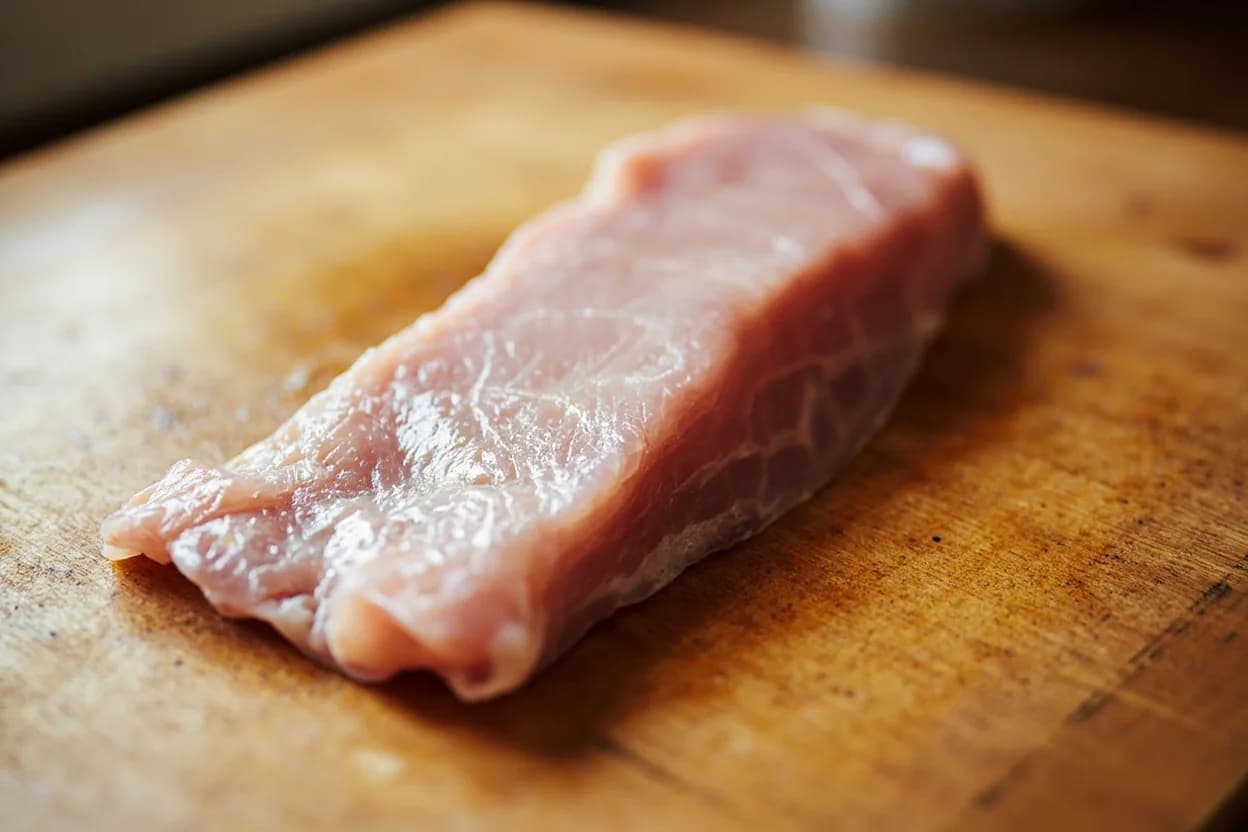
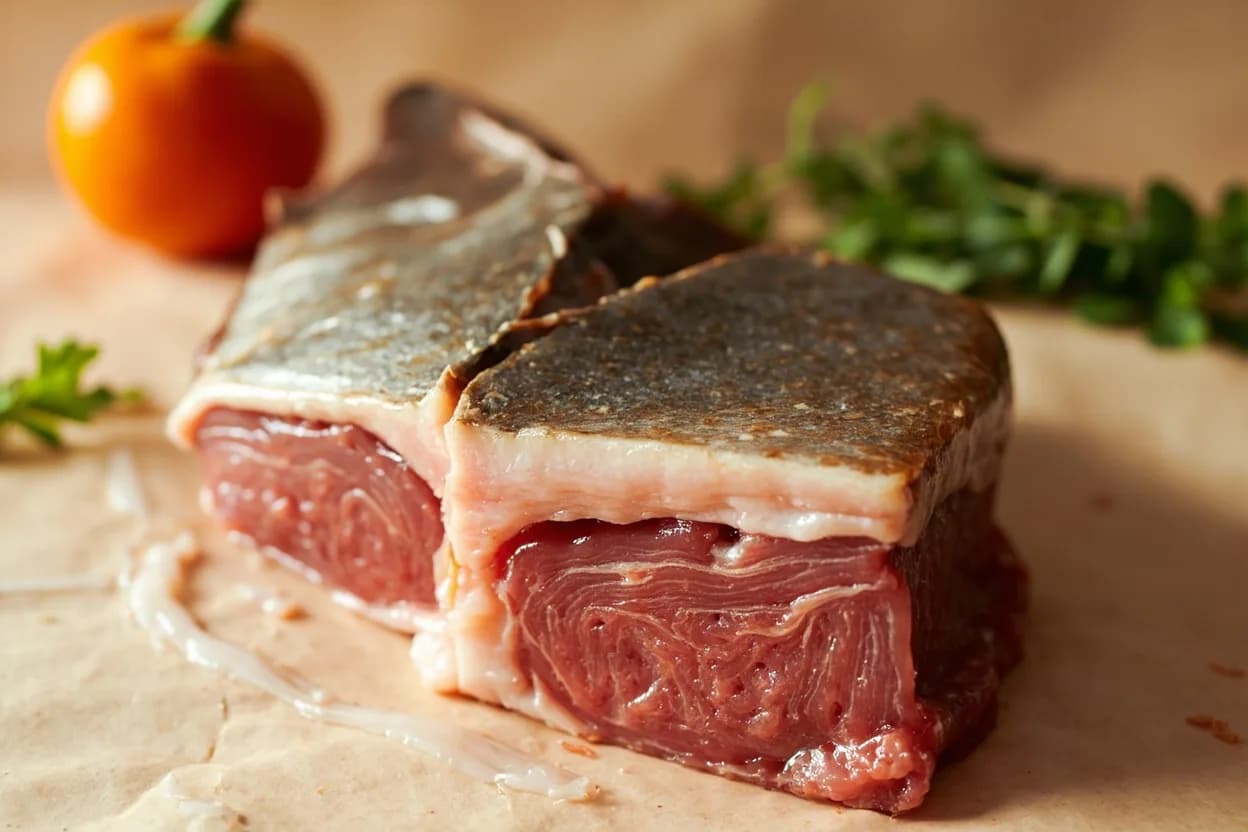
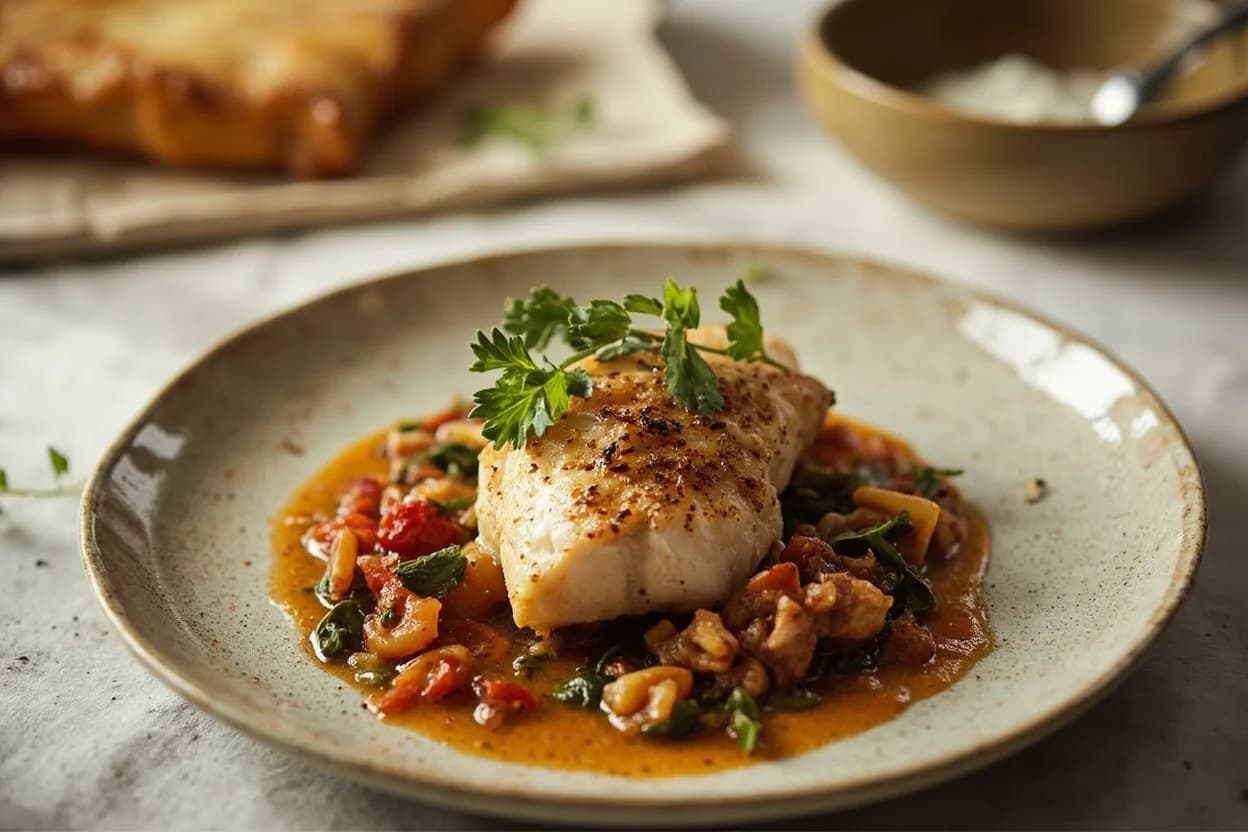
Where it comes from
Cut from the upper, thickest portion of a large round-fish fillet — salmon, halibut, turbot, sea bass, or cod. The tail taper is typically excluded or used for other preparations. Each fillet of a large fish (3 kg+) yields 4–6 suprêmes of 150–200 g each.
Best for
How to cook it
- 1Pat the suprême thoroughly dry on both sides — surface moisture is the enemy of crispy skin and proper Maillard browning.
- 2Score the skin lightly (2–3 shallow diagonal cuts) to prevent curling during searing.
- 3Heat a heavy (cast iron or stainless) pan until very hot; add oil with high smoke point. Place suprême skin-side down with gentle pressure for the first 30 seconds to maintain full contact.
- 4Cook 70–80% through on the skin side (flesh will turn opaque from the bottom up) before flipping briefly — 30–60 seconds on the flesh side is usually sufficient for 180 g portions.
- 5For poaching, lower suprêmes into barely simmering liquid (70–80°C); overcooking is instant and irreversible. Target internal temp 52°C (125°F) for salmon, 58°C (135°F) for halibut.
- 6Rest 1–2 minutes before plating; carry-over is significant in thick cuts.
Prep & butchery
- Start with a clean, pin-bone-free fillet; use tweezers or needle-nose pliers to remove any remaining bones before portioning.
- Lay fillet skin-side down; angle your knife at 30–45° away from vertical (toward the tail) and cut with one clean drawing motion — do not saw.
- Aim for consistent thickness (3–4 cm at the thickest point); mark the fillet with the back of the knife before cutting if portioning many covers.
- Trim any grey bloodline from salmon suprêmes for cleaner flavor in fine-dining applications.
- Portion immediately before service or refrigerate uncovered on a wire rack to keep skin dry.
Substitutes
- Pavé (fish)
Square-cut thick boneless portion from same fish; similar cooking methods but flat faces rather than bias-cut wedge; less classical presentation.
- Darnes
Bone-in cross-cut steak — shares the thick-portion cooking logic but requires different plating and guest experience.
- Standard fillet portion
Straight-cut fillet lacks the angled face and tends to taper, producing uneven cooking; acceptable but less elegant.
Related cuts
- Pavé (fish)
The square alternative — same thick boneless portioning logic, French brigade standard.
- Darnes
Bone-in round-fish cross-cut; the suprême's bone-in counterpart for certain presentations.
The French classification system that contextualizes the suprême as one of four canonical portion types.
Appears in
References
- 1.Auguste Escoffier, 'Le Guide Culinaire,' Flammarion, 1903 (suprême as brigade portion cut)
- 2.Jacques Pépin, 'La Technique,' Times Books, 1976 — fish fabrication chapter
- 3.The Culinary Institute of America, 'The Professional Chef,' 9th ed., Wiley, 2011 — fabrication standards
- 4.Heston Blumenthal, 'The Fat Duck Cookbook,' Bloomsbury, 2008 — fish cookery science
Confidence: high
Notes
Why bias-cut?
The angled cut serves two purposes: it maximizes surface area for the Maillard reaction (more brownable face) and it produces a uniform thickness even when cut from a fillet that naturally tapers. A straight-across cut from the same fillet would yield a thicker piece at the backbone end and a thinner piece at the belly — both would cook unevenly.
The skin question
In French classical service, suprêmes are sometimes presented skinless with the skin crisped separately as a garnish. In contemporary cooking, skin-on and crisped in the pan is dominant. The skin acts as a natural shield, protecting the delicate flesh from direct searing heat while itself caramelizing and crisping.