Fish — Fabrication & Breakdown
Fish Spine & Collar (Kama) Breakdown
Also: kama, fish collar, fish kama, pectoral collar, fish neck, kama-yaki cut, fish cheek
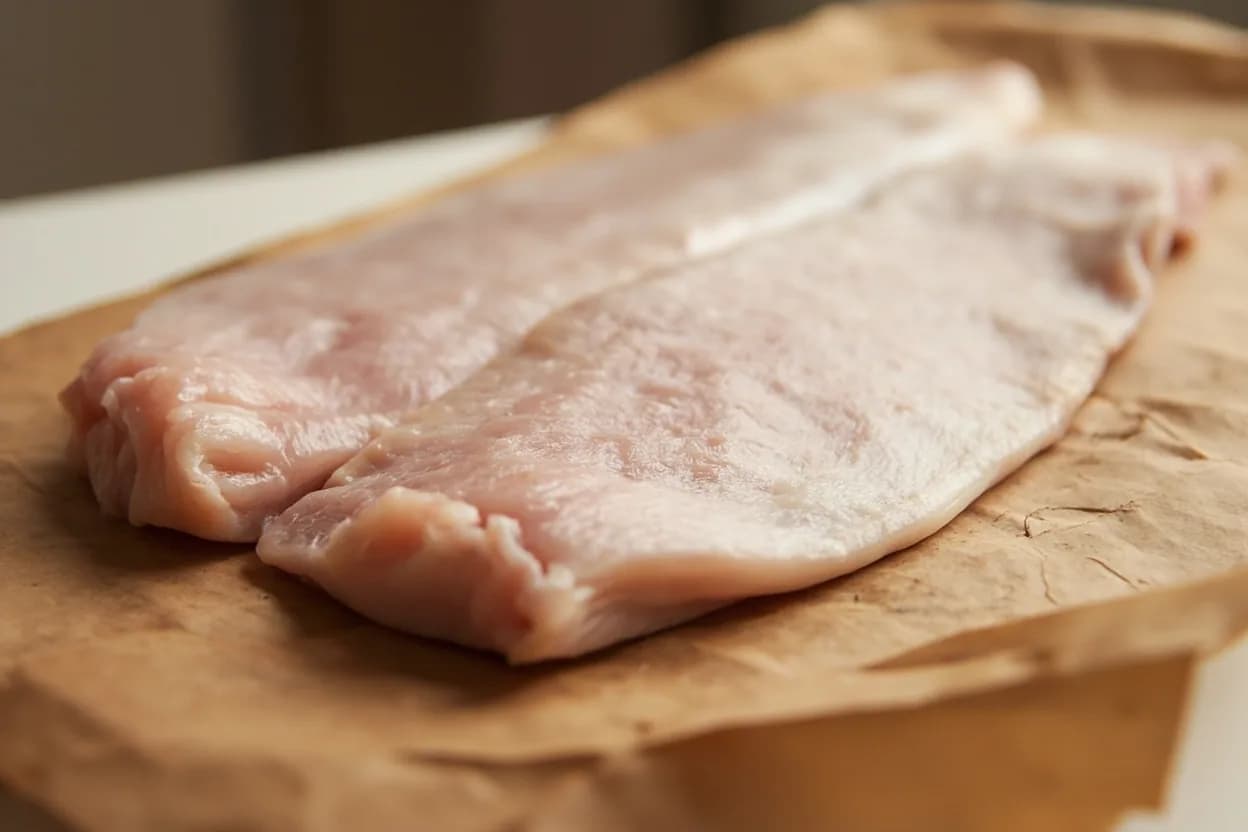
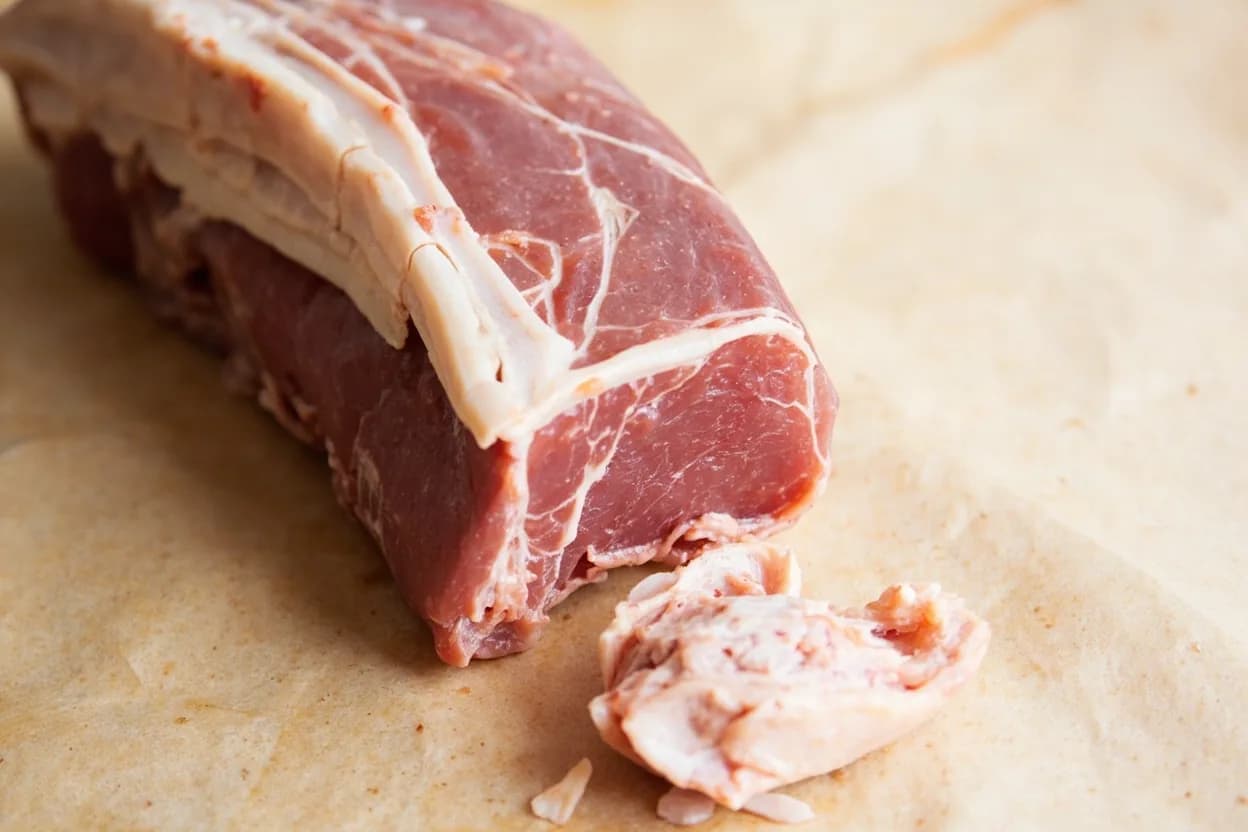
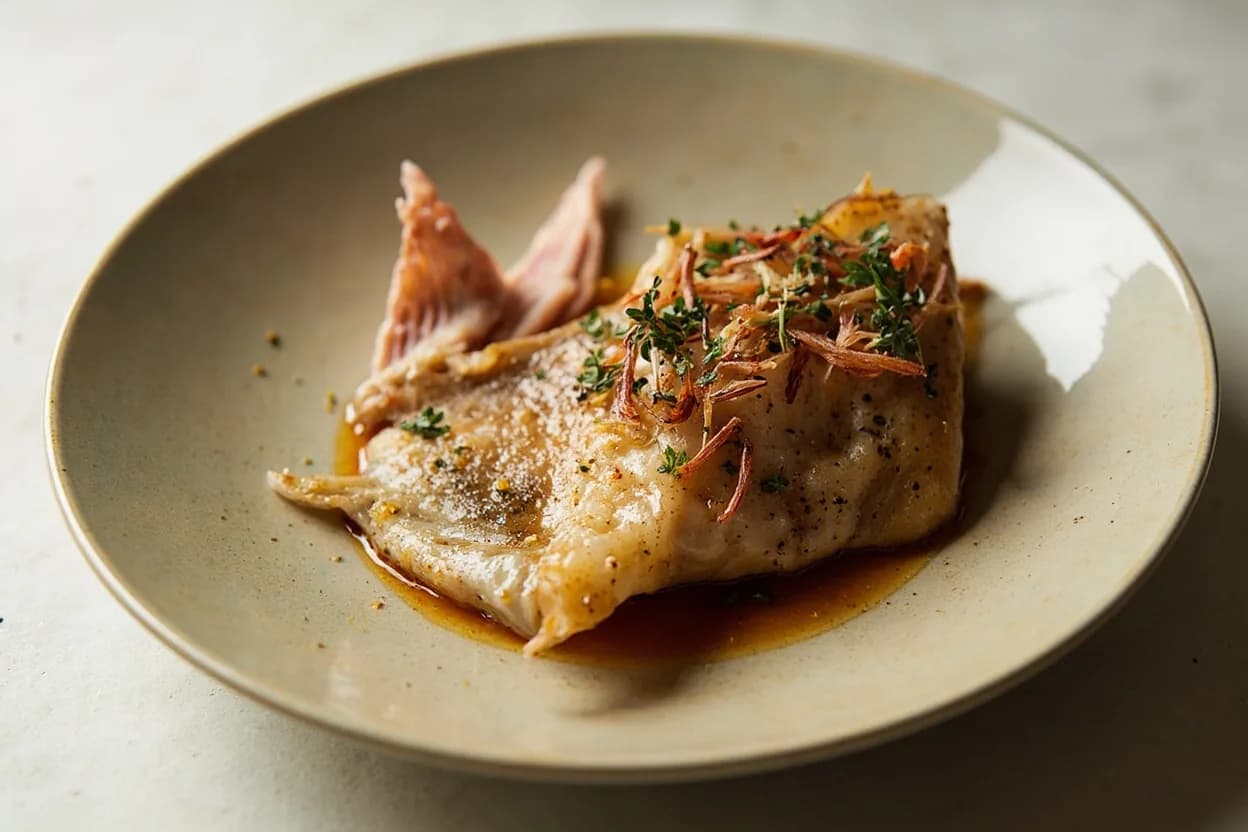
The pectoral collar of a large fish — the collagen-rich, fat-marbled section behind the gills — separated cleanly from the shoulder for grilling whole.
The kama (カマ) is the pectoral collar of a large fish: the triangular section comprising the pectoral fin, its surrounding musculature, the shoulder girdle bones, and a thick band of richly marbled flesh that abuts the cheek and the upper loin. In Japanese cuisine, kama-yaki — the grilled collar — is one of the most prized preparations for large fish such as buri (yellowtail), bluefin tuna, salmon, amberjack, and snapper. The collar is removed first during fabrication and treated as its own serving piece rather than as scrap. It is the fish butcher's equivalent of the pork collar: dense, self-basting, and packed with connective tissue that melts into gelatin under heat.
In photos
Where it comes from
Sits immediately behind the gill plate (operculum), from the cleithrum (shoulder blade) to the pectoral fin root, on both sides of the fish. The collar is bounded dorsally by the upper loin, ventrally by the belly, and medially by the spine. Large fish (2 kg and above) yield a collar worth cooking whole; smaller fish yield collars that are best combined for stock.
Best for
How to cook it
- 1Place the fish on a stable board, head toward you. Identify the gill plate edge; the collar begins just behind it.
- 2Using a heavy deba knife or a stiff boning knife, make a diagonal cut from just behind the gill plate downward toward the breast, following the natural line of the pectoral fin socket. The angle is approximately 45° from horizontal on a large fish.
- 3Cut through the shoulder cartilage and any connecting tissue. The collar should come free in one piece with the pectoral fin still attached. On large fish (buri, salmon over 3 kg), a single decisive chopping stroke through the bone is better than sawing.
- 4Score the skin of the collar in a crosshatch pattern — 1 cm diamond cuts — to allow fat to render and prevent curling during cooking.
- 5For kama-yaki: salt generously (1% by weight) and let rest 20–30 minutes to draw surface moisture. Grill over high charcoal or under a broiler, skin-side up first, until the skin is golden and lacquered (8–10 min), then flip to caramelise the flesh side (4–5 min). Serve immediately with grated daikon and ponzu.
- 6To locate the cheek: with the collar cooked, the cheek muscle is the small, plump disc of flesh visible inside the cheek cavity just below the eye socket. Use a teaspoon or fingers to pop it free.
Prep & butchery
- A deba knife is the correct tool for collar removal on Japanese fish; its weight and single bevel handle both the scoring cut and the bone chop
- Score the skin before cooking — failure to score causes violent curling under heat as the skin contracts unevenly
- Salting 20–30 minutes ahead firms the surface and intensifies flavour; longer dry-brining (overnight, uncovered in the fridge) produces even better skin crispness
- For stock, blanch collars first in boiling water and rinse before simmering — this removes blood and impurities that would cloud and bitter the stock
- Cheek meat can be removed raw with a small flexible knife if only the cheek is wanted; this is common in upscale butchery where cheeks are sold separately
Substitutes
- Whole fish head, bisected
Smaller fish yield more modest collars; halve the head and roast — the cheek and collar meat are still present, just less dramatic
- Pork neck (collar)
Conceptual analogue only — similar self-basting collagen-rich properties in a mammalian context; no fish substitute function
- Salmon collar
One of the most accessible kama cuts in Western markets; same grilling technique, approximately 15–20 min under a broiler
Related cuts
Buri kama is the most iconic kama in Japanese cuisine; the collar removal is the first step of the buri breakdown
Salmon collar removal follows the same anatomical line as described here
Bluefin tuna kama is a separate highly prized cut from the three primal zones
Appears in
References
- 1.The Japanese Kitchen — Hiroko Shimbo (Harvard Common Press, 2000)
- 2.Fish & Shellfish — James Peterson (William Morrow, 1996)
- 3.Japanese Farm Food — Nancy Singleton Hachisu (Andrews McMeel, 2012)
- 4.The Professional Chef, 9th ed. — Culinary Institute of America (Wiley, 2011)
Confidence: high
Notes
Why the collar outperforms the fillet
The pectoral muscles that make up the collar are slow-twitch, working muscles — much like a chicken thigh versus its breast. They contain more connective tissue, more intramuscular fat, and more myoglobin than the dorsal loin. Under the sustained heat of grilling, all of that collagen converts to gelatin, the fat renders, and the result is a piece of fish that is simultaneously crispy on the skin, juicy in the flesh, and gelatinous near the bone. A perfectly grilled kama from a fat winter yellowtail is, by many accounts, the single most pleasurable way to eat a fish.
Collar availability in Western markets
Fish collars are chronically underutilised in Western fish markets, where the pectoral section is typically discarded or sold for pennies to stock-makers. Salmon collars are the most accessible — ask at any fishmonger that breaks down whole fish. Yellowtail (hamachi) collars appear at Japanese grocery stores and Asian fish markets. Whole snapper and grouper collars are occasionally available from fishmongers who offer whole-fish butchery. The price-to-flavour ratio is exceptional.