Fish — Fabrication & Breakdown
Maguro (Tuna) Primal Sections — Otoro, Chutoro & Akami
Also: tuna primal breakdown, otoro, chutoro, akami, tuna belly, tuna loin sections, hon-maguro breakdown
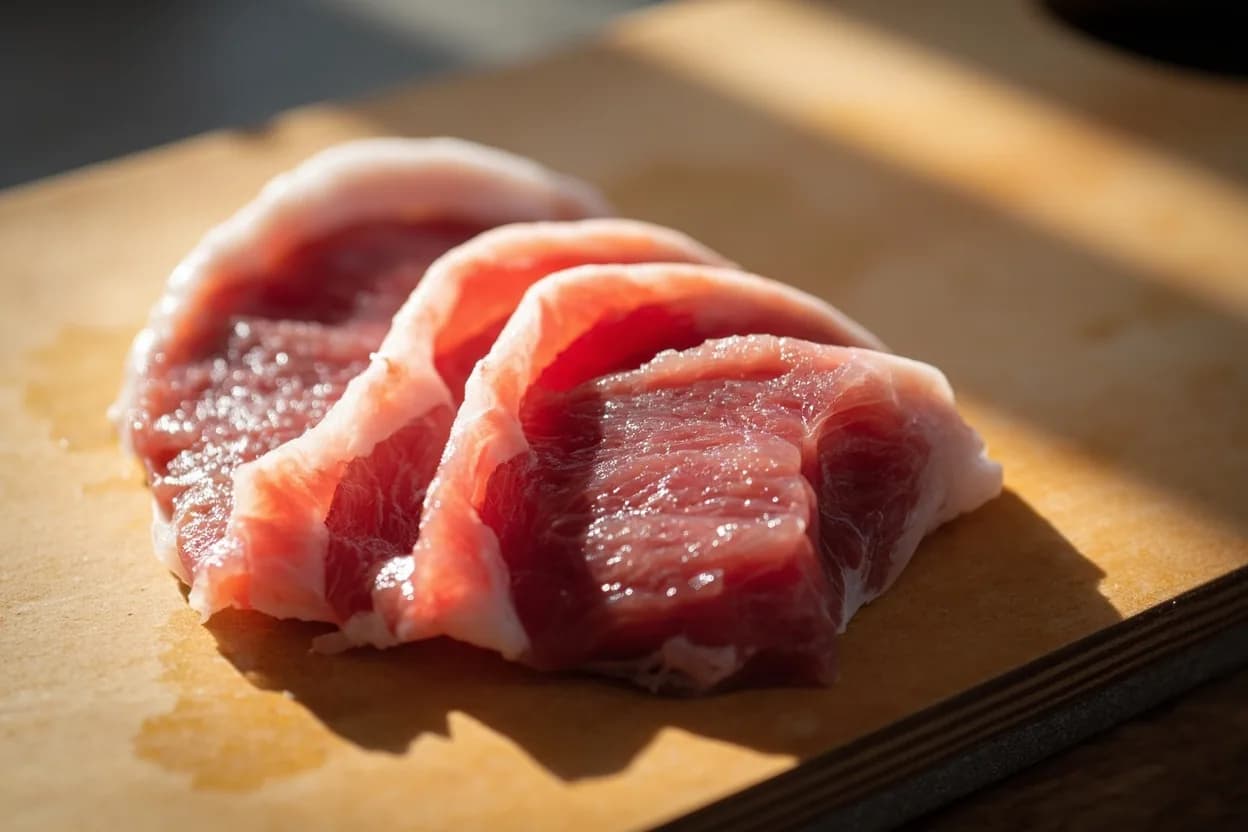
The three primal fat zones of bluefin tuna — ultra-fatty belly, mid-fatty belly, and lean loin — each with a distinct colour, flavour, and sashimi value.
Maguro (鮪) refers to tuna, and in Japanese cuisine the carcass of a bluefin (hon-maguro, Thunnus thynnus or T. orientalis) or yellowfin (kihada-maguro) is divided anatomically into three primary fat zones: otoro (大トロ, the richest ventral belly), chutoro (中トロ, the mid-fatty flank and upper belly), and akami (赤身, the lean dorsal loin). Each zone is treated as its own sashimi grade and commands a different price. This tripartite classification governs how a whole tuna is valued, broken down, and presented in sushi culture.
In photos
Where it comes from
Bluefin tuna (Thunnus thynnus, Atlantic; T. orientalis, Pacific); also applied to southern bluefin (T. maccoyii) and yellowfin (T. albacares). Otoro occupies the ventral belly from behind the pectoral fin to the anal fin; chutoro runs the mid-flank and the upper belly; akami is the large dorsal loin that flanks the spine on both sides.
Best for
How to cook it
- 1Receive the tuna loin or whole side at -60 °C (super-frozen) or freshly landed near 0 °C; thaw slowly under refrigeration (24–48 h) — never in water.
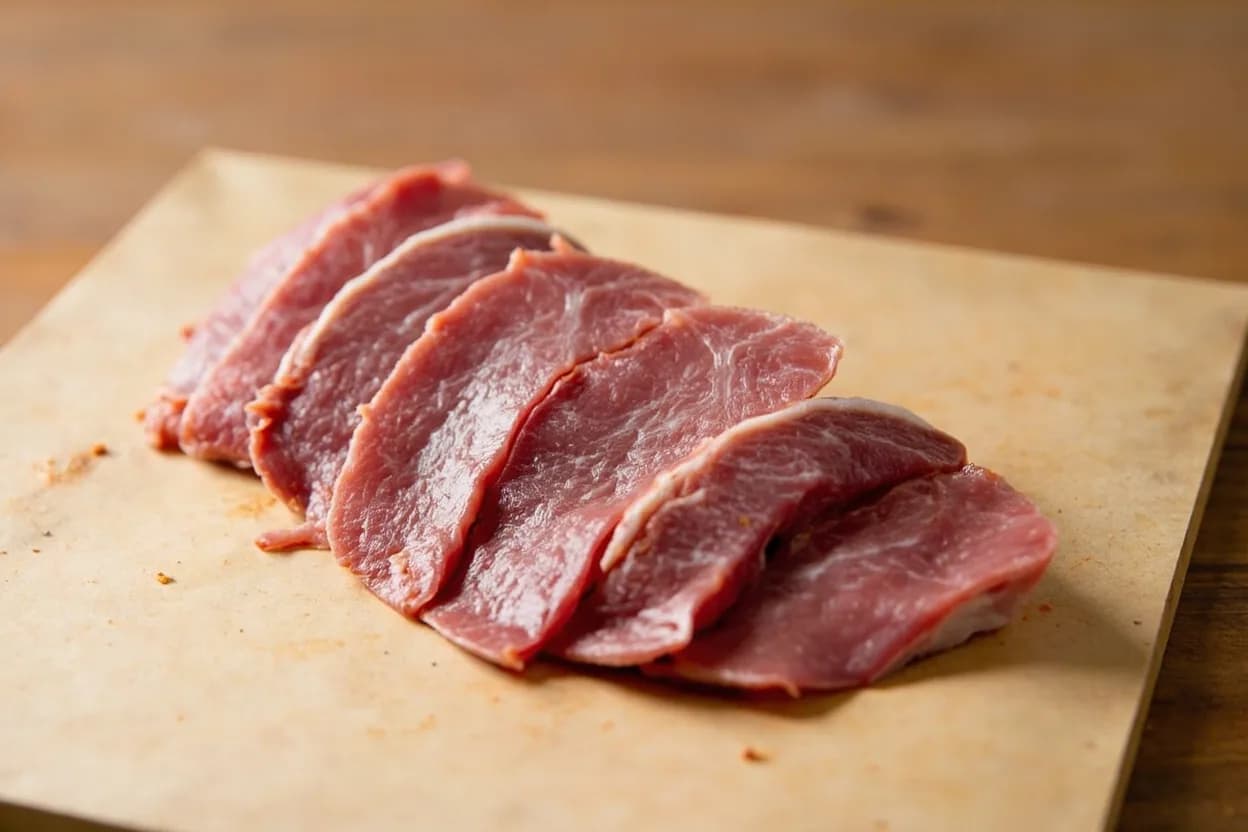
- 2Identify the three zones: otoro sits along the ventral belly with the deepest white marbling; chutoro forms the transitional zone above and behind it; akami is the large dorsal muscle block, deep red and firm.
- 3Using a long, thin yanagi (sashimi knife) or a sujihiki, separate the zones by cutting along the visible fat lines that demarcate them anatomically.
- 4Block each zone into manageable pieces (saku) — rectangular blocks approximately 4 cm wide and 7–10 cm long — by slicing cleanly and decisively with the full blade.
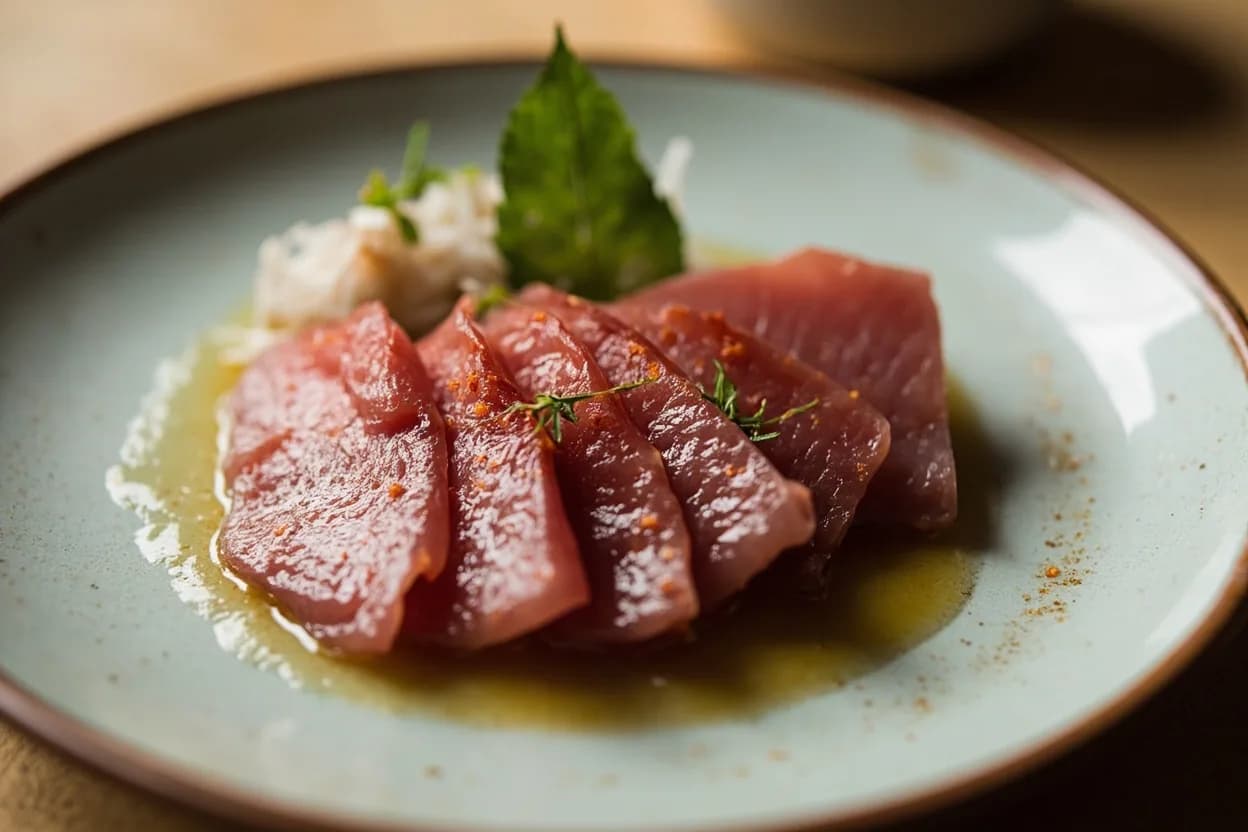
- 5For sashimi, slice each saku against the grain at 7–10 mm thickness for otoro and chutoro, 5–7 mm for akami; pull the blade fully rather than pressing to avoid compressing the fat.
- 6Keep cut surfaces covered and refrigerated; oxidation turns akami brown within minutes of exposure to air.
Prep & butchery
- Super-frozen bluefin must be thawed under refrigeration, not at room temperature; improper thawing causes drip loss and colour degradation
- A single-bevel yanagi knife gives the cleanest sashimi face; Western chef's knives are acceptable but produce more drag on fatty sections
- Wipe the blade with a wet cloth between each slice — fat from otoro smears onto subsequent slices and dulls the cut
- Trim any dark bloodline (red-brown sinew near the spine) from akami before serving; it is bitter and intensely fishy
- Presentation convention: otoro placed last on a sashimi tray (to be eaten first as the crown jewel, per tradition)
Substitutes
- Yellowfin tuna (kihada-maguro)
Leaner than bluefin with less otoro; chutoro and akami sections are usable but less fatty
- Bigeye tuna (mebachi-maguro)
Often used as a chutoro substitute — higher fat than yellowfin, close to bluefin chutoro in richness
- Salmon belly (harasu)
Comparable fat content to otoro; used as a budget substitute in lower-grade sushi, though flavour profile is distinct
Related cuts
Parallel Japanese primal zone logic applied to yellowtail; hamachi toro is analogous to chutoro
Western equivalent breakdown philosophy; salmon belly parallels otoro in richness
The collar (kama) of bluefin tuna is a separate prized section outside the three primal zones
Appears in
References
- 1.The Japanese Kitchen — Hiroko Shimbo (Harvard Common Press, 2000)
- 2.Sushi: The Beginner's Guide — Aya Imatani (Barron's, 2009)
- 3.Nobu: The Cookbook — Nobu Matsuhisa (Kodansha International, 2001)
- 4.On Food and Cooking — Harold McGee (Scribner, 2004)
Confidence: high
Notes
Anatomical precision
Otoro (大トロ) strictly refers to the most ventral, fattiest section of the belly — the portion closest to the skin and fins where fat accumulates as thermal insulation. Chutoro (中トロ) encompasses the upper belly and the mid-flank where fat content is intermediate. Akami (赤身) is the dark, myoglobin-rich fast-twitch muscle of the dorsal loin that powers the tuna's long oceanic migrations. The three zones are anatomically fixed, not a matter of butcher choice.
Sustainability note
Atlantic bluefin tuna (Thunnus thynnus) is critically overfished; Pacific bluefin (T. orientalis) is also under pressure. Responsible sourcing means tracing to Marine Stewardship Council-certified fisheries, farmed ranched bluefin where transparency exists, or substituting with bigeye or yellowfin for akami applications. Offering otoro from uncertified sources is an ethical and increasingly a regulatory risk.