Knife Cuts — Classical French
Mandoline — Paper-Thin Slice Technique
Also: mandoline, mandolin, benriner, Japanese mandoline, French mandoline, paper-thin slice, waffle cut, crinkle cut
A fixed-blade slicer that produces paper-thin to 3 mm vegetable and fruit cuts with perfect uniformity — impossible to achieve with a knife alone.
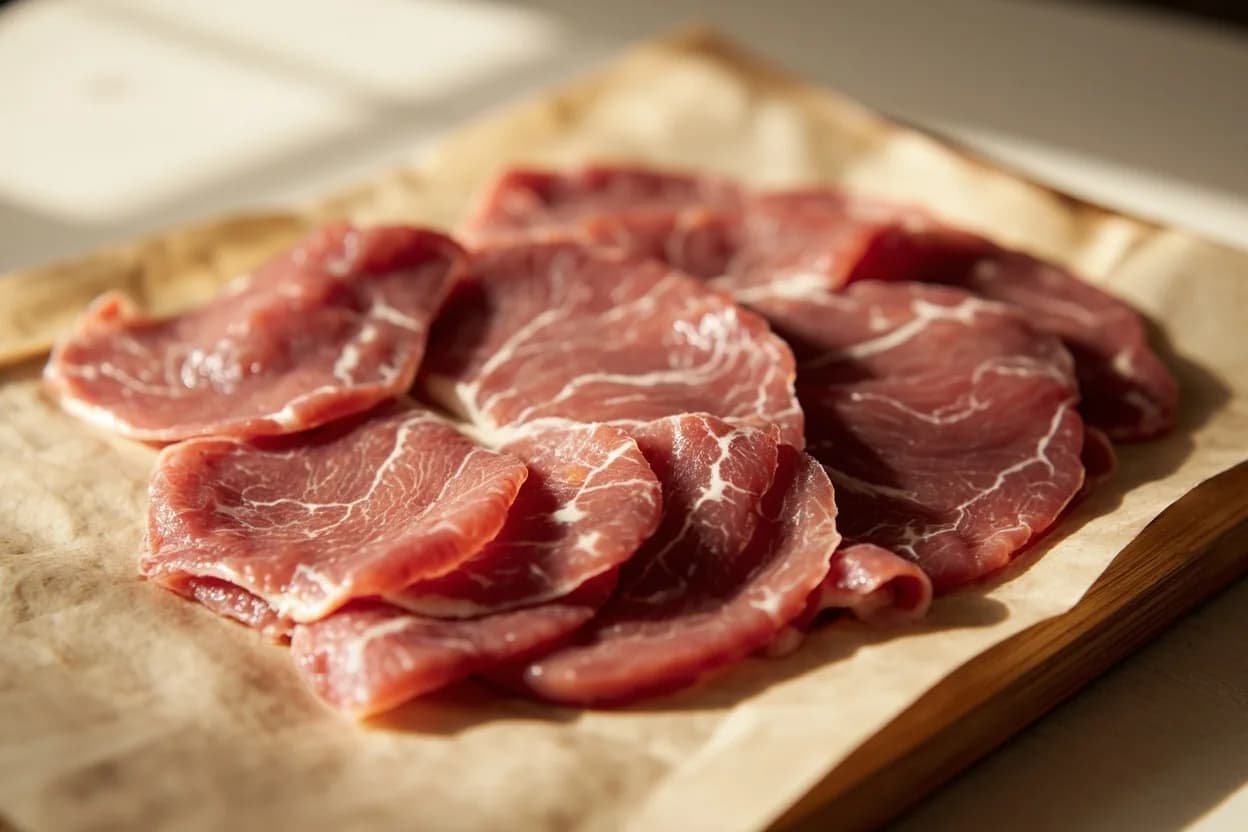
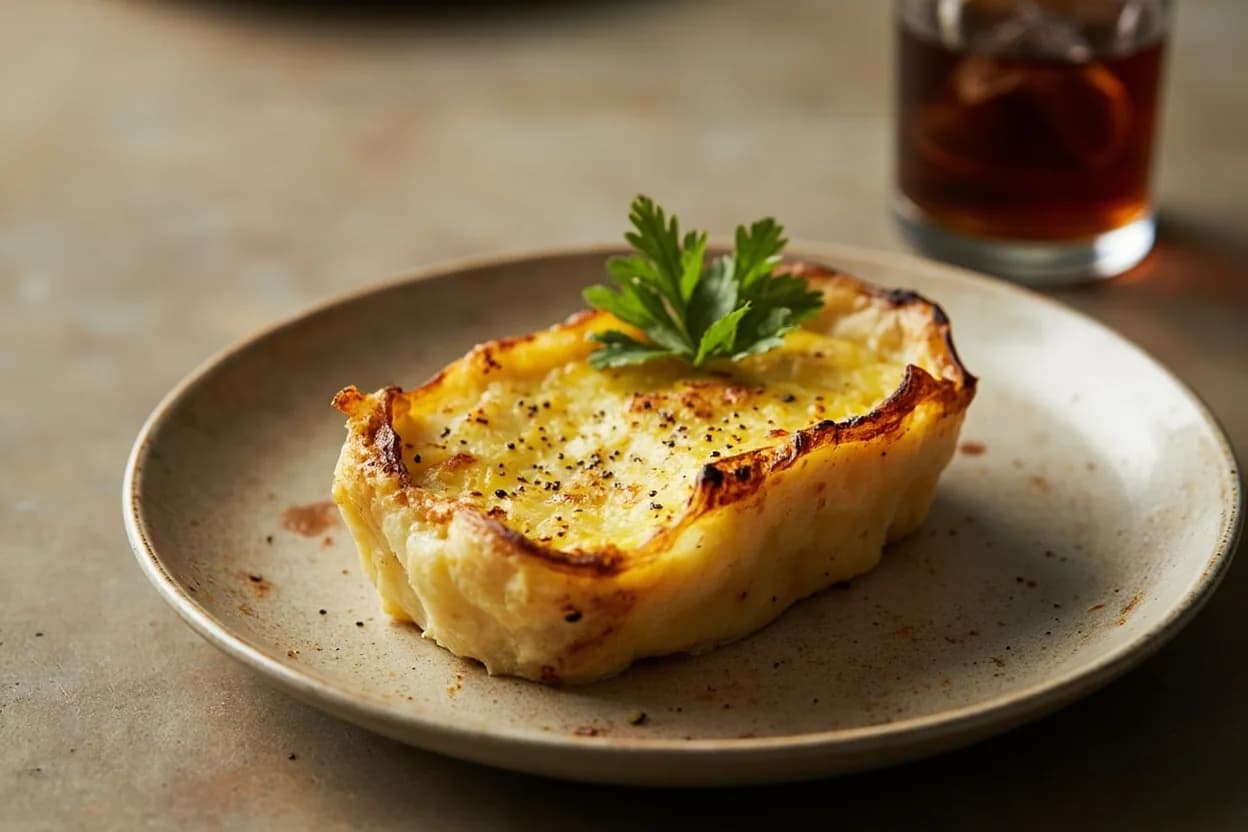
A mandoline is a flat slicer with one or more fixed, extremely sharp blades set at an angle in a rigid frame. The ingredient is pressed against the frame and drawn across (or down over) the blade in a smooth stroke, producing slices of exactly the blade gap's thickness. Modern models offer straight blades for plain slices, V-shaped blades for precision, and optional julienne/waffle/crinkle inserts. Paper-thin slices (0.5–1 mm) are the mandoline's signature capability — below the threshold achievable consistently by hand — and are used for potato gratins, vegetable carpaccios, pickled vegetables, and raw salads where translucency is a textural goal.
In photos
Where it comes from
Tool-based technique applicable to firm to semi-firm vegetables, tubers, fruits, and aged cheeses: potato, fennel, celeriac, turnip, beet, cucumber, apple, radish, kohlrabi, zucchini, citrus (for wheels), Parmigiano-Reggiano.
Best for
How to cook it
- 1Fit the mandoline with the appropriate blade insert and set the gap before turning on any guard mechanisms — do this away from the blade edge.
- 2ALWAYS use the hand guard / food holder. Bare-hand contact with a mandoline blade moving at speed is the leading cause of serious kitchen injuries. If no guard is provided (older models), use a cut-resistant glove as a minimum.
- 3Square off the ingredient if necessary: trim round vegetables to create a flat base for stability during the first passes.
- 4Apply firm, even downward pressure on the food holder; use your full arm to make a consistent stroke — jerky or hesitant strokes produce uneven thickness.
- 5For paper-thin slices (0.5–1 mm): set the blade as close to closed as possible. The slice should be translucent and pliable; if it shatters, the vegetable is too dry or the setting is too thin for that ingredient.
- 6For waffle cuts: make one pass, rotate the ingredient exactly 90°, make the next pass — the two blade passes create the lattice. Repeat consistently on each new face of the ingredient.
- 7Immediately transfer sliced product to cold water (for potatoes and other starchy vegetables to prevent oxidation) or to a seasoned dressing (for salad applications).
Prep & butchery
- Clean the blade with a brush (not a cloth or sponge) — a saturated blade edge is an invisible trap for fingers during washing.
- Calibrate the thickness by making a test pass on a scrap piece and measuring with a ruler or placing against light; dial adjustments are rarely accurate to stated values.
- For short ingredients (radish, small beet), cut them to expose a flat side before the first mandoline pass — this gives the food holder a stable purchase.
- Stabilise the mandoline on a damp cloth or non-slip mat; a sliding board is dangerous.
- Keep a bowl of acidulated water (for pale vegetables prone to oxidation) or a dressing bowl next to the mandoline so slices move directly off the blade into liquid.
Substitutes
- Sharp chef's knife (thin slices)
Can approach 1–1.5 mm in skilled hands but lacks the uniformity of a mandoline — acceptable for small quantities
- Deli slicer / meat slicer
Achieves thinner and more consistent slices for large quantities but is bulky; used in high-volume kitchens for potato gratin prep
- Food processor with slicing disc
Produces uniform slices quickly but typically has a 3 mm minimum thickness and less precise control over thickness setting
Related cuts
The mandoline's julienne insert produces the classical 3 mm × 3 mm × 6 cm stick at speed and volume impossible by knife
Fine-ribbon cut for soft herbs and greens — NOT a mandoline application; hand knife or scissors are correct for delicate leaves
The mandoline's julienne insert at widest setting approximates bâtonnet — though hand-cut versions remain the classical approach
Appears in
References
- 1.Thomas Keller, Ad Hoc at Home (2009)
- 2.The Culinary Institute of America, The Professional Chef, 9th ed. (2011)
- 3.Heston Blumenthal, Heston Blumenthal at Home (2011)
Confidence: high
Notes
French mandoline vs. Japanese Benriner
The traditional French mandoline is a large, heavy stainless-steel frame with a flat blade and mechanical thickness adjuster — precise but slow to set up and difficult to clean. The Japanese Benriner (and its many imitators) uses a V-shaped blade that is sharper out of the box and easier to adjust, in a lighter plastic frame. Professional kitchens increasingly favour the Benriner or its high-end derivatives (OXO, de Buyer) for everyday use. The French model remains preferred for waffle and gaufrette work because its larger frame and blade system handle the ingredient rotation more precisely.
Safety culture
The mandoline generates more serious lacerations in professional kitchens than any other tool except perhaps a box grater. The danger is not the blade's sharpness but the mechanics: as the ingredient shrinks, the cook instinctively moves the bare fingertips closer to the blade, and a momentary hesitation or loss of grip collapses the hand directly into it. The rule in most professional kitchens is absolute: no mandoline pass without the food holder or cut-resistant glove, no exceptions, even for a single slice. Stopping to cut off a stub end with a knife is always faster than a trip to the emergency room.