Regional Meat Cuts
Maciza vs. Surtida (Carnitas Cuts)
Also: maciza, surtida, carne maciza, carnitas surtida, mixed carnitas
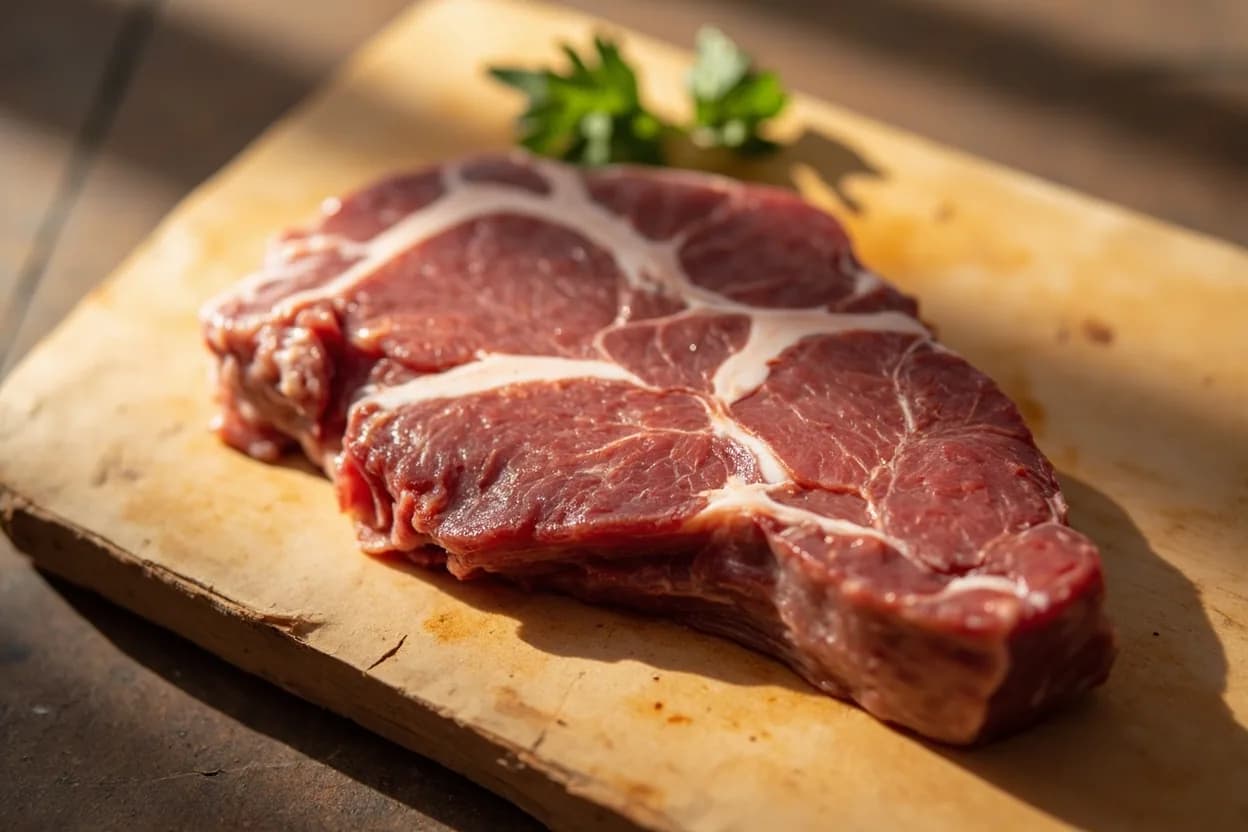
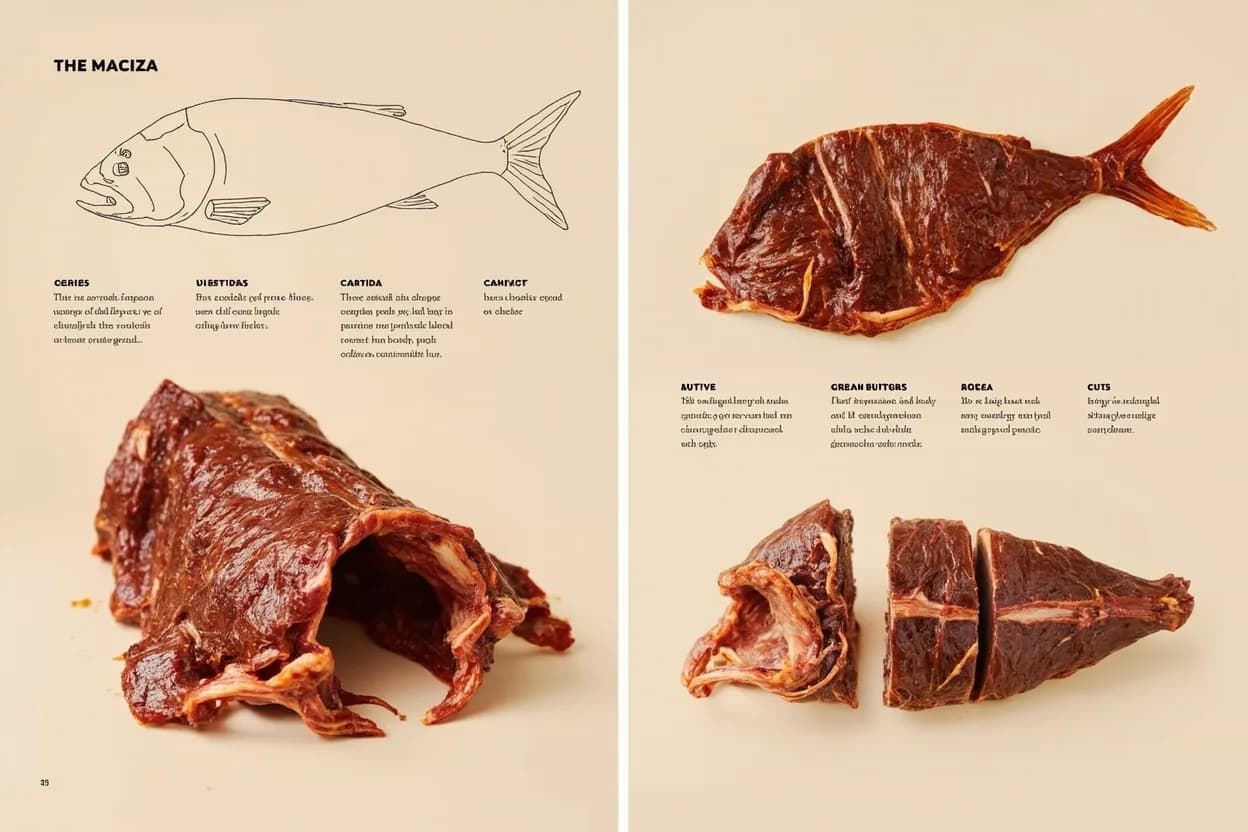
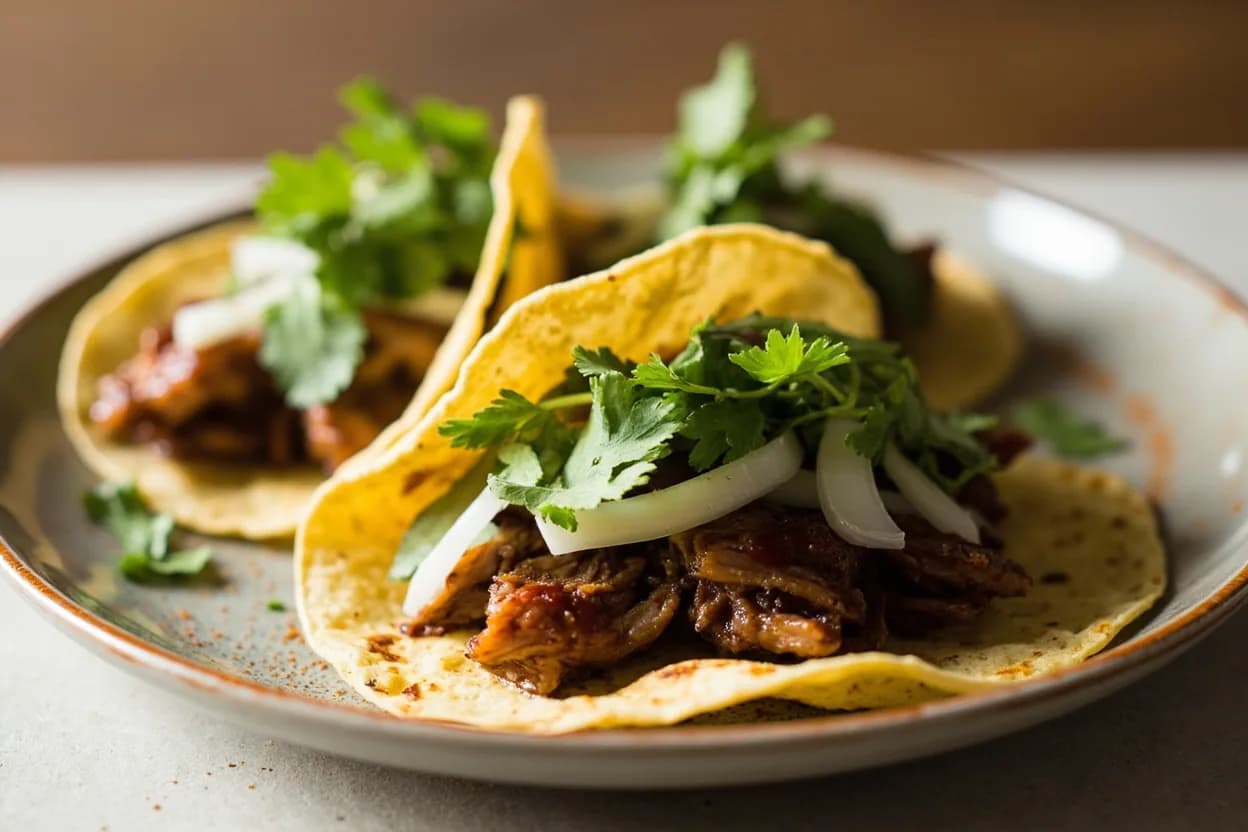
The two fundamental carnitas orders in Mexican butchery: maciza (solid, lean pork muscle) vs. surtida (a mixed 'assorted' portion of offal, fatty pieces, and trim), each with distinct textures and an irreducible place in the taquería canon.
In Mexican carnitas tradition, the entire pig is braised in lard or its own fat in a copper or steel cazo (cauldron), then portioned according to the customer's preference. Two fundamental categories define the menu: maciza (solid, lean muscle from the leg, shoulder, or loin) and surtida ('assorted'—a heterogeneous mix of fatty pork, skin scraps, organ meats, and rich trimmings). The two are not competing products but complementary philosophies: maciza offers clean, pull-apart lean meat for those who want texture without richness, while surtida delivers fat, collagen, skin, and occasional offal for those who want the full flavor of the cazo.
In photos
Where it comes from
Maciza: primarily pork leg (pierna), pork shoulder/butt (paleta or espadilla), and loin (lomo)—lean, solid muscle groups. Surtida: the mixed remainder of the pig including skin (cueritos), fatty belly/pork jowl (cachete), trachea (traquea), pork rind (chicharrón en salsa), kidney (riñón), liver (hígado), and the fat-rich buche (stomach lining) and bofe (lung). The exact composition of surtida varies by carnitas vendor—it is defined by 'whatever was cooked' rather than a fixed anatomical formula.
Best for
How to cook it
- 1Traditional carnitas: whole-pig parts are submerged in lard in a large copper cazo over an open flame and cooked at a low simmer (140–160°C oil temperature) for 3–4 hours until every part is tender.
- 2The cazo is then brought to a higher temperature briefly to crisp the exterior of some pieces—this creates the desired 'doradito' (golden-crisp) exterior on the maciza.
- 3Maciza pieces (leg, shoulder chunks) should reach internal tenderness with pull-apart fibers; test by pressing with tongs—the muscle should yield without resistance.
- 4Surtida pieces (fat, offal) are considered done when fat has rendered and skin has softened; some pieces like buche take the full cooking time while others (liver, lung) go in later to prevent overcooking.
- 5At service, the carnitas master chops all cooked pieces on a wooden board, intermixing the parts of surtida; maciza is served in recognizable chunks.
- 6Serve immediately—carnitas deteriorate rapidly and should never be reheated aggressively (gentle warm, not sizzle).
Prep & butchery
- For maciza: cut the pork leg or shoulder into 8–10 cm chunks; no need to remove all fat but trim excess hard exterior fat.
- For surtida components: clean and prep each organ or fatty part individually—stomach (buche) requires thorough scrubbing; skin must be scraped free of bristles.
- Season: traditionally only lard, salt, orange juice (or Coca-Cola in some traditions), and milk are added to the cazo. No dry rubs; the simplicity is the point.
- Submerge all cuts in enough lard to cover; the copper cazo is the traditional vessel, prized for even heat distribution and the faint mineral note it imparts.
Substitutes
- Slow-roasted pork shoulder (maciza substitute)
Oven-braised bone-in pork shoulder replicates maciza texture; lacks the lard-confit depth but is the standard home approach.
- Pork belly (surtida substitute)
Adds the essential rich-fatty element of surtida; add cooked pork skin (chicharrón) to complete the texture range.
- Pork shoulder + pork rinds (combined substitute)
The most practical home carnitas: shoulder for maciza, purchased chicharrón softened in the cooking liquid for surtida character.
Related cuts
- Buche (Pork Stomach)
The most sought-after surtida component; smooth-textured stomach wall with a rich, clean pork flavor.
- Cueritos (Pork Skin)
Soft cooked pork skin, a defining surtida texture; also served separately in vinegar as a taco topping.
- Pork Shoulder / Boston Butt
The primary maciza muscle; most home carnitas recipes use this cut exclusively.
- Carnitas (Cooking Method)
The lard-braise technique that transforms all these cuts; maciza and surtida are outputs of the same carnitas process.
Appears in
References
- 1.Authentic Mexican — Rick Bayless, William Morrow
- 2.Mexico: The Cookbook — Margarita Carrillo Arronte, Phaidon
- 3.My Mexico City Kitchen — Gabriela Cámara, Lorena Jones Books
Confidence: high
Notes
The philosophy of surtida
Surtida (from Spanish surtido, 'assorted' or 'supplied') embodies the Mexican culinary principle of zero-waste nose-to-tail cooking elevated to a delicacy. Rather than treating offal as the cheap fallback, Michoacán carnitas culture celebrates surtida as the expert's order—the version that requires the cook to have properly managed every part of the pig through the cazo. In Morelia and Quiroga (the carnitas capitals of Michoacán), the best taquerías are ranked partly by the quality of their surtida, particularly the buche.
Michoacán as the carnitas heartland
The state of Michoacán, particularly the Lago de Pátzcuaro region and the city of Quiroga, is the undisputed home of carnitas. The copper cazo tradition there dates to the colonial period when copper smelting was a regional industry. Quiroga is so associated with carnitas that the town's main plaza and surrounding streets are lined almost entirely with carnitas vendors—a destination worth noting for any serious student of Mexican regional food.
Ordering fluency
At a Mexican carnitas counter, 'maciza' gets you solid muscle; 'surtida' gets you the mix. But experienced customers often order by specific part: 'buche' (stomach), 'cuerito' (skin), 'cachete' (cheek), 'traquea' (trachea for its cartilaginous crunch), 'riñón' (kidney), or 'bofe' (lung). Asking for 'de todo' (everything) is the bravest and most rewarding order—a true cross-section of the cazo.