Fish — Fabrication & Breakdown
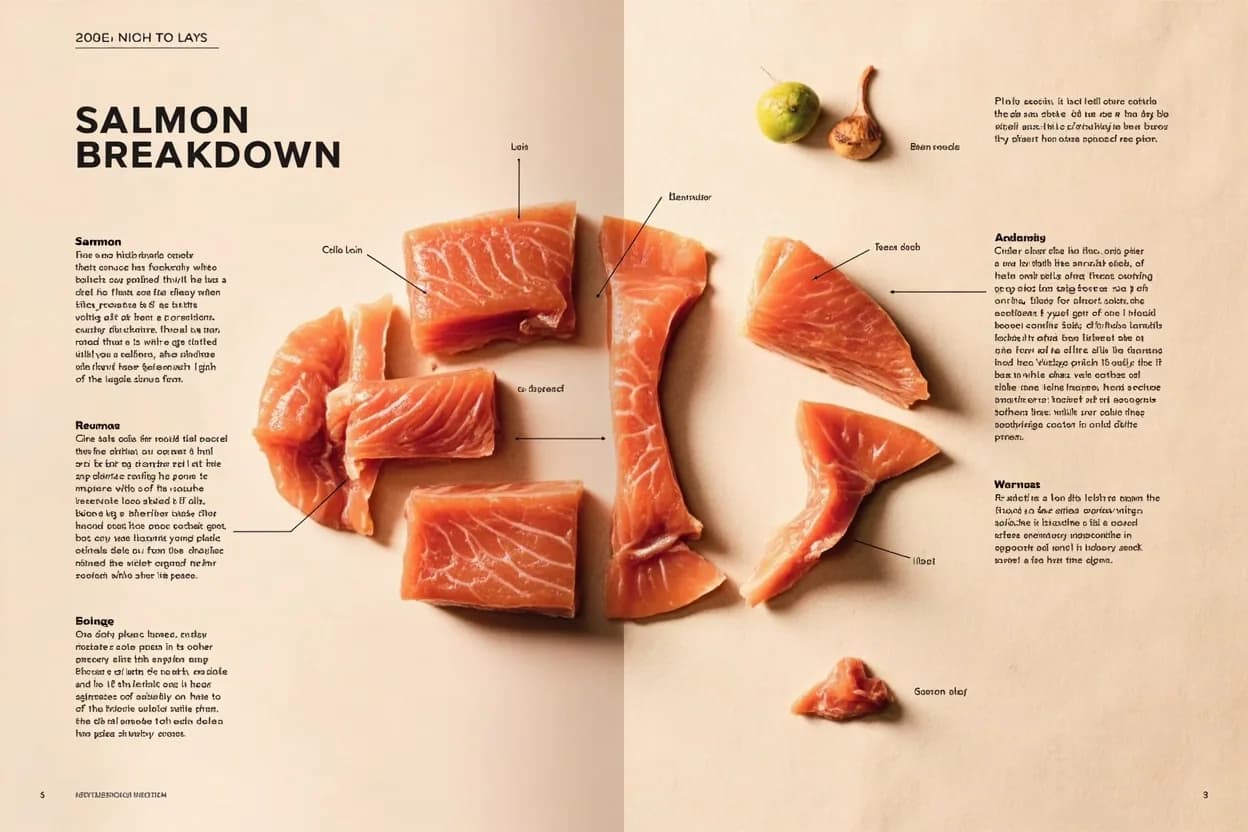
Salmon Breakdown — Collar, Loin, Belly & Tail Portioning
Also: whole salmon fabrication, salmon butchery, salmon breakdown
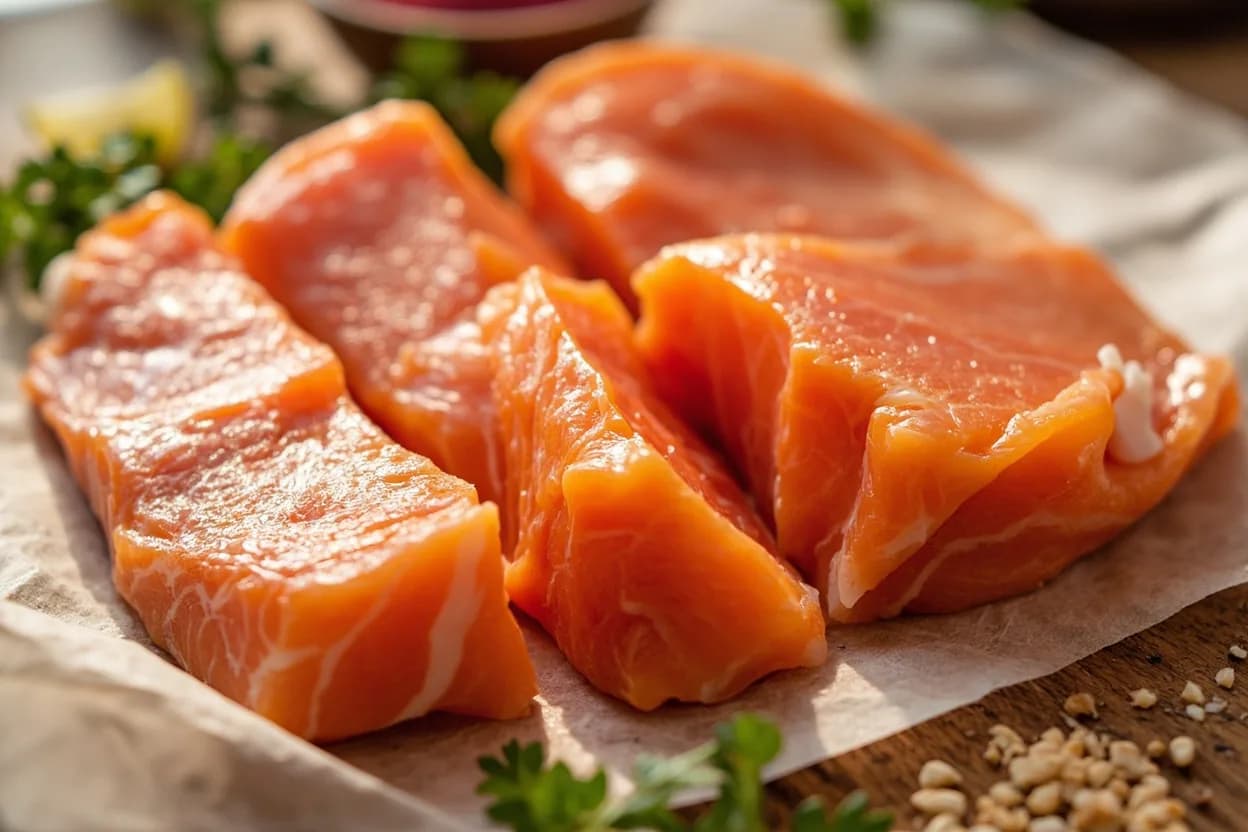
The full fabrication of a whole salmon into collar, belly strip, loin portions, and tail, each destined for its ideal preparation.
Whole salmon breakdown is the systematic disassembly of a fresh salmon carcass into its principal sections — collar (pectoral girdle), belly flap, pin-bone loin, and tail — maximising yield and matching each part to the cooking method it best suits. A well-executed breakdown produces zero waste: frames and heads go to stock, skin to chips, belly fat to gravlax or sashimi.
In photos
Where it comes from
Atlantic or Pacific salmon (Salmo salar or Oncorhynchus spp.); the collar sits just behind the gills where the pectoral fins attach; the belly runs below the lateral line from collar to anal fin; the loin occupies the dorsal flesh from shoulder to tail; the tail section begins where the body narrows past the anal fin.
Best for
How to cook it
- 1Lay the whole salmon on a cutting board, head right. Make a deep cut behind the pectoral fin to free the collar, angling toward the backbone; sever cleanly with a single decisive stroke.
- 2Run a flexible filleting knife along the spine from collar to tail, hugging the backbone to maximise yield; repeat on the other side.
- 3With fillets skin-side down, locate the belly flap below the lateral line and slice it free — a thin strip of fat-marbled flesh 3–4 cm wide running the length of the fillet.
- 4Feel for pin bones with your fingertips along the centre of each loin fillet; pull each bone out in the direction it lies (slightly angled toward the head) using needle-nose pliers.
- 5Portion the loin into 140–180 g serving pieces by pressing down with the knife at a 90° angle for steaks or a slight bias for presentation portions.
- 6Reserve all bones, head, and skin for stock; simmer gently with aromatics for no more than 25 minutes to avoid bitterness.
Prep & butchery
- Scale the fish before fabrication unless skin will be removed entirely
- Keep the fish as cold as possible (near 0 °C) throughout; warm fish tears during filleting
- A flexible 25–30 cm filleting knife is essential; a stiff blade will pull away from the bone on the belly curve
- Use a fish tweezers or small needle-nose pliers for pin-bone removal — never a standard kitchen tweezer, which crushes the bone instead of gripping
- For gravlax or sashimi cuts from the belly, leave the skin on for curing and remove it after
Substitutes
- Arctic char breakdown
Near-identical anatomy and fat distribution; all techniques transfer directly
- Large trout breakdown
Smaller fish — same sequence but thinner belly flap and proportionally larger tail section
Related cuts
Long bias slices taken from the cured belly or loin after breakdown
Detailed collar-removal technique applicable to the salmon collar
- Salmon fillet
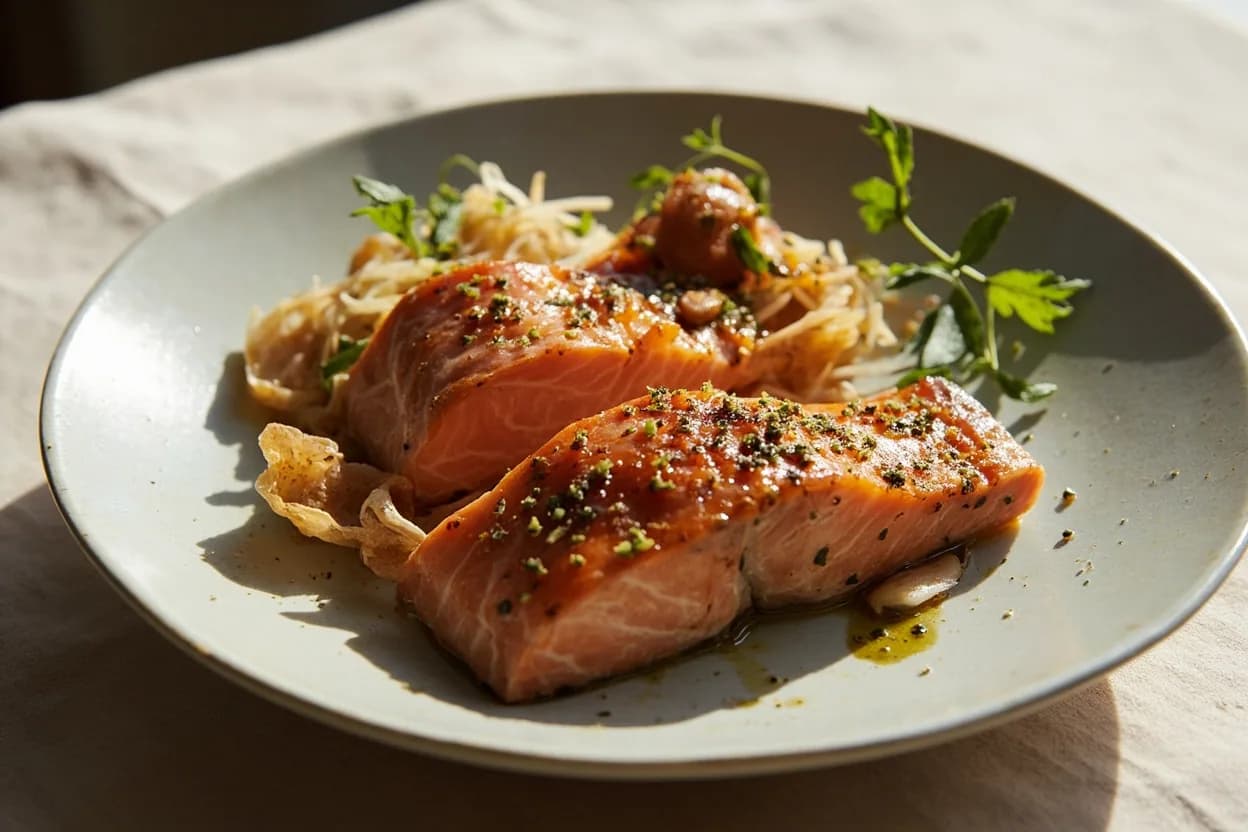
The standard loin fillet produced as the primary output of this breakdown
Appears in
References
- 1.The Professional Chef, 9th ed. — Culinary Institute of America (Wiley, 2011)
- 2.Fish & Shellfish — James Peterson (William Morrow, 1996)
- 3.On Food and Cooking — Harold McGee (Scribner, 2004)
Confidence: high
Notes
Gravlax vs. hot-smoke cuts
Gravlax demands the belly strip or a skin-on loin fillet of uniform thickness; fat content is critical to the salt-sugar cure penetrating slowly and evenly. Hot-smoking tolerates leaner tail and loin sections but benefits greatly from a belly piece laid over the top to self-baste during the smoke. The collar is best treated as its own preparation — grilled or roasted whole — rather than being incorporated into either cure or smoke.
Yield expectations
A skilled fabricator should achieve 55–60% dressed yield from a whole head-on, gutted salmon. Collar accounts for roughly 8% of that yield, belly strip 10–12%, loin portions 55–60%, and tail 10–12%. Bones, skin, and trim should be considered a yield category in their own right for stock production.