Fish — Fabrication & Breakdown
Salmon Gravlax Slice Technique
Also: gravlax slicing, smoked salmon slicing technique, bias slice salmon, lox slicing
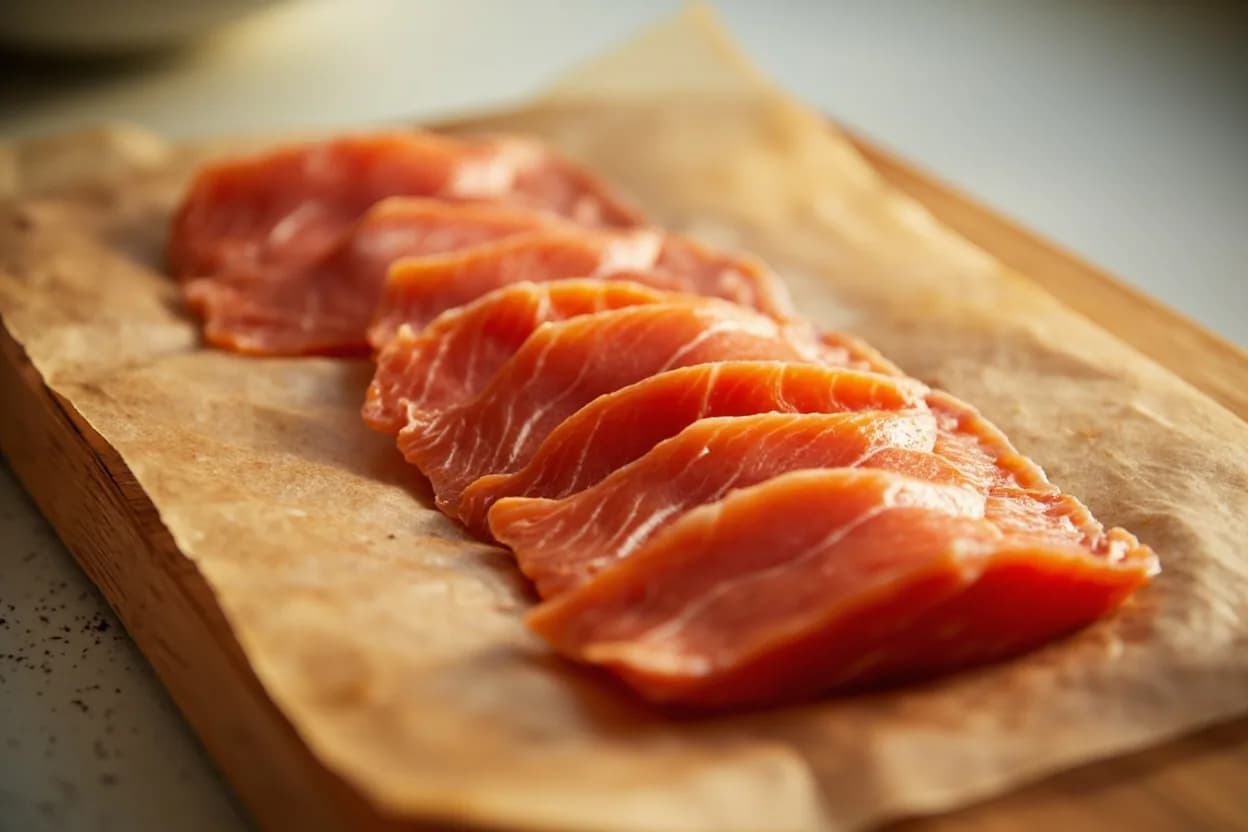
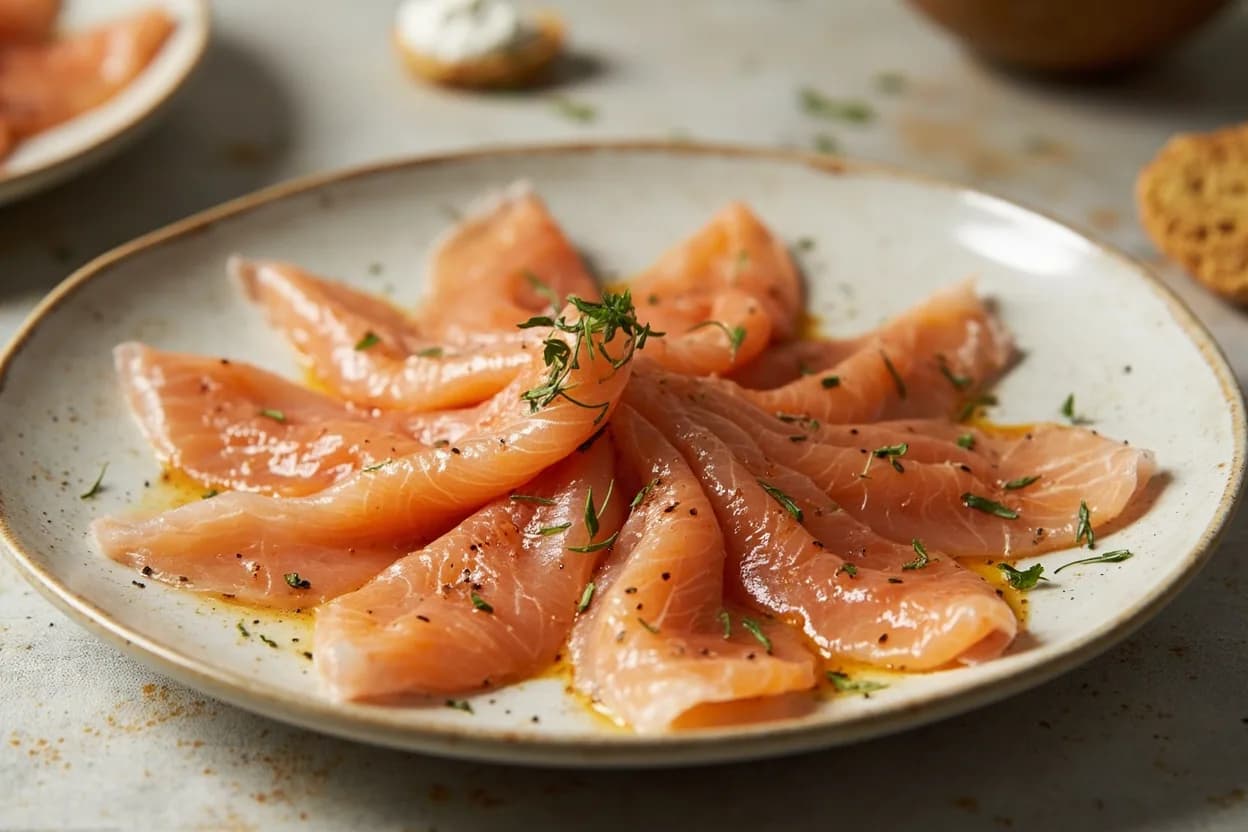
Long, angled, paper-thin slices pulled across the grain of cured salmon — the knife technique that defines gravlax's translucent, silky presentation.
Gravlax slice technique refers to the method of carving cured or cold-smoked salmon into long, translucent, bias-angled slices by drawing a long flexible blade at a near-horizontal angle against the fish's grain. The result is near-transparent slices that melt on the palate rather than requiring chewing. It is a knife skill in its own right, distinct from portioning raw salmon, and determines the quality of the finished plate as much as the cure itself.
In photos
Where it comes from
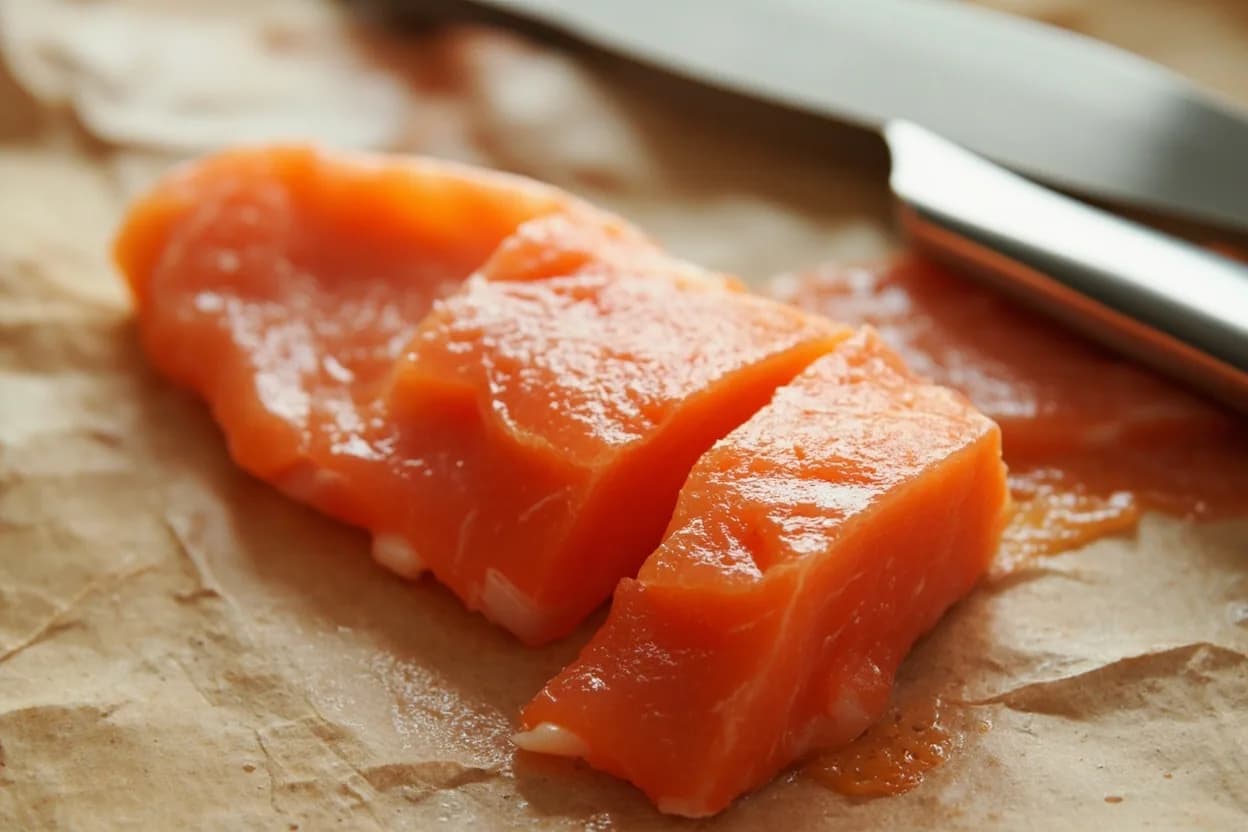
Applied to a skin-on cured salmon fillet (gravlax) or cold-smoked side; the flesh is the dorsal loin or belly that has been salt-sugar cured (and optionally smoked). The skin acts as an anchoring platform and is not served.
Best for
How to cook it
- 1Chill the cured fillet thoroughly (near 0 °C) before slicing — cold flesh firms the fat and holds shape under the knife.
- 2Place the fillet skin-side down on a clean, damp cutting board. The board should not slip; a damp towel underneath helps.
- 3Select a long (25–30 cm), thin, flexible slicing knife (a salmon slicing knife or a carving knife with flex). The blade must be razor-sharp.
- 4Position the knife at a very low angle — approximately 15–20° from the surface of the fish — and start the cut at the tail end, with the knife nearly parallel to the skin.
- 5Draw the full length of the blade in one smooth pulling motion from heel to tip, moving diagonally across the fillet at roughly 30–40° to the long axis of the fish. Do not saw.
- 6As you work toward the head end, adjust your wrist to keep the angle consistent and avoid cutting into the skin. Stop just above the skin at the end of each stroke.
- 7Lay each completed slice flat on the board or directly onto the service plate; overlapping slightly in a 'shingled' presentation is classical.
Prep & butchery
- Ensure the fillet is fully cured and rinsed before slicing; un-rinsed cure will be too salty and the surface sticky
- Pat the surface dry before slicing — moisture causes the blade to drag
- Keep a damp cloth nearby to wipe the blade between every second or third slice to prevent cure residue from tearing subsequent slices
- If the fillet has a tapered tail end, begin there so the thicker mid-loin section arrives at the end when your technique is fully warmed up
- A honing steel used immediately before slicing makes a decisive difference to slice quality
Substitutes
- Cold-smoked salmon slicing
Identical technique; smoked salmon is typically firmer than gravlax and slices slightly more cleanly
- Cured tuna (maguro-zuke) slicing
Similar bias angle but tuna's grain runs differently — adjust to slice across the red muscle bundles
Related cuts
The upstream fabrication that produces the fillet this technique is applied to
Similar long-bias slicing conventions apply to sashimi-grade tuna
- Carpaccio thin-slice technique
Analogous philosophy of near-translucent slicing applied to raw beef or fish
Appears in
References
- 1.Fish & Shellfish — James Peterson (William Morrow, 1996)
- 2.Scandinavian Cooking — Andreas Viestad (Kyle Books, 2007)
- 3.The Professional Chef, 9th ed. — Culinary Institute of America (Wiley, 2011)
Confidence: high
Notes
Knife choice matters
A dedicated salmon slicer — long, thin, and slightly flexible with a Granton (hollow-ground) edge — reduces drag and prevents the slice from adhering to the blade. In the absence of one, the thinnest, longest carving knife available will do. A short or stiff blade makes the low-angle pulling stroke nearly impossible and results in torn, thick slices.
Grain direction
Salmon muscle fibres run roughly parallel to the spine. Slicing against the grain (across the fibre direction) shortens those fibres within each slice, producing tenderness. Slicing with the grain — common with beginners who angle the knife along the fish's length — results in long, chewy strips that fall apart when lifted.