Fish — Fabrication & Breakdown
Salt Cod — Soaking & Pre-Portioning
Also: bacalao preparation, baccalà desalting, morue trempage, klippfisk soaking, bacalhau rehydration
The essential multi-day soaking and anatomy-aware portioning that transforms a plank of preserved salt cod into recipe-ready flesh.
Salt cod is Atlantic cod (Gadus morhua) that has been split, heavily salted, and dried to a moisture content of roughly 40% — a preservation method over 500 years old, born from Basque and Portuguese fishermen working Newfoundland banks before refrigeration. Before cooking, the fish must be desalted (dessaler, in remojo) by submerging it in cold water and exchanging that water repeatedly. The process is not merely about removing salt: it also rehydrates the flesh, partially reverses the protein denaturation caused by salt-curing, and softens the texture from woody to supple. Understanding the anatomy of a split cod — which sections are thick loins (lomos), which are flaps (ventral flap, tail piece) — determines portioning strategy and cooking assignment.
In photos
Where it comes from
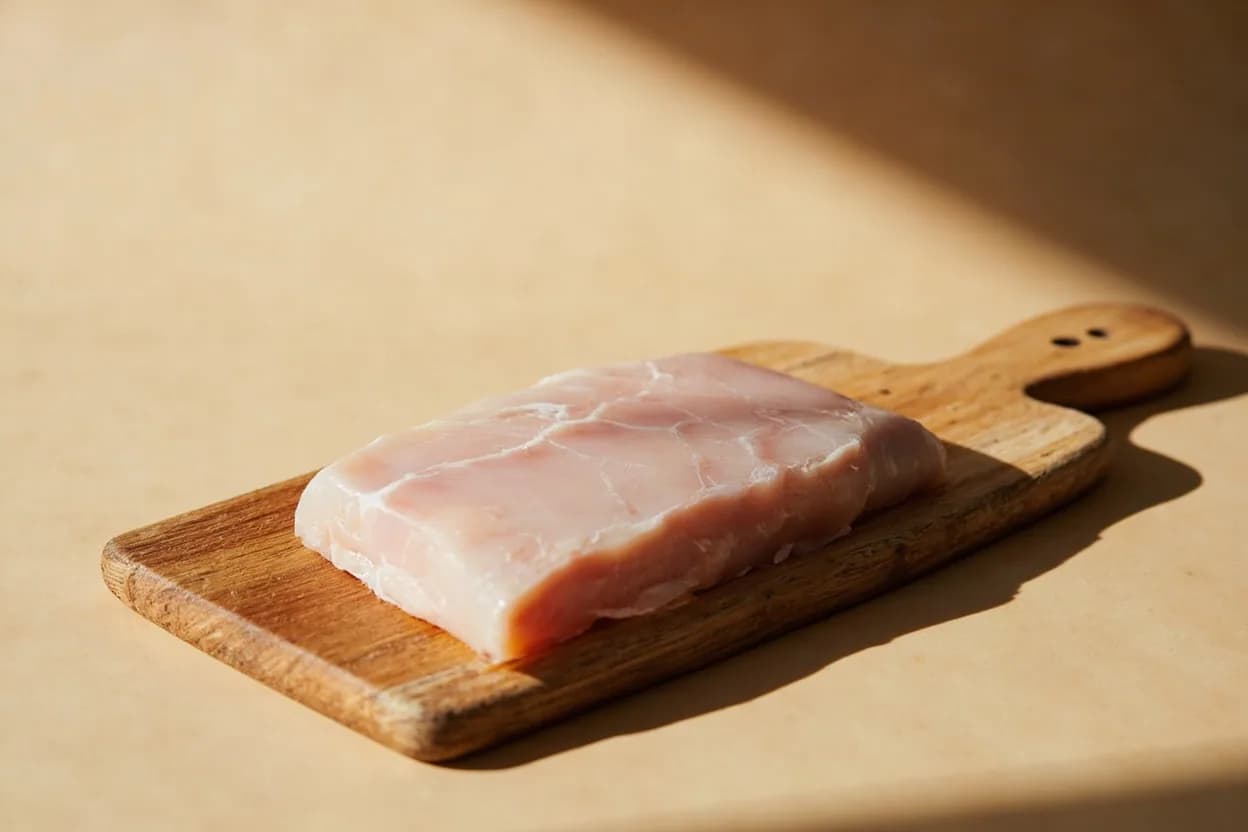
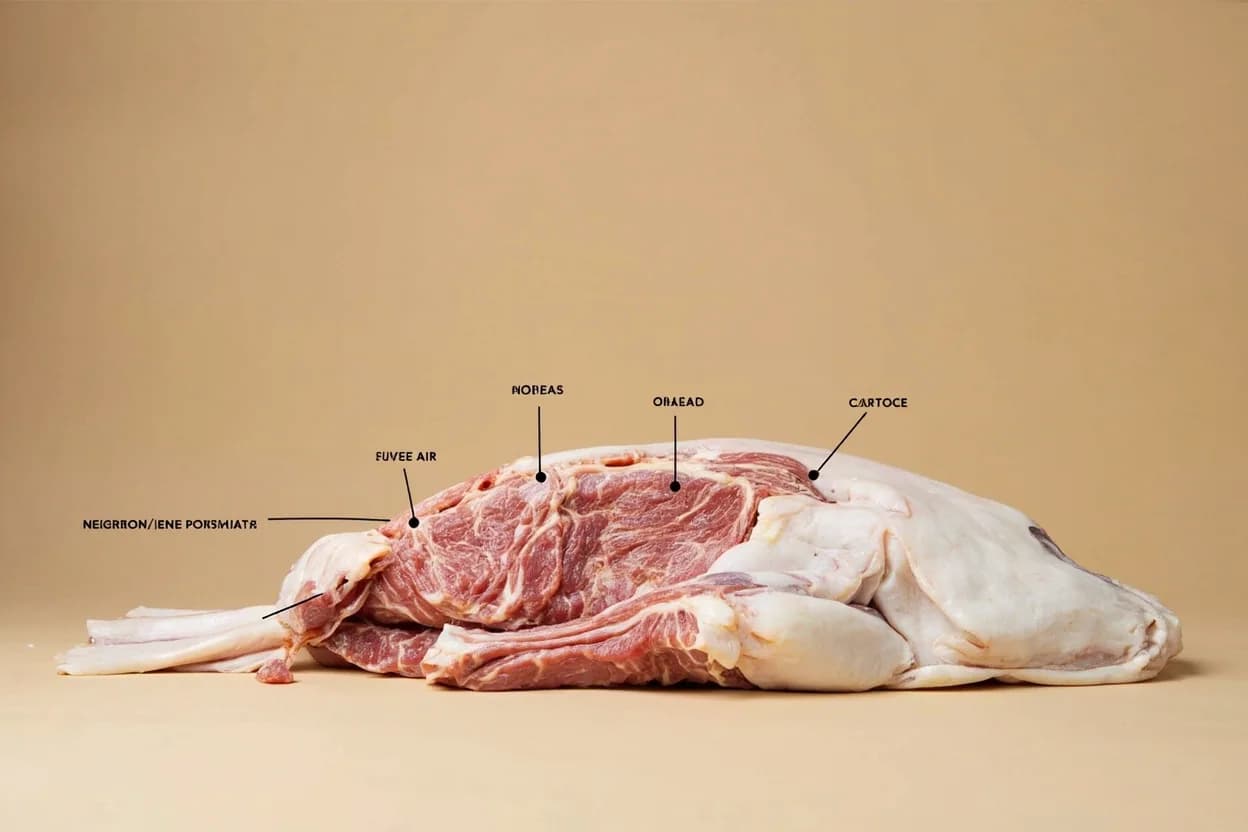
Atlantic cod split along the dorsal line, backbone removed (though Norwegian klippfisk retains the backbone; Portuguese bacalhau often does too). A whole dried salt cod weighs 500 g–3 kg and is sold as one flat, stiff piece. The anatomy reveals: a thick dorsal loin section in the center-upper area (the most prized), thinner lateral flanks, a narrow ventral flap (belly, fattier when fresh but more variable after curing), and a thin tail section.
Best for
How to cook it
- 1Begin 24–48 hours before cooking. Rinse the salt cod briefly under cold running water to remove surface salt.
- 2Place the cod in a large container, completely submerged in cold water, skin side up (this helps salt fall away from the flesh). Refrigerate.
- 3Change the water every 8–12 hours. Minimum 2 changes for a thin piece; 4–5 changes over 48 h for a thick loin. Taste a small flake after 24 h — it should be pleasantly seasoned, not mouth-puckeringly salty.
- 4To portion before soaking (Spanish approach for recipes with precise piece counts): use a sharp, heavy knife to cut the stiff, dried fish across the grain. Cut thick loin sections (lomos) from the upper dorsal area — these will expand significantly during soaking. Reserve thinner flap sections for other preparations.
- 5To portion after soaking (Italian baccalà approach for delicate preparations): soak whole, then portion with a flexible knife once the flesh is supple, keeping flakes intact for fritto or carpaccio di baccalà.
- 6After soaking, pat dry thoroughly before any cooking method that requires browning — the flesh holds significant water and will steam if not dried.
- 7For pil-pil (Basque emulsion): use thick lomos, skin on; the gelatin in the skin and the constant circular swirling of the pan builds the emulsion.
Prep & butchery
- Never soak salt cod at room temperature — bacterial growth risk is real over 24–48 h. Always refrigerate during soaking.
- Skin-side up during soaking allows salt to dissipate downward through the flesh rather than pooling at the skin surface.
- Thick lomos may need scoring through the skin in 2–3 places to help water penetrate to the center during soaking.
- Norwegian klippfisk (bone-in) requires the backbone to be removed after soaking, when the flesh is pliable enough to work the knife around it.
- Test salt level by tasting a small raw flake from the thickest part — this is where the most salt will remain. If still aggressive, continue soaking with fresh water changes.
Substitutes
- Fresh cod fillet
No soaking required, much milder; lacks the umami concentration and textural character of cured salt cod; salt separately to approximate.
- Salt pollock (bacalao substituto)
Used widely in industrial Spanish cooking; leaner and less flavorful but takes the same preparation; nearly identical appearance.
- Salt hake
Used in South American markets; softer texture after soaking; lacks the large-flake character of cod.
Related cuts
- Kokotxas (cod cheeks)
The gelatinous chin-throat section, cut before salting in Basque butchery; often sold fresh or salt-cured separately for pil-pil.
- Fresh cod loin
The uncured anatomical equivalent — same dorsal position, same thick-fleshed character, no preparation lag.
- Bacalao wings/collars
Sold separately in Portuguese and Spanish markets; thick, gelatinous sections near the head; require the same soaking protocol.
Appears in
References
- 1.Cod: A Biography of the Fish That Changed the World, Mark Kurlansky, Walker & Company
- 2.The Basque Kitchen, Gerald Hirigoyen, HarperCollins
- 3.Made in Spain, José Andrés, Clarkson Potter
- 4.The River Cottage Fish Book, Hugh Fearnley-Whittingstall & Nick Fisher, Bloomsbury
Confidence: high
Notes
Spanish vs. Italian approaches to portioning timing
In Spain, particularly in Basque country, salt cod is routinely portioned before soaking — the dried fish is stiff enough to cut cleanly with a heavy knife, and pre-cut lomos (thick fillets) rehydrate more evenly than a whole plank. In Italian baccalà tradition, particularly the Veneto preparation alla vicentina, the whole piece is soaked until fully pliable and only then portioned, preserving larger, more intact flakes. Neither approach is wrong; the choice depends on the final dish's structural requirements.
The 48-hour rule and water temperature
The ideal soaking water temperature is 4–6 °C (refrigerator temperature). Warmer water accelerates desalting but also begins softening the fish's protein structure prematurely, resulting in mushy texture. Traditional fishing communities without refrigeration soaked cod in running cold streams — a natural equivalent of continuous water exchange. For modern kitchens, twice-daily water changes in the refrigerator reliably reproduce the result.