Fish — Fabrication & Breakdown
Sanmai Oroshi (Three-Piece Fish Breakdown)
Also: sanmai, san-mai oroshi, 三枚おろし, three-piece breakdown, Japanese filleting
The foundational Japanese fish-filleting method that breaks a round fish into three pieces — two boneless fillets and the central backbone — using precise knife work along the spine.
Sanmai oroshi (三枚おろし, literally 'three-sheet disassembly') is the standard Japanese technique for fabricating round fish into two fillets and the backbone frame. Unlike Western filleting — which often involves sawing strokes and flexing the blade — sanmai oroshi uses a series of decisive, full-length strokes with the knife held nearly parallel to the board, progressing in layers from surface to bone. The result is two clean fillets (身, mi) with minimal flesh left on the spine (中骨, nakagone), which itself is reserved for stock, kara-age, or grilling.
In photos
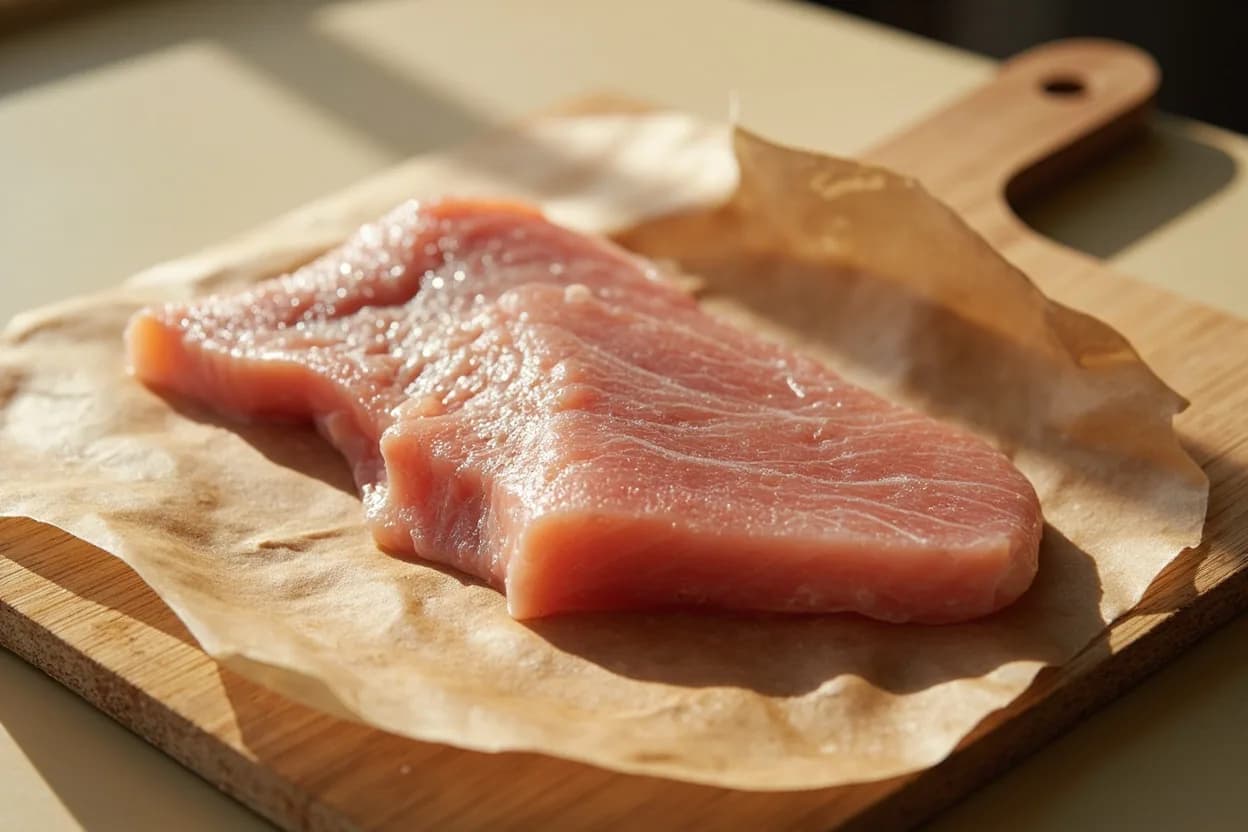
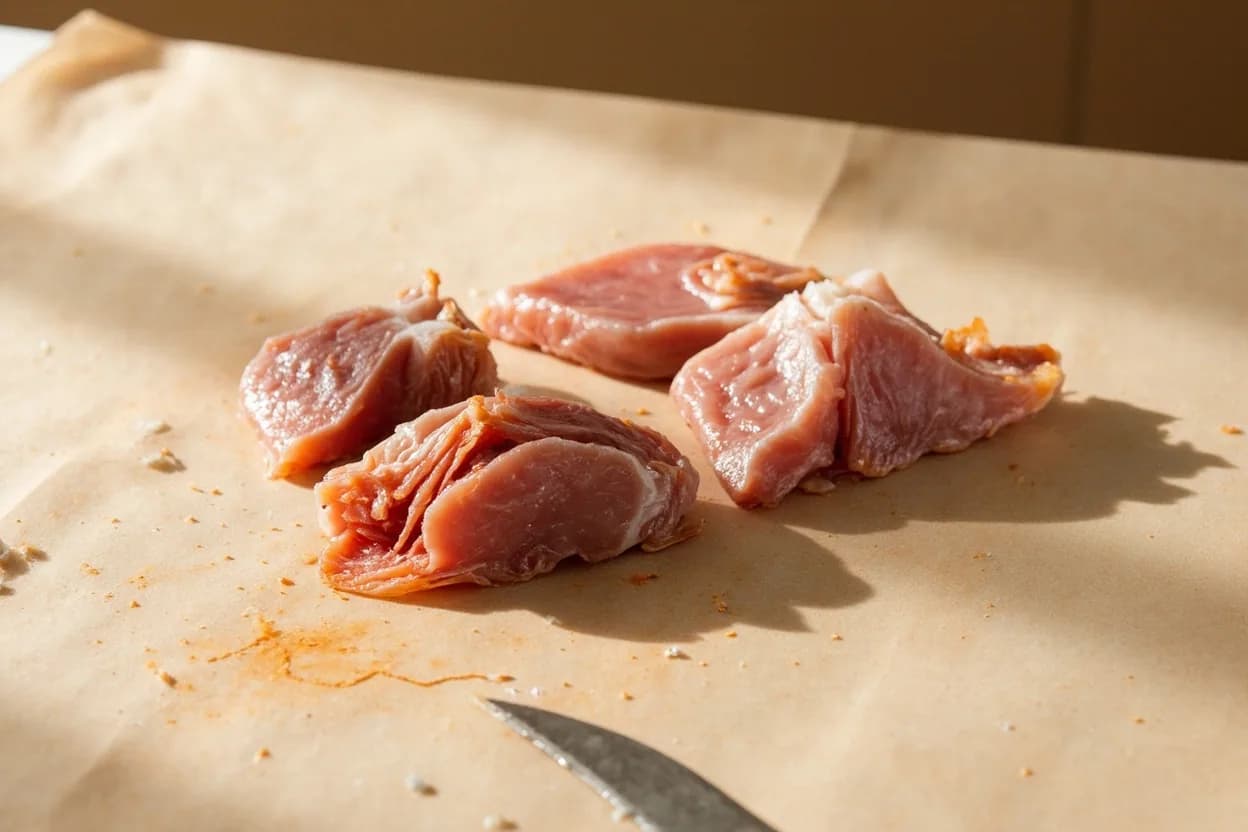
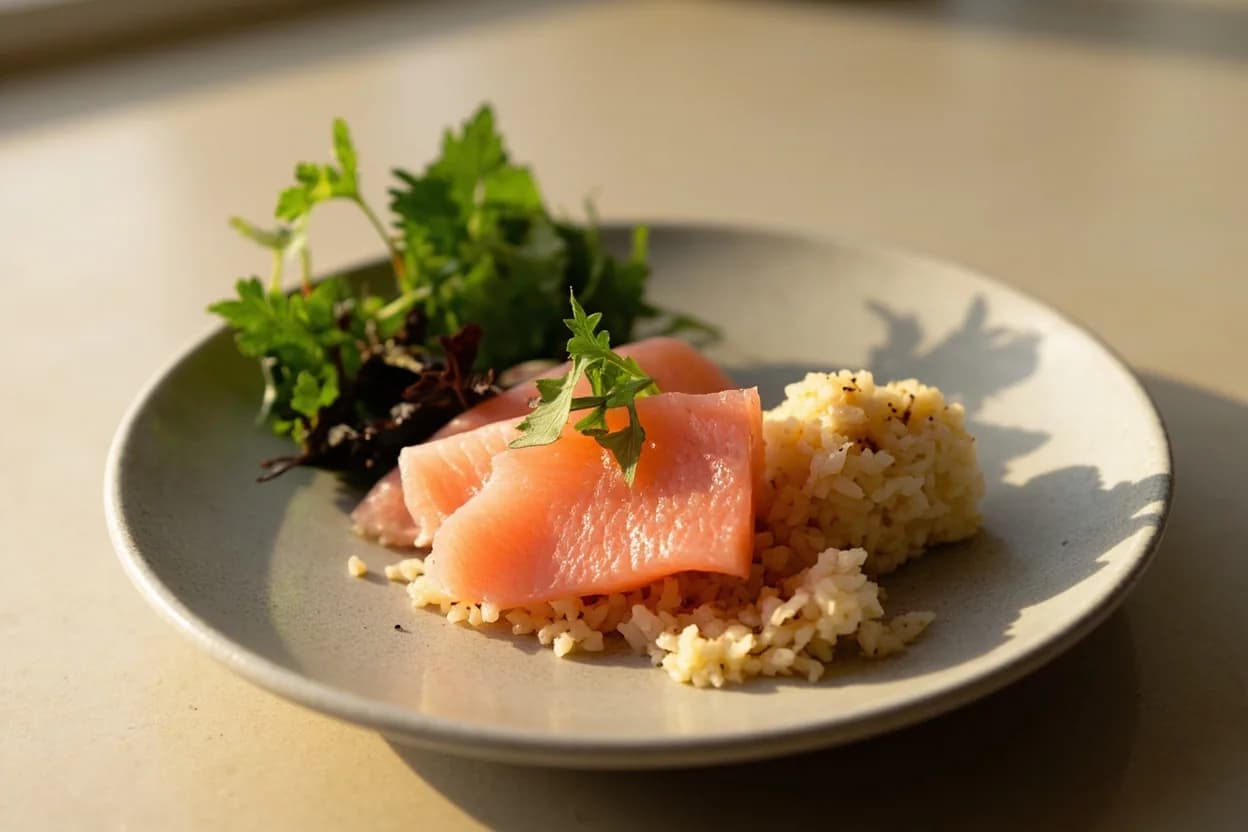
Where it comes from
Applied to round-bodied fish across all sizes, but classically taught on medium specimens (300 g–2 kg): aji (horse mackerel), saba (mackerel), tai (sea bream), buri (yellowtail), sake (salmon), suzuki (sea bass), and madai. The technique scales up with the knife choice — deba for larger fish, small deba (ko-deba) for smaller ones.
Best for
How to cook it
- 1Scale and gut the fish. Rinse the cavity clean of blood and membranes; dry the outside thoroughly.
- 2Lay the fish horizontally with the dorsal spine facing you. Make an incision along the back of the head at a downward angle to the backbone — do not sever the head.
- 3From that incision, draw the deba along the top of the dorsal spine from head to tail in one or two long, pulling strokes, scoring progressively deeper with each pass until the blade rides along the backbone.
- 4Flip the knife to cut along the ribs from the ventral side, freeing the fillet completely. Use the tip of the deba to separate the rib-cage connection without cutting into the belly flesh.
- 5Flip the fish to the second side (spine still facing you) and repeat all steps symmetrically.
- 6Remove the rib bones (suki-biki) from each fillet by slipping the knife under the rib cage and slicing upward in a thin arc.
- 7Locate pin bones with a fingertip and remove with bone tweezers, pulling at the angle of growth (slightly toward the head).
Prep & butchery
- The knife choice is critical: a deba (厚刃包丁) — a heavy, single-bevel blade — is designed for the weight and leverage required to cut through rib cartilage and the backbone joint at the head. A thin Western filleting knife will deflect off the spine on thick fish.
- Work on a dedicated fish board (ideally non-porous plastic); Japanese professionals use a hinoki (cypress) board that absorbs moisture without harboring bacteria.
- Keep the fish chilled (3–5°C) throughout fabrication — both for food safety and because cold flesh holds its structure better under the knife.
- The number of passes required along the spine is inversely proportional to knife sharpness and directly proportional to fish size — a very sharp deba on a small aji takes one pass per side.
Substitutes
- Western filleting technique
Achieves the same two-fillet result but uses sawing motions and different knife geometry; adequate for cooked preparations, less precise for raw.
- Gomai oroshi
The five-piece method used for flatfish — not applicable to round fish; a different anatomical breakdown entirely.
Related cuts
- Gomai Oroshi
The five-piece variant applied to flatfish such as hirame (flounder) and karei; same principles extended to four-lobe flatfish anatomy.
- Daimyo Oroshi
The single-stroke simplification for very small fish — a speed variant of sanmai oroshi that sacrifices some yield.
- Round Fish Fillet (Western)
The Western equivalent; same two-fillet result via different knife motion and blade geometry.
- Nakagone (Backbone Frame)
The third piece yielded by sanmai oroshi; grilled until crispy (hone senbei) or used for dashi and nabe.
Appears in
References
- 1.Japanese Cooking: A Simple Art — Shizuo Tsuji (1980)
- 2.The Sushi Experience — Hiroko Shimbo (2006)
- 3.Washoku: Recipes from the Japanese Home Kitchen — Elizabeth Andoh (2005)
- 4.Sushi Shokunin — Yamamoto Kiyoshi (2019, Japanese)
Confidence: high
Notes
Layer-by-layer philosophy
Western filleting typically runs the knife along the spine in a single deep pass. Sanmai oroshi approaches the spine in progressively deeper layers — first scoring the surface along the dorsal line, then deepening to rib contact, then a final freeing stroke under the ribs. This graduated approach keeps the blade in controlled contact with bone at each stage and dramatically reduces the chance of cutting into the spine or the belly flesh. It is harder to learn but produces demonstrably cleaner fillets.
The nakagone as a product
In Japanese fish cookery, the backbone frame (nakagone) is never wasted. For oily fish like aji and saba, the frames are dusted in potato starch (katakuriko), deep-fried until bone-crisp, and eaten whole as hone senbei (bone crackers) — a prized bar snack. For white fish like tai, the frame is split and used for the dashi that seasons the nitsuke or soup served alongside the fillets.