Knife Cuts — Japanese
Sasagaki (Burdock Shaving)
Also: sasagaki, pencil shaving cut, gobo shaving
A Japanese whittling technique that shaves burdock root into feathery curls by rotating it against a knife blade, maximising surface area for fast cooking.
Sasagaki is a Japanese knife technique in which a long, slender root vegetable — most commonly burdock (gobo, Arctium lappa) — is held like a pencil and rotated against the blade of a knife with short, decisive outward strokes, producing thin, irregular feather-shaped shavings. The name derives from sasa (笹, bamboo grass leaves), whose elongated, lanceolate shape the shavings resemble. The cut is almost exclusively associated with gobo and is the defining preparation for kinpira gobo.
In photos
Where it comes from
Applied to burdock root (gobo) and occasionally to carrot in kinpira-style preparations; the technique exploits the long, fibrous, rod-shaped structure of the root.
Best for
How to cook it
- 1Scrub burdock vigorously with a tawashi brush or the back of a knife under running water — do not peel; much flavour and fibre lie just beneath the skin.
- 2Cut the burdock into manageable 15–20 cm lengths.
- 3Hold one end of the burdock like a pencil over a bowl of cold water, angling it downward at roughly 45°.
- 4Press the blade edge flat against the root and make short, outward whittling strokes while simultaneously rotating the root a few degrees between each stroke.
- 5Let shavings fall directly into cold water acidulated with a small splash of rice vinegar or water — this prevents oxidation (gobo darkens rapidly).
- 6Soak for 5–10 minutes, then drain and pat dry before cooking.
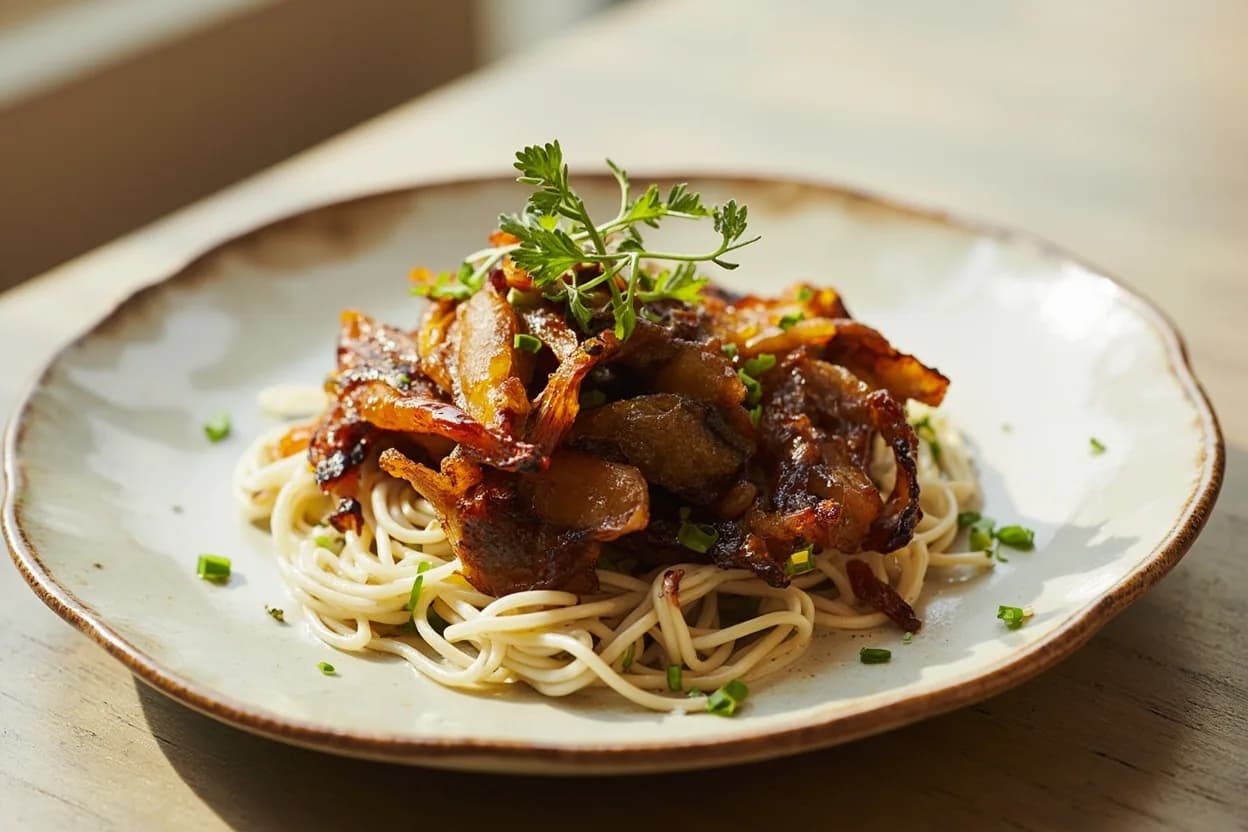
- 7For kinpira: stir-fry in sesame oil over high heat for 2 minutes, add carrot sasagaki, season with sake, mirin, soy, and a pinch of togarashi.
Prep & butchery
- Never peel burdock for sasagaki — the skin carries significant earthy flavour and the fibrous layer just beneath guides the shaving stroke.
- Acidulated water is non-negotiable; burdock oxidises within seconds of cutting, turning grey-brown from enzymatic activity.
- Work over the soaking bowl so shavings land directly in water rather than being transferred by hand.
- A sharp, thin-bladed nakiri or petty knife gives cleaner, thinner shavings than a thick chef's knife.
Substitutes
- Sengiri (julienne)
Fine julienne of burdock is a valid substitute in soups; it lacks the frayed edges and increased surface area of sasagaki, so cooking time is slightly longer.
- Thin coin slices
Acceptable in soups but produces a denser texture; misses the characteristic wispy quality of sasagaki kinpira.
Related cuts
- Sengiri
Fine julienne of burdock used when a more uniform, structured cut is preferred in soups and simmered dishes.
- Rangiri
Random diagonal roll-cut applied to burdock and other roots for rustic simmered preparations.
- Hyoshigi-giri
Thick rectangular batons of burdock used in heartier miso soups.
Appears in
References
- 1.Japanese Cooking: A Simple Art — Shizuo Tsuji
- 2.Washoku: Recipes from the Japanese Home Kitchen — Elizabeth Andoh
- 3.The Japanese Kitchen — Hiroko Shimbo
Confidence: high
Notes
Why sasagaki works for gobo
Burdock is exceptionally fibrous — long, parallel cellulose strands running the length of the root. Any cut that runs with the fibres (coins, batons) preserves their full length and results in a chewy, stringy texture. Sasagaki crosses and disrupts these fibres at multiple angles, shortening their effective length and allowing the root to soften and absorb seasoning quickly. This is why kinpira gobo achieves a pleasantly yielding texture in under 5 minutes on the flame, while casually sliced gobo can remain stubbornly firm.
Oxidation and the vinegar bath
Burdock contains chlorogenic acid and other polyphenols that react with oxygen almost instantly. A well-executed sasagaki session produces dozens of small pieces in quick succession; soaking them in vinegared cold water prevents the unappetising grey discolouration and also tempers the root's raw astringency, which can be quite aggressive in freshly harvested gobo.