Charcuterie & Cured Meat Cuts
Salmon Gravlax Slice (Garnish Manger Context)
Also: gravlax slice, gravad lax slice, smoked salmon slice, lox slice, bias gravlax cut
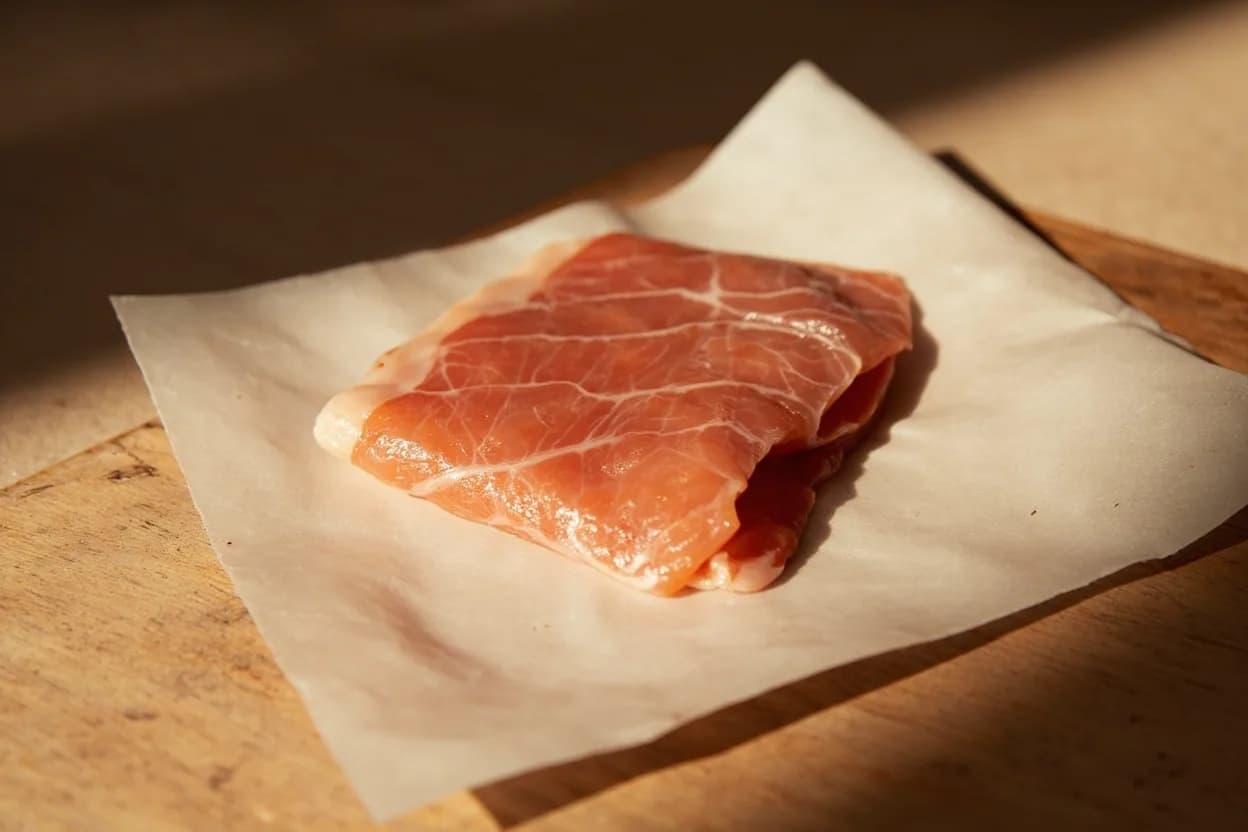
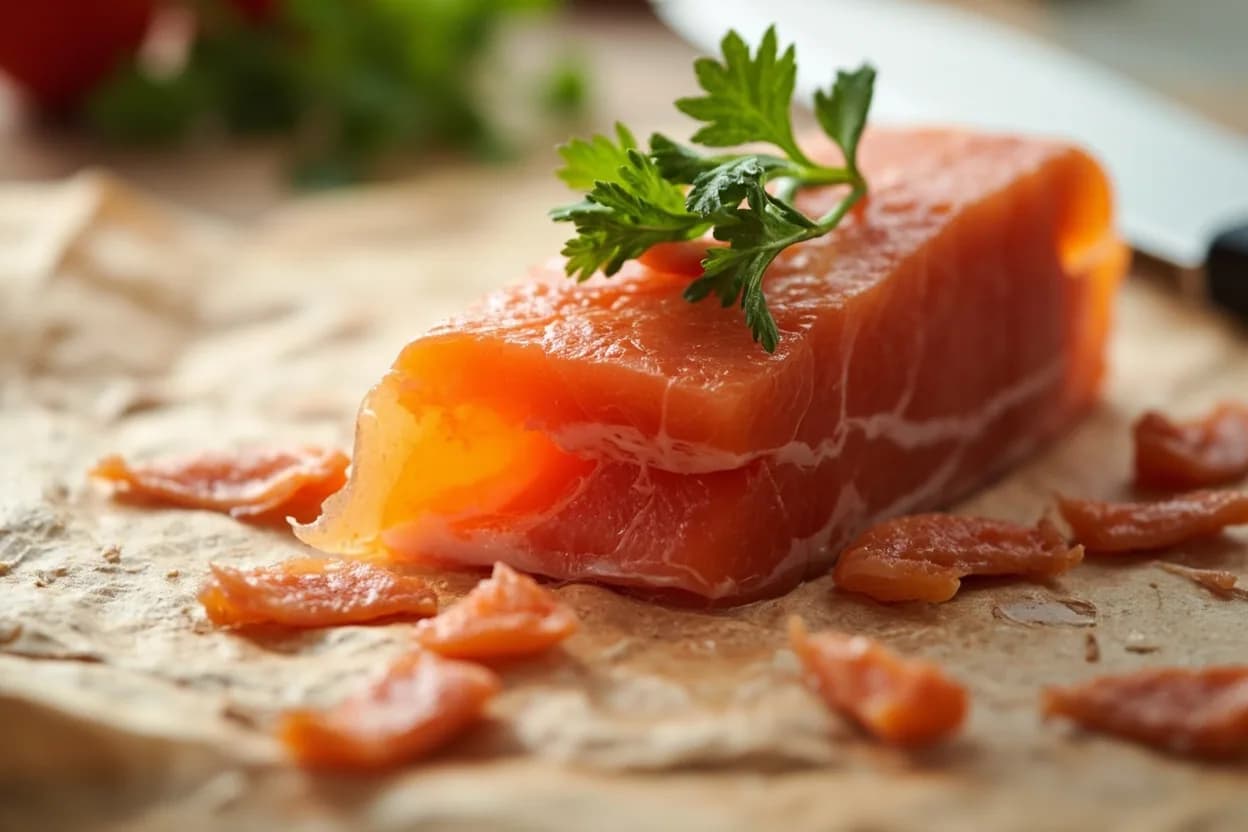
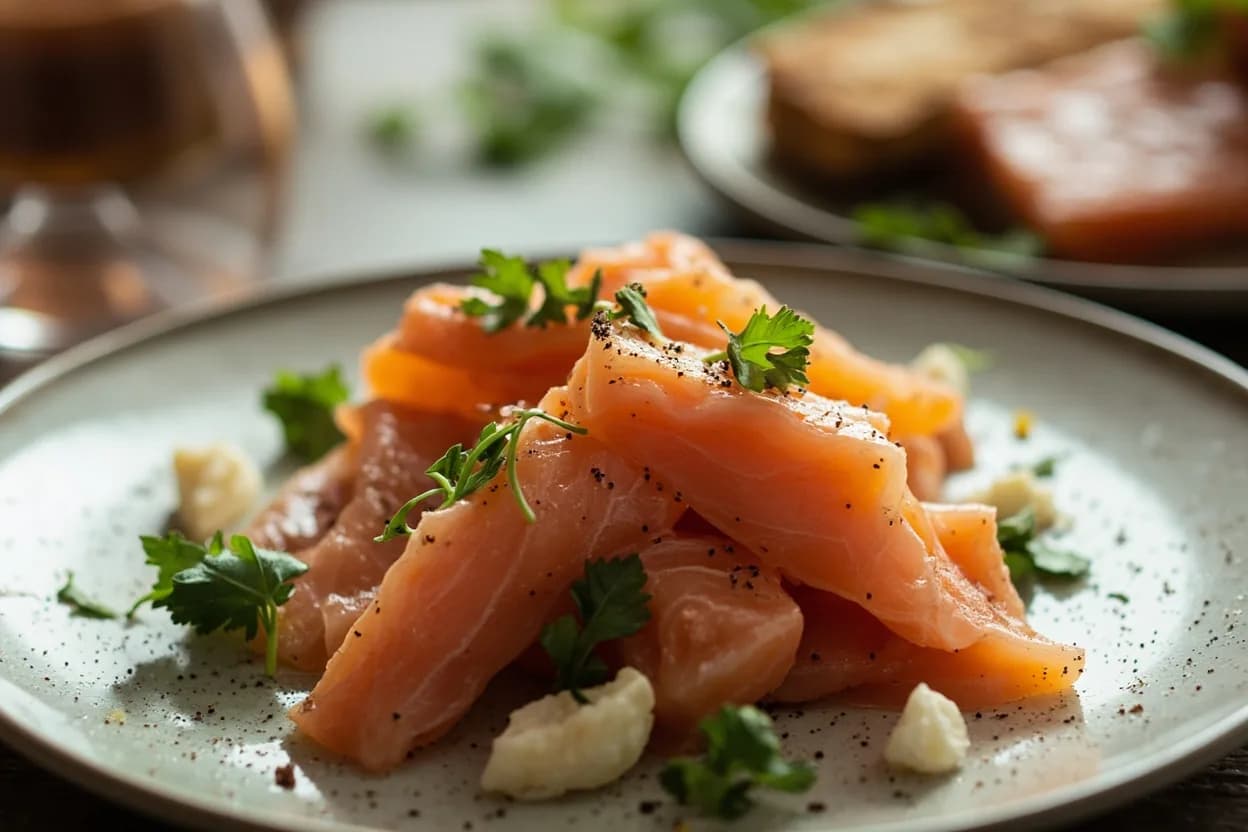
The long, translucent 2–3 mm bias-angled slice drawn from a cured salmon side — the definitive garde manger cut for cold platters, canapés, and Scandinavian first courses.
The salmon gravlax slice is a specific cold-kitchen cutting technique applied to a cured (gravlax) or cold-smoked salmon side. The cut is made at a shallow angle to the horizontal — typically 20–30 degrees off the flat, producing an elongated, near-translucent ribbon 2–3 mm thick. This geometry maximises the visible area of each slice (showcasing the colour gradient from deep orange at the skin-side to pale pink at the belly), shortens the muscle fibres across the slice for tenderness, and produces pieces thin enough to fold, drape, or fan on the plate. The technique is a cornerstone of garde manger work and appears in buffet service, restaurant plating, and smörgåsbord presentation.
In photos
Where it comes from
The side of an Atlantic or Pacific salmon that has been cured for 24–72 hours in a salt-sugar-dill mixture (gravlax) or cold-smoked. The skin is left on during curing and removed before or during slicing, depending on house style. The slice is drawn from the thickest part of the fillet, working from head-end to tail-end.
Best for
How to cook it
- 1Ensure the gravlax or smoked salmon side is well-chilled (2–4°C); a cold side is firmer and the flesh does not compress or smear under the blade.
- 2Use a dedicated salmon slicer (granton-edge hollow-ground blade, 30–36 cm long) or a very sharp, long, thin flexible knife; a chef's knife is a poor substitute.
- 3Chill the blade in ice water and dry it before each slice or between every 3–4 slices in continuous service.
- 4Position the salmon side with the head end to your left (if right-handed). Place your free hand flat on the top of the flesh to stabilise without pressing.
- 5Begin the cut at the head end, angling the blade at roughly 20–30 degrees to the horizontal — a shallower angle produces longer, more elegant slices.
- 6Draw the full length of the blade in a single smooth stroke from heel to tip; never saw back and forth.
- 7Lift each slice off the skin with the blade and transfer directly to a cold plate or parchment-lined tray.
- 8After every 4–6 slices, reposition the skin-flap away from the flesh so the blade does not ride over it and catch.
- 9For a presentation fan: overlap slices on the plate at slight angles; for a rosette: curl each slice into a loose spiral.
Prep & butchery
- Remove pin bones before slicing: run a finger along the centre line of the flesh to locate bones, extract with fish tweezers or needle-nose pliers, pulling toward the head end.
- Scrape any thick dill or pepper crust from the surface before slicing for a clean, unobstructed cut — the crust can be reserved and chopped as garnish.
- For high-volume service, portion a full side into 10–12 cm sections, then slice each section; this allows multiple knives to work in parallel.
Substitutes
- Smoked salmon (hot-smoked, flaked)
Flaked rather than sliced; an entirely different texture and presentation — not a direct substitute for bias slices but acceptable in scrambled eggs or pasta.
- Cured trout side
Gravlax technique applies equally; slightly smaller slices from a narrower fillet, suitable for canapés when salmon is unavailable.
- Thinly sliced prosciutto or bresaola
Visually similar long cold-platter slices, but from terrestrial protein; used when fish is not appropriate for the guest or occasion.
Related cuts
Same cold-service discipline: blade temperature management, single-stroke cuts, and chilling the protein before service.
- Smoked Salmon Slice
Industrially cold-smoked salmon uses identical slicing geometry; the cure method differs (smoke vs. dry-salt) but the knife technique is the same.
- Sashimi Slice (Sake)
Japanese raw salmon sashimi employs a similar bias-cut philosophy (sogizukuri) but thicker at 4–6 mm and using a yanagiba knife.
Appears in
References
- 1.The New Scandinavian Cooking — Andreas Viestad
- 2.Smörgåsbord: The Art of Swedish Breads and Savory Treats — Johanna Kindvall
- 3.The Professional Chef, 9th Edition — The Culinary Institute of America
- 4.Jacques Pépin: New Complete Techniques — Jacques Pépin
- 5.Garde Manger: The Art and Craft of the Cold Kitchen — The Culinary Institute of America
Confidence: high
Notes
Knife temperature management in garde manger
The cold kitchen rule for gravlax slicing is simple: the blade must never be warmer than the fish. A warm blade melts the fat along the cut edge, producing a greasy, slightly translucent smear where there should be a clean, jewel-bright face. Professional garde manger stations keep a tall container of ice water beside the cutting board; the knife is dipped and wiped dry before each stroke. In continuous high-volume service (wedding buffets, cruise ship galley), some kitchens use a refrigerated slicer bowl or work in a walk-in cooler rather than at room temperature.
Fan versus rosette — when to use each
The fan arrangement (overlapping slices fanned out from a central point) is the more architecturally dramatic presentation, suited to formal plating and buffet stations where height and sweep read from a distance. The rosette (a single slice rolled into a loose spiral and stood upright) is more appropriate for individual plate garnish — it takes up a small footprint and can be placed precisely beside other elements. Both require that slices be of consistent length and thickness; irregular slices cannot be arranged in either format without visual noise.