Charcuterie & Cured Meat Cuts
Terrine Slicing Thickness
Also: terrine tranches, cold terrine slicing, pâté slice
The 1–2 cm cold-service slice that preserves a terrine's mosaic structure while delivering clean, cohesive portions.
Terrine slicing thickness refers to the controlled cross-section cut applied to a chilled, set terrine, pâté en terrine, or rillettes slab before plating. The standard range is 1–2 cm (roughly ½–¾ inch), thick enough to hold the internal mosaic of meat, fat, vegetables, or foie gras intact, yet thin enough to eat without overwhelming the palate. Slices outside this window either crumble (too thin) or sit heavy and ungainly on the plate (too thick).
In photos
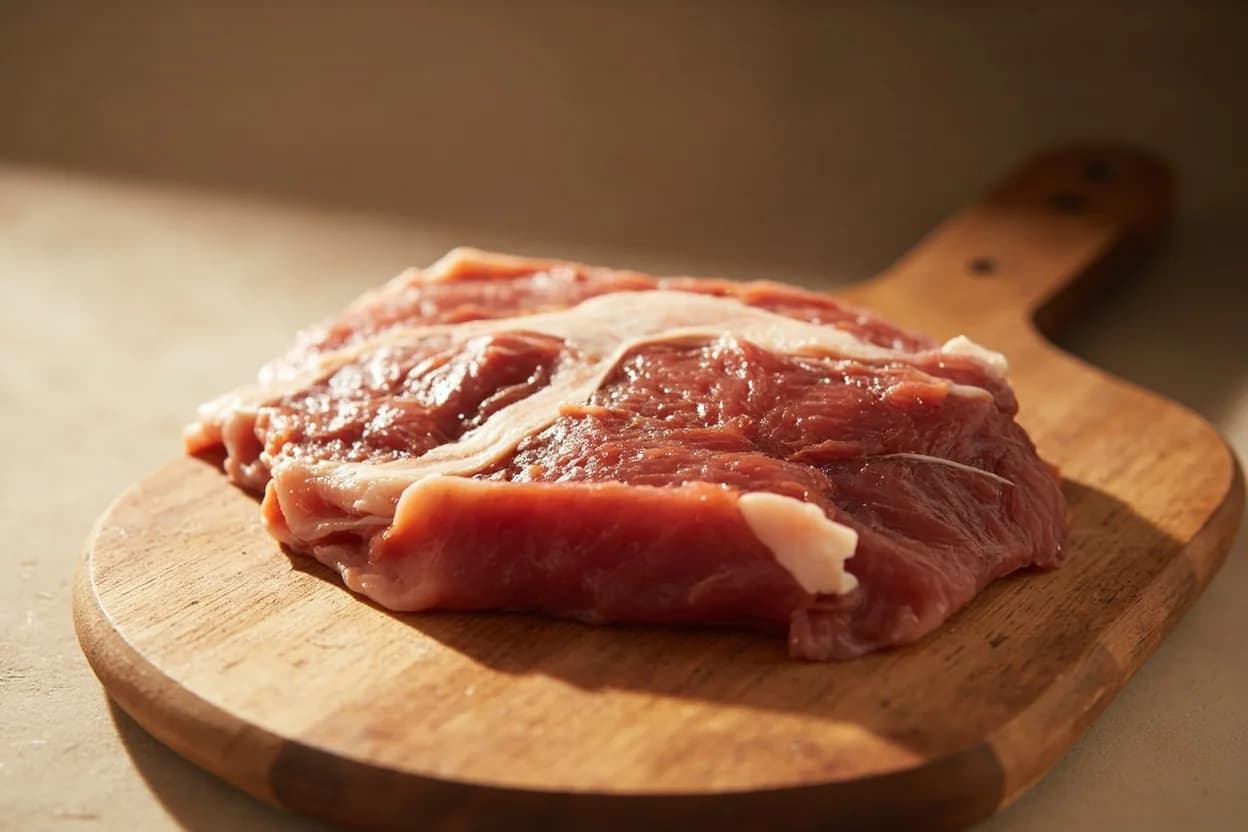
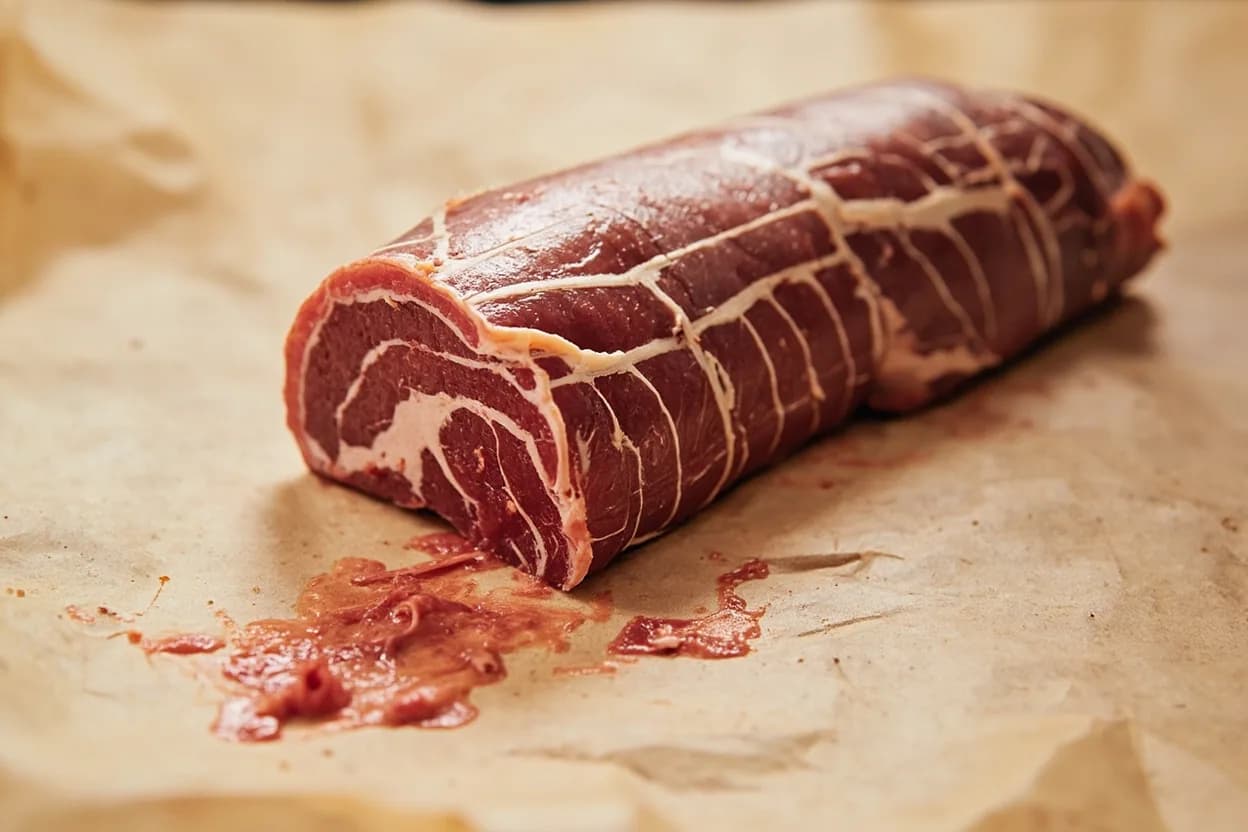
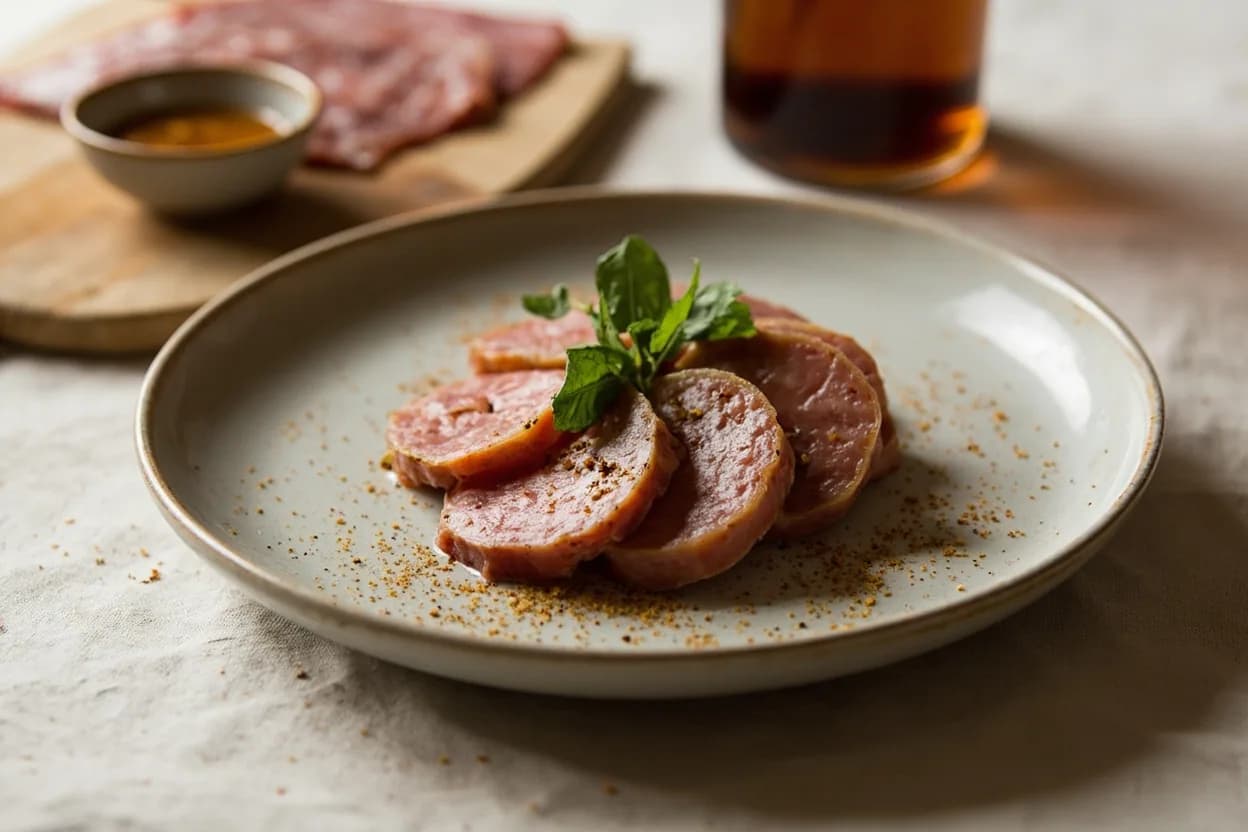
Where it comes from
Not anatomical — a cold-kitchen cutting standard applied along the transverse axis of a rectangular terrine mold after the preparation has set overnight under refrigeration or pressing.
Best for
How to cook it
- 1Chill the terrine completely — minimum 8 hours, ideally 24 — before attempting to slice; the fat must be fully solidified.
- 2Unmold onto a chilled cutting board; if the terrine was set in aspic, run a thin knife around the interior walls first.
- 3Use a long, thin-bladed slicing knife (a carving knife or Granton-edge slicer); avoid serrated blades which tear the forcemeat.
- 4Warm the blade in hot water and dry it between every slice; a cold or wet blade drags and smears.
- 5Apply a single smooth drawing cut rather than a sawing motion — the weight of the blade should do the work.
- 6Target 1.2–1.5 cm for a plated first course; 8–10 mm for canapé bases; no more than 2 cm even for a hearty country pâté.
- 7Return unsliced terrine to refrigeration immediately; do not leave at room temperature between services.
Prep & butchery
- Chill knife blade in an ice bath for 30 seconds, then wipe dry — this prevents the fat from smearing across the cut face.
- For terrines with a thick top fat cap (lard or duck fat seal), score and peel this cap away before the first retail cut, or include it in the slice as a deliberate presentation element.
- A mandoline is unsuitable; hand-slicing with a long knife gives better control over force and angle.
Substitutes
- Pâté en croûte slicing
Same 1.5–2 cm standard, but the pastry crust demands a sharper initial entry cut to avoid cracking before the filling is reached.
- Rillettes scooping
Rillettes are too loose to slice cleanly; use a warmed spoon or spatula instead of a knife.
Related cuts
Applied before curing or roasting; terrine slicing happens after setting — complementary stages of the same charcuterie workflow.
- Salmon Gravlax Slice
Similar cold-service slicing discipline with temperature management and bias angle considerations.
Appears in
References
- 1.Charcuterie: The Craft of Salting, Smoking, and Curing — Michael Ruhlman & Brian Polcyn
- 2.The French Laundry Cookbook — Thomas Keller
- 3.Larousse Gastronomique — Éditions Larousse
- 4.Jacques Pépin: New Complete Techniques — Jacques Pépin
Confidence: high
Notes
Knife temperature management
Professional garde manger cooks keep a pitcher of very hot water beside the board and dip the blade between every slice. The heat melts the outermost molecular layer of fat, allowing the knife to glide rather than tear. Wiping the blade immediately after dipping prevents water from contaminating the cut face. In a high-volume setting, two knives are used in rotation — one soaking while the other cuts.
Thickness for different terrine types
A coarse country pâté with large garnish pieces benefits from a slightly thicker 1.8–2 cm slice so the structural elements stay visible. A smooth foie gras terrine is conventionally served thinner (1–1.2 cm) because the richness is intensely concentrated. A vegetable-mosaic terrine should be cut exactly where the cross-section is most graphic — chefs trim and discard the dull ends before the first service slice.