Charcuterie & Cured Meat Cuts
Fat Cap Scoring
Also: scoring the fat, crosshatch scoring, diamond scoring, fat scoring
A crosshatch pattern of shallow cuts through an intact fat cap that unlocks even rendering, promotes crisping, and allows marinades or glazes to penetrate.
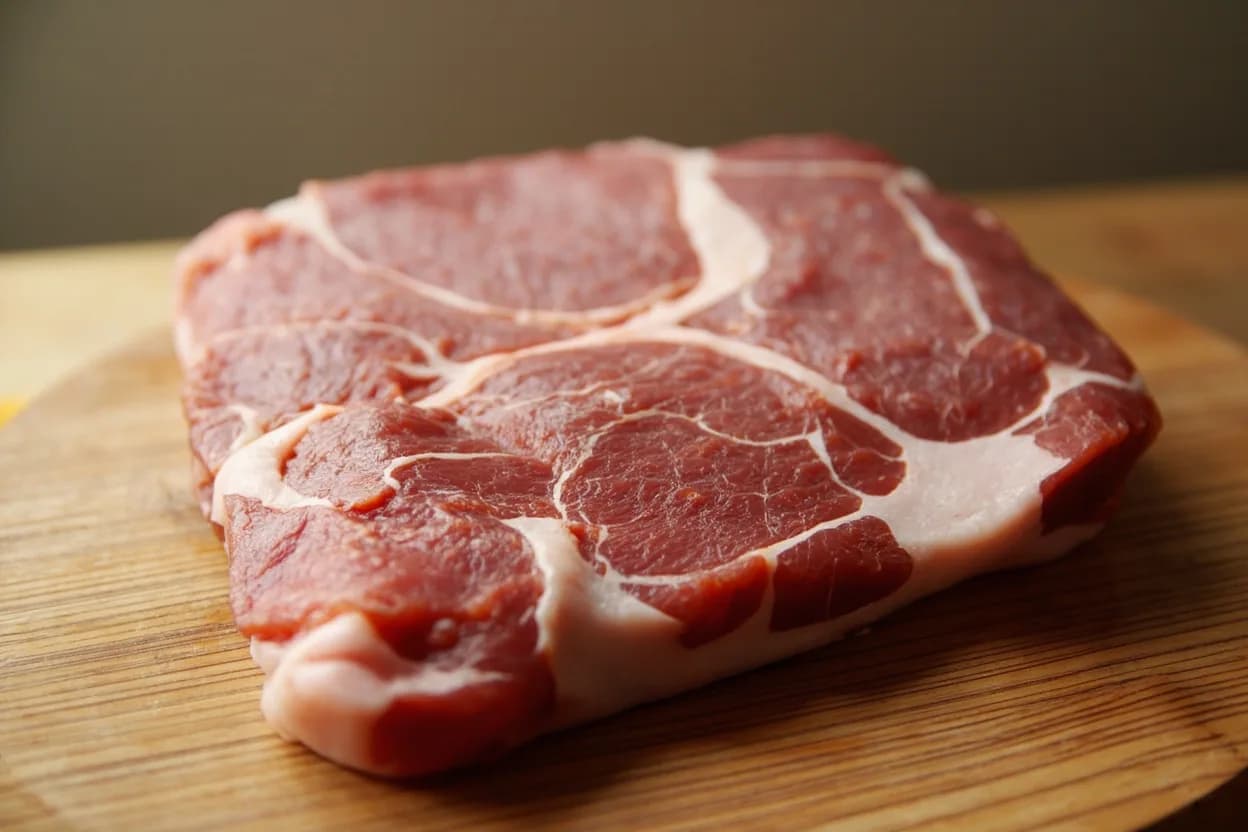
Fat cap scoring is the technique of cutting a series of parallel incisions — typically in two perpendicular directions to form a diamond or square grid — through the exterior fat layer of a meat cut or bird, stopping just short of the lean muscle beneath. The pattern opens channels that allow subcutaneous fat to liquefy and drain during cooking, prevents the fat layer from buckling or curling as it shrinks, and exposes additional surface area for caramelization, glaze adhesion, or spice rubs.
In photos
Where it comes from
Applied to any cut carrying a significant intact fat cap: pork belly (skin side), duck breast (magret), whole duck or goose (breast and leg), prime rib roast (fat-covered top), leg of lamb with fat intact, and ham skin before glazing.
Best for
How to cook it
- 1Chill the fat cap before scoring — cold fat is firmer and cuts more cleanly without slipping.
- 2Use a sharp chef's knife or boning knife; a dull blade compresses rather than slices the fat.
- 3For duck breast: score parallel lines 1 cm apart at a 45-degree angle, then rotate the breast and score again to form a diamond grid; target depth of 3–4 mm, reaching to but not into the red muscle.
- 4For pork belly or ham: score the skin at 1.5–2 cm intervals in one direction (or crosshatch); scoring through the skin into the fat below is desirable, but stop before the lean.
- 5For prime rib: score through the fat cap only, 2 cm intervals; fat here is thicker — 8–15 mm — and does not need crosshatching, simple parallel lines suffice.
- 6Season the scored surface directly — salt drawn into the channels seasons the fat column, not just the outer surface.
- 7Start cooking fat-side down over low to medium heat to allow gradual rendering before applying high heat for final crisping.
Prep & butchery
- Pat the surface dry before scoring — moisture makes the knife slip and prevents the channels from staying open.
- Score before marinating, not after; the channels should carry the marinade into the fat layer.
- On duck breast, remove any remaining pinfeathers along the score lines before cooking.
Substitutes
- Piercing with a fork or skewer
Creates point channels rather than open lanes; less effective at preventing curling and produces a less even rendered surface.
- Removing the fat cap entirely
Eliminates the rendering challenge but also removes the protective basting layer and the textural contrast that makes the cut distinctive.
Related cuts
Fat cap scored before curing or roasting; terrine slicing is the complementary downstream step after setting.
- Pork Belly Slab
The primary canvas for fat cap scoring in European and East Asian cooking traditions.
- Duck Breast (Magret)
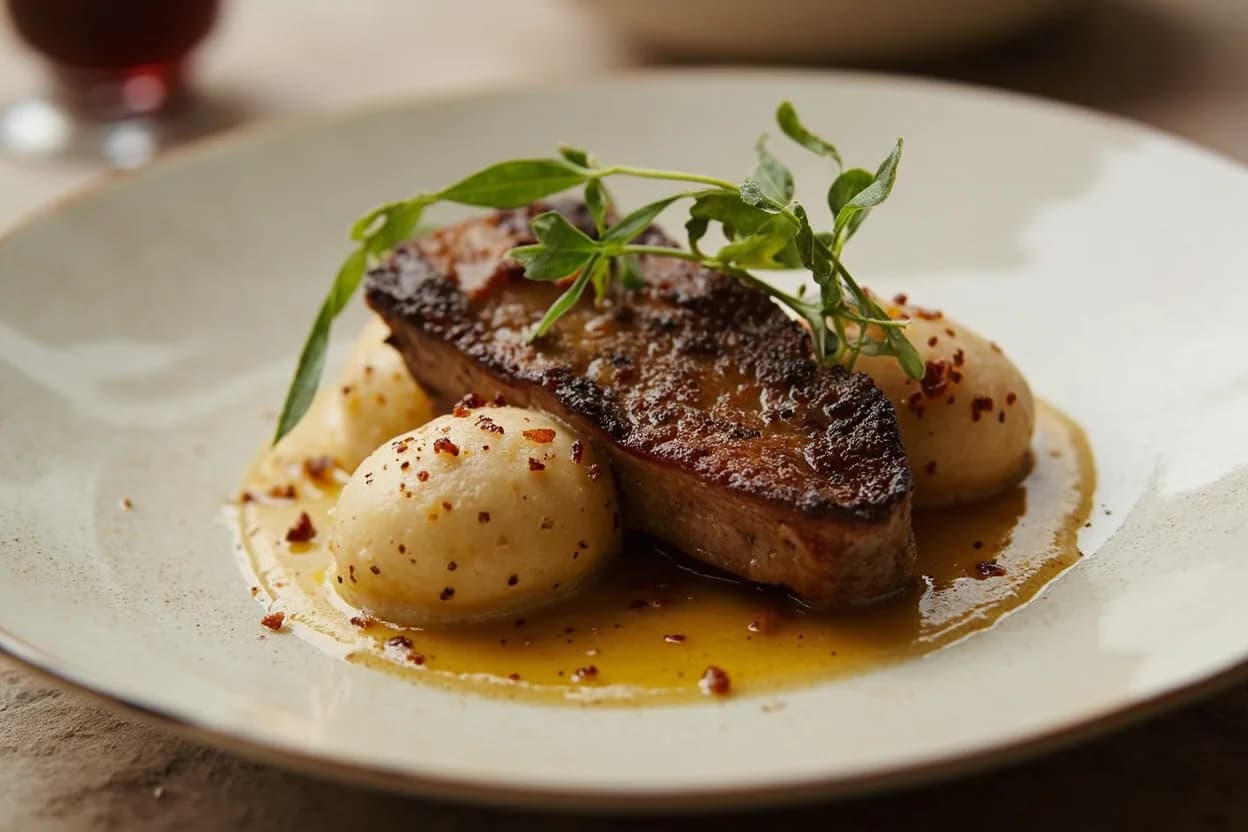
The canonical application of crosshatch scoring in French restaurant cooking.
Appears in
References
- 1.The Professional Chef, 9th Edition — The Culinary Institute of America
- 2.Charcuterie: The Craft of Salting, Smoking, and Curing — Michael Ruhlman & Brian Polcyn
- 3.The River Cottage Meat Book — Hugh Fearnley-Whittingstall
- 4.Jacques Pépin: New Complete Techniques — Jacques Pépin
Confidence: high
Notes
Depth is everything
The two most common failures are scoring too shallow (channels seal shut within the first minute of heat as the fat expands) and scoring too deep (the knife enters the muscle, which dries out along the cut edge and can cause the breast or belly to split during cooking). A good rule: on duck breast, you should see the boundary between white fat and red muscle as a reference line — stop 1–2 mm before it. On pork belly, skin can be scored all the way through into the fat column without issue.
Angle and spacing for different proteins
Duck breast is conventionally scored at 45 degrees to the grain of the muscle fibres because it looks elegant and the bias angle shortens the channels slightly, promoting faster rendering. Pork belly is usually scored straight across (90 degrees to the long axis) because the aesthetic matters less than maximising the drainage area. Ham is often scored in a diamond pattern for presentation — the visual grid is part of the dish's identity.