Pork — Primal & Subprimal
Fatback vs. Leaf Lard vs. Caul Fat
Also: back fat, lard gras, crépine, leaf fat, flare fat, omentum
Three anatomically distinct pork fat depots — back sheet, kidney leaf, and lacy omentum — each with irreplaceable uses in charcuterie and cooking.
Pork yields three major fat deposits that are structurally and functionally different: fatback is the thick subcutaneous fat sheet running along the spine; leaf lard (also called flare or kidney fat) is the dense, pure interior fat surrounding the kidneys and loin cavity; caul fat (crépine or omentum) is the gossamer, lacy membrane that envelops the stomach and intestines. All three are rendered or used fresh, but they behave very differently and are never fully interchangeable.
In photos
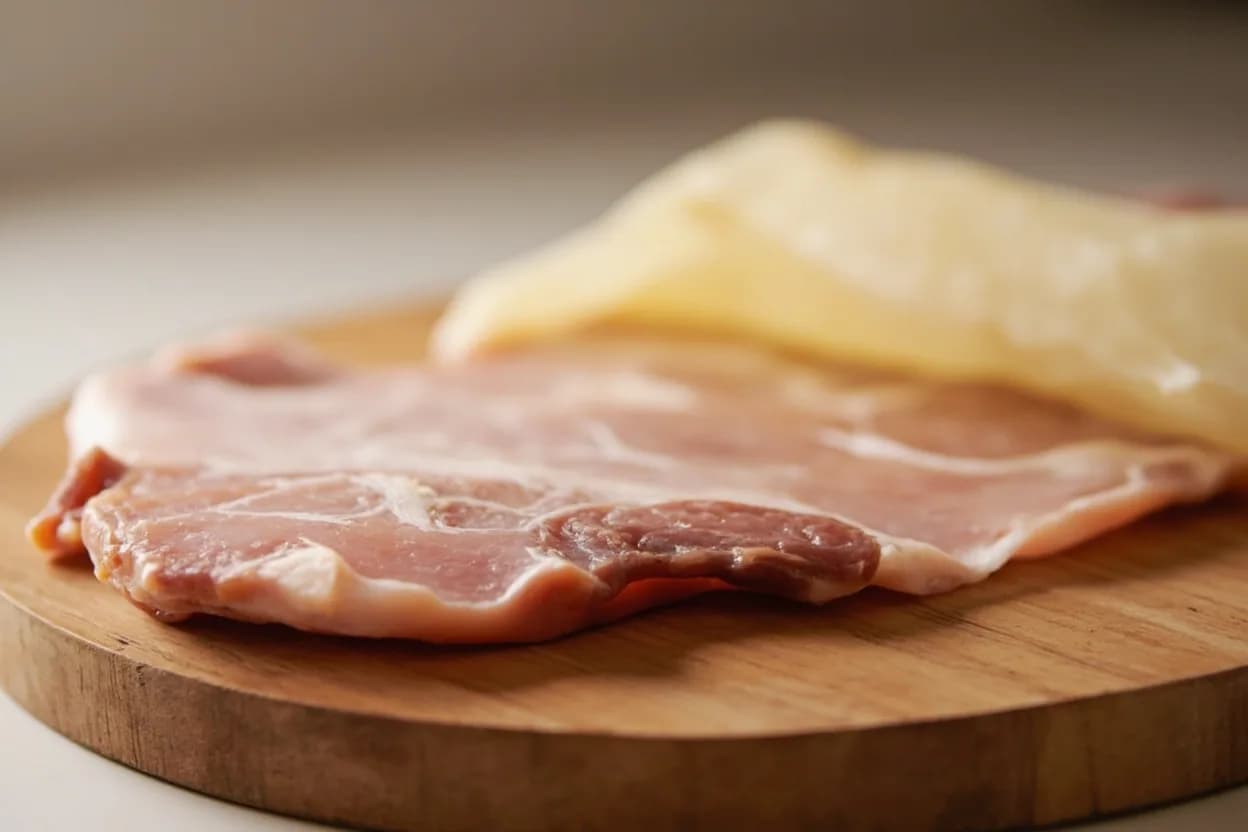


Where it comes from
Fatback: subcutaneous layer from the dorsal (back) side of the carcass, between the skin and the longissimus dorsi. Leaf lard: visceral fat lining the abdominal cavity around the kidneys and psoas. Caul fat: peritoneal omentum, a vascular fatty membrane attached to the stomach and large intestine.
Best for
How to cook it
- 1Rendering fatback: cube into 1-cm pieces, add a splash of water to prevent scorching, melt over low heat until solids are golden crackling; strain through fine-mesh
- 2Rendering leaf lard: grind or cube the cold fat, render very slowly at 90–100 °C to preserve its neutral flavor; do not allow to brown
- 3Using caul fat: soak in cold water for 10 minutes to soften and unfurl without tearing; lay flat, place filling, wrap snugly — it naturally adheres to itself
- 4For lardo: rub fatback generously with salt, black pepper, rosemary, and garlic; press into a marble trough (conca) or vacuum bag; cure refrigerated for 6–12 months
- 5Fatback in farce: keep at 2 °C when grinding — warm fat smears rather than cuts and will cause a greasy, broken emulsion
Prep & butchery
- Fatback: skin may be left on for curing (lardo) or removed for rendering and farce work; chill to near-freezing before cutting or grinding
- Leaf lard: remove the tough membrane and any red kidney-adjacent tissue before rendering; freeze briefly for easier cubing
- Caul fat: if dried out, soak in warm salted water 10–15 minutes; handle gently — it tears easily when dry
Substitutes
- Lard (rendered)
Can substitute for rendered leaf lard in pastry, but commercial lard is often hydrogenated and less neutral-flavored
- Butter
Acceptable pastry substitute but adds dairy flavor and less flakiness than leaf lard
- Pork shoulder fat cap
A workable substitute for fatback in sausage — slightly more connective tissue
- Pork belly (skin-off)
Higher lean-to-fat ratio than fatback; usable in farce but will produce a coarser texture
Related cuts
Belly fat-and-lean; uses the same fatback curing logic but with a higher lean component
Jowl fat, similar curing approach to lardo from fatback
- Lardo di Colonnata
The canonical cured product made exclusively from fatback
- Pork Back Ribs
Share the dorsal anatomy; fatback is the fat cap above the longissimus that backs the rib eye
Appears in
References
- 1.Charcuterie: The Craft of Salting, Smoking, and Curing — Michael Ruhlman & Brian Polcyn
- 2.The Fat Duck Cookbook — Heston Blumenthal
- 3.On Food and Cooking — Harold McGee
- 4.Larousse Gastronomique
Confidence: high
Notes
Why leaf lard makes the best pastry
Leaf lard's near-total absence of water (unlike butter at ~15% water) and its particular crystal structure at refrigerator temperature produce distinctly flaky, short pastry. The fat coats flour proteins in large, irregular sheets rather than the fine emulsion butter creates, yielding a shatter-crisp crust.
Caul fat sourcing
Caul fat is rarely stocked in supermarkets. Order from a specialist butcher or ethnic market (Asian, Mexican, and Eastern European butchers commonly carry it). It freezes perfectly — freeze flat on parchment, then roll up and bag.