Cured Meats & Umami Proteins
Guanciale
Also: cured pork cheek, pork jowl bacon
The silkiest, most flavourful fat in the Roman larder — irreplaceable in carbonara, amatriciana, and gricia.
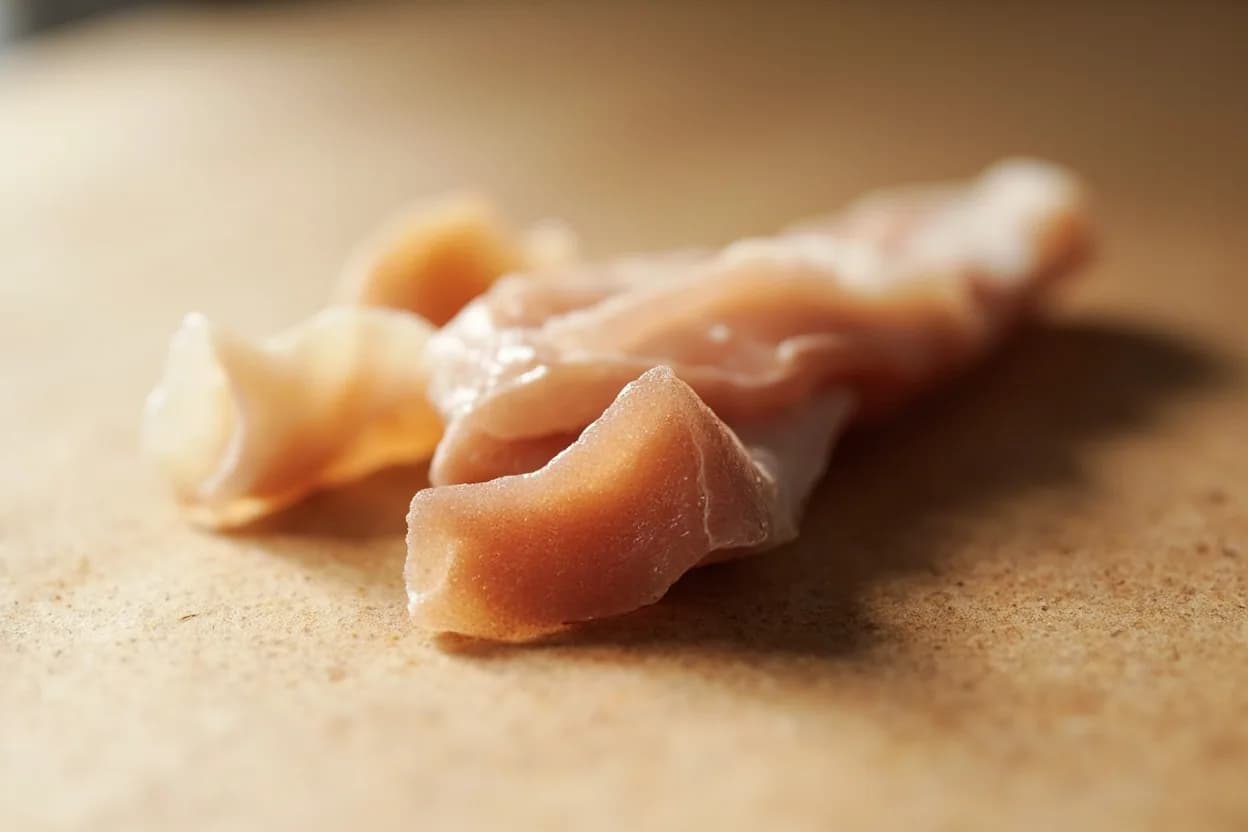
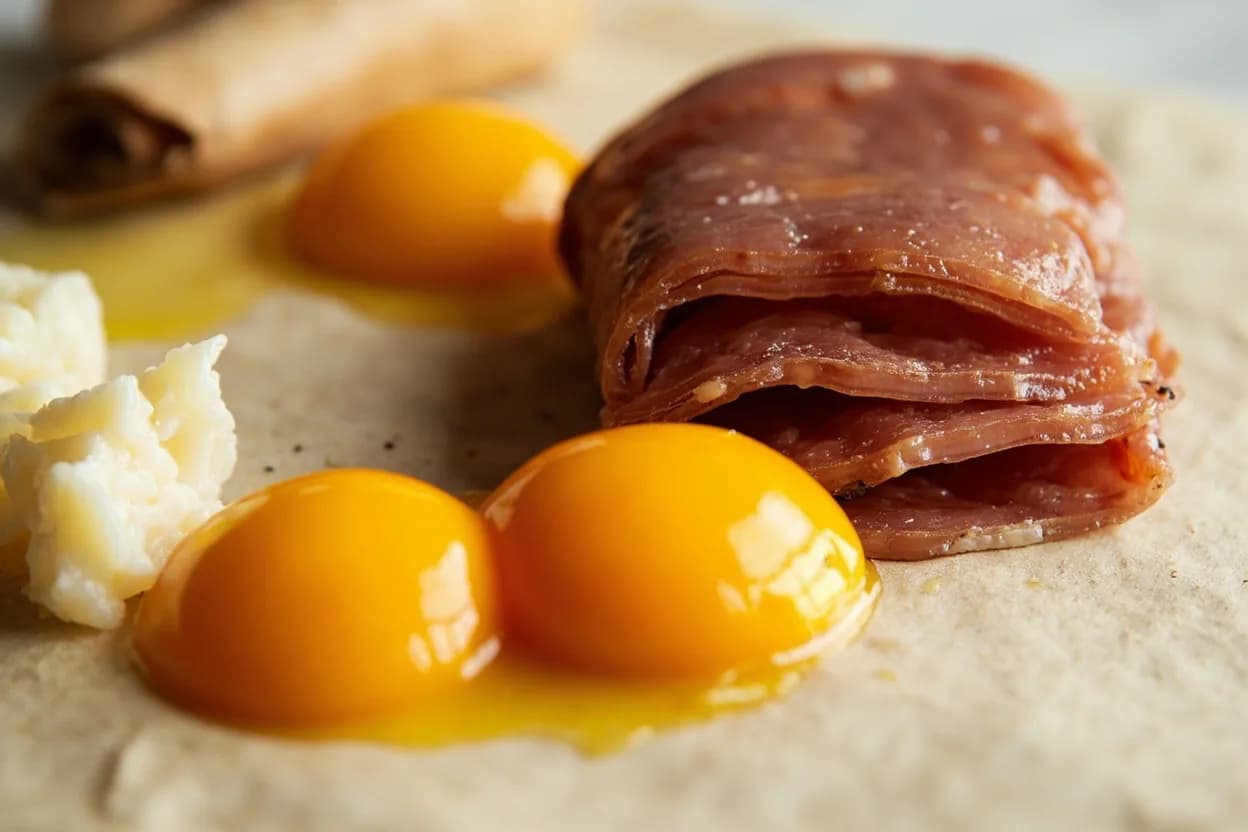
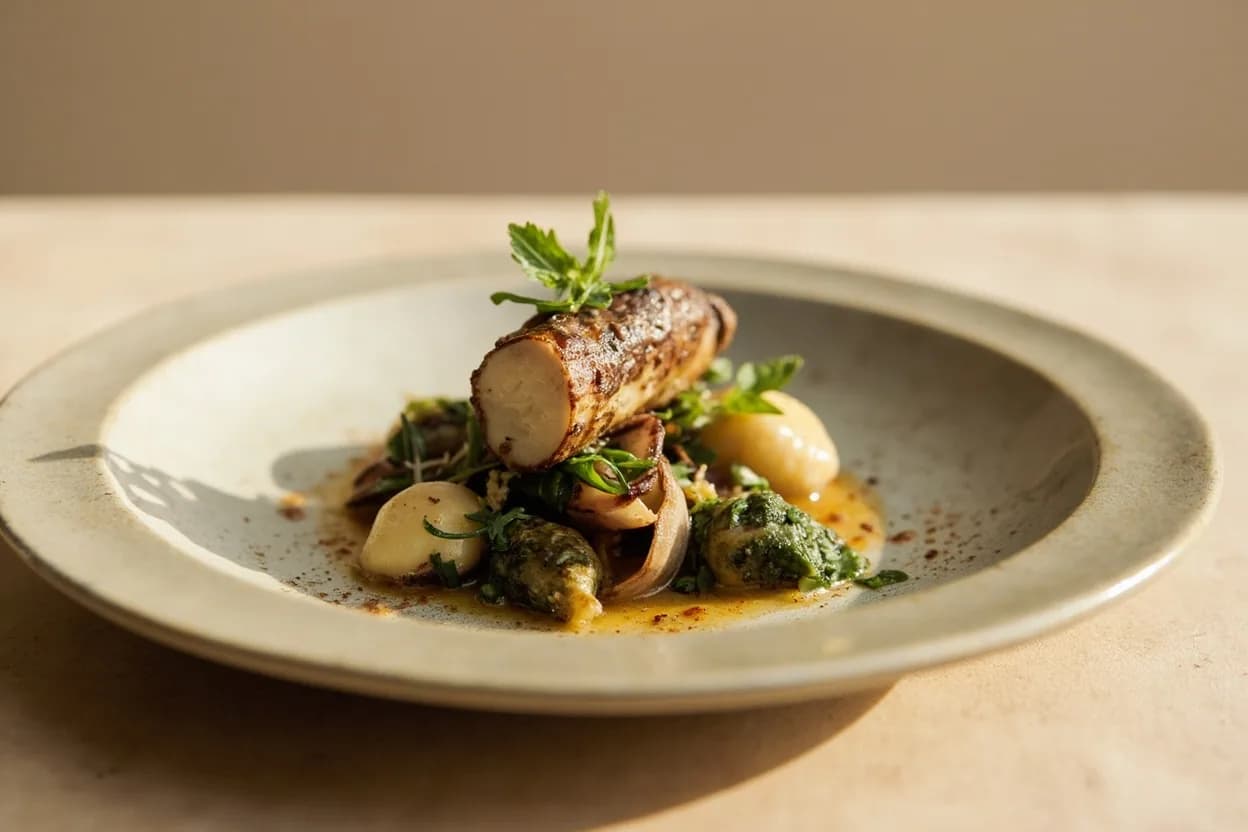
Guanciale (gwan-CHA-leh) is an unsmoked Italian cured meat made from pork cheek or jowl, rubbed with salt, black pepper, and sometimes chilli or rosemary, then air-dried for 3–4 months. Unlike pancetta (belly) or bacon (smoked belly), guanciale's cheek fat is softer, more marbled, and richer in oleic acid, which means it renders into a pure, intensely porky lard at lower temperatures. The flavour is deeply gamey and savoury with a sweet undertone — more complex and distinctly animal compared to the milder pancetta.
In photos
Flavour profile
Classic pairings
- Egg yolksRoman
In carbonara, the rendered guanciale fat emulsifies with egg yolks and Pecorino to coat the pasta; the lecithin in the yolks binds the sauce while the pork flavour saturates every strand.
- Pecorino RomanoRoman
The sharp, salty sheep's milk cheese seasons guanciale's fat and cuts its richness; the two are the twin pillars of cacio e uova, carbonara, amatriciana, and gricia.
- San Marzano tomatoesRoman
In amatriciana, the sweet acidity of crushed tomatoes balances guanciale's fat; the rendered drippings left in the pan become the sauce base.
- Black pepper (coarsely cracked)Roman
The primary cure spice; when the guanciale is rendered, the residual pepper in the fat blooms and perfumes the entire dish.
- Rigatoni, spaghetti, tonnarelliRoman
Short ribbed pasta or thick round pasta trap the rendered fat in their ridges and hollows; the choice of pasta shape is inseparable from guanciale's function in Roman cooking.
- OnionRoman
In amatriciana, thin-sliced onion sweated in guanciale fat acquires a sweet, porky depth it couldn't achieve alone; the fat acts as a flavour vector.
- White wineRoman
A small splash deglazed into the pan after rendering cuts through fat, lifts fond, and adds acidity; evaporates quickly without masking the pork character.
Adventurous pairings
- Clams (vongole)
The Italian surf-and-turf pairing: guanciale rendered in olive oil, deglazed with white wine, then clams added — the brine of the clams and the sweet pork fat create an extraordinary umami base.
- Bitter greens (cicoria, escarole)
Romans love cicoria ripassata — blanched chicory tossed in garlic and olive oil — with guanciale lardons; the bitter vegetal note sharpens the fat's sweetness dramatically.
- Figs
Thin slices of guanciale draped over ripe figs as an antipasto; the floral sugar of the fig absorbs the porky salt and funk in the way prosciutto e melone does but with more animal depth.
- Bottarga (cured mullet roe)
Two heavily salted, air-dried Lazio cured products combined on pasta or toast produce layered umami — fishy and porky funk together, offset by good olive oil and lemon.
- Fermented black garlic
Black garlic's sweet, molasses-like umami pairs with guanciale's gamey fat to create an unusually complex sauce base for slow-braised legumes or pizza.
Tread carefully
- Delicate herbs (tarragon, chervil)avoid
Guanciale's aggressive pork fat overwhelms the fine anise and floral notes of delicate French herbs; choose rosemary, sage, or thyme instead.
- Creamavoid
Adding cream to a guanciale-based sauce makes it heavier and muddier than necessary — the rendered fat is already an emulsifier; cream is redundant and dulls the pork character.
- Smoked ingredients (smoked paprika, smoked salmon)avoid
Guanciale is intentionally unsmoked; layering smoke into a dish built around it blurs the character that makes it distinct from pancetta or bacon.
How to use it
- Start in a cold pan with no added oil — the fat renders at low heat without burning the meat fibers
- Cut into lardons (matchsticks) or cubes; avoid slicing too thin or it crisps before the fat renders fully
- Render slowly over medium-low heat until the fat is translucent and the meat edges just begin to colour
- Reserve the rendered fat in the pan as the sauce base — do not discard it
- In carbonara, remove the pan from heat before adding egg-cheese mixture to avoid scrambling
- Wrap around figs or stone fruit as a quick antipasto sear
Appears in
Related flavours
The more widely available substitute — belly rather than cheek, milder in flavour and less fatty; usable in the same Roman dishes but the result is noticeably less rich
- Lardo di Colonnata
Pure cured fatback, even softer and more delicate; a different application (charcuterie boards, melted over warm bread) but shares the rendered-fat idiom
Its inseparable Roman twin — always used together in the four canonical Roman pasta sauces
References
- 1.Rachel Roddy — Two Kitchens: Family Recipes from Sicily and Rome
- 2.Oretta Zanini De Vita — Encyclopedia of Pasta (University of California Press)
- 3.Giorgio Locatelli — Made in Italy: Food and Stories
- 4.Harold McGee — On Food and Cooking
Confidence: high
Notes
Why guanciale is not interchangeable with pancetta
The cheek muscle contains a higher ratio of soft, oleic-acid-rich fat to lean meat than the belly does. This fat renders at a lower temperature, coats pasta more smoothly, and delivers a more intensely porky, almost sweet flavour note that pancetta cannot replicate. In carbonara and gricia, the substitution is noticeable to any experienced palate.
The amatriciana debate
Whether onion belongs in amatriciana is a genuine Roman culture war. The Amatrice municipality's official recipe excludes onion; Roman trattorias often add it. If using guanciale, onion is defensible — it sweetens in the pork fat and adds body to the tomato sauce.