Cured Meats & Umami Proteins
Pancetta
Also: Italian bacon, pancetta tesa, pancetta arrotolata, pancetta affumicata
Italy's versatile cured belly — milder than guanciale, cleaner than bacon, and at home in pasta, risotto, and slow braises across the peninsula.
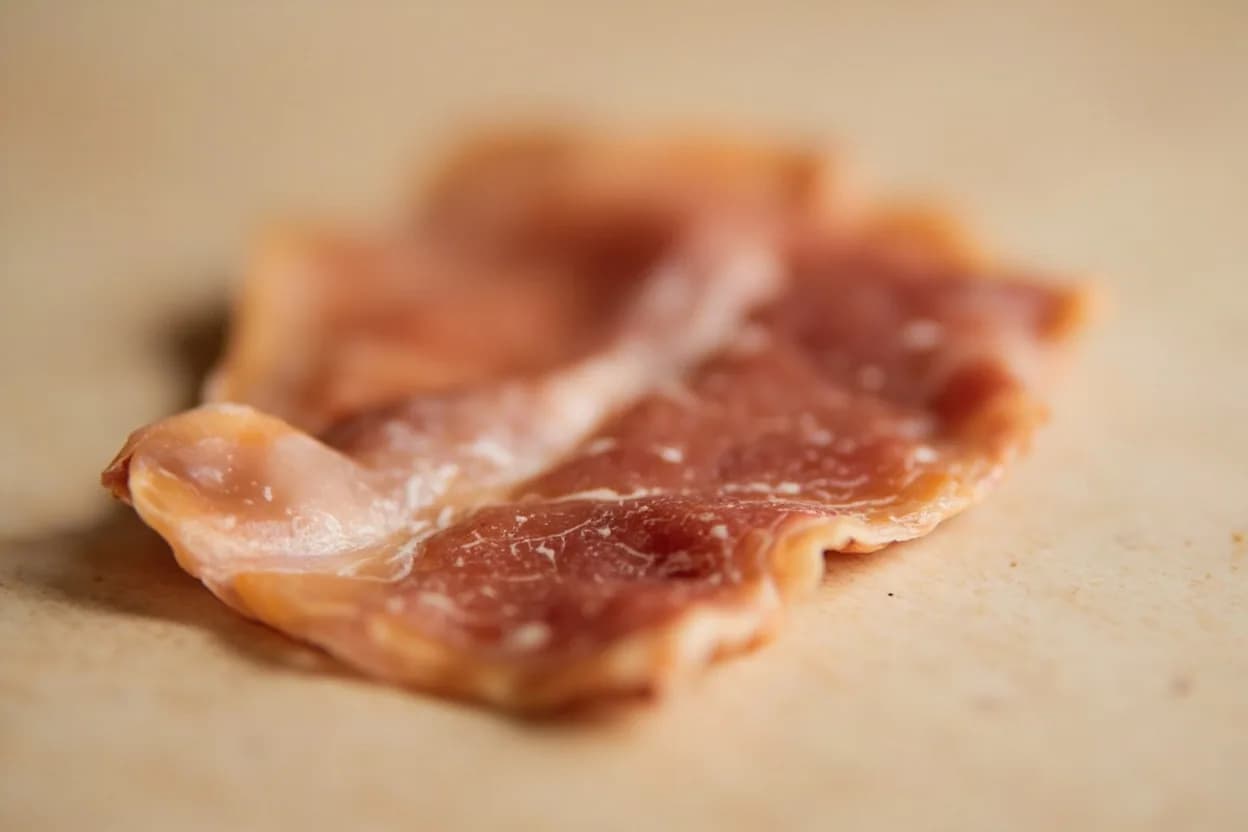
Pancetta is an Italian cured pork belly seasoned with salt, black pepper, juniper, nutmeg, and sometimes rosemary, then air-dried for weeks to months. It comes in two main forms: tesa (flat, like a slab) and arrotolata (rolled into a cylinder). Unlike guanciale, it is made from belly, not cheek; unlike most bacon, it is typically unsmoked (though affumicata versions exist). The result is a mildly porky, lightly spiced cure with good but less aggressive fat than guanciale — versatile enough to move across regions and applications where guanciale would be too assertive.
In photos
Flavour profile
Classic pairings
- Risotto (peas, asparagus, radicchio)Venetian/Northern Italian
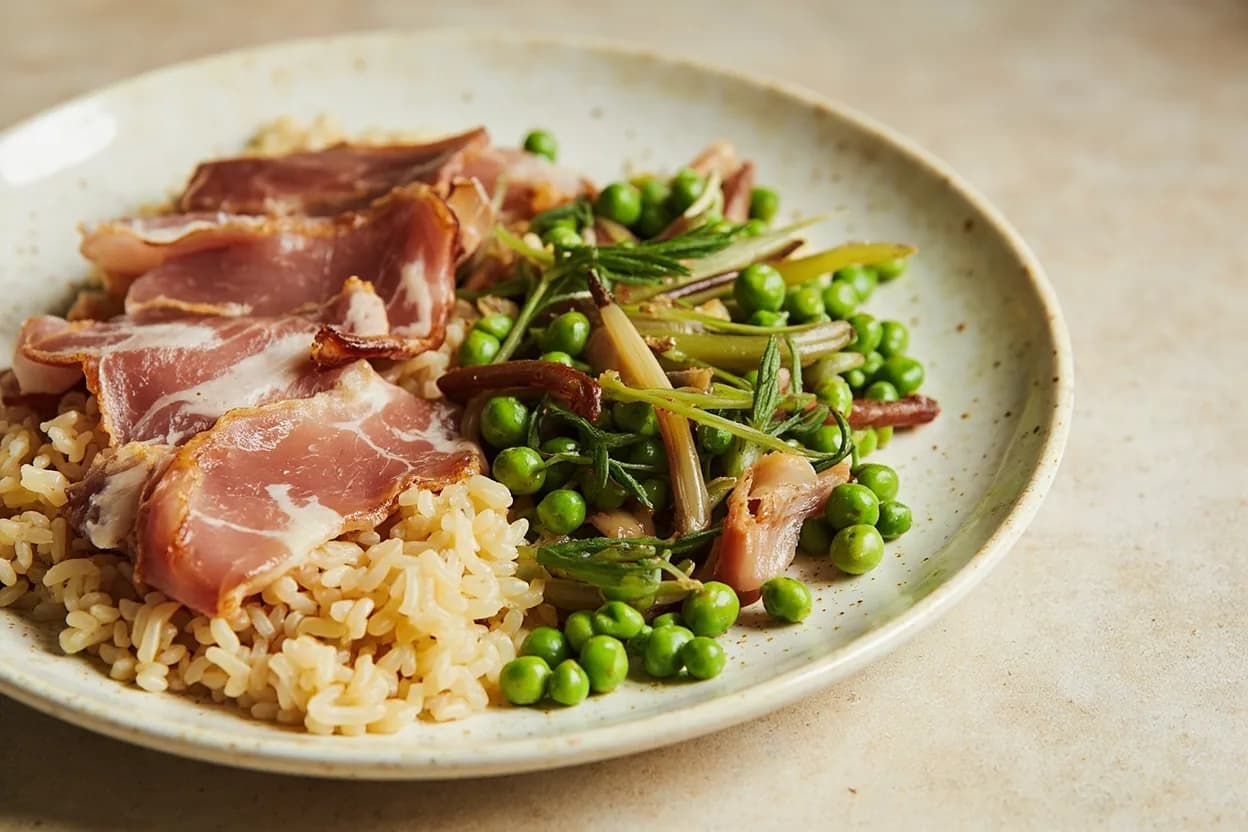
Pancetta lardons rendered at the start of a risotto — especially risi e bisi — lay down a savoury-fat base that enriches the stock as it is ladled in; peas and asparagus provide contrast sweetness.
- EggsItalian
The default carbonara substitute when guanciale is unavailable; the rendered fat emulsifies with egg yolk and Parmigiano into a workable (if less complex) sauce.
- Legumes (lentils, cannellini, borlotti)Italian
Pancetta is the canonical flavour base for Italian bean soups and stews — pasta e fagioli, ribollita, zuppa di lenticchie — providing fat and umami depth that the beans absorb during long cooking.
- Parmigiano-ReggianoNorthern Italian
A softer pairing than Pecorino-guanciale; Parmigiano's sweet, nutty milk notes complement pancetta's milder fat without the sharp saltiness of the Roman pair.
- Sage and butterItalian
Classic saltimbocca and pasta-butter sauces start with pancetta rendered in butter; the sage's herbaceous camphor note cuts the fat and perfumes the dish.
- Chicken and rabbitEmilia-Romagna, Umbria
Pancetta larding (threading fat through lean poultry or rabbit) and barding (wrapping the outside) is standard in Northern Italian roasts — the fat bastes from within and without.
- White wine and aromaticsItalian
Pancetta is the first element rendered in a soffritto alongside onion, carrot, and celery before white wine is added; the fat becomes the extraction medium for all subsequent aromatics.
Adventurous pairings
- Peaches and stone fruit
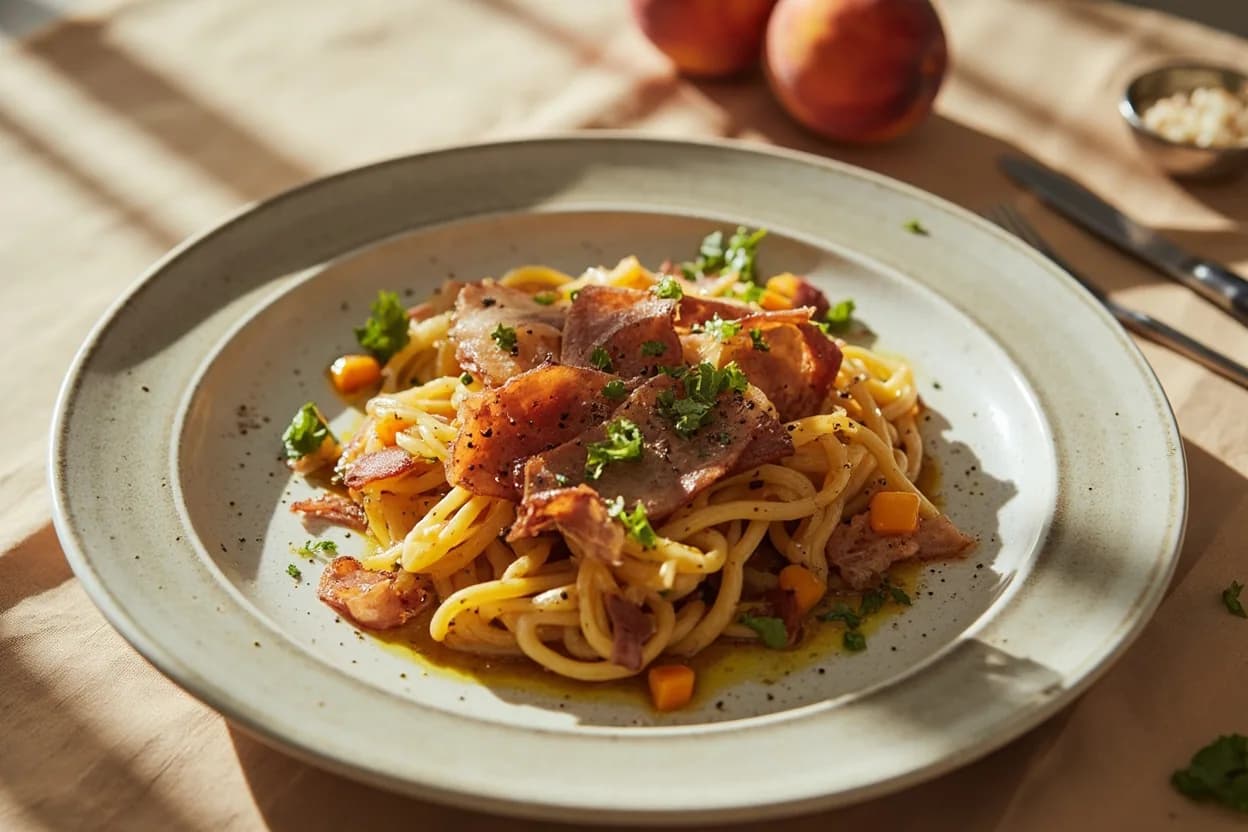
Thin slices of pancetta arrotolata wrapped around ripe peach wedges and grilled briefly — the rendered fat picks up stone-fruit sugar in a caramelised crust; a less clichéd prosciutto alternative.
- Dark leafy greens (cavolo nero, kale)
Pancetta renders in olive oil, the greens wilt in the fat; the bitter glucosinolates in kale are tamed by the salt-fat while the pancetta gains a vegetable-forward freshness.
Pairing two cured pork products sounds redundant but works: pancetta provides structural fat and body while nduja adds spice and spreadable richness to a pizza or pasta sauce.
Pancetta rendered in butter, then saffron-bloomed stock added, builds an extraordinarily luxurious risotto Milanese base; the cure's mild salinity carries the saffron's metallic floral note beautifully.
Japanese-Italian fusion: pancetta caramelised with white miso creates a double-fermented umami glaze for vegetables, noodles, or braised pork; the salt levels in both demand restraint elsewhere in the dish.
Tread carefully
- Oily fish (mackerel, sardines)avoid
Pancetta's cured pork fat on top of already-oily fish creates an oppressively heavy, muddy profile; a squeeze of lemon and cured capers do more work here.
- Very sweet preparations (candied fruit, dessert custards)avoid
The salt-and-spice cure clashes with very high-sugar applications in an unresolved way; unlike bacon's smokiness, pancetta lacks the char note that bridges salt and sweet effectively.
- Raw (as a charcuterie plate alternative to prosciutto)avoid
Pancetta arrotolata can be eaten raw in thin slices, but the flat slab form is not food-safe raw outside of specific PDO certifications; always confirm cure duration before serving.
How to use it
- Render in a cold pan over low heat until the fat runs clear and the edges are lightly golden before adding other ingredients
- Cut into cubes (lardons) for pasta and soups; into thin slices for wrapping and barding
- Use pancetta fat as the base for soffritto rather than olive oil for a deeper savoury foundation
- Wrap around lean proteins (chicken breast, rabbit saddle, scallops) to baste during roasting
- Crisp thin-sliced rounds under the grill for salad garnish — they shatter like very thin chicharrón
Appears in
Related flavours
The Roman specialist — richer, funkier pork cheek; pancetta is the versatile everyday substitute
- Prosciutto crudo
Dry-cured leg rather than belly; more delicate, sweeter, typically eaten raw rather than rendered
- Speck
Alto Adige smoked and cured pork leg — similar uses to pancetta in northern braises but adds a pronounced smoke layer
References
- 1.Marcella Hazan — Essentials of Classic Italian Cooking
- 2.Giorgio Locatelli — Made in Italy: Food and Stories
- 3.Lynne Rossetto Kasper — The Italian Country Table
- 4.Italian Ministry of Agricultural, Food and Forestry Policies — IGP/PDO product specifications
Confidence: high
Notes
Pancetta vs. bacon: the smoking question
The key practical difference between Italian pancetta and American bacon is smoke. Pancetta tesa (flat) and arrotolata (rolled) are virtually always unsmoked in Italy, which means the rendered fat tastes of pure pork and spice rather than campfire. This makes it a more neutral, refined base for delicate sauces where smoke would dominate. Pancetta affumicata (smoked) exists but is less common and regionally specific.
Cure time matters
Pancetta arrotolata aged for six months or more develops a much deeper, more complex flavour than the mild 4-week versions sold in supermarkets. When you find genuinely aged pancetta from a salumeria, use it where it can be tasted — as a thin antipasto slice or a risotto garnish — rather than burying it in a braise.