Spices & Dried Aromatics
Saffron
Also: zafferano, azafrán, za'faran, kesar, crocus sativus stigmas
The world's most expensive spice — golden, honeyed, and faintly metallic — whose floral aroma transforms rice, custards, and braises with a warmth no other ingredient replicates.
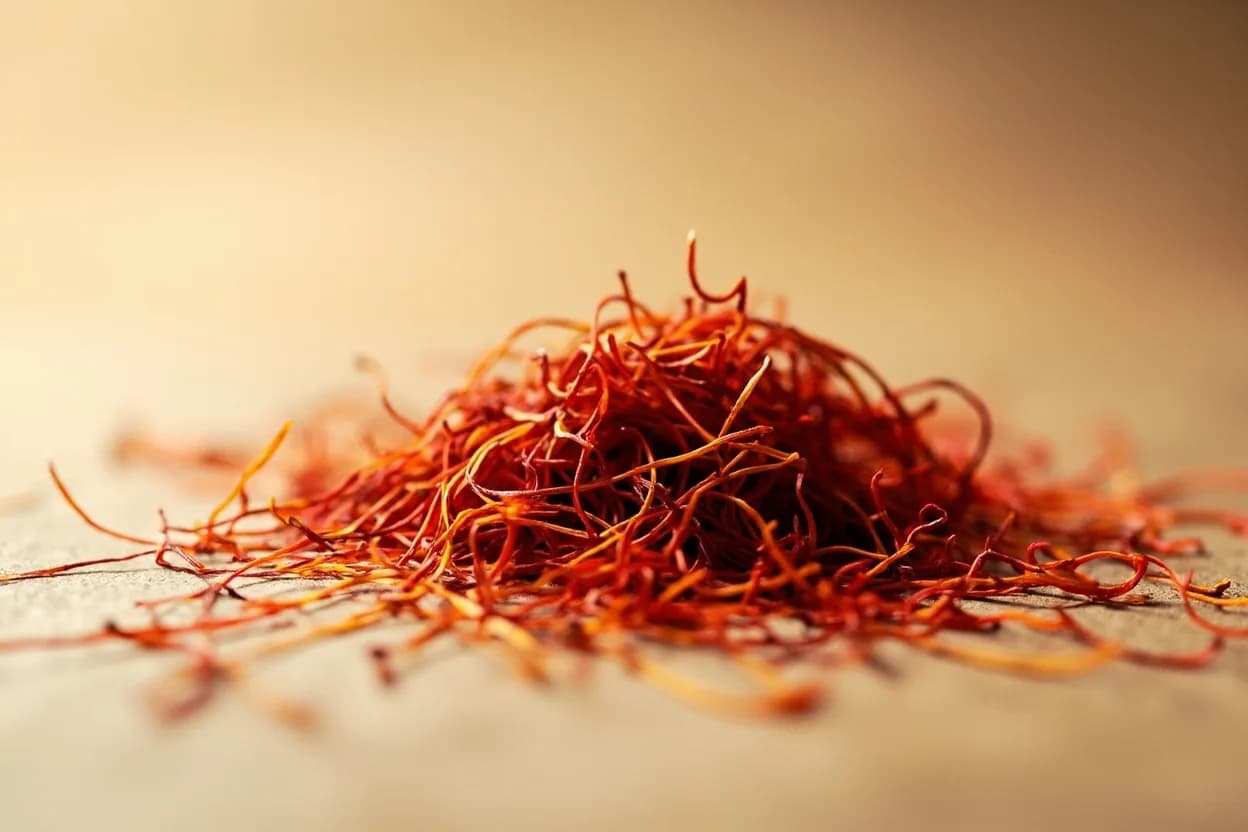
Saffron consists of the dried stigmas of the saffron crocus (Crocus sativus), hand-harvested at dawn before the flower opens and dried immediately. Each flower yields just three stigmas, and roughly 150,000 flowers are needed per kilogram — explaining its price. The primary aromatic compound is safranal (a sweet, haylike floral note), while crocin (a carotenoid) supplies the intense golden-orange colour and picrocrocin contributes a faint bitter-medicinal quality. The overall flavour is honeyed, floral (reminiscent of hay and chamomile), with a slight metallic-mineral edge and lingering warmth. Iranian, Spanish (La Mancha), and Kashmiri saffrons are the benchmark origins.
In photos
Flavour profile
Classic pairings
- Short-grain rice (Arborio, Calasparra, basmati)Italian / Spanish / Persian
Saffron rice is the world's most widely expressed pairing — risotto alla Milanese, paella, Persian chelow — the grain absorbs both colour and perfume, and starch softens the metallic edge.
- Shellfish (mussels, clams, langoustines)French / Spanish
Saffron and shellfish are inseparable in bouillabaisse and paella; the spice's floral warmth amplifies the iodine sweetness of bivalves and crustaceans.
- Cream and butter (milk-fat-based sauces and custards)Persian / French / Indian
Fat is saffron's best solvent: cream carries its colour and aroma more completely than water; saffron ice cream and crème brûlée demonstrate how dairy amplifies the honeyed floral note.
- Chicken (braised or spit-roasted)Persian
Persian fesenjan and Iranian stews (khoresh) rely on saffron-rubbed chicken; the spice softens the bird's occasionally harsh skin fats with fragrance.
- AlmondsMoroccan / Andalusian
A classic North African and Moorish combination — both are pale, fragrant, and slightly bitter; almond's fat carries saffron's aroma in tagines and Moroccan pastilla.
- Onion (slow-caramelised)Levantine / Persian
Caramelised onion's sweetness provides a natural base for saffron in rice dishes and braises; the Maillard sugars marry the floral-metallic warmth.
- Egg yolkItalian
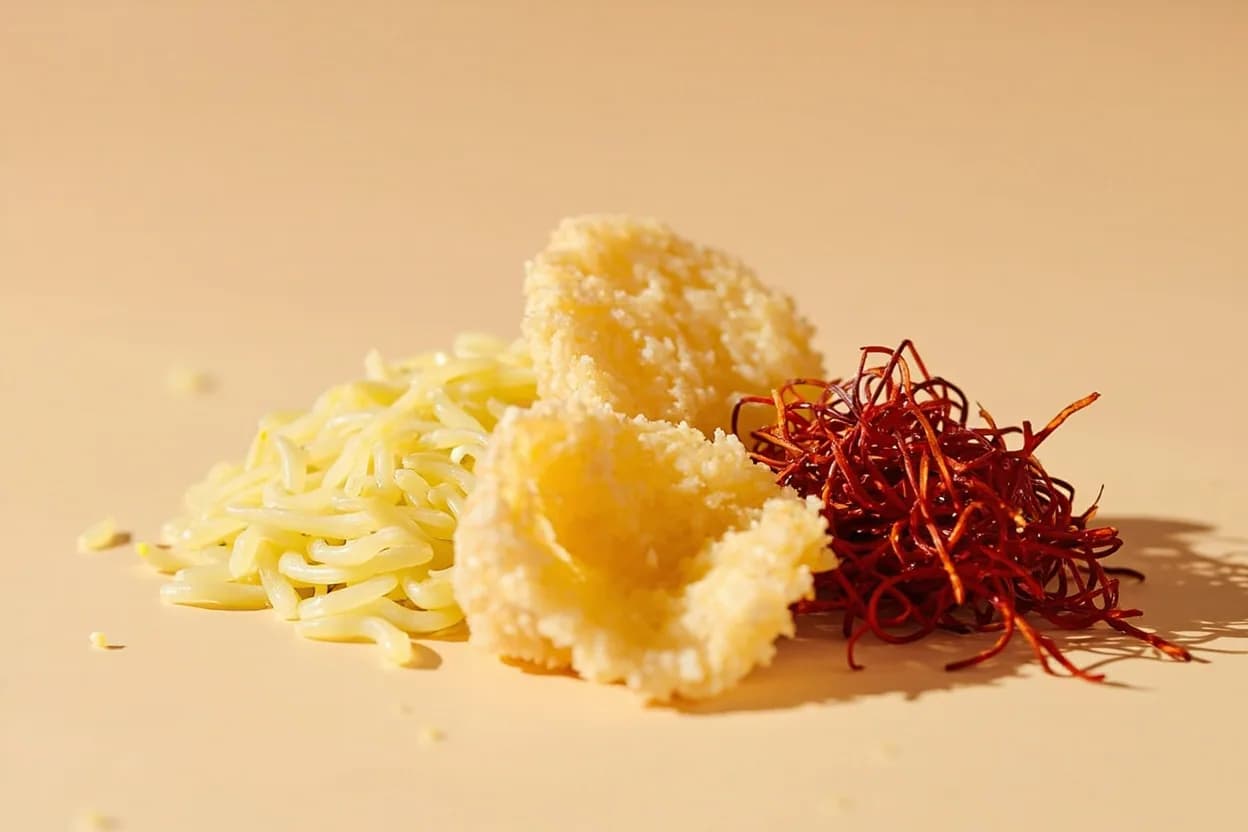
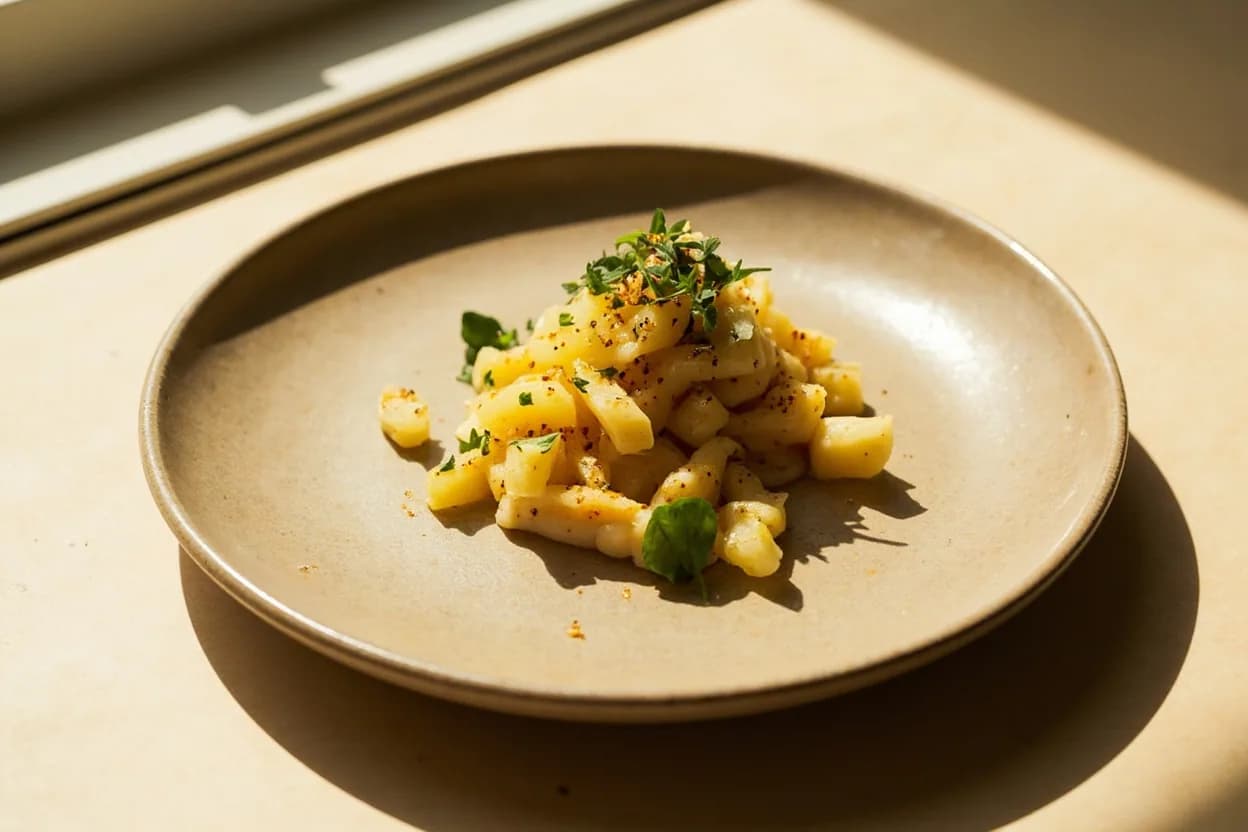
Yolk shares saffron's golden-orange hue and fat content; together in pasta (tagliolini al nero and al zafferano), custards, or aioli they form a visually and flavourally unified pair.
Adventurous pairings
- White chocolate
White chocolate's cocoa-butter fat carries saffron's colour and aroma completely; a ganache or truffle filling with a few milligrams of saffron becomes unexpectedly complex.
- Cauliflower
Roasted or puréed cauliflower — earthy, slightly sulphurous — is transfigured by a saffron beurre blanc or soaking liquid; a Catalan restaurant classic.
- Honey (particularly thyme or acacia honey)
Saffron dissolved in warm honey for a glaze or drizzle doubles down on the honeyed-floral character; exceptional on baklava or panna cotta.
- Cardamom
The Persian and Indian tradition of pairing these two spices in rice and sweets (sheer khurma, Persian sholeh zard): both are floral but operate on different aromatic frequencies, creating depth.
- Pear (poached or roasted)
Saffron-poached pear is a Northern European dessert: the pear's delicate floral-acid sweetness absorbs the saffron brilliantly, and the colour is spectacular.
Tread carefully
- Strongly spiced or chilli-heavy dishesavoid
Capsaicin and bold spices override saffron's delicate aromatic compounds entirely; the spice's investment is wasted.
- Strongly fermented or funky ingredients (fish sauce, blue cheese)avoid
Saffron's subtlety is obliterated by pungent fermented notes; the two aromatic registers have no common ground.
- Overuse in any single dishavoid
More than approximately 0.2 g per 4 servings and saffron becomes medicinal, bitter, and unpleasant — less is genuinely more.
How to use it
- Bloom in warm liquid first: steep threads in 2–3 tbsp warm (not boiling) water, milk, or stock for 15–30 minutes before adding to the dish — hot water destroys safranal
- Grind threads to a fine powder with a pinch of sugar or salt in a mortar to extract maximum colour and aroma
- Add early when cooking rice so the threads disperse their colour through absorption, but stir in the steeping liquid at the end
- For custards and ice cream, steep in warm cream overnight (cold infusion preserves volatile aromatics better)
- Use sparingly — a professional kitchen benchmark is 0.1–0.2 g per 4 portions
Appears in
Related flavours
Often used as a cheap colour substitute — it provides yellow hue and earthiness but lacks safranal's floral aroma and picrocrocin's bitterness; not a true flavour substitute.
- Cardamom
The most natural companion spice in Persian and Mughal cooking; both are floral and fragrant; together they define a culinary vocabulary distinct from any single spice alone.
- Vanilla
Both are expensive, floral, and honey-adjacent; in custards they can substitute or compound — a half-and-half approach yields unusual depth.
References
- 1.Plenty More — Yotam Ottolenghi
- 2.A Book of Middle Eastern Food — Claudia Roden
- 3.On Food and Cooking: The Science and Lore of the Kitchen — Harold McGee
- 4.The Physiology of Taste — Jean Anthelme Brillat-Savarin
- 5.Spice: The History of a Temptation — Jack Turner
Confidence: high
Notes
Buying and authentication
Genuine saffron is deep red with slightly lighter orange tips. A thread steeped in cold water should slowly release gold colour (not immediately — fast release suggests dyed filler). Powdered saffron is difficult to authenticate; buy threads and grind yourself. Iranian (Persian) saffron and Spanish La Mancha DOP are the benchmark commercial grades.
The metallic note
Saffron's faint metallic quality — a characteristic some palates find off-putting — is largely due to picrocrocin. It is more pronounced in poor-quality or over-steeped saffron. Blooming briefly in warm rather than boiling liquid, and using the minimum effective dose, keeps the metallic edge in the background where it adds interest rather than dominance.
Storage
Safranal is highly volatile. Store saffron in an airtight, opaque container away from heat and light; use within one year of purchase. Refrigeration is acceptable; freezing is not recommended as condensation on thawing degrades the threads.