Aromatics & Roots
Turmeric
Also: haldi, golden spice, Curcuma longa, Indian saffron
An earthy, mildly bitter warmth that colors everything gold and anchors the backbone of South and Southeast Asian cooking.
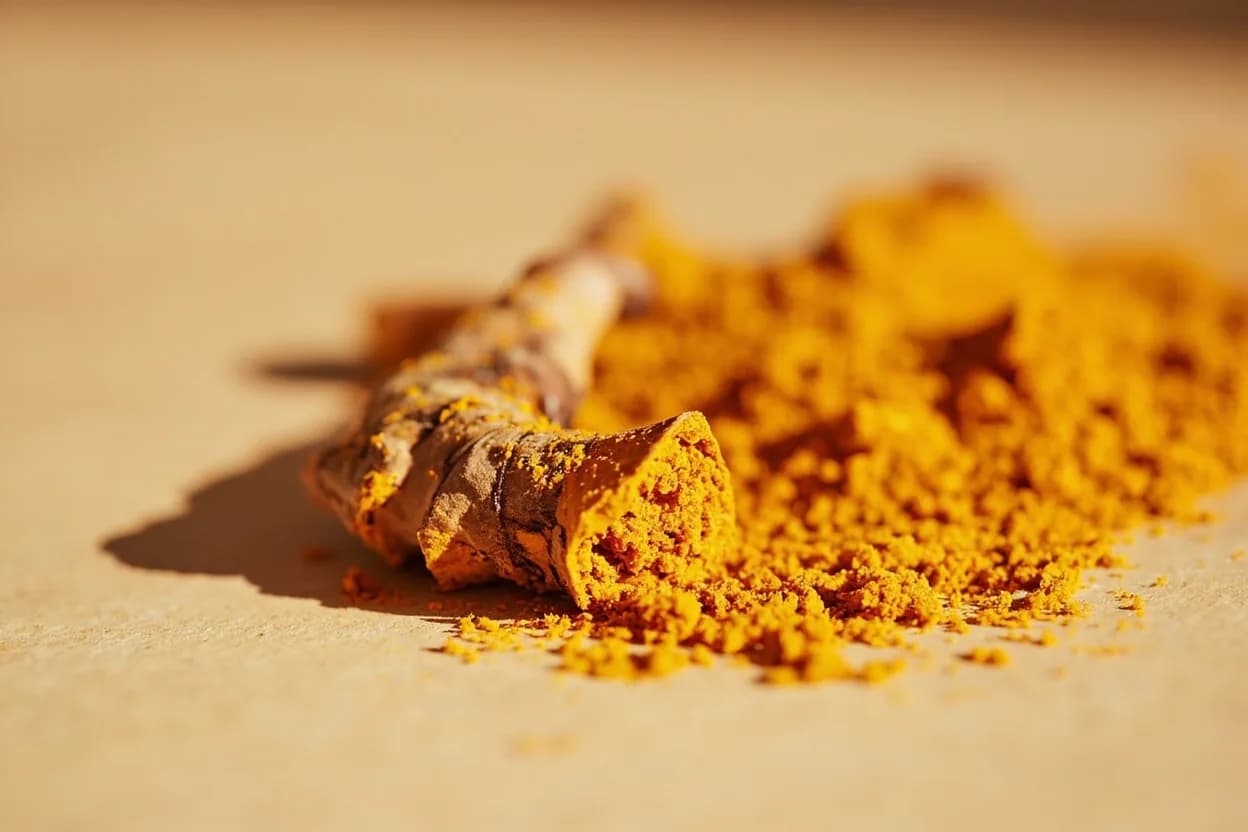
Turmeric is the dried, ground rhizome of Curcuma longa, a tropical plant in the ginger family. Its defining compound, curcumin, gives it an intense golden-orange color and a flavor that is simultaneously earthy, warm, faintly bitter, and musky—never fiery, always grounding. Raw turmeric root has an additional citrusy, gingery freshness that the dried powder largely loses. In cooking, turmeric rarely shines alone; it functions as a foundational flavor layer that stabilizes and unifies other spices, particularly in curry bases, rice dishes, and braises. Fat and heat are essential activators—curcumin is fat-soluble, meaning it releases its color and flavor most fully when bloomed in warm oil.
In photos
Flavour profile
Classic pairings
- Coconut milkThai / South Indian
Turmeric's bitterness is tempered by coconut fat and sweetness; together they form the color and body of Thai and South Indian curries.
- CuminIndian
The two spices are inseparable in Indian masalas: cumin provides anise-like warmth while turmeric grounds the earthiness; together they cover virtually every savory register.
- Black pepperIndian / Global
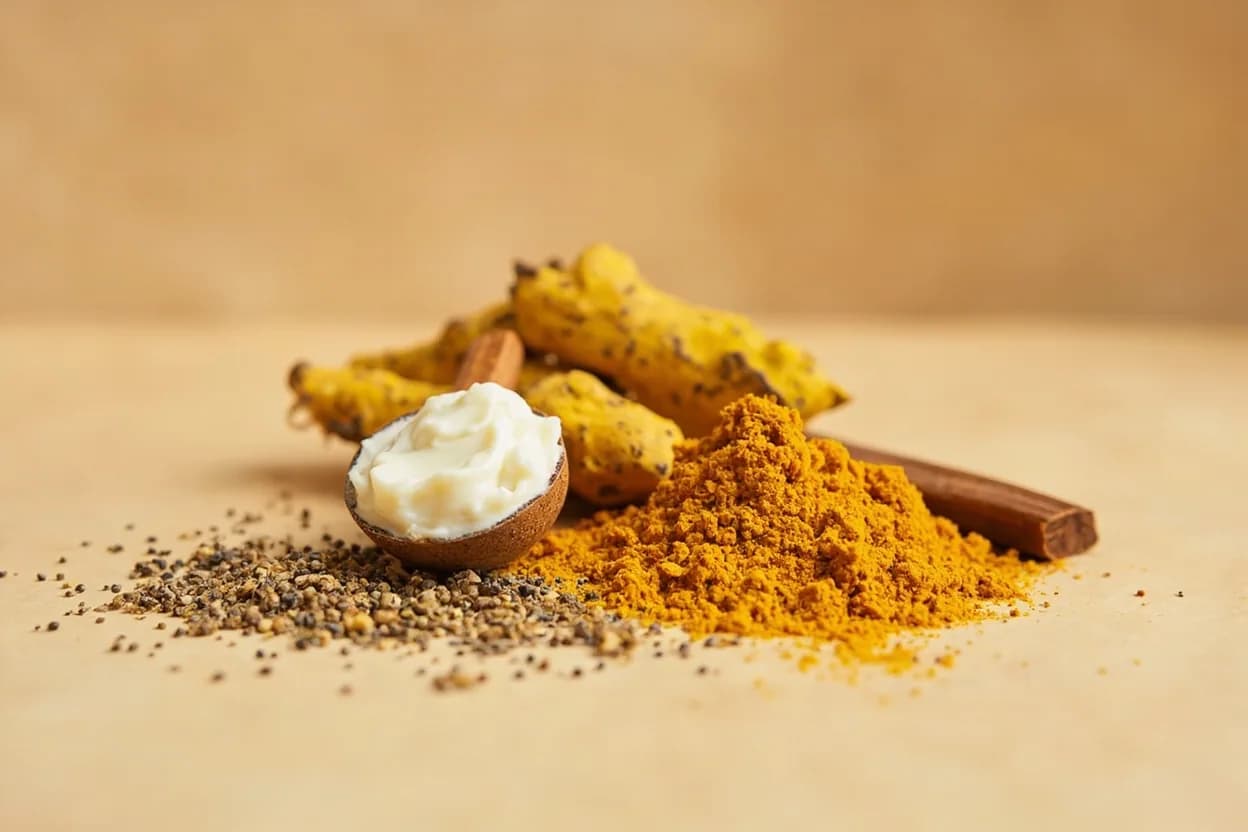
Piperine in black pepper increases curcumin bioavailability by up to 2000%; the pairing is both culinary wisdom and nutritional synergy.
- CauliflowerIndian / North African
Neutral brassica flesh absorbs turmeric's color and earthy warmth beautifully; aloo gobi and roasted turmeric cauliflower are canonical expressions.
- LentilsIndian / Sri Lankan
Dal in all forms relies on turmeric as a foundational spice; the bitterness anchors the legume's sweetness and earthy starch.
- RiceSouth Asian / Southeast Asian / Persian
Persian saffron rice uses turmeric as an affordable stand-in for color; Malaysian nasi kuning and Indonesian yellow rice are built on turmeric-infused coconut rice.
- Fish and seafoodSouth Indian / Vietnamese / Bengali
Turmeric has long been used in South and Southeast Asian fish preparations—it suppresses fishy amine odors while adding warmth; Keralan fish curry and Vietnamese cha ca la vong rely on it.
Adventurous pairings
- Fermented foods (kimchi, pickles)
Turmeric's bitterness contrasts with lactic sourness; in some Korean and Persian traditions, it is added to pickling brines for color and gentle preservative effect.
- Eggs
A small bloom of turmeric in scrambled eggs or frittata adds color and warmth without overwhelming—a standard technique in Parsi cuisine (akuri) and Yemeni breakfast.
- Honey
Turmeric-honey combinations balance bitter with floral sweet; in Ayurvedic tradition this is taken as a tonic; in modern kitchens it makes a compelling glaze for roasted carrots or chicken.
- Citrus (lemon, orange)
Acid brightens and sharpens turmeric's muted earthiness; lemon-turmeric dressings are a lighter alternative to full curry sauce.
Sesame's toasty, oil-rich bitterness runs parallel to turmeric's; combined with lemon and garlic they produce a deeply savory Middle Eastern-inflected sauce.
Tread carefully
- Delicate floral herbs (lavender, rose)avoid
Turmeric's earthy, slightly metallic bitterness overwhelms floral notes and muddies the aroma entirely.
- Vanillaavoid
Sweet vanillin and curcumin bitterness create a dissonant, medicinal aftertaste with no unifying bridge.
- High-acid tomato sauces (Italian-style)avoid
Tomato acidity exaggerates turmeric's bitterness and can produce a tinny, unpleasant note in European-style sauces where the spice has no cultural context.
How to use it
- Bloom in warm oil or ghee before adding other aromatics to unlock fat-soluble curcumin and color.
- Use sparingly—even 1/4 tsp can dominate; start low and layer up.
- Add to marinades for chicken or fish; the natural antibiotic properties also inhibit surface bacteria during marination.
- Grate fresh turmeric root (peel first) directly into smoothies, dressings, or curries for a brighter, more citrusy flavor.
- Combine with black pepper in every application—piperine dramatically boosts curcumin absorption.
- Stir into warm milk with honey and black pepper for golden milk (haldi doodh), the Ayurvedic tonic now popular globally.
Appears in
Related flavours
Same rhizome family; shares zingiberene; they reinforce each other's warm, earthy character in curry bases.
- Coriander
The most common spice pairing with turmeric in Indian masalas; coriander's citrusy, lemony notes brighten turmeric's earthiness.
Shares a slightly bitter, maple-like warmth; the two spices together define the backbone of many South Indian curry powders.
References
- 1.Indian-ish — Priya Krishna
- 2.On Spice: Advice, Wisdom, and History — Caitlin PenzeyMoog
- 3.The Flavor Bible — Karen Page & Andrew Dornenburg
- 4.Spices, Salt and Aromatics in the English Kitchen — Elizabeth David
Confidence: high
Notes
Curcumin bioavailability
Curcumin is notoriously poorly absorbed on its own but becomes dramatically more bioavailable when consumed with fat and piperine. This is not a modern discovery—traditional Indian cuisine has combined turmeric with ghee and black pepper for millennia, producing a preparation that maximizes whatever benefits the compound offers.
Turmeric as color vs. flavor
In much of Southeast Asia and the Middle East, turmeric functions primarily as a colorant—imparting gold to rice, soups, and pastries—while the actual flavor contribution is deliberately kept subtle. In South Asian cooking, the flavor itself is integral to the spice structure. Knowing which role it plays in a dish helps calibrate the dose.