Fats, Pastes & Condiments
Coconut Milk
Also: gata, santan, nước cốt dừa, kati, thairu thengai paal
Rich, tropical creaminess that carries spice, tames heat, and transforms everything it touches.
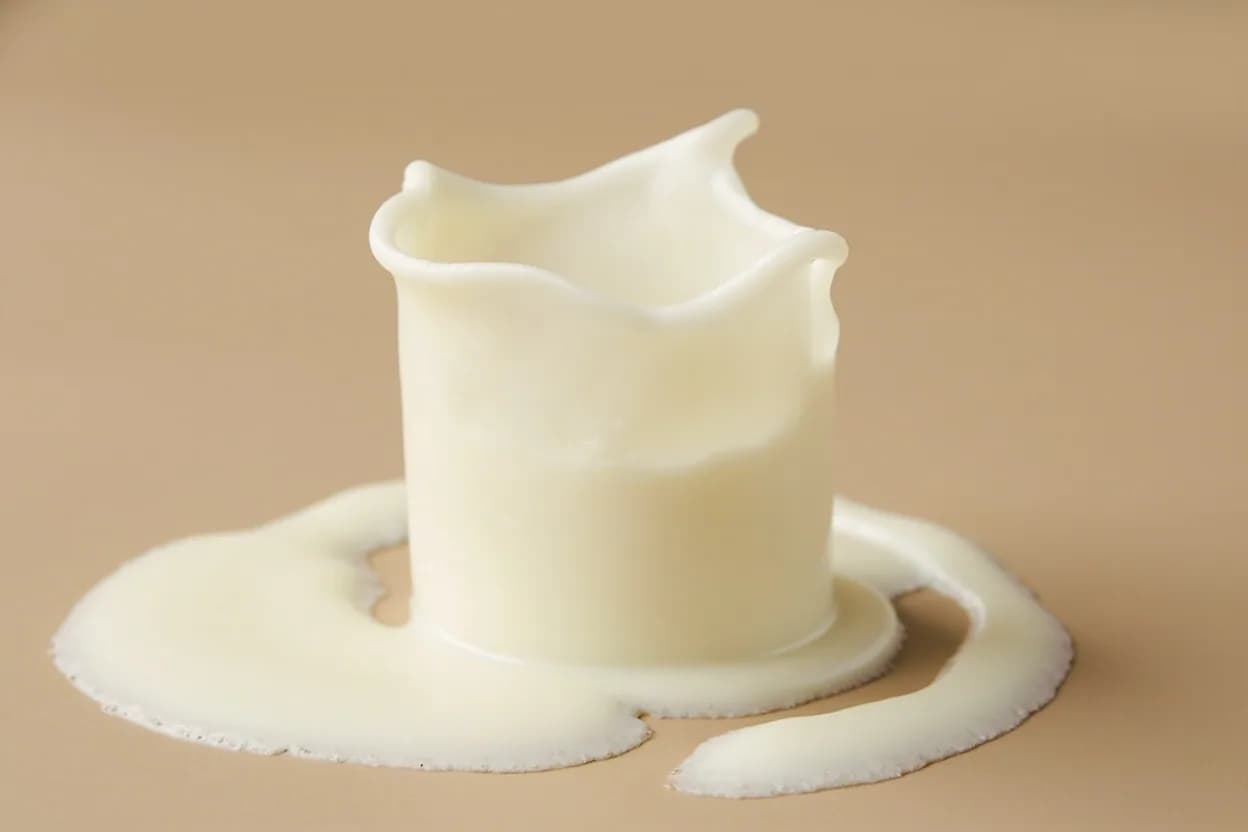
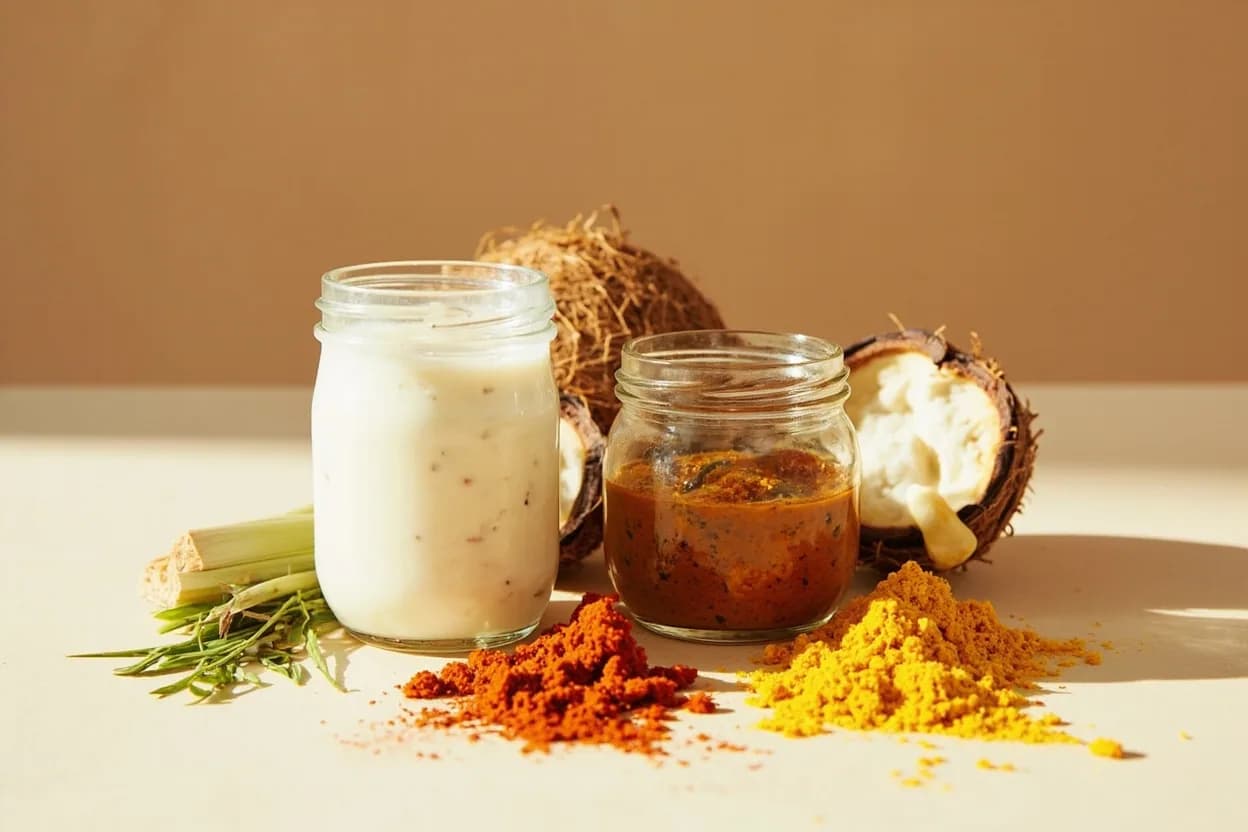
Coconut milk is the liquid extracted from the grated flesh of mature coconuts (Cocos nucifera) mixed with water and pressed through a strainer. Full-fat canned coconut milk contains around 17–24% fat, predominantly medium-chain triglycerides (MCTs) that give it an unusually rich, clean-melting body. The predominant volatile aroma compounds — γ-nonalactone (coconut lactone), δ-nonalactone, and methyl ketones — produce the unmistakeable sweet-tropical, slightly floral character. Coconut cream is the thicker, higher-fat first pressing; lighter 'thin' coconut milk is a subsequent dilution. Across South and Southeast Asian cuisines, coconut milk functions as the primary liquid fat: it carries spice-paste aromatics, controls heat from chillies, provides the body for curries, and adds lushness to both savoury and sweet dishes.
In photos
Flavour profile
Classic pairings
- Thai red and green curry pasteThai
Fat-soluble aromatic compounds in lemongrass, galangal, kaffir lime, and chilli bloom in the coconut milk's fat; the milk simultaneously tempers the chilli heat and unites the paste.
- LemongrassThai/Vietnamese
Citral in lemongrass and coconut lactone are a canonical aromatic pair in Thai, Vietnamese, and Sri Lankan cooking; they reinforce each other's tropical register.
- TurmericSouth Indian/Sri Lankan
Turmeric's earthy bitterness is rounded and softened by coconut milk's fat; the milk's sweetness also prevents turmeric's colour from tasting medicinal.
- Basmati or jasmine rice (cooked in coconut milk)Thai/Malaysian
Rice absorbs the fat and lactone aromas during cooking, becoming fragrant, slightly sweet, and sumptuously textured; essential in many Southeast Asian rice preparations.
- Kaffir lime leavesThai
The leaves' citronellal and linalool volatiles dissolve into coconut milk's fat and perfume the entire curry; they cannot work the same way in a water-based medium.
- Sweet potato and pumpkinSouth Indian/Caribbean
Starches from root vegetables thicken the milk naturally; their beta-carotene sweetness echoes coconut's tropical character in South Indian and Caribbean dishes.
- Sticky rice (mango and sticky rice)Thai
Sweetened coconut milk soaks into glutinous rice grains, providing fat and flavour to offset the fresh mango's acidity; an iconic Thai dessert pairing.
- Chilli (scotch bonnet, bird's eye)Thai/Caribbean
Coconut milk's fat binds capsaicin molecules, attenuating the burn while preserving the chilli's fruity character; essential in Caribbean and Thai cooking.
Adventurous pairings
- Miso (white shiro miso)
White miso's gentle umami and fermented sweetness harmonise with coconut milk's richness; together in a ramen broth or sauce they produce a creamy, complex result that neither could achieve alone.
Tamarind's sour-fruity tartness cuts through coconut milk's fat and sweetness without curdling it; the combination underpins many Tamil Nadu and Sri Lankan curries and is underused in Western kitchens.
Saffron's safranal dissolves readily in fats; coconut milk carries the spice's colour and aroma more evenly than water, making it a luxurious base for South Asian and Middle Eastern rice puddings.
- Dark rum
Coconut and rum share ester compounds; together in a glaze, marinade, or cocktail-inspired reduction they produce a Caribbean-tropical harmony greater than either ingredient.
Full-fat coconut milk froths and steams well; its sweetness complements espresso's bitterness in a dairy-free 'coconut flat white' where the fat emulsifies into the crema.
- Pomelo or grapefruit
The grapefruit family's terpene bitterness (limonene, nootkatone) provides a counterpoint to coconut milk's sweetness that is underexplored; use in a cold citrus-coconut dressing for seafood salads.
Tread carefully
- High-acid tomato sauces (without stabilisation)avoid
Coconut milk can split and curdle when added abruptly to a very acidic base; if combining, reduce heat, add milk last, and stir gently — or use coconut cream which is more stable.
- Delicately flavoured steamed fish without accompanimentavoid
Coconut milk's assertive sweet-fatty character overwhelms gentle white fish unless the fish is paired with strong aromatics (galangal, chilli, herbs) to create a complete Thai or Vietnamese dish.
- Very tannic red wines in a sauceavoid
Tannins from red wine react with the milk's proteins and fats to produce a grainy, unpleasant texture; choose white wine or stock for coconut milk-based sauces.
How to use it
- Bloom whole spices and spice paste in the coconut cream (the separated fat layer) before adding the rest of the milk
- Reduce uncovered to thicken curries; the fat will separate and 'fry' the paste — a technique called 'cracking the coconut' in Thai cooking
- Use full-fat for curries and desserts; light coconut milk for soups, dressings, and lower-calorie applications
- Do not boil hard after adding lime juice or other acids — keep at a gentle simmer to prevent curdling
- Shake the can vigorously before opening if emulsified, or scoop the cream separately if the recipe calls for layered addition
- Sweeten with palm sugar rather than white sugar for traditional Southeast Asian desserts
Appears in
Related flavours
- Coconut cream
First-press, higher-fat version of coconut milk; richer and more stable for desserts and sauce reduction
Canonical Thai aromatic partner; its piney, citrusy bite contrasts coconut milk's sweetness and defines Thai curry broth
Coconut milk's sweetness and fish sauce's funky saltiness are the two poles of Thai savour; balance between them defines the cuisine
Pandan's vanilla-like, grassy aroma infuses coconut milk beautifully; the combination is ubiquitous in Southeast Asian sweets and rice dishes
References
- 1.Hot Sour Salty Sweet — Jeffrey Alford & Naomi Duguid (Artisan, 2000)
- 2.The Flavor Bible — Karen Page & Andrew Dornenburg (Little, Brown, 2008)
- 3.On Food and Cooking — Harold McGee (Scribner, 2004)
- 4.Cradle of Flavor — James Oseland (Norton, 2006)
Confidence: high
Notes
Cracking the coconut
In Thai and Malay cooking, full-fat coconut milk is often simmered uncovered until the fat separates and pools on the surface — this is called 'cracking.' The separated fat is then used to fry the spice paste, producing a more intensely flavoured, less watery curry base than adding the paste to pre-mixed milk. It only works with full-fat, not 'lite' products.
Canned vs. fresh
Fresh coconut milk (pressed to order) has a sweeter, more complex flavour with none of the metallic edge that inferior canned products can carry. In Southeast Asian home cooking, freshly pressed milk is standard. For canned products, Thai brands (Aroy-D, Chaokoh) are generally better stabilised and less likely to contain excessive emulsifiers.