Fats, Pastes & Condiments
Coconut Aminos
Also: coconut sap aminos, coconut secret, soy-free soy sauce alternative
Mellow, slightly sweet soy-sauce substitute with enough umami to hold its own in stir-fries and marinades.
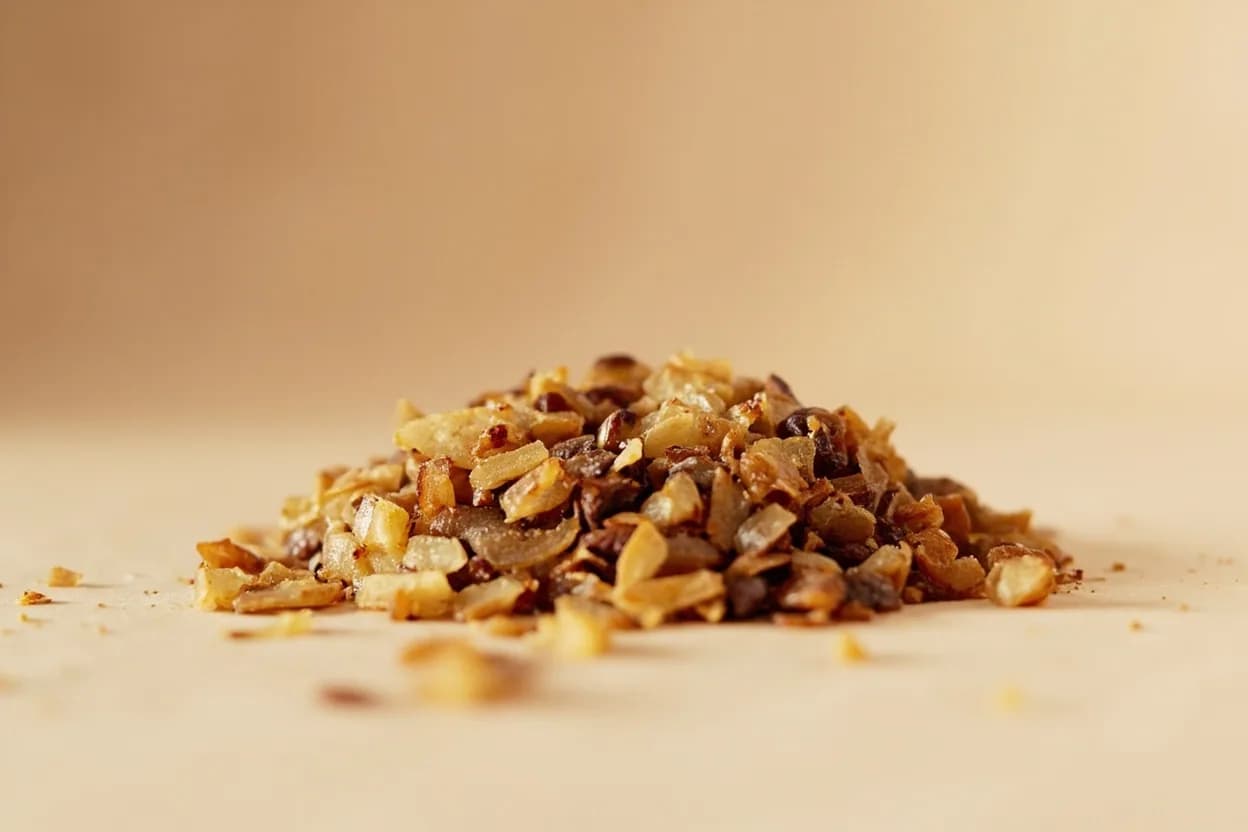
Coconut aminos is a dark, liquid condiment made by fermenting the raw sap of coconut palms (Cocos nucifera) with sea salt. The fermentation process — typically 3–12 months — converts the sap's sugars and amino acids into a savoury, glutamate-rich liquid with a flavour profile loosely resembling low-sodium soy sauce but markedly sweeter, less pungent, and with only about 90–130 mg sodium per teaspoon (vs. 280–300 mg for regular soy sauce). It contains 17 amino acids and naturally occurring glutamates produced during fermentation. Its relatively mild, sweet-savoury character makes it a go-to for Whole30, paleo, and AIP (autoimmune protocol) communities seeking soy-free and gluten-free alternatives. It lacks soy sauce's depth of Maillard-caramelised complexity but brings a useful sweetness and modest umami that performs well in plant-based cooking, light stir-fries, and marinades.
In photos
Flavour profile
Classic pairings
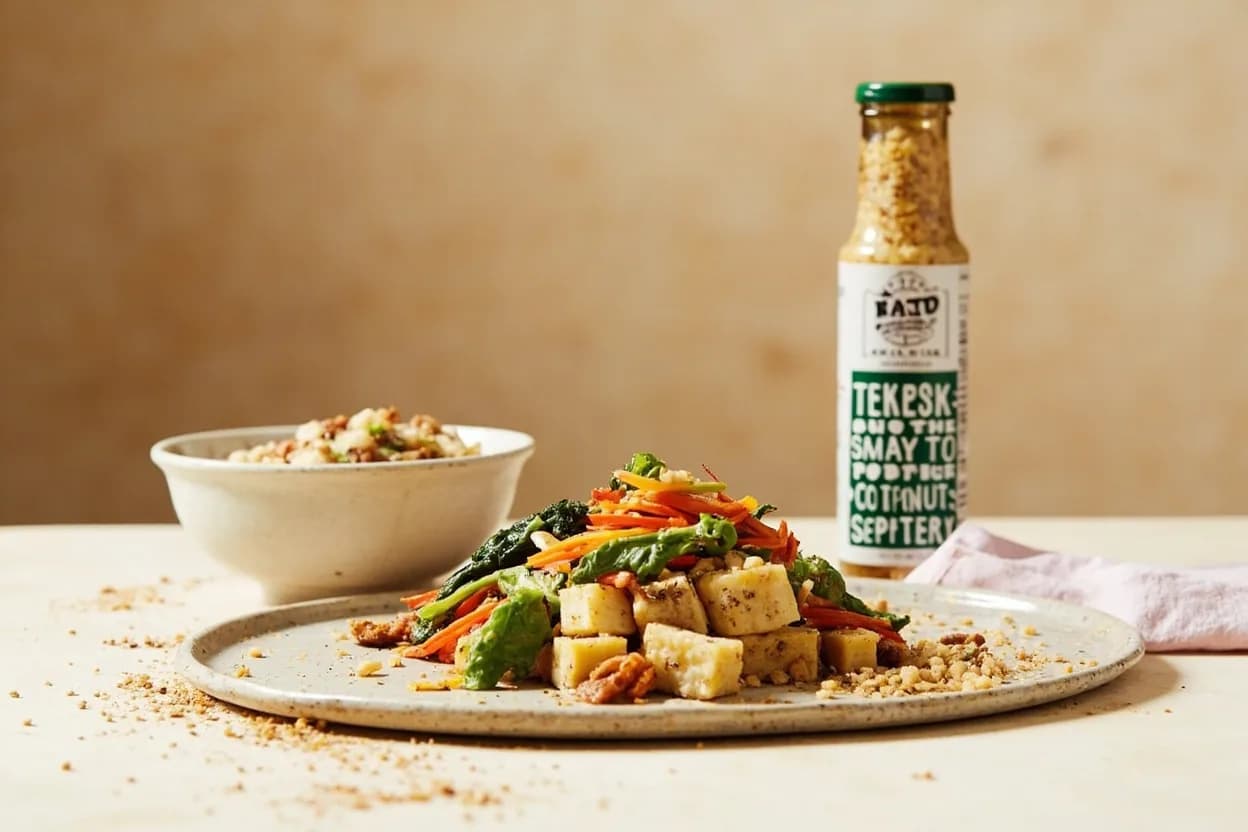
- Stir-fried vegetables and tofuAsian-inspired
Its mild sweetness and umami coat vegetables without overpowering delicate flavours; better than soy for stir-fries where you want a light glaze rather than a punchy sauce.
- Cauliflower rice and cauliflower steaksPlant-based/Whole30
Cauliflower's neutral brassica character absorbs the aminos' umami and sweetness beautifully; a splash while stir-frying adds depth that makes the dish feel complete.
- Chicken marinadesAsian-inspired
The natural sugars assist Maillard browning and caramelisation; used with garlic and ginger, it produces a glossy, sweet-savoury crust on grilled or pan-seared chicken.
- Avocado and sushi-style rolls (hand rolls)Japanese-inspired
A drizzle over avocado-centric hand rolls replaces soy sauce with less sodium and a gentler flavour that doesn't overpower the avocado's creaminess.
- Ginger and garlicAsian-inspired
Classic flavour trinity: ginger's citrus-spice and garlic's sulphur compounds bloom in coconut aminos' sweet-savoury medium; together they make the simplest effective stir-fry sauce.
- Dipping sauce base (grain-free)Pan-Asian
Mixed with rice vinegar, sesame oil, and scallion, coconut aminos produces a dipping sauce for dumplings or spring rolls that is grain-free and appreciably lighter than soy-based alternatives.
Adventurous pairings
- Miso (white)
Double fermentation: coconut aminos and white miso together produce compounding umami layers with a sweetness backbone from the aminos and a richer, more yeast-complex depth from the miso.
Coconut aminos' earthy sweetness and pomegranate's sharp tartness produce a glaze that caramelises beautifully on lamb, duck, or roasted root vegetables — a Middle Eastern-meets-Pacific crossover.
Together with lime juice and garlic, coconut aminos turns tahini into a glossy, umami-sweet sauce for grain bowls, grilled chicken, or roasted vegetables — no soy needed.
- Pineapple juice
The aminos' sweetness rhymes with pineapple's tropical-acid character; combined with ginger in a marinade they create a Hawaiian-inspired caramelising glaze for pork or shrimp.
- Smoked paprika
Smoky capsicum compounds and the aminos' sweet-savoury base produce a faux-barbecue marinade that is particularly effective for grilled mushrooms and plant-based proteins.
- Truffle oil (finishing)
A counterintuitive luxury pairing: a few drops of each over roasted potatoes or scrambled eggs produces mushroom-like umami amplified by the truffle's sulphur compounds, with the aminos providing salt and depth without edge.
Tread carefully
- Recipes requiring high-sodium punch (e.g., traditional ramen tare)avoid
Coconut aminos' low sodium content and mild character cannot replicate the aggressive salt and fermented depth of shoyu tare or miso tare; the dish will taste flat and sweet.
- Delicate poached fish or white sauceavoid
The caramel-sweet notes intrude on neutral, delicate preparations where salt alone (or a neutral fish sauce) would be invisible.
- Very spicy dishes as the sole seasoningavoid
In intensely spiced preparations, coconut aminos' sweetness can amplify the sensation of heat unpleasantly; balance with an acidic ingredient or use alongside a more assertive umami source.
How to use it
- Use 1.5× the volume of soy sauce called for in a recipe to compensate for lower sodium and intensity
- Add near the end of cooking to preserve the sweet-caramel note; prolonged high heat can make it taste flat
- Combine with fish sauce (1:1) for plant-based-adjacent dishes that need more depth
- Use as a glaze brush in the final minutes of grilling — the sugars caramelise without burning as quickly as honey
- Reduce by half in a pan for a concentrated, syrupy dipping condiment
- Substitute for Worcestershire in Whole30 or paleo recipes for its sweet-savory complexity
Appears in
Related flavours
- Soy sauce (tamari)
The direct comparator; tamari is gluten-free and deeper in umami — choose it over coconut aminos when soy allergy is not a constraint
More pungent and saltier umami bomb; coconut aminos is often blended with a small amount of fish sauce to add depth while staying soy-free
- Liquid aminos (Bragg)
Soy-derived but processed rather than brewed; more salt-forward than coconut aminos, less sweet — a closer flavour proxy to soy sauce
Same botanical origin; coconut milk provides fat and creaminess while aminos provide savour — the two can coexist in a Thai-inspired sauce
References
- 1.The Whole30 — Melissa Hartwig Urban (Houghton Mifflin Harcourt, 2015)
- 2.Paleo Cooking from Elana's Pantry — Elana Amsterdam (Ten Speed Press, 2013)
- 3.On Food and Cooking — Harold McGee (Scribner, 2004)
- 4.The Flavor Bible — Karen Page & Andrew Dornenburg (Little, Brown, 2008)
Confidence: medium
Notes
Not a one-to-one soy substitute
Coconut aminos is sweeter, milder, and lower in sodium than any soy sauce or tamari. In recipes where soy sauce is the dominant flavour note, coconut aminos will produce a noticeably sweeter, lighter result. This is a feature for plant-based light cooking; it is a limitation in robustly seasoned Asian dishes. Adding a pinch of salt to coconut aminos gets you closer to the soy sauce sodium level without the soy.
Refrigerate after opening
Like all fermented condiments, coconut aminos oxidises and develops off-flavours once exposed to air. Store in the refrigerator after opening and use within 3–6 months for best flavour.