Souring Agents
Pomegranate Molasses
Also: dibs al-rumman, pomegranate paste, grenadine concentrate, rob-e-anar
The Levant's deep, glossy souring syrup — tart, fruity, and hauntingly complex, the backbone of muhammara, fesenjan, and a hundred glazes.
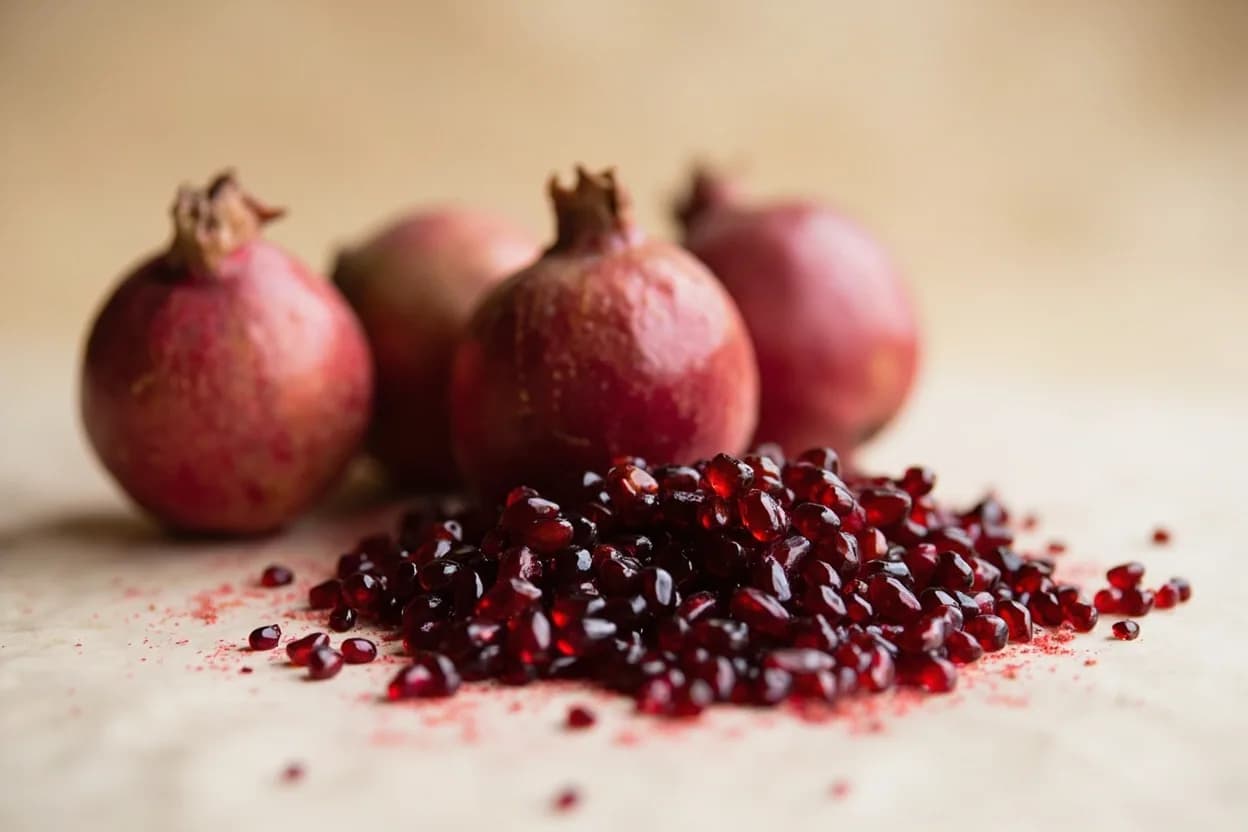
Pomegranate molasses is a syrup produced by reducing pure pomegranate juice — sometimes with a little sugar and lemon — until it thickens to a pourable, tar-dark consistency. It concentrates the fruit's malic and citric acids alongside anthocyanins and tannins, producing a flavour that is simultaneously tart, fruity, slightly bitter, and deeply complex in a way no other single ingredient replicates. Unlike grenadine (which is sweetened and often artificial), authentic pomegranate molasses from Lebanon, Syria, Iran, and Turkey is dominated by sourness and fruit depth, with sweetness secondary. The texture is thick and glossy; used sparingly, it functions as both souring agent and flavour amplifier.
In photos
Flavour profile
Classic pairings
- Walnuts (muhammara)Syrian / Lebanese
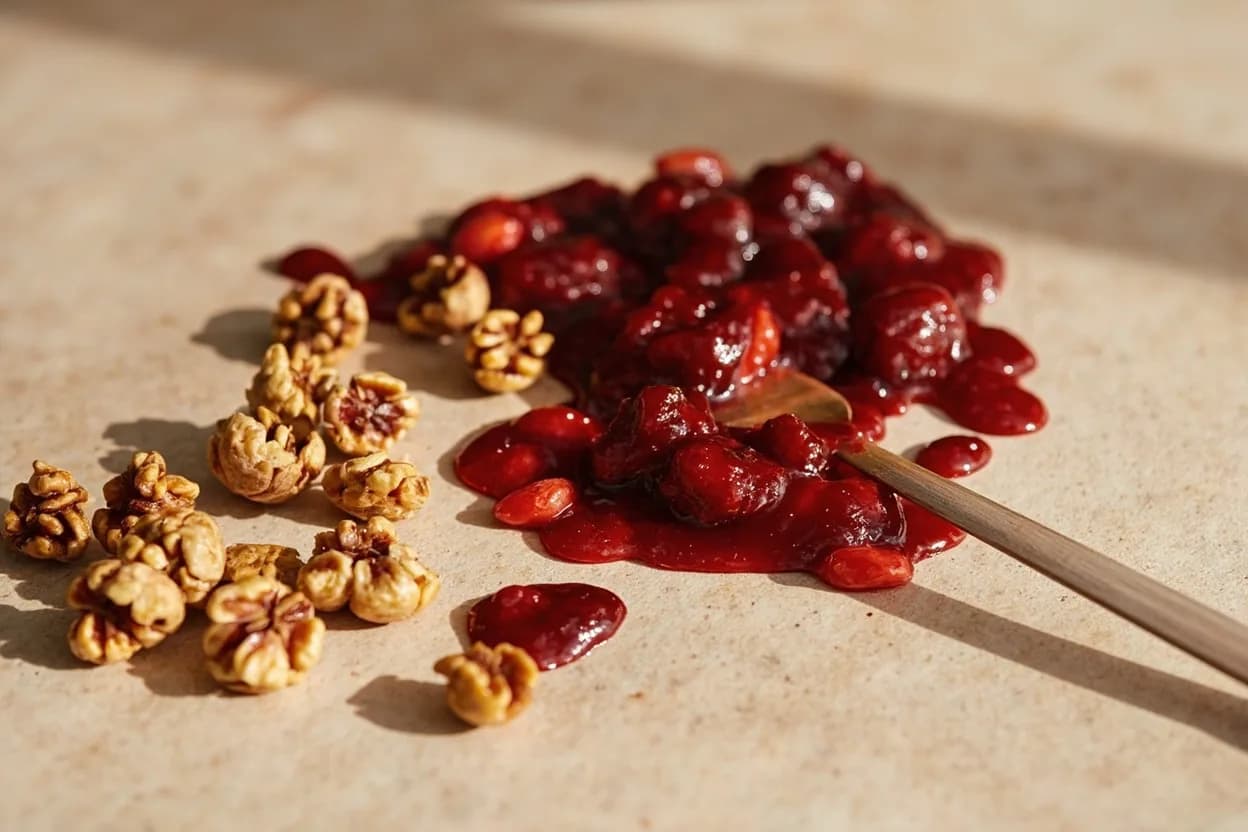
The canonical pairing: Syrian-Lebanese muhammara is a dip of roasted red peppers, toasted walnuts, and pomegranate molasses — the astringency of walnut skin and the fruit-tartness of the molasses are perfectly calibrated.
- Duck and wild fowl (fesenjan)Persian
Iran's great stew fesenjan simmers duck or chicken in a sauce of pomegranate molasses and ground walnuts — the molasses's acid cuts the fat, and together with the walnuts it creates a hauntingly dark, complex sauce.
- Lamb (kebabs and braises)Levantine / Persian
A glaze of pomegranate molasses brushed onto lamb before the last minutes of grilling caramelises into a lacquered crust — the acid brightens the meat's mineral depth.
- Eggplant (aubergine)Levantine
Roasted eggplant dressed with pomegranate molasses and tahini is a Levantine dish in its own right — the molasses counteracts eggplant's slight bitterness and adds colour and gloss.
- TahiniLevantine
A classic meze pairing: pomegranate molasses drizzled over or stirred into tahini creates a sweet-sour-nutty sauce (fatteh, kebab dressings) where the sesame bitterness is beautifully offset by the fruit acid.
- BeetsLevantine / Persian
Beet and pomegranate share deep berry earthiness; tossing roasted beets with pomegranate molasses, olive oil, and mint creates a salad where the flavour is amplified rather than contrasted.
- ChickpeasLebanese
In Lebanese fatteh and salads, a spoonful of pomegranate molasses in the dressing lifts the earthiness of chickpeas and adds the necessary acid that makes legume dishes come alive.
Adventurous pairings
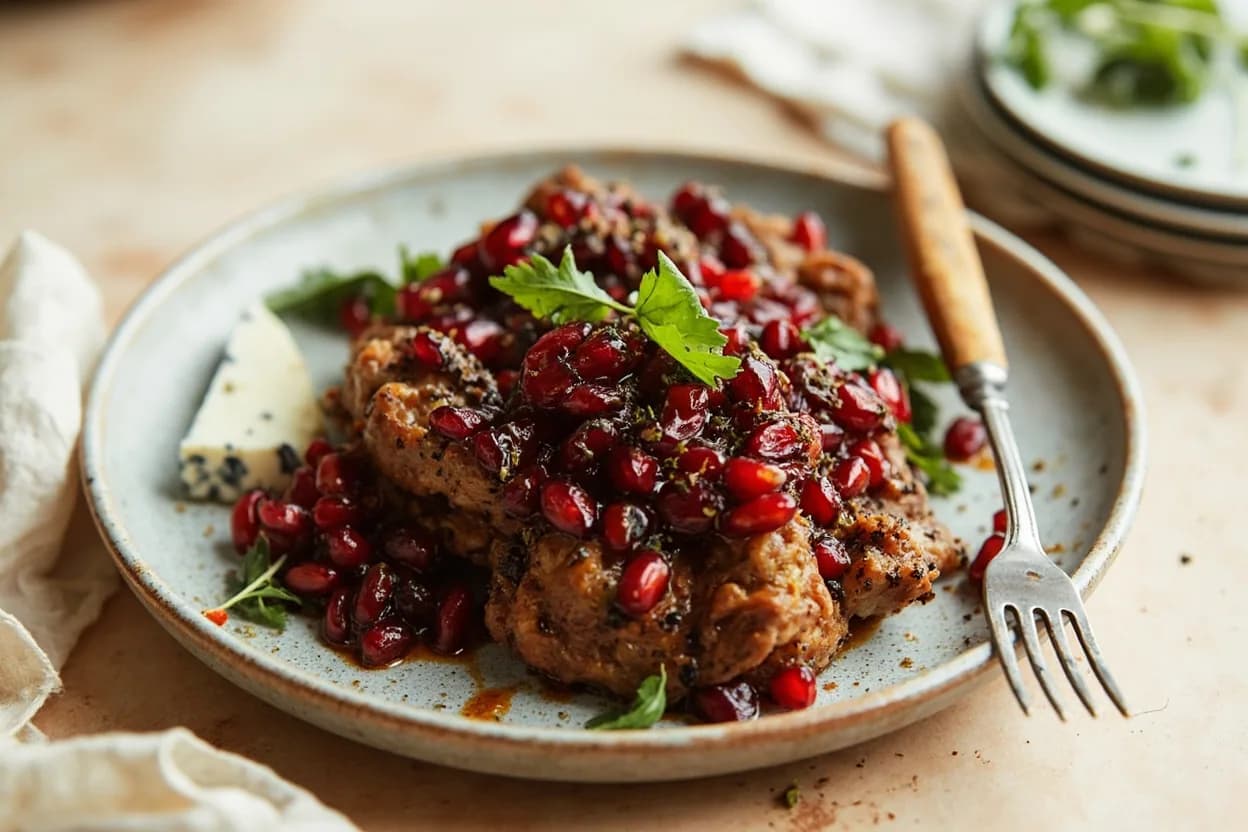
The combination maps onto the classic grape-cheese logic but with greater complexity — pomegranate molasses's fruit-tartness cuts blue cheese's ammonia edge while the berry depth echoes the cheese's funk.
- Dark chocolate (75%+)
A small amount of pomegranate molasses stirred into a chocolate ganache or sauce deepens the fruit register — both share polyphenols and the combination reads as sophisticated rather than strange.
- Beef ribs (barbecue glaze)
Used in place of or alongside tamarind in a slow-cook glaze, pomegranate molasses adds fruity depth and a lacquer finish that outpaces most commercial BBQ sauces.
- Goat cheese
Pomegranate molasses over fresh goat cheese (labneh or chèvre) is a straightforward but remarkable combination — the tangy dairy meets the tangy fruit, but on different flavour axes.
Tread carefully
- Grenadine (as a substitute)avoid
Supermarket grenadine is primarily sugar, artificial colour, and flavouring — it lacks the acid, tannin, and depth of true pomegranate molasses. The resulting dish will taste candied rather than complex.
- Cream-based hot saucesavoid
The tannins and high acid can curdle or separate cream when added hot — use as a finishing drizzle or incorporate into vinaigrettes rather than dairy reductions.
- Delicate white fish dressed simplyavoid
The colour and intensity overwhelm lean, mild fillets — works better with oily, full-flavoured fish like mackerel or salmon.
How to use it
- Use as a finishing drizzle over completed dishes — its volatile aromatics and colour are best preserved raw
- Whisk into vinaigrettes at a ratio of 1 part molasses to 3 parts olive oil with garlic and za'atar for a Levantine dressing
- Brush onto meat or vegetables in the final 10 minutes of grilling to caramelise the sugars into a lacquered crust without burning
- Stir into braising liquids for duck, short ribs, or lamb in the last third of cooking to concentrate flavour without oxidising the aromatics
- Reduce with onion and garlic in a little olive oil to build a muhammara-style sauce base before adding roasted peppers and walnuts
- Add a teaspoon to a vinaigrette or marinade in place of lemon juice when a deeper, fruitier acid is desired
Appears in
Related flavours
The dry equivalent souring agent in Levantine cooking — lighter, more versatile as a finishing powder; where pomegranate molasses is for sauces and glazes, sumac is for dusting
A parallel tropical-fruity souring agent — tamarind is earthier and darker; pomegranate molasses is fruitier and more floral; they are interchangeable in some North African and Persian crossover recipes
The definitive culinary partner — the bitter tannins of walnut skin and the fruity tannins of pomegranate molasses create one of the Levant's great flavour duets
A natural counterweight — sesame oil's richness and slight bitterness balanced by the molasses's sourness and fruitiness
References
- 1.Jerusalem: A Cookbook — Yotam Ottolenghi & Sami Tamimi
- 2.Feast: Food of the Islamic World — Anissa Helou
- 3.Persiana: Recipes from the Middle East and Beyond — Sabrina Ghayour
- 4.The Complete Middle East Cookbook — Tess Mallos
Confidence: high
Notes
Sweet vs. sour style
Lebanese pomegranate molasses (dibs al-rumman) skews more tart and concentrated — often made from pure juice with minimal sugar. Turkish and some Iranian versions are slightly sweeter and more syrupy. Always taste before using; the acidity varies significantly between brands. If yours is too sweet, a squeeze of lemon restores balance.
Making your own
Homemade pomegranate molasses is straightforward and dramatically superior to most commercial products: reduce 4 cups of pure pomegranate juice with 2 tablespoons of lemon juice and 2 tablespoons of sugar over medium heat for 45–60 minutes until it coats a spoon. The result will be more aromatic and less acidic than the best commercial versions.