Nuts & Seeds
Walnuts
Also: English walnut, Persian walnut, Juglans regia, noix, akhrot
Bitter, rich, and resinous — walnuts ground into sauces or scattered whole bring an earthy, oil-slicked complexity nothing else replicates.
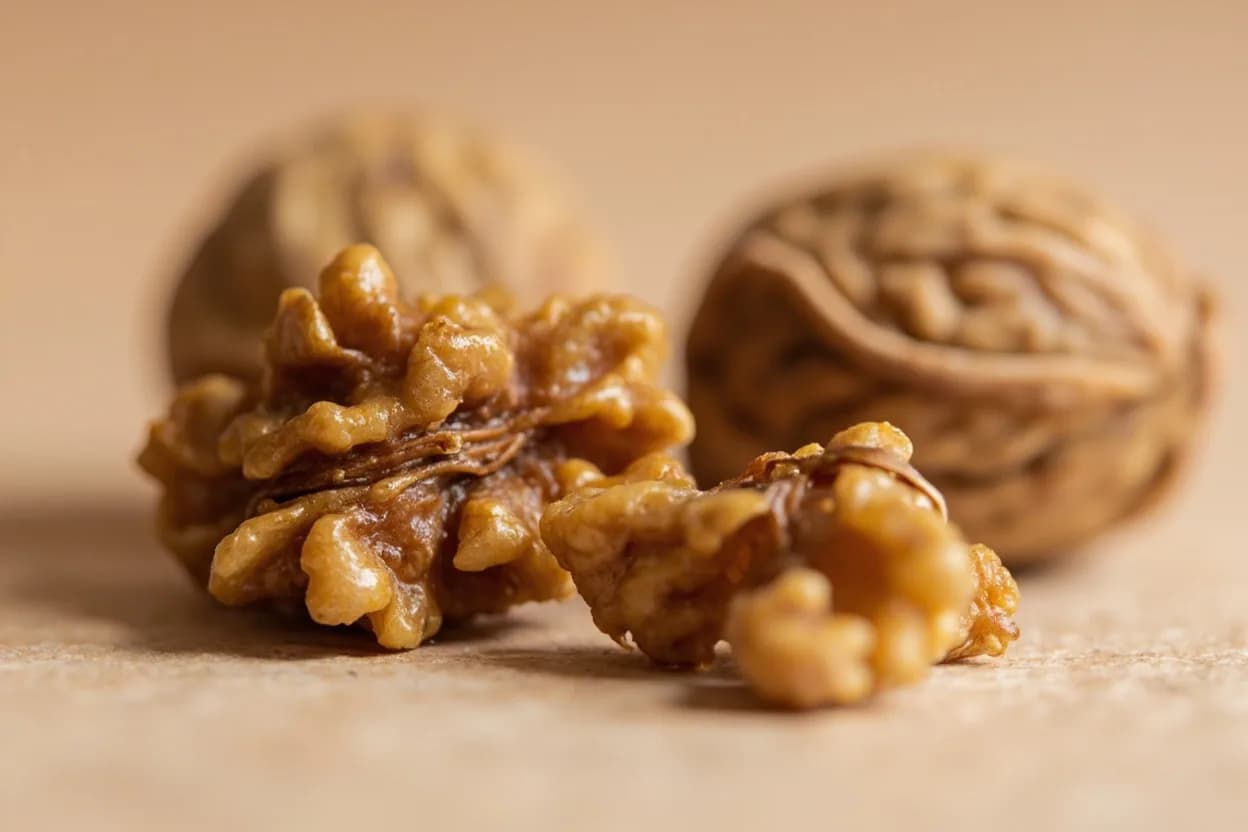
The walnut (Juglans regia) is a large, wrinkled nut whose flavor is simultaneously bitter, rich, and faintly astringent from its papery skin, with a deeply savory, oil-forward quality. The bitterness comes from ellagitannins concentrated in the skin; toasting mellows this while deepening the roasted, almost meaty character. Walnuts are extraordinarily high in polyunsaturated fats — particularly ALA omega-3s — which give them their characteristic 'resinous' mouthfeel and make them prone to rancidity once shelled. Fresh-harvest walnuts in autumn have a creamy, mild flavor that sharpens and becomes more bitter as they age.
In photos
Flavour profile
Classic pairings
- Pomegranate molassesPersian
Ground walnuts and pomegranate molasses form the backbone of Persian fesenjan; the nut's fat absorbs and mellows the molasses's sharp acidity into a dark, resonant sauce.
- Blue cheese (Gorgonzola, Roquefort)French / Italian
Walnuts' bitter tannins and rich oil are the ideal foil to blue cheese's pungent salt and funk; a canonical pairing across cheese boards and composed salads.
- HoneyMiddle Eastern / Georgian
Honey's pure sweetness cuts through walnut bitterness; the pairing appears across baklava, Greek spoon sweets, and Georgian churchkhela candy.
- Bitter greens (endive, radicchio)French / Italian
Walnut's own bitterness creates a harmonic doubling with radicchio or endive, while its oil richness provides the 'dressing' that softens both.
- Dark chocolateFrench / American
Walnuts and dark chocolate share bitter, earthy, phenolic flavor compounds; together in brownies or confectionery the effect is layered rather than redundant.
- Dried figsMediterranean
Figs' jammy, floral sweetness balances walnuts' bitterness; a pairing found from Provence to Turkey in pastries, cheese accompaniments, and autumn salads.
- Duck (confit, breast)French / Georgian
Walnut's bitter richness stands up to duck fat while adding textural contrast; the nut appears in Périgord-style salads and Georgian walnut-stuffed duck dishes.
Adventurous pairings
Walnut's bitter oil blended with white miso creates a deeply umami, savory spread or dressing — the fermented saltiness tames the nut's bitterness without sweetness.
- Cardamom and rose water
In Persian and Afghan confectionery, cardamom's cool eucalyptus and rose water's floral lift elevate walnuts from merely bitter to ethereally complex.
- Anchovies
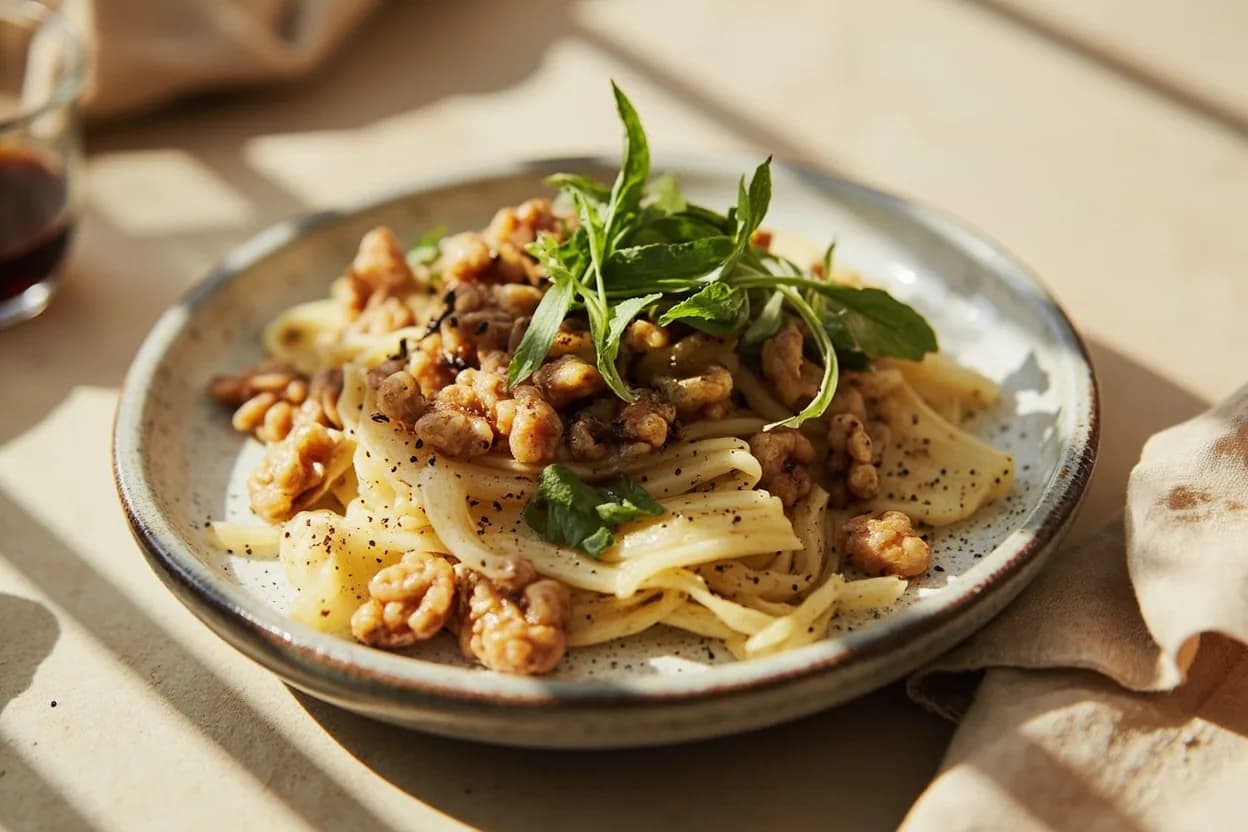
Ground walnuts with anchovies, garlic, and lemon (a riff on the Ligurian salsa di noci) pairs umami-salt with bitter fat for an intensely savory pasta sauce.
Coffee's roasted bitterness shares aromatic compounds with toasted walnuts; together in a torta di noci or coffee-walnut cake they amplify without clashing.
Tread carefully
- Very delicate white fishavoid
Walnuts' dominant bitter, resinous oil overwhelms the subtle minerality of sole, turbot, or delicate sashimi-grade fish.
- Very sweet desserts without acid or salt counterbalanceavoid
Walnuts in an excessively sweet context (plain sugar cookies, mild vanilla cream) highlight bitterness unpleasantly; always pair with acid, salt, or a robust flavor.
- Light, floral teas (jasmine, white tea)avoid
Walnuts' tannins clash with the delicate aromatics of light teas, creating an astringent bitterness that overwhelms both.
How to use it
- Toast in a dry pan or 170°C oven for 8–10 min to mellow bitterness and deepen flavor
- Blanch and rub skins off with a tea towel for a milder, creamier flavor in sauces
- Grind to a paste in a food processor for fesenjan, muhammara, or walnut sauce
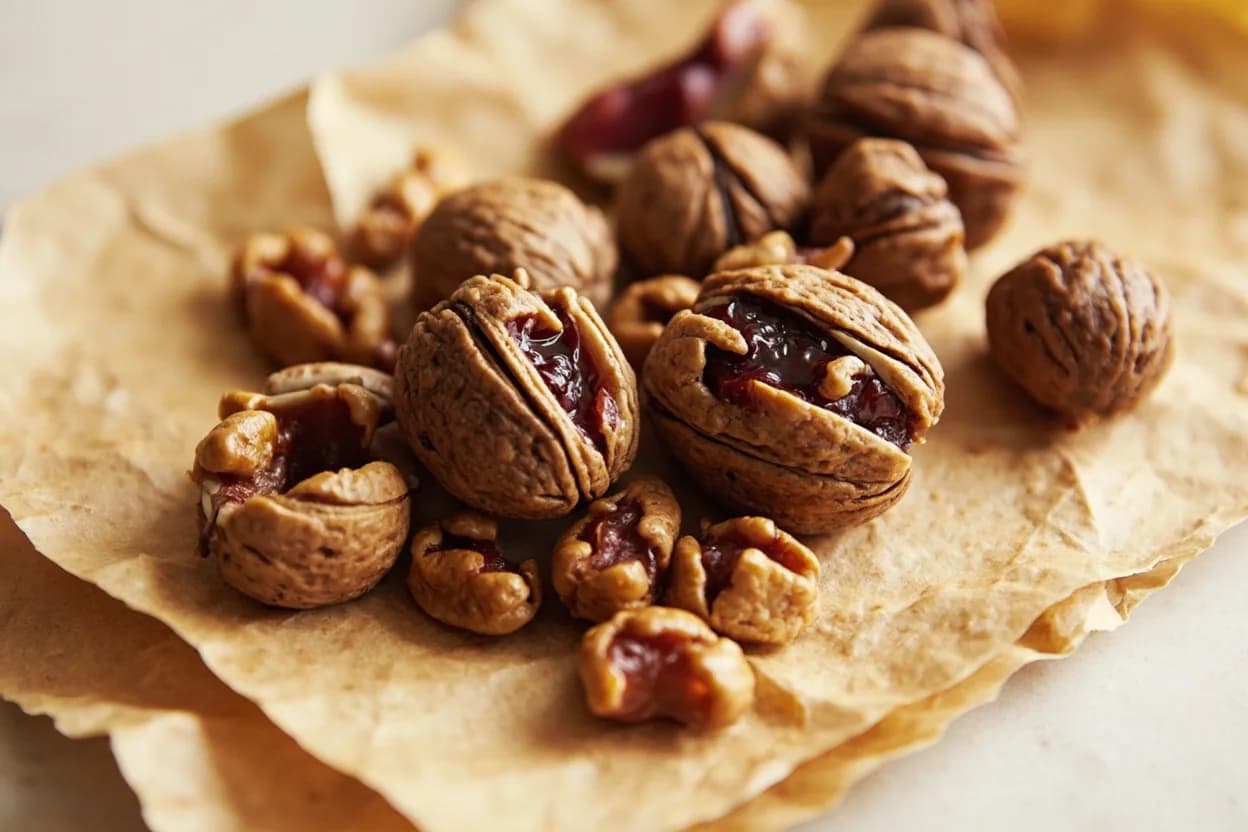
- Candy by tossing in sugar syrup and drying on parchment for garnishes and salads
- Press cold into walnut oil for a finishing oil over salads, pasta, or roasted vegetables
Appears in
Related flavours
- Pecans
Pecans share walnut's structure and oil richness but are sweeter and less bitter; they substitute well in most Western baking applications.
Both walnut paste and tahini are oil-rich nut/seed pastes used in similar sauce roles across the Middle East; they can combine for added depth.
- Pomegranate
Walnut and pomegranate are a canonical Persian flavor couple, inseparable in fesenjan and central to the Persian cooking palette.
References
- 1.Plenty — Yotam Ottolenghi (Chronicle Books, 2011)
- 2.A Book of Middle Eastern Food — Claudia Roden
- 3.The Flavor Bible — Karen Page & Andrew Dornenburg (Little, Brown & Company)
- 4.On Food and Cooking — Harold McGee (Scribner, 2004)
- 5.The Georgian Feast — Darra Goldstein
Confidence: high
Notes
Bitterness Management
The majority of walnut bitterness lives in the papery skin. If raw walnuts taste unpleasantly sharp, blanch them in boiling water for 60 seconds, then rub the skins away while warm. For cooking, toasting drives off volatile bitter compounds and deepens the Maillard-roasted character — almost always the preferable preparation. Store shelled walnuts in the freezer; rancid walnut oil is the number one killer of walnut flavor.
Fesenjan — Fat as Sauce Builder
In Persian fesenjan, the walnuts are ground fine and cooked at length in water — their high fat content emulsifies into the pomegranate molasses as the sauce reduces, creating a thick, almost molten-dark coating. The technique is more akin to making a mole than a European nut garnish: the walnut is the primary sauce agent, not a textural element.