Dried Fruits
Dried Figs
Also: anjeer, dried anjeer, khooshk anjir, Black Mission figs (dried), Calimyrna figs (dried), Turkish figs
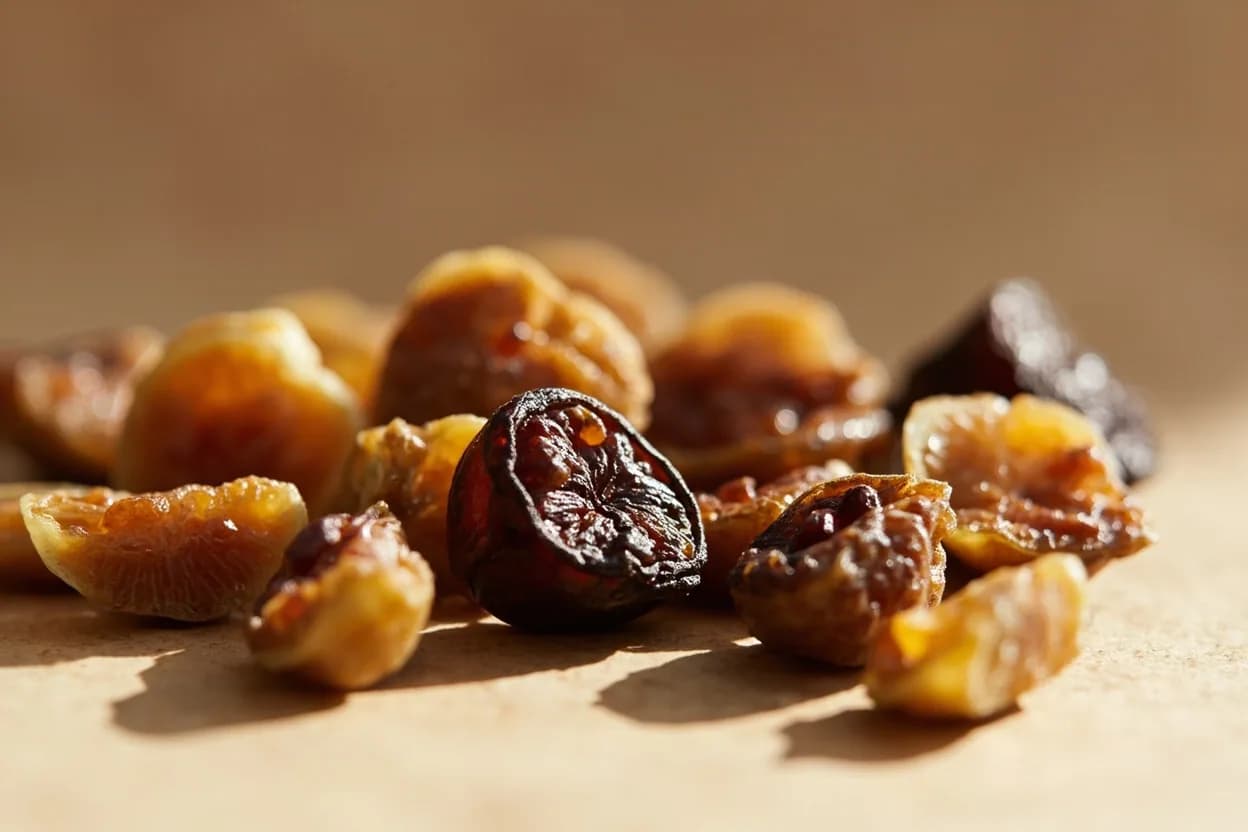
Jammy, honey-dark, and seeded — the fig intensified into something with the weight of a good cheese.
Dried figs are fully ripe figs — most commonly Black Mission, Calimyrna (Smyrna), or Turkish varieties — dried until their moisture drops to roughly 20–30%, concentrating natural sugars (primarily glucose and fructose), earthy-musky aromatics, and tannins from the skin. The texture is chewy-sticky with a granular crunch from the edible seeds. Flavor is layered: honey and caramel up front, followed by jammy berry notes, an earthy mushroom-like depth, and a faint wine-like ferment at the finish. Dried figs are used across Persian, Moroccan, Turkish, Italian, and North African cuisines in both savory and sweet contexts.
In photos
Flavour profile
Classic pairings
- Blue cheese (Roquefort, Gorgonzola, Stilton)European cheese culture
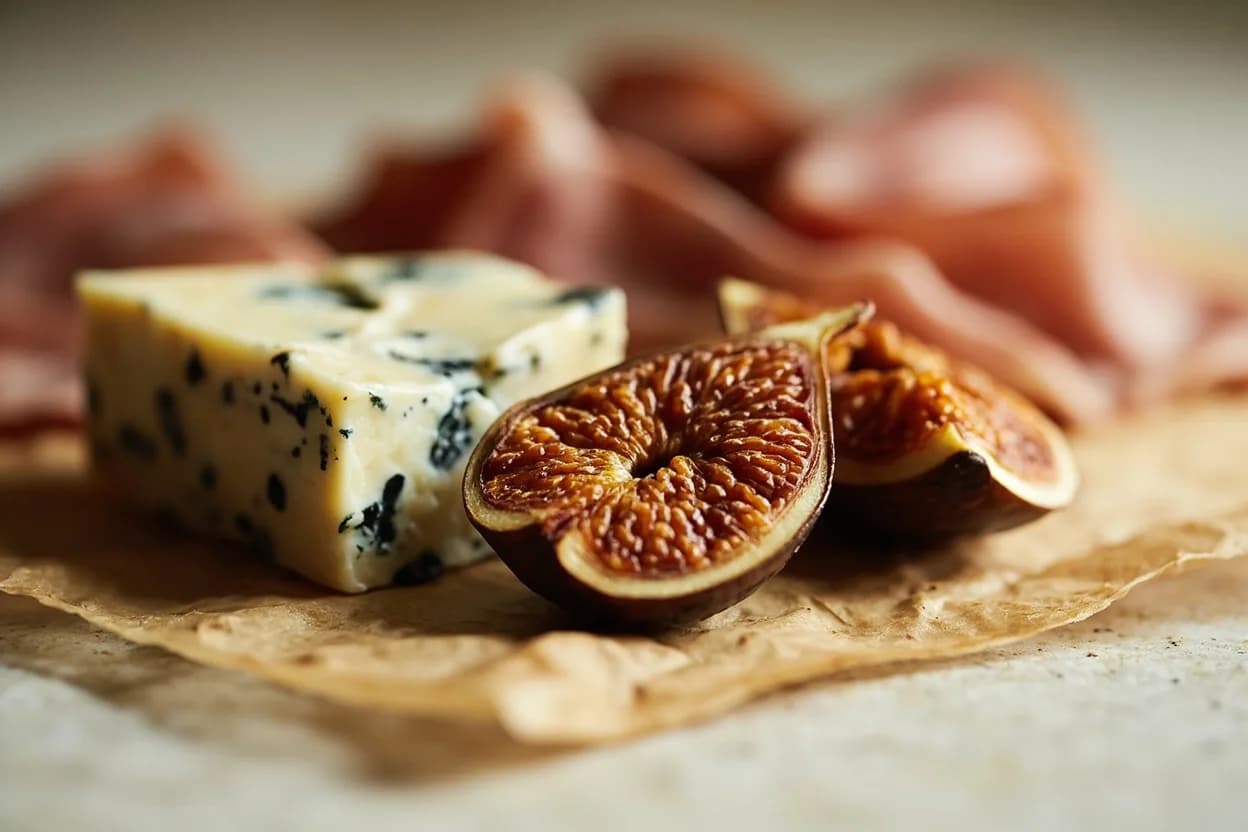
The canonical pairing — fig's honey sweetness is the only thing powerful enough to balance a strong blue's ammoniac funk and pungent fat; served together on cheese boards worldwide.
- Prosciutto / cured meatsItalian
The salt and savory umami of cured pork cut through fig's sweetness; a classic Italian antipasto pairing that rebalances both components.
- LambPersian / Moroccan
In Persian khoresh-e anjir (fig and lamb stew), dried figs melt into the braise, lending their sweetness and body to balance lamb's gaminess; also appears in Moroccan tagines.
- WalnutsPersian / Turkish
The textural complement and flavor bridge — walnuts' tannins and bitter fat align with fig's own tannins and seed crunch; a foundational pairing in Middle Eastern sweets and salads.
- Goat cheeseFrench / Mediterranean
Chèvre's tangy lactic freshness lifts dried fig's dense sweetness; used in composed salads, flatbreads, and tarts throughout Provence and the Mediterranean.
- Balsamic vinegarItalian
Aged balsamic's complex sweet-sour condenses fig's jammy qualities into near-syrup; the two together glaze duck or pork loin with remarkable depth.
- Cinnamon and gingerMoroccan / Persian
The backbone of dried fig in Moroccan tagines and Persian khoresht; warm spices amplify the fruit's musky-caramel notes without masking them.
- Pork belly / pancettaItalian
Fatty pork and fig is a classic Tuscan and Umbrian combination; the rendered fat carries fig's sugars into savory territory, especially in roasted preparations.
Adventurous pairings
In Persian cooking, saffron's floral, slightly metallic character is a regal counterpart to dried fig — both are luxury ingredients in the Persian pantry, used together in polo (rice) and khoresh.
- Dark chocolate (70%+)
Fig's berry-musky sweetness mirrors the jammy fruit notes in fine dark chocolate; fig-and-dark-chocolate combinations in confectionery highlight shared phenolic compounds.
The bright saline-citrus punch of preserved lemon cuts through dried fig's dense sweetness in tagines and North African salads, preventing the fruit from making a dish cloying.
The classic liver-sweet affinity: fatty, rich foie gras needs fruity acidity and sweetness to cut through; dried fig compote fills this role with more complexity than a simple sugar jam.
Bitter roasted espresso picks out the dark berry and musky notes in dried fig while cutting sweetness; used in Sicilian pastry (buccellato) and North African desserts.
Fig's sweetness is a natural counterweight to harissa's chili heat; together in a roasted vegetable preparation or as a lamb marinade they create sweet-hot North African complexity.
Tread carefully
- Very delicate white fish (sole, flounder)avoid
Dried fig's concentrated sugar and musky depth overwhelm the delicate marine sweetness of fine white fish — a mismatch in both texture and flavor register.
- Cream-based desserts (panna cotta, crème brûlée base)avoid
Dried fig's tannins can interfere with cream's clean dairy flavor; fresh figs are far better suited here where subtlety matters.
- Sharp acidic dressings (straight lemon vinaigrette)avoid
Pure citric acid amplifies fig's tannins into astringency; balance with fat (olive oil) or swap to balsamic if acidity is wanted.
How to use it
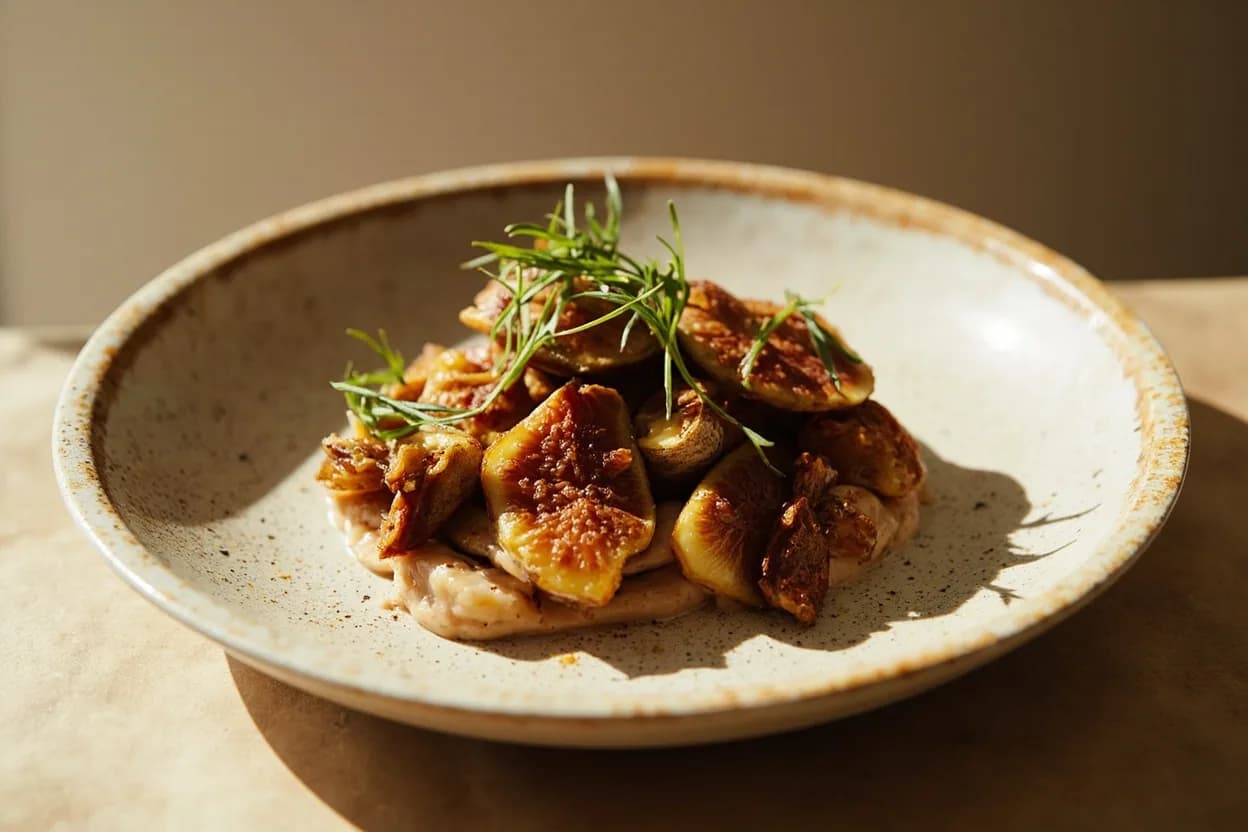
- Reconstitute by simmering in wine, port, or tea for 20–30 minutes to plump and infuse before using in braises or compotes
- Chop and fold raw into cheese boards, stuffings, or grain salads — no preparation needed when texture is wanted
- Purée reconstituted figs with olive oil, lemon, and garlic for a savory-sweet spread on flatbread
- Braise whole or halved with proteins (lamb, duck, pork) in the final 30 minutes of slow-cooking
- Use as a natural sweetener and body-builder in vinaigrettes and glazes instead of sugar
- Toast briefly in a dry pan to awaken aromatics before adding to stuffings or grain dishes
Appears in
Related flavours
- Medjool dates
The closest relative in culinary character — both are intensely sweet dried fruits with an earthy depth; dates are stickier and less tannic.
- Dried plums (prunes)
Shares the jammy-dark fruit profile and works in the same Persian and Moroccan stew applications; prunes are more acidic, figs earthier.
- Raisins
The milder, brighter counterpart in the dried-fruit family; raisins lack fig's musky depth but can substitute in sweet stuffings.
Dried fig's most reliable textural and flavor companion across Persian, Turkish, and Mediterranean cooking.
References
- 1.Plenty More — Yotam Ottolenghi
- 2.The New Persian Kitchen — Louisa Shafia
- 3.A Book of Middle Eastern Food — Claudia Roden
- 4.Flavor Bible — Karen Page & Andrew Dornenburg
- 5.Zaitoun: Recipes from the Palestinian Kitchen — Yasmin Khan
Confidence: high
Notes
Variety matters
Black Mission dried figs are darker, jammier, and more wine-like in flavor. Calimyrna (Smyrna) are lighter in color and milder, closer to honey. Turkish Lerida figs are large, pale, and the most widely traded commercially. For savory stews and braises, darker varieties generally hold up better. For cheese boards and sweets where visual contrast matters, lighter varieties can be more striking.
The enzyme question
Fresh figs contain ficin, a protease enzyme that can prevent gelatin from setting. Dried figs have enough of this enzyme deactivated that they work in gelatin-set applications, but heat-treating fresh figs first is required if using them in panna cotta or marshmallows.