Fermented Vegetables & Pickles
Preserved Lemon
Also: preserved lemons, l'hamd m'rakad, citron confit, salted lemon
Salt-cured, fermented lemon rind that collapses the citrus spectrum into something entirely its own — mellow, floral, intensely fragrant.
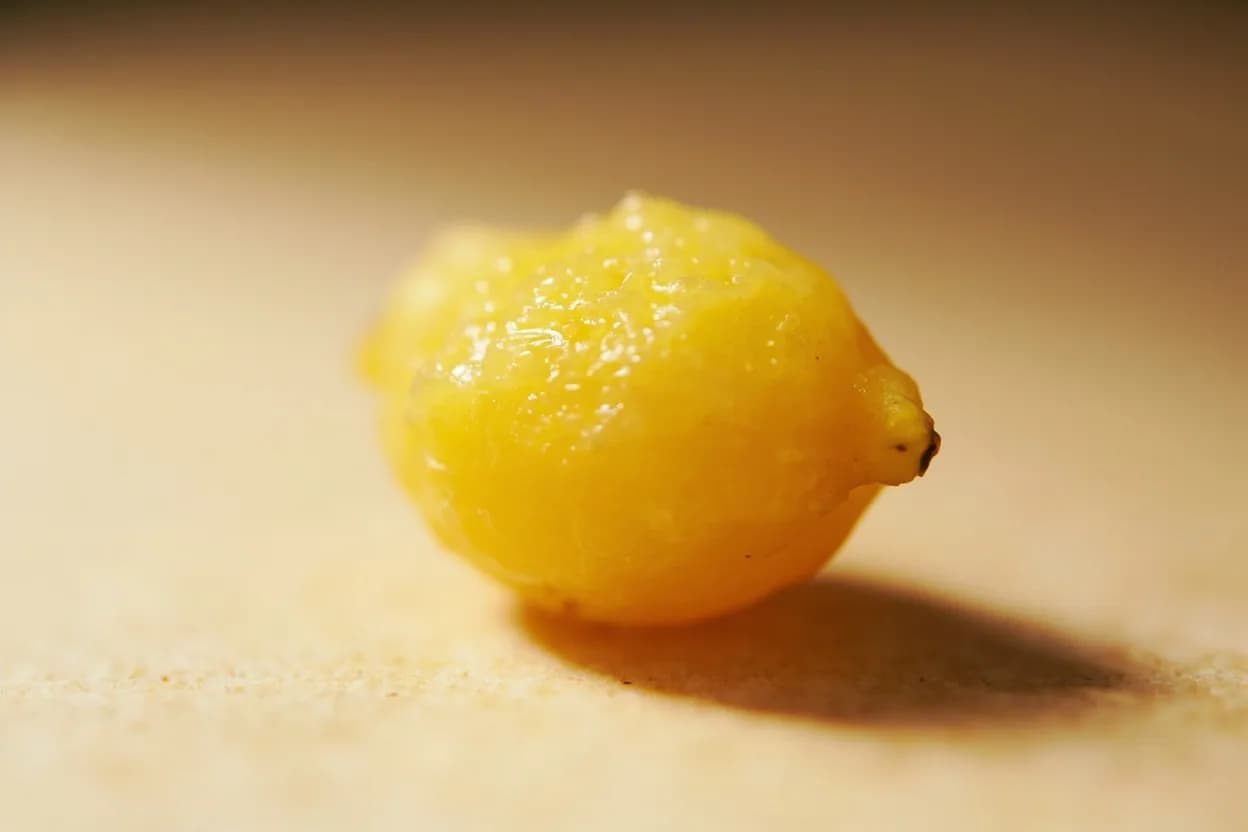
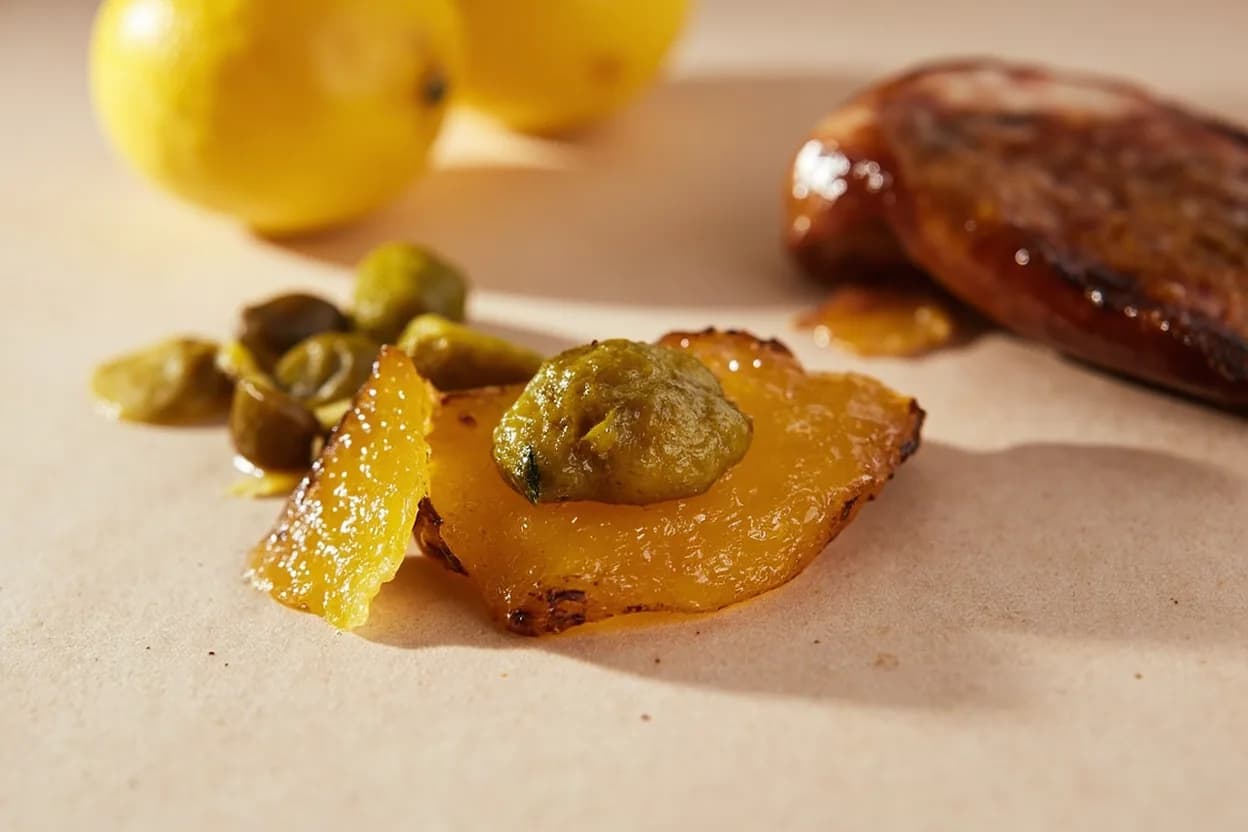
Preserved lemons are whole or quartered lemons packed in salt and left to ferment and cure in their own juice for a minimum of 4 weeks, often several months. The process — lacto-fermentation aided by the salt draw — fundamentally transforms the lemon: the volatile top-notes (sharp citric acid, bright zest) mellow and recede, while the rind develops a soft, jammy texture and a deep, floral, almost fermented-honey fragrance. The pith, normally too bitter to eat, softens and edibilizes. The rind is what's used; the pulp and liquid are typically discarded or used to season braises. The resulting flavour is unmistakably lemon but with none of the raw acidity — instead, a rounded, slightly funky, intensely perfumed citrus note that no fresh lemon can approximate. Originally North African (Morocco is the canonical source), preserved lemon has become a marker of Levantine, Middle Eastern, and increasingly global cooking.
In photos
Flavour profile
Classic pairings
- Chicken (tagine or roasted)Moroccan
The canonical Moroccan pairing — chicken with preserved lemon and olives is arguably North Africa's most famous dish. The rind's mellow citrus penetrates the meat during braising without acidifying or tightening it.
- Green olives (Picholine or Manzanilla)Moroccan, Levantine
Salt-cured olives and salt-preserved lemon are from the same preservation tradition; their brine-salty, lightly bitter characters reinforce each other in tagines and relishes.
- Lamb (shoulder, leg, chops)Moroccan, Levantine
Lamb's gaminess and fat welcome the perfumed citrus of preserved lemon — minced into a marinade or stirred into a braise, it cuts richness without the shock of fresh lemon juice.
- CouscousMoroccan, North African
Minced preserved lemon rind stirred into finished couscous with herbs and butter is a simple technique that transforms the grain — it becomes fragrant and complex rather than neutral.
- Fish (sea bass, branzino, cod)Moroccan, Mediterranean
A thin slice of preserved lemon rind placed on fish before roasting perfumes the flesh as it cooks; the salt also seasons from outside in. Particularly effective with mild white fish that need lift.
- Yogurt / labnehLebanese, Persian
Minced preserved lemon in labneh or strained yogurt creates a dip that is simultaneously creamy, tart, salty, and floral — used across Levantine and Persian meze traditions.
- Freekeh / farro / grain saladsLevantine, Middle Eastern
Chewy whole grains need an assertive dressing — preserved lemon whisked into olive oil and herbs provides both acid and aromatic complexity without making the salad wet.
Adventurous pairings
- Pasta with butter and herbs
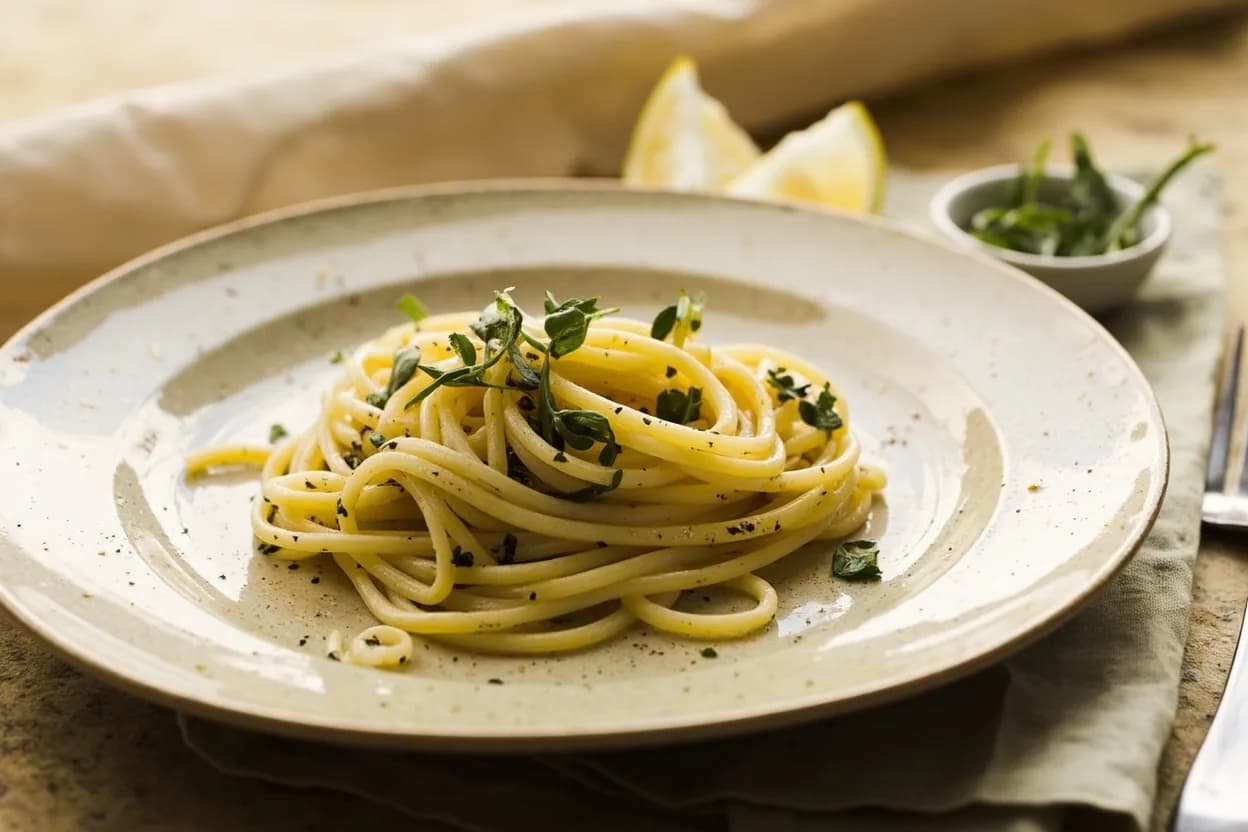
A teaspoon of minced preserved lemon rind stirred into spaghetti aglio e olio or a simple butter-herb pasta replaces the lemon zest and capers in a single ingredient — more complex, less sharp.
Stirred in at the mantecatura stage, preserved lemon perfumes the whole pot without breaking the creamy emulsion that fresh lemon acid can destabilize — particularly compelling with asparagus or pea risotto.
- Roasted cauliflower
Cauliflower's mild sweetness and tendency to caramelize beautifully pairs with preserved lemon's floral salt — together with cumin and golden raisins this is a North African preparation with global application.
- Vinaigrette
Replace the fresh lemon or vinegar in a dressing with minced preserved lemon rind and its brine — it seasons, acidifies, and adds fragrance simultaneously, requiring less oil to feel balanced.
- Vanilla ice cream (as a sauce or ripple)
A small amount of preserved lemon syrup (the brine sweetened slightly) drizzled on vanilla ice cream is a surprisingly compelling pairing — floral-salty-citrus against cold dairy fat.
Tread carefully
- Delicate raw fish (sashimi, crudo with fresh citrus)avoid
Preserved lemon's fermented, salty-floral character overwhelms the clean oceanic minerality of raw fish — fresh lemon or yuzu is the appropriate acid here.
- Strong blue cheeseavoid
Two powerfully fermented, salty, funky ingredients compete rather than complement — neither has room to express itself and the result is muddled.
- Dishes that depend on fresh lemon acidityavoid
Preserved lemon cannot substitute for fresh lemon juice in any recipe where the sharp citric acid is structural (soufflés, lemon curd, hollandaise) — it contributes fragrance and salt, not tartness.
How to use it
- Use only the rind — rinse off the salt, scrape away the pulp with a spoon, and mince the golden peel finely. The pulp is very salty and often discarded, though the brine can season sauces.
- A little goes a long way: half a preserved lemon quarter, minced, is usually sufficient for 4 servings — start conservative and build.
- Add to dishes at two stages: early in a braise for deep penetration into the meat, and again stirred in at the finish for aromatic freshness.
- Make preserved lemons by packing quartered lemons with generous amounts of coarse salt in a sterilised jar, topping with additional lemon juice. Cure at room temperature for 4 weeks minimum before using. They keep in the refrigerator indefinitely.
- Blend rind into a compound butter with herbs and garlic — the salt means you use less added salt elsewhere, and the fragrance perfumes the whole dish as the butter melts.
Appears in
Related flavours
The Moroccan spice blend that most often shares a pot with preserved lemon — their warm spice and floral citrus characters are designed to work together.
Harissa's heat and smoke frequently partners with preserved lemon's mellow citrus in North African sauces and marinades — fire balanced by perfume.
Saffron's honeyed, hay-like floral note and preserved lemon's fermented citrus fragrance share a register — both work in tagines, risottos, and grain dishes where floral complexity is the goal.
References
- 1.Wolfert, Paula — Couscous and Other Good Food from Morocco (Harper & Row, 1973)
- 2.Ottolenghi, Yotam — Jerusalem (Ten Speed Press, 2012)
- 3.Roden, Claudia — A Book of Middle Eastern Food (Knopf, 1972)
- 4.Sax, Richard — Classic Home Desserts (Chapters Publishing, 1994)
Confidence: high
Notes
Quick-preserved lemons
Traditional preserved lemons need at least 4 weeks. Several quick methods (microwave, pressure cooker, salting and resting 24 hours) are circulated online. None of them fully replicate the fermented depth of the slow-cured version — they produce salted lemon rind, which is pleasant but different. For any application where preserved lemon is structural (tagines, chermoula), use the properly cured product.
Lemon variety matters
Meyer lemons make the most aromatic preserved lemons (thin skin, floral, low acid). Eureka or Lisbon lemons are more acidic but perfectly acceptable — the curing process normalizes differences significantly. Avoid waxed commercial lemons unless you scrub the wax off thoroughly before curing.