Spice Blends
Ras el Hanout
Also: ras el hanout, rass el hanout, top of the shop
Morocco's most aristocratic spice blend — a floral, warm, deeply complex mixture that defines tagines and elevates couscous to ceremony.
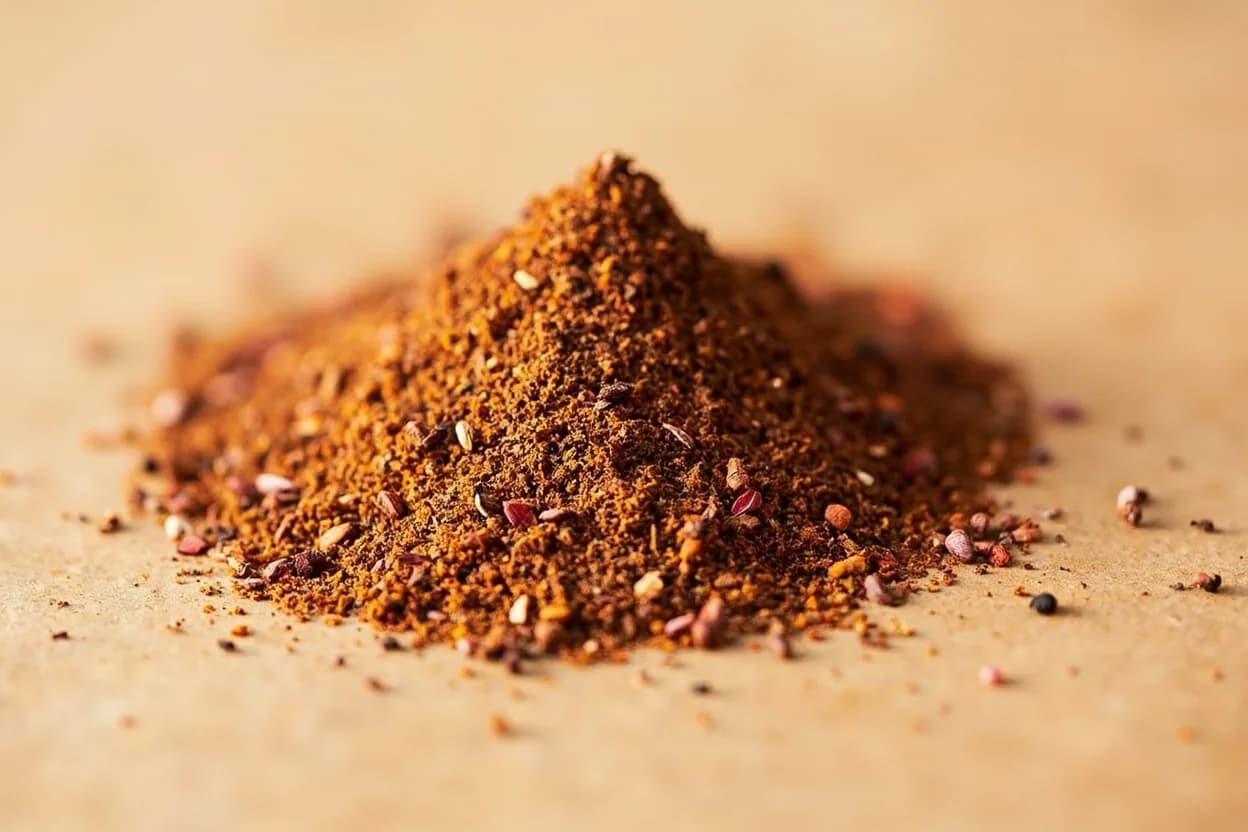
Ras el hanout (Arabic: 'head of the shop') is Morocco's premier spice blend, historically comprising the finest spices a merchant carried. A classic blend contains 20–35 spices including rose petals, cinnamon, cubeb pepper, mace, galangal, cardamom, turmeric, coriander, cumin, allspice, and sometimes Spanish fly (now largely omitted). No two blenders produce the same recipe, but the signature character is warm, floral, and multilayered — with rose's perfume, cinnamon's sweet warmth, and black pepper's edge creating a profile unlike any other blend in world cuisine.
In photos
Flavour profile
Classic pairings
- lambMoroccan
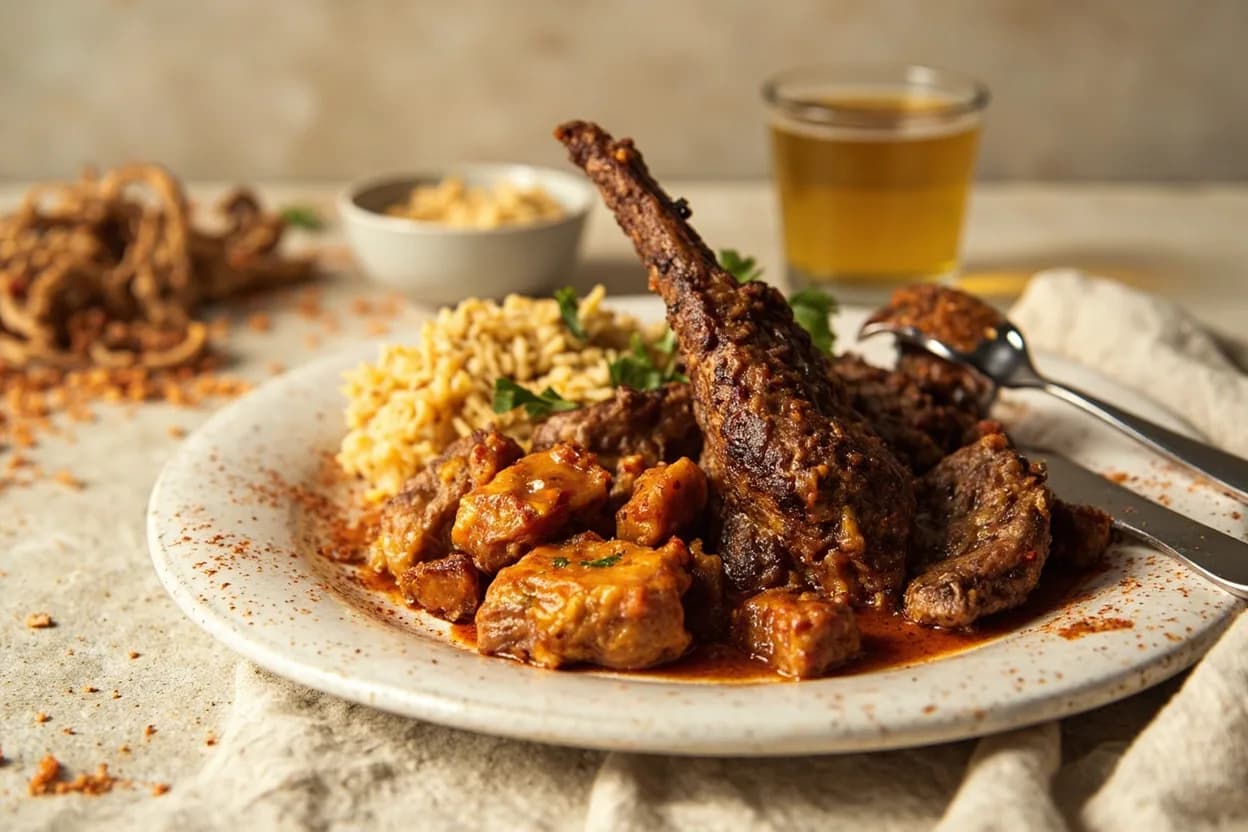
The foundational pairing: lamb shoulder or leg tagine with ras el hanout, preserved lemon, and olives is Morocco's most celebrated slow-cooked dish.
- couscousNorth African
Steamed couscous with ras el hanout-braised vegetables and chickpeas is Friday's communal dish across North Africa; the fluffy grain becomes a canvas for the blend's warmth.
- chickenMoroccan
Chicken bastilla and tagine with preserved lemon depend on ras el hanout; the blend's floral notes balance the unctuous fat of slow-braised thighs.
- dried apricotsMoroccan
Fruit tagines with dried apricots or prunes and ras el hanout exploit the sweet-savory axis; the rose notes in the blend resonate with stone-fruit aromatics.
- chickpeasMoroccan
Merguez-and-chickpea tagines and msemen-stuffed pastillas rely on the blend's warmth to elevate a neutral legume into something complex and aromatic.
- honeyMoroccan
Honey-glazed roasted carrots or squash with ras el hanout is a classic Moroccan side; the sweetness amplifies the rose and cinnamon warmth.
- preserved lemonMoroccan
The salty-sour punch of preserved lemon counterbalances ras el hanout's sweetness and lifts every tagine it enters.
Adventurous pairings
- dark chocolate ganache
Stirring ras el hanout into a 70% dark chocolate ganache produces a North African truffle with extraordinary depth — the rose and cinnamon push the chocolate toward Turkish delight territory.
- lobster or large prawns
Charmoula-style ras el hanout marinade on grilled lobster tail bridges Moroccan spice tradition with luxury seafood; the sweetness of crustacean meat amplifies the floral notes.
- vanilla ice cream (warm oil drizzle)
A warm ras el hanout–infused olive oil drizzled over cold vanilla ice cream: the contrast of temperature and the spice-fat coating on dairy fat is unexpectedly sophisticated.
- lentil soup with tahini
Ras el hanout stirred into a lentil-tahini soup with a splash of lemon creates a North African-Levantine hybrid with stunning aromatic complexity.
- roasted cauliflower
Cauliflower's mild, slightly sulfurous sweetness takes ras el hanout beautifully; high-heat roasting caramelizes the spices into a fragrant crust.
Tread carefully
- very delicate custards and panna cottaavoid
The blend's rose and galangal notes overwhelm subtle egg-cream desserts; reserve for robust flavor profiles or use a single extracted spice instead.
- raw application on fish carpaccioavoid
Uncooked ras el hanout on raw fish is acrid and peppery; it needs heat or at minimum a marinade period to mellow the cubeb and galangal.
- high-acid, bright tomato sauces (Italian)avoid
The tomato's acidity fights the floral warmth of ras el hanout awkwardly; it suits Moroccan chermoula-tomato bases where cumin and coriander bridge the gap.
How to use it
- Toast lightly in a dry pan before blooming in olive oil or butter to release volatile floral aromatics
- Use as a dry rub pressed into lamb or chicken 4–24 hours before cooking
- Stir into braising liquids at the start — the long cook integrates the complex notes
- Mix with olive oil, garlic, and lemon as a charmoula-style marinade
- Finish roasted vegetables with a pinch after plating for a fresh aromatic hit
- Infuse into warm cream or butter for a compound to finish sauces or mashed root vegetables
Appears in
Related flavours
A fellow complex African spice blend; berbere skews chili-forward and earthy where ras el hanout is floral-warm — both work with lamb and legumes.
- Baharat
The Middle Eastern cousin: baharat shares the cinnamon-allspice-pepper warmth of ras el hanout but lacks the rose and galangal; pairing logic overlaps on lamb and rice.
The rose-petal component of ras el hanout extends naturally to rose water in North African sweets; both belong to the same aromatic tradition.
References
- 1.Paula Wolfert, 'The Food of Morocco' (2011)
- 2.Claudia Roden, 'The New Book of Middle Eastern Food' (2000)
- 3.Anissa Helou, 'Feast: Food of the Islamic World' (2018)
- 4.Oxford Companion to Food, Alan Davidson (3rd ed., 2014)
Confidence: high
Notes
Spice Count
Traditional Moroccan spice vendors (attarine) in Fez and Marrakech may include up to 35 spices in a premium ras el hanout, including orris root, ash berries, and belladonna berries (now banned in commercial blends). Modern versions stabilize around 20–25 spices. Always buy from a spice merchant who blends to order; pre-ground shelf blends lose the rose volatile aromatics within weeks.
Regional Variation
Algerian ras el hanout differs meaningfully from Moroccan — fewer rose petals, more fenugreek. Tunisian versions skew toward caraway and chili. The name covers a family of blends, not a fixed recipe.