Citrus & Floral
Rose Water
Also: rosewater, ma'a ward, golab, gulab jal, rose distillate
The distilled essence of rose petals — the most universally beloved floral flavoring from Tehran to Lahore to Marrakesh.
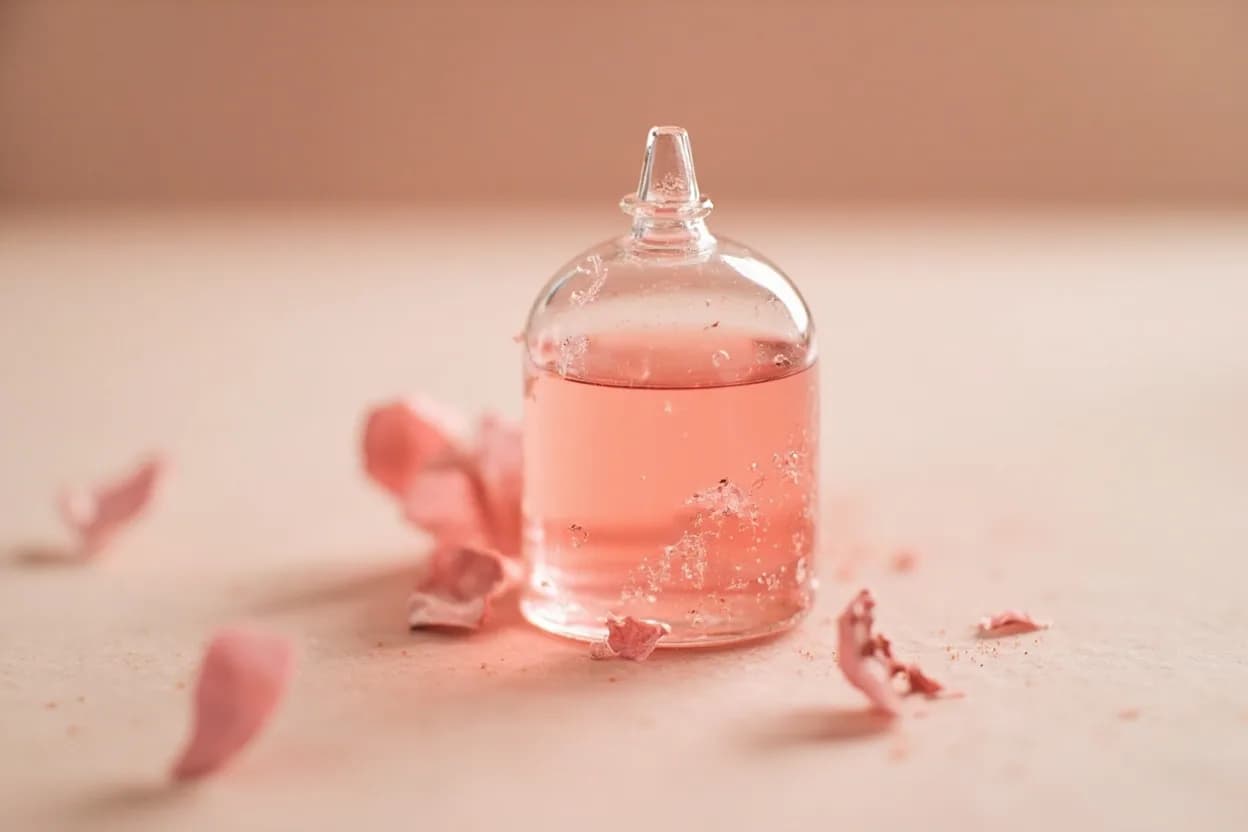
Rose water is produced by steam-distilling or cold-macerating fresh rose petals, most commonly from Rosa damascena (the Damask rose) or Rosa centifolia, and collecting the aromatic distillate. The flavor is intensely, unmistakably floral — dominated by geraniol and citronellol, the same volatile compounds responsible for the smell of fresh roses — with secondary notes of honey, wax, and faint violet. At proper concentration it reads as perfumed and elegant; overdosed it becomes soapy, synthetic, and suffocating. Rose water is one of the oldest culinary flavorings in continuous use, appearing in Persian, Ottoman, Levantine, Mughal, North African, and South Asian cooking for over a thousand years. It is primarily a dessert and beverage flavoring, though it appears in some savory Persian and Moroccan dishes as well. Quality varies enormously: distilled culinary rose water from Iran, Bulgaria (Valley of Roses), or Lebanon is far superior to rose-flavored extracts or heavily diluted supermarket versions.
In photos
Flavour profile
Classic pairings
- CardamomPersian / South Asian / Levantine
The single most classic pairing — Persian, Levantine, and South Asian confections routinely combine rose water and cardamom; their shared floral aromatic compounds (linalool) amplify each other, with cardamom's citrus-spice anchoring what would otherwise be purely sweet florals.
- PistachiosPersian / Ottoman / Lebanese
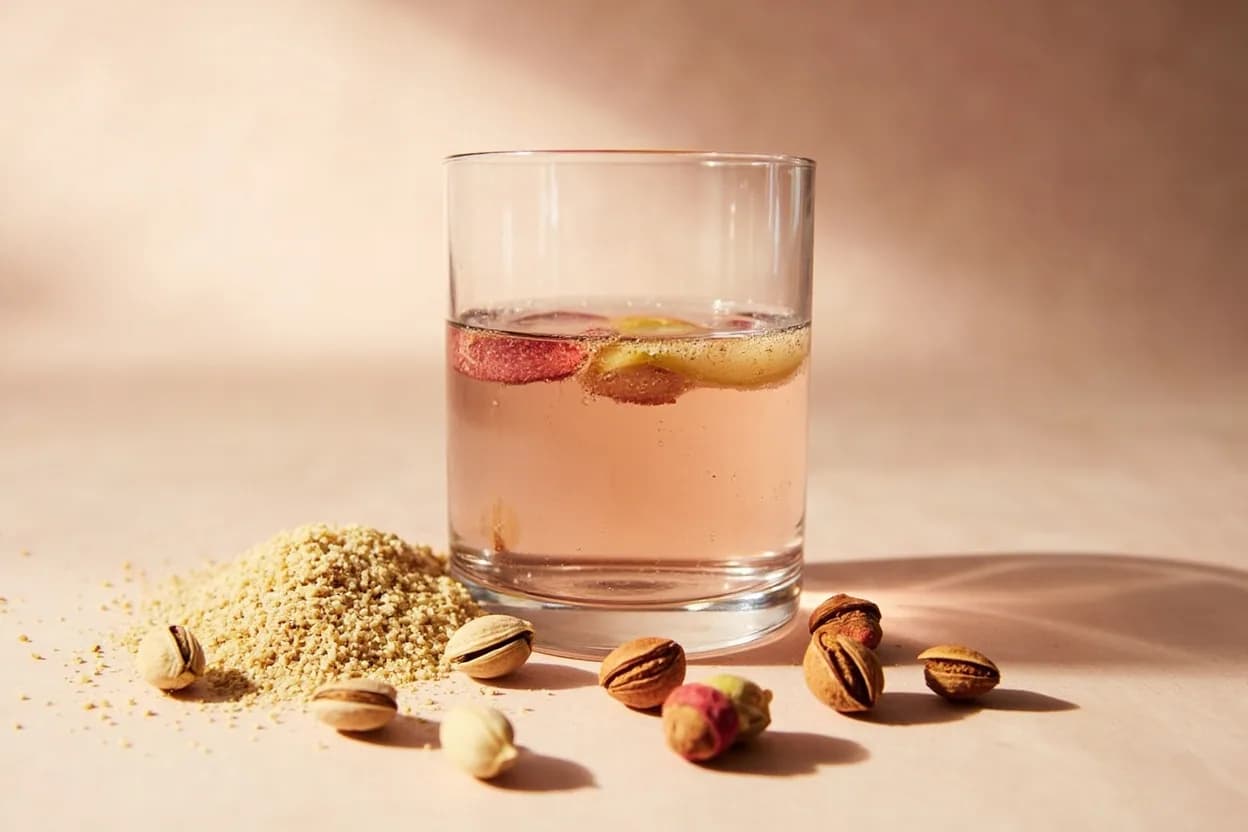
Finely ground or whole pistachios alongside rose water appear in baklava, halva, Persian rice pudding, and Indian kulfi — the nut's buttery, mild sweetness is a perfect backdrop for rose water's perfume without competition.
- SemolinaLevantine / North African
Rose water-scented semolina pudding (basbousa, namoura, or halva) is a Levantine and North African staple — the graininess of semolina absorbs and holds rose water aromatics in a way that wheat flour cannot.
- Rice (kheer, shirin polo)Persian / South Asian
Rose water in rice pudding (kheer in South Asia, sholeh zard in Iran) and Persian jeweled rice (shirin polo) is ancient and canonical — the grain's starch traps and slowly releases the aromatic.
- SaffronPersian / Mughal
Used together in Persian and Mughal cooking, rose water and saffron create a 'golden rose' aromatic that is the signature scent of Persian celebration cooking — they share honey and warm-floral registers that layer without clashing.
- Milk and cream (custard, ice cream)South Asian / Levantine
Dairy fat is the ideal carrier for rose water's volatile oils — in kulfi, gulab ice cream, malabi (Israeli milk pudding), and muhalabia (Middle Eastern milk pudding) the fat captures and slowly releases the floral character.
- HoneyPersian / Levantine / Ottoman
Rose water and honey share a waxy, sweet-floral character; combined in baklava syrup, rose water lemonade, or sharbat (Persian drinks), each reinforces the other's sweetness and aromatic depth.
Adventurous pairings
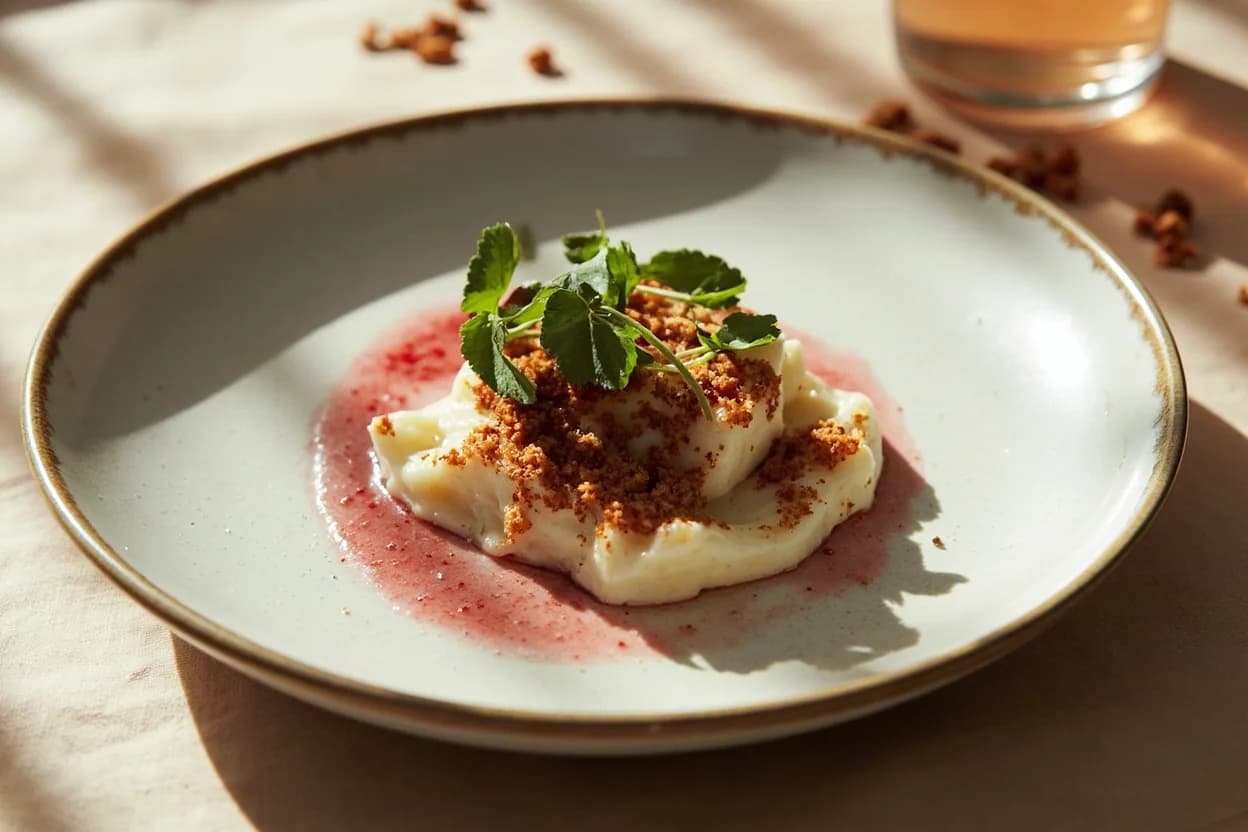
Raspberry and rose share the aromatic compound beta-damascenone; a few drops of rose water in a raspberry coulis, jam, or sorbet amplifies the berry's natural rose-like character without falsifying it.
- Lamb (Persian and Moroccan slow braises)
In Persian khoresh and Moroccan tagine, rose water is used in tiny quantities (½ teaspoon) as a finishing aromatic in braised lamb — it perfumes the sauce without sweetening it, the way a fresh herb garnish might.
A few drops of rose water in a 70%+ dark chocolate ganache or truffle introduces a Middle Eastern floral dimension — the cocoa's bitter depth anchors the rose's floatiness, and the pairing reads as more complex than either alone.
- Yogurt (labneh, set yogurt)
Rose water stirred into thick strained yogurt or labneh with honey is a simple Persian breakfast or dessert — the live-culture tang contrasts the floral sweetness in a way that is surprisingly balanced.
- Sparkling wine / prosecco cocktail
A teaspoon of rose water added to a glass of dry prosecco with a sugar cube produces a rose royale — the carbonation spreads the volatile aromatics across the palate faster than any other delivery method.
- Almond
In marzipan, frangipane, and Indian barfi, almonds and rose water are a very old pairing — almond's sweet-bitter, marzipan-adjacent flavor (benzaldehyde) bridges to rose water's florality without either becoming one-dimensional.
Tread carefully
- High heat (cooking in rather than adding after)avoid
Rose water's volatile aromatics evaporate almost immediately at cooking temperatures — always add at the very end of cooking, off heat, or in no-heat preparations; cooking it in early wastes the ingredient.
- Strongly savory or umami-heavy dishesavoid
Except in the specific Persian and Moroccan tradition of floral meat dishes (where quantities are very small), rose water clashes with soy sauce, fish sauce, anchovies, and other strong umami sources — the combination reads as soap over brine.
- Over-use (the soap threshold)avoid
Rose water has an extremely narrow window between 'fragrant' and 'soapy' — the threshold is typically 1-2 teaspoons per 500ml liquid or per batch of baked goods. Exceeding this produces a detergent quality that is impossible to mask.
- Red wineavoid
Tannins in red wine clash with rose water's delicate floral volatiles, producing a harsh, bitter-floral combination; rose water belongs with light, sweet, or sparkling wines or in non-alcoholic contexts.
How to use it
- Always add off heat or to cold preparations — heat destroys volatile rose aromatics in seconds
- Start with 1 teaspoon per 4 servings and taste before adding more — the soap threshold is closer than it seems
- Combine with an equal measure of orange blossom water for a more complex, rounded floral aroma (common in Moroccan cooking)
- Bloom rose water in warm (not hot) fat or cream for 5 minutes to marry the aromatics before incorporating into custard or ganache
- Spray or brush finished pastries with rose water syrup (rose water + sugar dissolved in warm water) for a perfumed glaze without structural impact
- Whisk into cold syrup (cold-process simple syrup) — the sugar stabilizes the volatile compounds and makes storage more aromatic
Appears in
Related flavours
The other great floral water of Middle Eastern cooking — slightly more citrus-forward than rose water; the two are often blended 1:1 for more nuanced floral desserts in Moroccan and Levantine traditions
- Cardamom
Rose water's most constant partner — their shared linalool compounds and complementary profiles make them the defining aromatic pair of Persian and South Asian confectionery
The other Persian celebration flavoring — saffron contributes color and earthy-honey depth that grounds rose water's volatility
Rose water's preferred nut companion — buttery, mild, and green enough to show through the floral fragrance without competing
References
- 1.Plenty — Yotam Ottolenghi (Chronicle Books, 2011)
- 2.Jerusalem — Yotam Ottolenghi & Sami Tamimi (Ten Speed Press, 2012)
- 3.A Book of Middle Eastern Food — Claudia Roden (Vintage, 1974)
- 4.Persiana — Sabrina Ghayour (Mitchell Beazley, 2014)
- 5.On Food and Cooking: The Science and Lore of the Kitchen — Harold McGee (Scribner, 2004)
Confidence: high
Notes
Iranian versus Lebanese versus Bulgarian
The finest culinary rose waters come from Kashan, Iran (distilled from Rosa damascena) and from Taif in Saudi Arabia, with Lebanese and Bulgarian versions also well regarded. Iranian rose water tends to be intensely concentrated and should be used in half the quantity of the more diluted Lebanese supermarket versions (Mymouné and Al Wadi are reliable Lebanese brands widely available internationally). Cheap 'rose flavoring' or rose extract is made from synthetic rose compounds and produces a harsh, artificial quality completely unlike true distillate.
The soap problem
Rose water's aromatic compounds — geraniol and citronellol — are the same compounds used in many soaps and cosmetics, which is why overdosed rose water reads as soapy. The neurological reason is that our brains have already filed those compounds under 'cleaning product' from prior exposure. This is not a flaw in the ingredient; it is a calibration issue. Precision matters more here than with almost any other flavoring.