Sweet Aromatics
Pistachio
Also: Pistacia vera, green almond, fistuk, pistache
Buttery, sweet, and vividly green — pistachio bridges the nut and floral worlds with quiet authority.
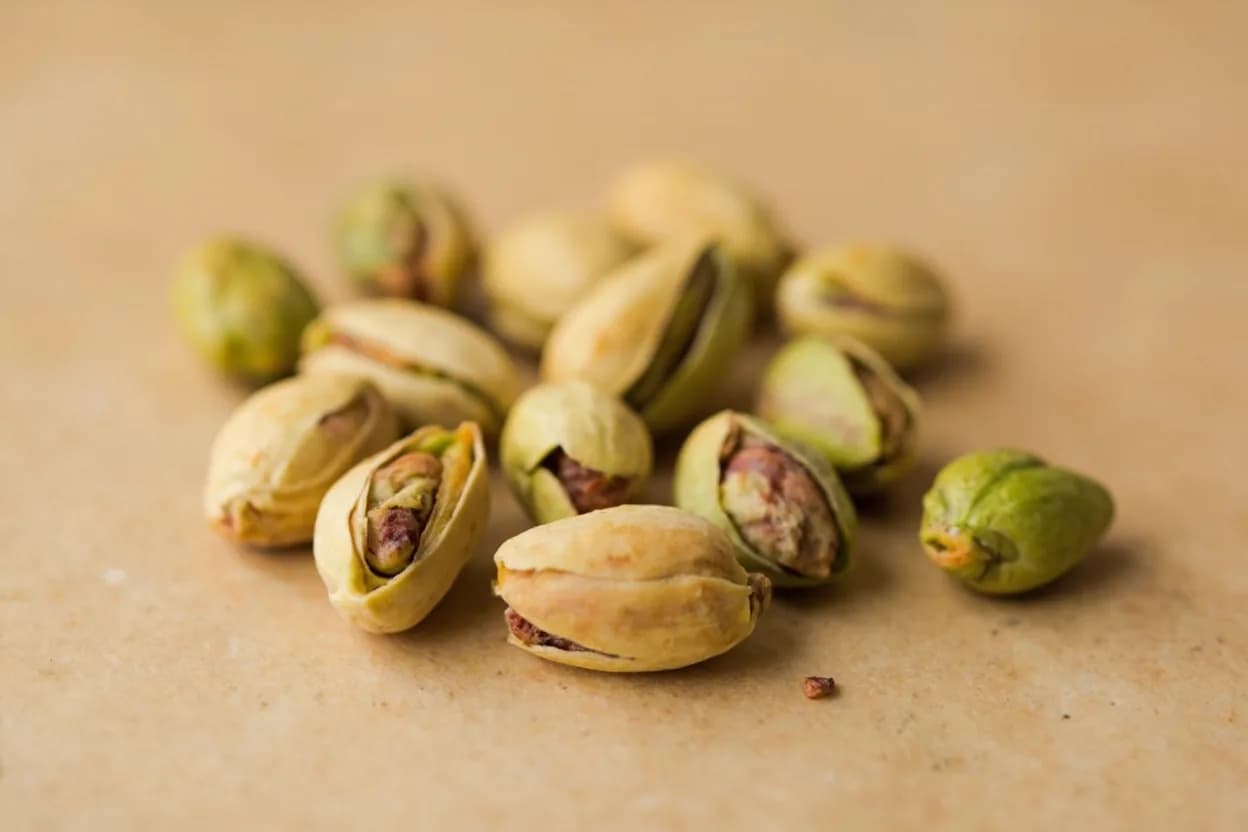
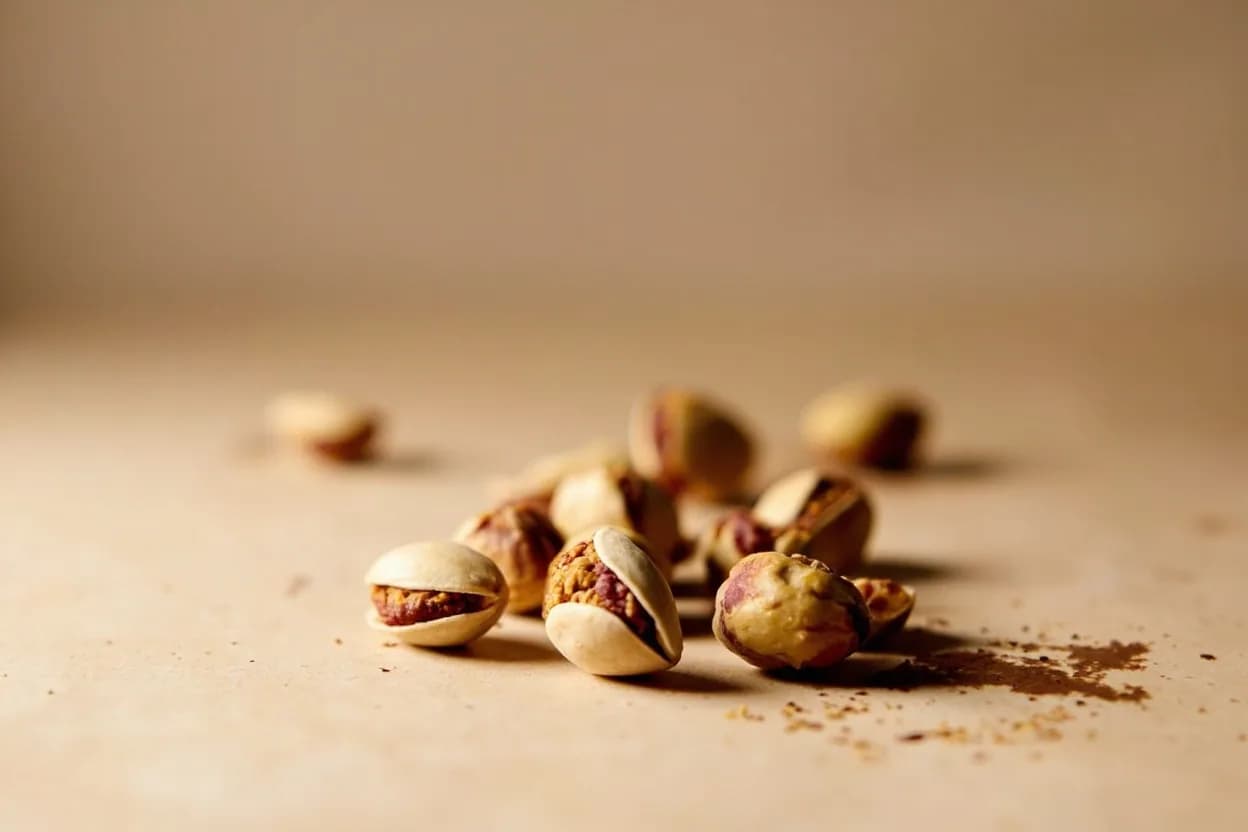
The pistachio (Pistacia vera) is a drupe native to Central Asia and the Middle East, prized for its split green kernel and its flavor — a distinctive combination of buttery sweetness, mild nuttiness, and a faint, grassy-herbal quality unique in the nut world. Its vivid green color comes from chlorophyll in the kernel skin; premium varieties (Sicilian Bronte, Iranian Akbari) are more intensely colored and flavored. The fat profile is predominantly monounsaturated (oleic acid), making pistachios creamy rather than waxy. Roasting deepens pyrazine notes (nutty, roasted); raw kernels emphasize the sweet, green, almost vegetal character.
In photos
Flavour profile
Classic pairings
- Rose waterPersian, Lebanese, and Turkish confectionery
The definitive Middle Eastern and Persian combination: rose's citronellol and geraniol harmonize with pistachio's own faint floral compounds; used together in baklava, halva, ice cream, and maamoul.
- HoneyGreek, Turkish, and Levantine pastry
Floral sweetness and viscosity complement pistachio's buttery richness; together in baklava they are inseparable.
- Dark chocolateItalian gianduja-style confectionery, modern chocolate bars
Bittersweet roasted notes provide dramatic contrast to pistachio's sweetness; chocolate coats the nut's fat and amplifies richness.
- CardamomIndian kulfi, Middle Eastern ma'amoul, Iranian bastani
1,8-cineole's spicy warmth cuts pistachio's sweetness and adds aromatic lift; classical in South Asian and Middle Eastern sweets.
- SaffronPersian bastani (saffron-pistachio ice cream), Moroccan tagines
The world's most expensive spice and one of its most expensive nuts share the same Persian culinary heritage; safranal's floral-hay notes complement pistachio's green sweetness.
- VanillaItalian gelato di pistacchio
Vanillin's warmth rounds pistachio's mild sweetness; classic in gelato, ice cream, and European pastry.
- LambMoroccan pastilla, Levantine kofta, Turkish kebab
Pistachio is pressed into lamb kofta, stuffed into crown roasts, and incorporated into chermoula — the nut's fat and mild sweetness balance gamey richness.
Adventurous pairings
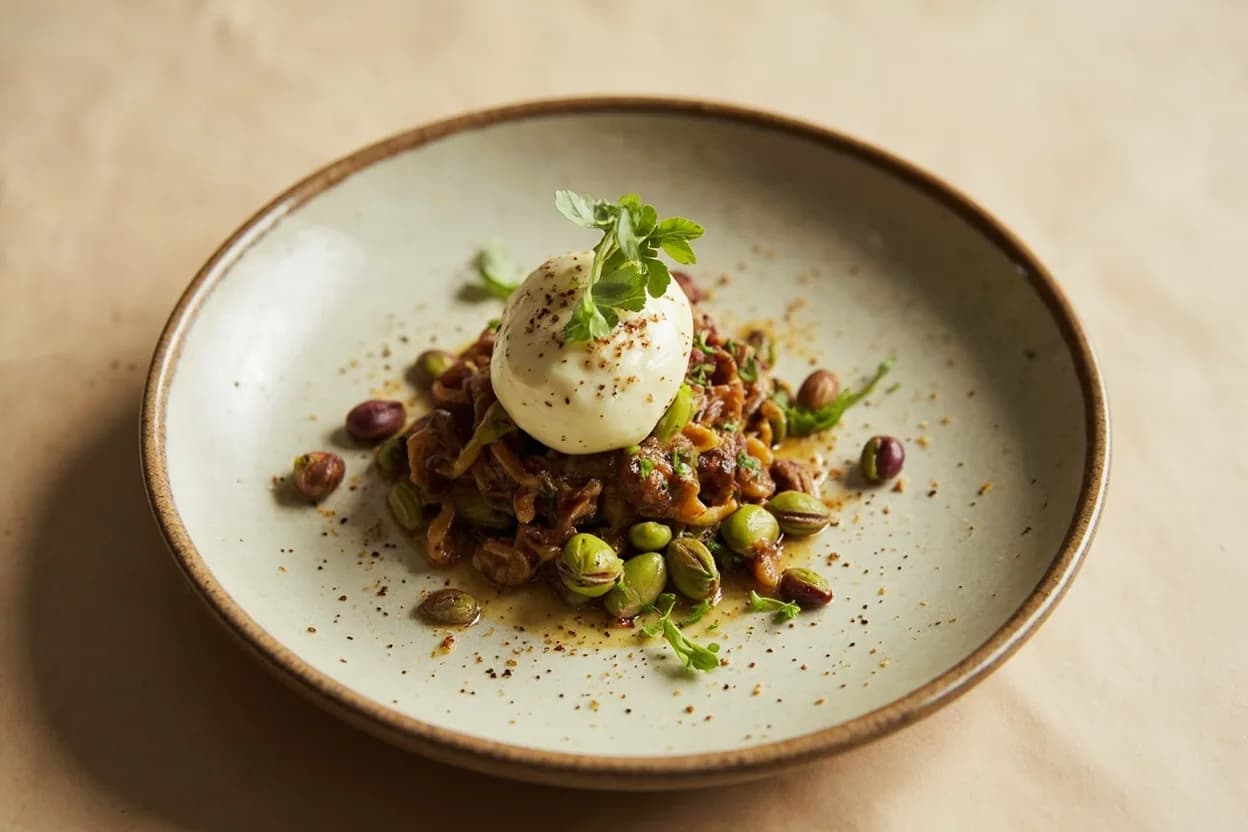
Raw pistachio crushed over burrata with olive oil and flaky salt plays the nut's green, grassy side against the cheese's milky creaminess — a modern Italian restaurant staple.
Sumac's tart, fruity acidity cuts through pistachio fat with precision; together in a za'atar-style blend or salad dressing they create bright, complex savor.
Japanese citrus's floral-tart complexity elevates pistachio's sweetness in a fusion context — yuzu-pistachio financiers or a glaze on grilled fish represent this direction.
Sour-sweet reduced pomegranate and green pistachio is a Levantine flavor axis; used in salads, rice pilafs (fesenjan direction), and dips.
- Aged ricotta (ricotta salata)
The salty, firm cheese provides mineral contrast to pistachio sweetness — a Sicilian combination rooted in the island's Arab-influenced pastry and pasta tradition.
Tread carefully
- Very pungent blue cheeseavoid
Roquefort or Gorgonzola piccante's sharp blue mold notes overpower pistachio's delicate sweetness — intensity mismatch.
- Strongly smoked ingredientsavoid
Heavy smoke (liquid smoke, heavily smoked fish) clashes with pistachio's green, floral character — the nut's mild sweetness cannot hold its own against dominant phenol volatiles.
- Raw brassicas (high quantities)avoid
Sulfonyl glucosinolate compounds in large quantities of raw kale or cabbage conflict with pistachio's delicate floral-sweet notes — cook the brassicas first, or use in small amounts.
How to use it
- Blanch and peel raw pistachios to reveal vivid green interior for maximum visual impact in desserts
- Process raw kernels into a smooth paste (pistachio butter / pasta di pistacchio) for ganaches, gelato, and pastry creams
- Toast whole kernels lightly (150°C, 8 minutes) to deepen pyrazine-roast notes without greying the green
- Grind coarsely as a crust for fish, lamb, or goat cheese — the fat holds seasoning and forms a crisp shell
- Steep in warm milk or cream for an infused base; strain for pistachio gelato or crème brûlée
- Use freeze-dried pistachio powder as a finishing dust for mignardises, macarons, and pastry glazes
Appears in
Related flavours
The most canonical companion — shared floral compounds and a shared culinary heritage in Persian and Levantine sweets.
- Almond
The closest nut relative in flavor and culinary use — interchangeable in many pastry contexts, though pistachio is sweeter and greener.
A Persian heritage pairing — the two together define Iran's most celebrated ice cream (bastani).
References
- 1.The Flavor Bible — Karen Page & Andrew Dornenburg
- 2.On Food and Cooking — Harold McGee
- 3.Plenty — Yotam Ottolenghi
- 4.The Complete Middle Eastern Cookbook — Tess Mallos
- 5.Honey & Co: The Baking Book — Sarit Packer & Itamar Srulovich
Confidence: high
Notes
Origin quality gradient
Not all pistachios are equal. Iranian Akbari and Sicilian Bronte pistachios are considered the world's finest — deeper green, more aromatic, and richer in flavor. California pistachios (the dominant commercial variety) are larger but often blander. For fine pastry, Bronte paste or Iranian kernels are worth the cost premium. The color difference alone is significant in presentation.
Rancidity risk
Pistachio's high fat content makes it prone to rancidity, especially when pre-ground. Pistachio paste should be stored refrigerated in an airtight container and used within 2–3 months of opening. Taste before using — rancid pistachio is genuinely unpleasant and will spoil a dessert more effectively than any other nut.