Sweet Aromatics
Dark Chocolate
Also: bittersweet chocolate, semisweet chocolate, cacao, couverture
Bitter, fruity, and deeply complex — dark chocolate is one of the most versatile flavor anchors in both sweet and savory cooking.
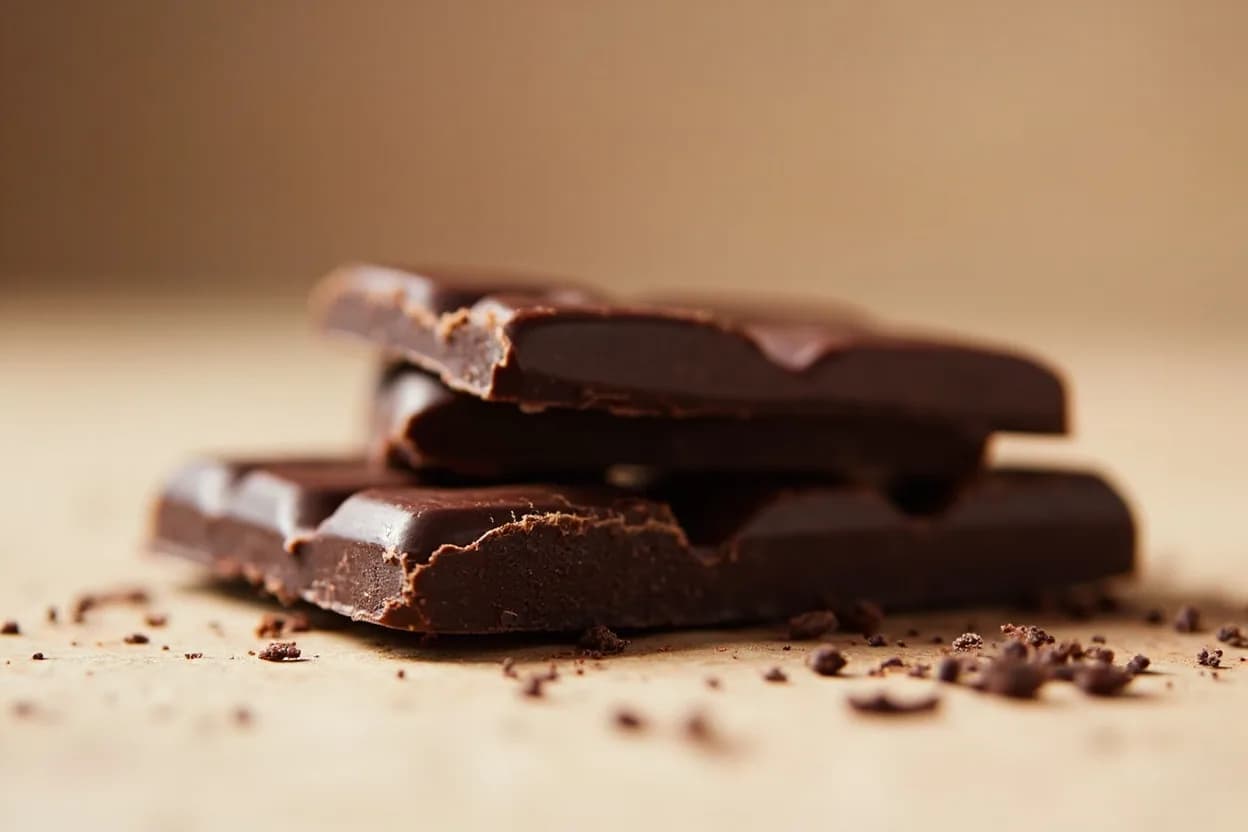
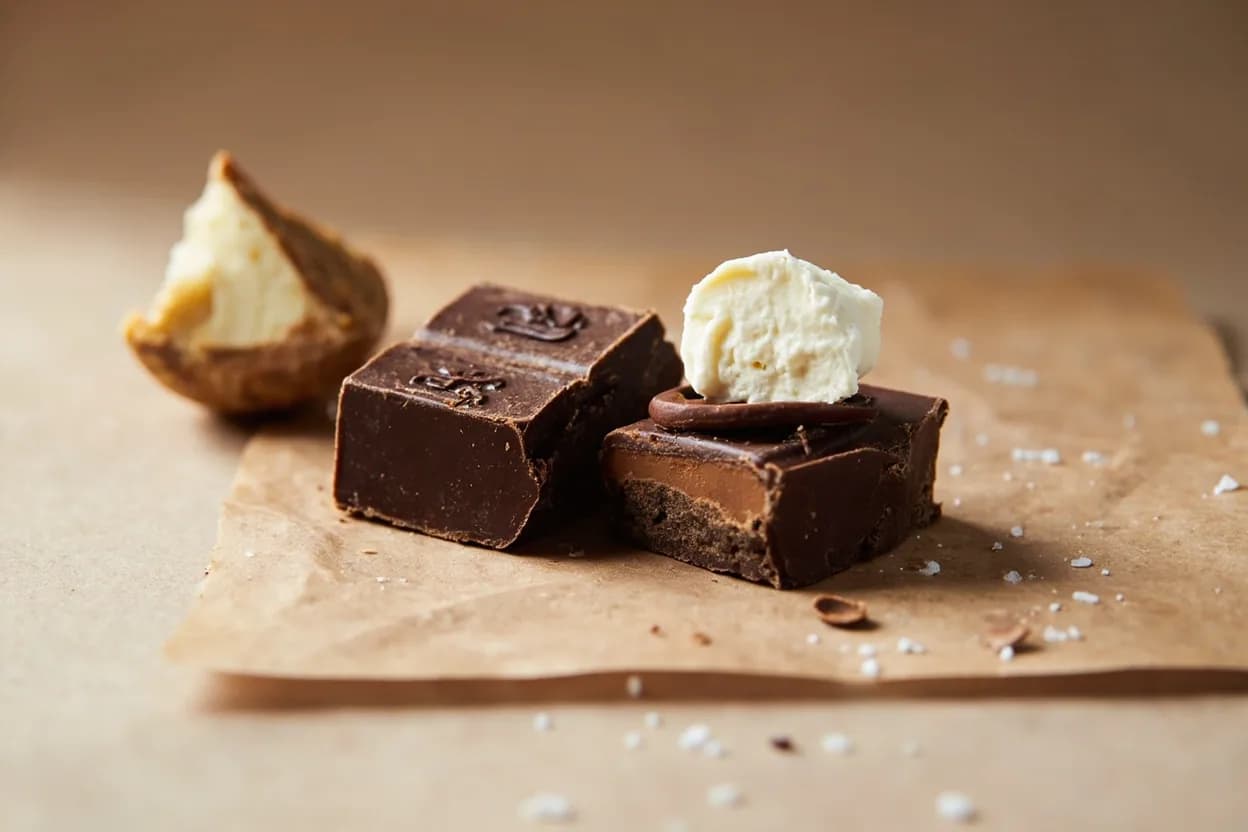
Dark chocolate contains 50–99% cacao solids (cocoa mass, cocoa butter, minimal sugar) with no added milk solids. Its flavor is built from over 600 aromatic compounds generated during fermentation and roasting of Theobroma cacao seeds. Single-origin bars carry distinctive terroir: Madagascan cacao is bright and berry-fruited; Venezuelan is earthy and nutty; Peruvian has floral jasmine tones. Couverture (high cocoa butter) is preferred for cooking due to its fluid melt and clean snap. The bitterness comes from theobromine and caffeine; the fruit notes from acetic acid esters formed in fermentation.
In photos
Flavour profile
Classic pairings
- Heavy creamFrench patisserie
The fat in cream dissolves cocoa butter and suspends cacao solids into a smooth ganache — the most fundamental chocolate application.
- Vanilla beanGlobal
Vanilla's floral esters soften chocolate's bitter edge; they are so intertwined that vanilla is added at the couverture stage of most commercial chocolate.
- Sea saltFrench, American
Sodium suppresses bitterness receptors and heightens sweet and aromatic perception, making salt the most impactful single addition to dark chocolate.
- Red wine (Cabernet, Malbec)French, Argentine
Shared tannin structures and red-fruit compounds (anthocyanins) create harmonic resonance; the classic wine-and-chocolate pairing.
- Chili (ancho, pasilla)Mexican
Capsaicin's heat is the cornerstone of Mexican mole negro and champurrado; it amplifies chocolate's depth without competing for aromatic space.
- Coffee / espressoGlobal
Roast compounds (pyrazines, furans) in coffee amplify chocolate's depth; a teaspoon of espresso powder intensifies cocoa flavor in any chocolate cake.
- Orange (zest and juice)French
D-limonene from orange peel lifts the bitterness with citrus brightness; a classic French confectionery pairing (orangette).
- RaspberryFrench, American
Malic acid and fruit esters in raspberry cut through chocolate's fat and echo its red-fruit undertones in a way that's both classic and precise.
Adventurous pairings
- Ancho chili + cinnamon (mole negro)
The foundational Mexican pairing beyond simple chili heat — the mulato and ancho's dried-fruit character merges with chocolate's own fruity base, creating layers of complexity that define one of the world's great sauces.
- Aged balsamic vinegar (tradizionale)
12-year aceto balsamico tradizionale carries its own dark fruit, caramel, and slight bitterness — poured over dark chocolate gelato, it creates a pairing of stunning complexity with no single note dominating.
- Lamb / game meat
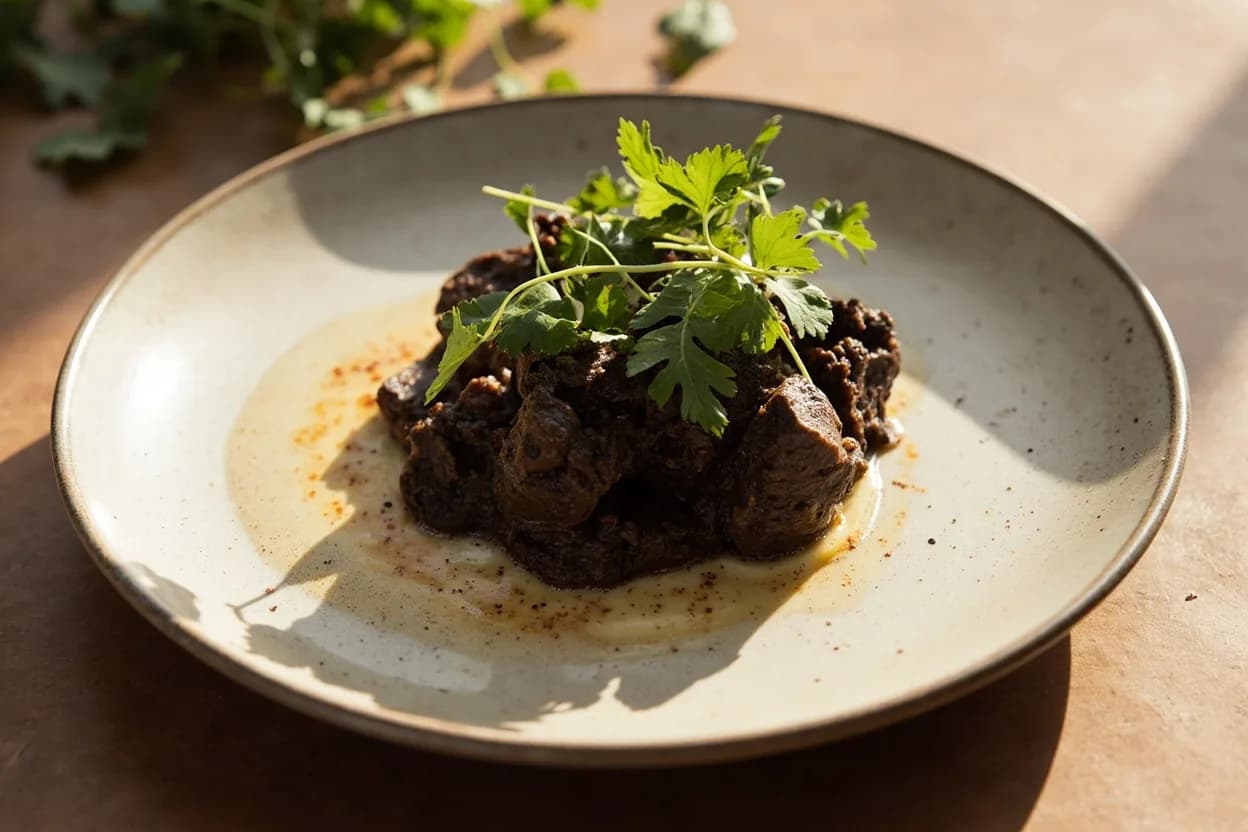
Dark chocolate adds body and bitter depth to braises of lamb neck or venison, functioning like a tannin-heavy red wine reduction; used in refined Italian and Spanish cooking.
- Cardamom
The eucalyptol in cardamom cuts through chocolate's fat and draws out its floral notes; common in Middle Eastern chocolate confections and Nordic pastry.
- Tahini (dark-roast sesame paste)
Sesame's fat and roasted bitterness echo chocolate's own; combined, they produce a complex, halva-like depth used in contemporary Middle Eastern pastry.
- Smoked paprika
A small amount of pimentón de la Vera's sweet smoke adds an unexpected savory dimension to dark chocolate mole or truffles, reinforcing the pepper-fruit axis.
Tread carefully
- Delicate white fishavoid
The intensity and tannins of dark chocolate completely overwhelm the subtle umami and fat of fish like sole or cod — no culinary tradition supports this combination.
- Highly tannic red wine (young Barolo)avoid
Stacking the tannins of both produces an astringent, mouth-drying combination that makes both the chocolate and the wine taste worse than they would alone.
- Very sweet milk chocolate or white chocolate ganacheavoid
Mixing into the same preparation creates unresolved sweetness levels — if combining chocolates, stay within a similar cacao percentage range.
How to use it
- Tempering: melt to 50°C, cool to 27°C, rewarm to 31°C to align cocoa butter crystals for glossy, snappy chocolate with a long shelf life
- Ganache: hot cream poured over chopped couverture in a 1:1 ratio for truffles, 2:1 cream for glaze, 1:2 cream for firm filling
- Blooming cocoa powder in hot water or fat before adding to batter deepens flavor by releasing volatile aromatics
- Shaving or microplaning over dishes rather than melting preserves the top-note volatiles lost to heat
- Mole base: toast dried chilies, then bloom the chocolate off-heat in the simmered chili-spice liquid for maximum integration
- Double boiler or bain-marie: melt gently below 50°C to prevent seizing or scorching; never allow water contact with melted chocolate
Appears in
Related flavours
Caramel's Maillard sweetness and slight bitterness are the natural counterpoint to chocolate in countless confections and layer cakes
So ubiquitous a pairing that vanilla is typically blended into couverture during manufacture
- Chili (Ancho)
The savory-spice axis of Mexican mole; the two are arguably the most iconic flavor pair in Mesoamerican cuisine
References
- 1.The Flavor Bible — Karen Page & Andrew Dornenburg
- 2.On Food and Cooking — Harold McGee
- 3.Chocolates and Confections — Peter Greweling
- 4.Modernist Cuisine — Myhrvold et al.
- 5.The Art of the Chocolatier — Ewald Notter
Confidence: high
Notes
Percentage and its implications
Cacao percentage dictates the intensity and bitterness of chocolate in a recipe. 60–65% is the workhorse range for ganache and baking — enough bitterness to be interesting, enough sugar to balance. 70–80% works well where other sweetness sources are present (caramel layers, sweet fruit). Above 85%, the bitterness becomes dominant and requires careful balancing partners — thick cream, salt, or high-sugar fruit accompaniments. Single-origin chocolates at any percentage carry terroir that matters: a Madagascan 72% behaves very differently from a Venezuelan 72% in a delicate mousse.
Savory applications
Beyond mole, dark chocolate functions as a seasoning in braises and stews. A 20g square of 70% chocolate added to the last 10 minutes of a lamb or venison braise enriches the sauce with tannins (acting like a red wine reduction), adds body via cocoa butter fat, and contributes a subtle bitterness that reads as depth rather than sweetness. This technique is centuries old in Italian cinghiale (wild boar) preparations.