Sweet Aromatics
Caramel
Also: toffee, butterscotch, dulce de leche, salted caramel, praline base
The bittersweet alchemy of burned sugar — caramel's Maillard depth makes it the most complex sweetener in the pastry kitchen.
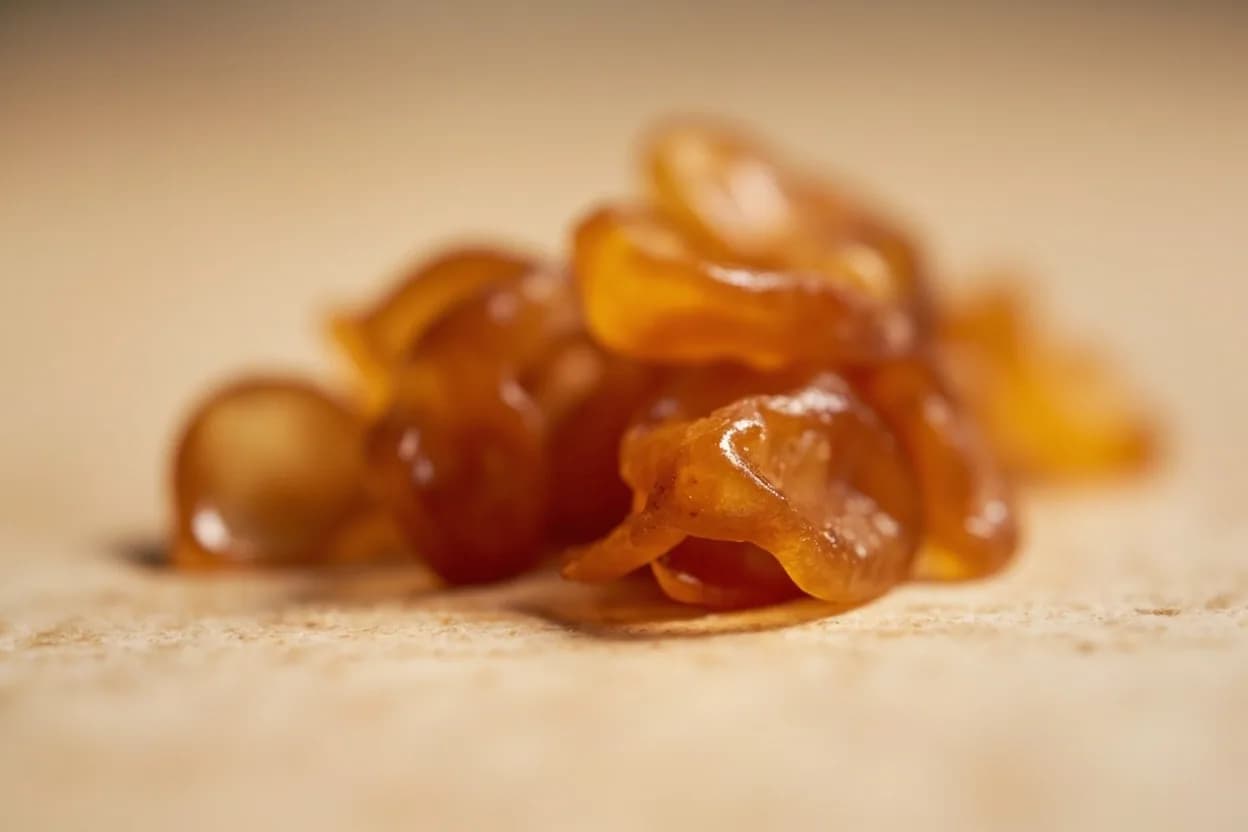
Caramel is the product of heating sucrose (or glucose/fructose mixtures) to 160–180°C, triggering pyrolysis and Maillard-adjacent browning reactions that generate over 800 flavor compounds including furans, aldehydes, diacetyl (butter), and maltol (toasty sweetness). At its lightest (blonde caramel, 160°C) it is buttery and mild; at its darkest (dark caramel, 180°C) it is intensely bitter, almost smoky. Adding cream and butter halts cooking and introduces dairy richness. Salted caramel — popularized by Henri Le Roux and Joël Robuchon in Brittany — uses fleur de sel to suppress residual bitterness and heighten aromatic perception. Dulce de leche is a milk-based variation where the Maillard reaction between lactose and milk proteins produces a distinctly milky, less-bitter profile.
In photos
Flavour profile
Classic pairings
- Dark chocolateFrench, British
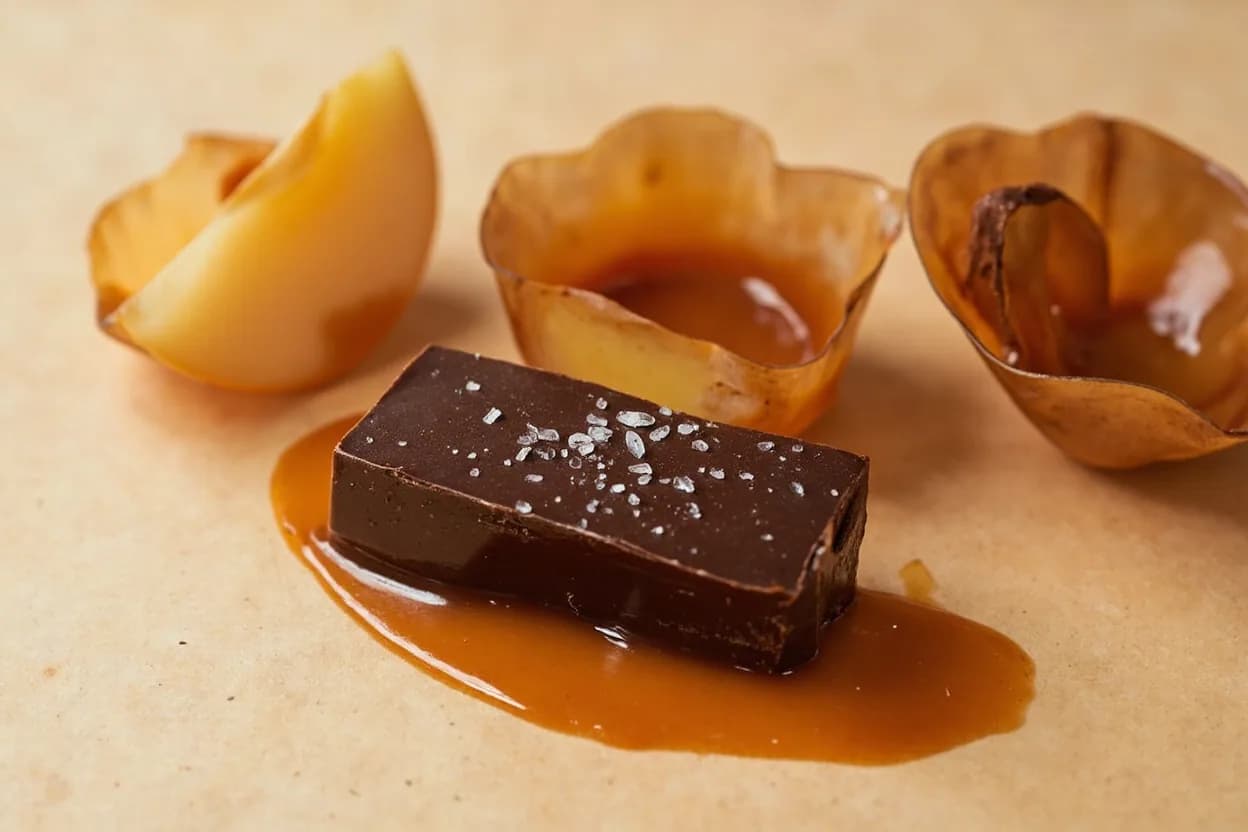
Caramel's Maillard sweetness and chocolate's cacao bitterness are complementary: one is the bittersweet inversion of the other, creating the core of praline, chocolate caramel tart, and millionaire's shortbread.
- Fleur de sel / sea saltFrench (Brittany)
Salt suppresses bitterness and amplifies sweetness and aromatics; the Breton salted-butter caramel is the canonical example of this transformation.
- Apple (especially tart varieties)French, American
Malic acid in Granny Smith or Bramley apples cuts caramel's richness and provides fruit contrast; tarte Tatin and caramel apple are the defining dishes.
- Coffee / espressoGlobal
Shared roast compounds (pyrazines) mean caramel and coffee share flavor architecture; the combination appears in macchiato syrups, coffee caramel tarts, and affogato.
- Cream and butterFrench
The standard sauce construction: hot caramel is quenched with cream and enriched with butter, creating a pourable sauce whose fat carries and sustains caramel's volatile aromatics.
- BananaAmerican (New Orleans)
Bananas flambéed in caramel (bananas Foster) is a New Orleans classic; the high sugar content and soft texture of banana melds seamlessly into molten caramel.
- Vanilla beanFrench
Standard aromatic addition to caramel sauce; vanilla's florals round the burnt edge and add complexity, making the combination feel complete rather than one-dimensional.
- PearFrench
A more elegant alternative to apple: pear's subtle tartness and floral aroma are enhanced by light golden caramel without the abrasiveness of more acidic fruit.
Adventurous pairings
- Aged Comté or Gruyère
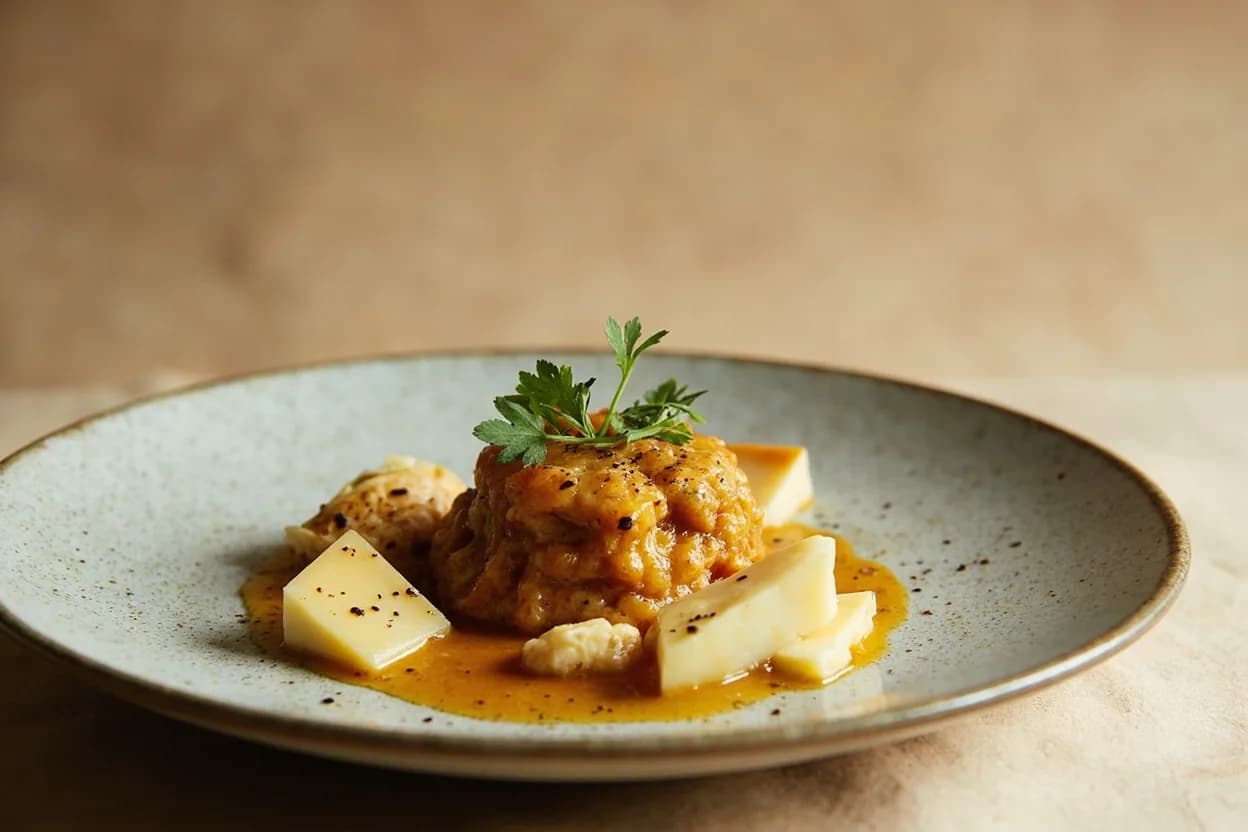
Aged Alpine cheeses carry their own caramel/butterscotch notes from slow aging; a caramel sauce drizzled over a cheese course, or caramelized onion embedded in a cheese gratin, creates a savory-sweet resonance that is quietly stunning.
The roasted sesame bitterness and fat of tahini are natural counterweights to caramel's sweetness; together they form the basis of a Middle Eastern-inflected toffee that is less cloying and more complex than the original.
- Bourbon whiskey
Oak aging gives bourbon its own vanillin and caramel esters; folded into a caramel sauce, it adds smoke, spice, and resonant depth — a foundational sauce for pecan pie and bread pudding in American cooking.
- Miso (hatcho or red)
Fermented savory intensity from hatcho miso pushed into a caramel creates an umami-laced sweetness that reads as both familiar and entirely unexpected; popular in contemporary Japanese-French patisserie.
The bitter, roasty nuttiness of black sesame paste mirrors caramel's darker notes while its color creates dramatic visual contrast; an important flavor pair in contemporary Asian patisserie.
Tamarind's tartaric acid and caramel's pyrolysis products share a bittersweet backbone; combined in a glaze, they create a sweet-sour-bitter depth used in South Asian caramelized preparations and Worcestershire sauce formulations.
Tread carefully
- Delicate citrus creamsavoid
Caramel's assertive burnt-sugar character overwhelms the bright, fragile acidity of lemon curd or yuzu cream; keep the two preparations separate on a plate at most.
- Very herbal, grassy flavors (fresh tarragon, lovage)avoid
The chlorophyll and methyl chavicol in fresh herbs are stripped by caramel's intensity, leaving only a flat sweetness with a slight chemical aftertaste.
- Delicate fish (Dover sole, flounder)avoid
Caramel in savory applications works with bold proteins (duck, pork); it overwhelms the subtle umami of delicate white fish.
How to use it
- Dry caramel: melt sugar in a clean, dry pan without water, swirling (not stirring) until evenly amber — cleaner flavor, faster, but less forgiving
- Wet caramel: dissolve sugar in water first before cooking — slower, more controllable, suitable for beginners
- Quenching: warm cream (not cold) prevents violent splattering when stopping caramel's cooking; add off the heat and whisk continuously
- Caramelized onions: slow cook 45+ minutes over low heat, allowing natural sugars to caramelize — distinct from sautéing, which is steam-softening
- Crème brûlée crust: thin sugar layer torched in one pass; too close or too long produces bitter, acrid burning rather than controlled caramelization
- Praline: caramel poured over toasted nuts and left to cool, then pulverized — the standard French method for praline paste and feuilletine fillings
Appears in
Related flavours
Complementary bittersweet axis — the two are rarely far apart in fine pastry
Standard aromatic partner; nearly every caramel sauce includes vanilla as structural support
Shared Maillard chemistry means coffee and caramel are naturally resonant and often amplify each other
References
- 1.On Food and Cooking — Harold McGee
- 2.The Flavor Bible — Karen Page & Andrew Dornenburg
- 3.Patisserie — Christophe Felder
- 4.The French Chef's Companion — Henri-Paul Pellaprat
- 5.Bouchon Bakery — Thomas Keller & Sebastien Rouxel
Confidence: high
Notes
Light vs. dark caramel
The temperature at which you pull caramel off the heat determines its entire flavor character. Blonde/golden caramel (160°C) is buttery, sweet, and mild — right for praline and caramel popcorn where you don't want bitterness to compete. Amber caramel (170°C) has developed Maillard complexity and a slight fruitiness that works in classic caramel sauces and tarte Tatin. Dark caramel (178–180°C) is genuinely bitter, almost smoky, and should only be used where that bitterness is a design element, not a mistake — caramel anglaise for crème caramel uses it intentionally for depth.
The Breton salt revelation
Henri Le Roux's invention of salted butter caramel (CBS) in Quiberon, Brittany, in 1977 changed pastry. The mechanism is straightforward — salt suppresses bitterness receptors (masking the burnt-sugar edge) while simultaneously enhancing sweet and aromatic perception — but the effect is disproportionate. A mere 0.5% salt by weight transforms caramel from sweet-one-note to a fully dimensional, addictive flavor. Fleur de sel is preferred over fine salt for its mineral complexity and burst of texture.