Nuts & Seeds
Black Sesame
Also: black sesame seeds, kuro goma, hei zhi ma
Intensely nutty and faintly bitter, black sesame brings depth and drama wherever it lands.
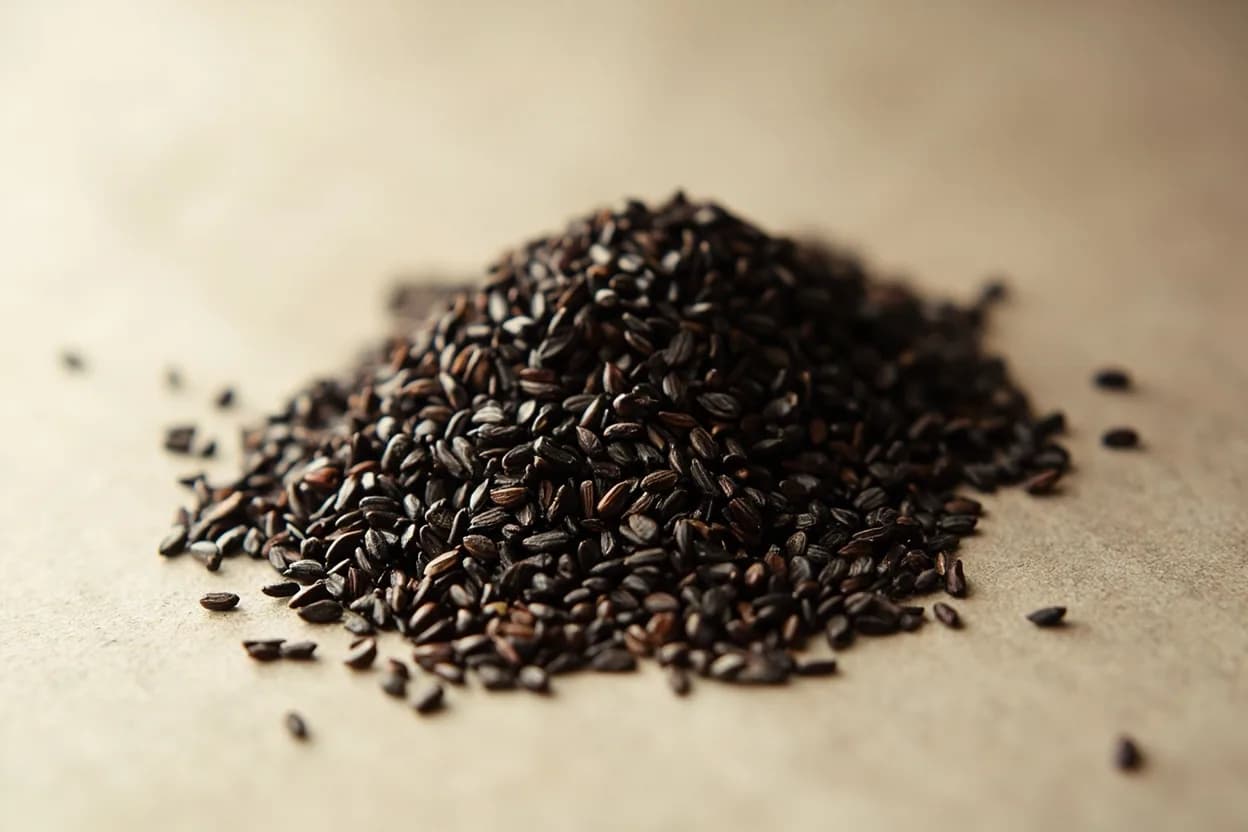
Black sesame seeds are the unprocessed, unhulled form of Sesamum indicum, carrying a more robust, slightly bitter edge compared to their white counterparts. Toasted, ground into a paste, or pressed into oil, they release aromatic compounds — sesamin, sesamol, and volatile pyrazines — that produce a rich, roasted nuttiness with inky, almost mineral undertones. Central to East and Southeast Asian pastry, confectionery, and savory cooking.
In photos
Flavour profile
Classic pairings
- Glutinous riceChinese, Japanese
The sticky, neutral starch of mochi or tang yuan lets the sesame paste's intensity take center stage without competition.
- HoneyKorean, Japanese
Floral sweetness from honey rounds the bitterness and creates a balanced, aromatic paste or glaze.
- Soba noodlesJapanese
Buckwheat's own earthy bitterness harmonizes with black sesame, and the seed's oil clings to noodle surfaces beautifully.
- Coconut milkSoutheast Asian
Rich coconut fat tempers sesame's bitter edge and adds tropical sweetness; classic in black sesame porridge.
- Dark chocolateContemporary pastry
Both share roasted bitterness and deep umami; together they amplify rather than clash.
- Tofu (silken)Japanese, Chinese
Mild, clean protein acts as a blank canvas, allowing black sesame dressing or sauce to dominate.
- Ice cream (vanilla base)Japanese
Cream and vanilla sugar cushion the bitterness; the contrast in color is also visually striking.
Adventurous pairings
- White miso
Umami from miso and roasted compounds from sesame create a savory-sweet paste excellent as a glaze or spread.
Shared pyrazine and roast chemistry; combine in a latte or panna cotta for doubled depth without bitterness overload.
The bright acidity and fruit volatiles cut through sesame's oiliness, creating a vivid contrast used in contemporary patisserie.
- Tahini (white sesame)
Layering both sesame forms builds dimensional nuttiness — used in high-end halva and compound butters.
Tread carefully
- Delicate white fish (raw)avoid
Sesame's intensity overwhelms the subtle sweetness of crudo or sashimi-grade fish; reserve sesame applications for cooked preparations.
- Fresh cream saucesavoid
The bitter edge can curdle the perception of clean dairy; black sesame works better in richer, already-sweetened cream contexts.
How to use it
- Toast seeds dry in a pan until fragrant before grinding
- Grind to a smooth paste with a mortar or high-speed blender; add oil incrementally
- Steep seeds in warm cream or milk overnight for infused ice cream bases
- Use paste as a fill for mochi or pastry dough
- Fold into shortbread or cookie dough for speckled effect and nutty depth
- Blend into sesame oil with honey for a glaze
Appears in
Related flavours
Milder, sweeter sibling — interchangeable in some applications but lacking black sesame's bitter edge and color impact
Ground white sesame paste; similar fat-forward nuttiness but without the mineral bitterness
- Toasted Peanut
Shares the roasted pyrazine character; pairs similarly with rice-based desserts and savory sauces
References
- 1.On Food and Cooking — Harold McGee
- 2.The Flavor Bible — Karen Page & Andrew Dornenburg
- 3.Japan: The Cookbook — Nancy Singleton Hachisu
Confidence: high
Notes
Hulled vs. unhulled
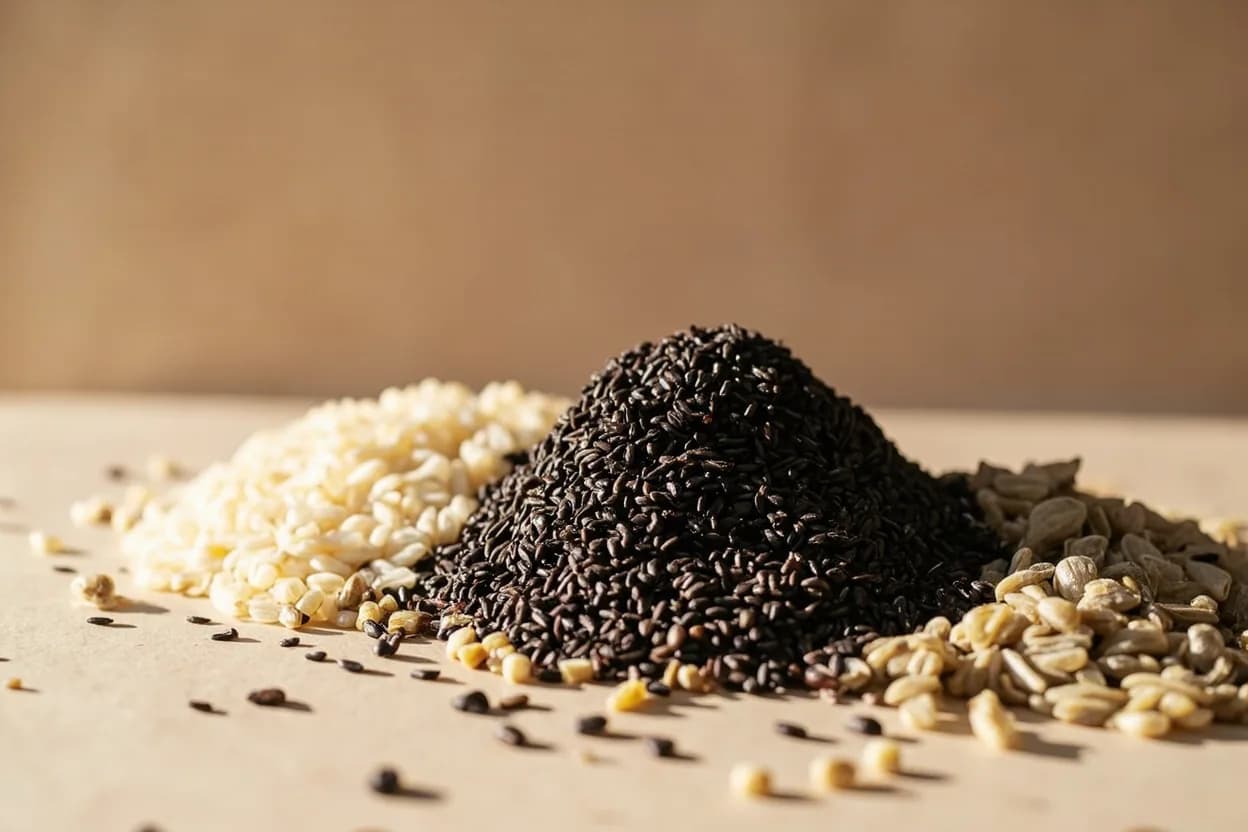
Black sesame seeds are almost always used unhulled; the hull is where most of the color, bitterness, and mineral complexity reside. Hulling would make them behave more like standard white sesame.
Color as ingredient
The dramatic jet-black color is itself a design tool. In pastry and confectionery, black sesame lends a striking contrast to white rice, pale cream, or blond dough — a visual impact ingredient as much as a flavor one.