Souring Agents
Black Vinegar (Chinkiang)
Also: Zhenjiang vinegar, Chinkiang vinegar, 镇江香醋, Chinese black vinegar
A smoky, malt-dark vinegar from Jiangsu province that brings umami depth alongside its acidity.
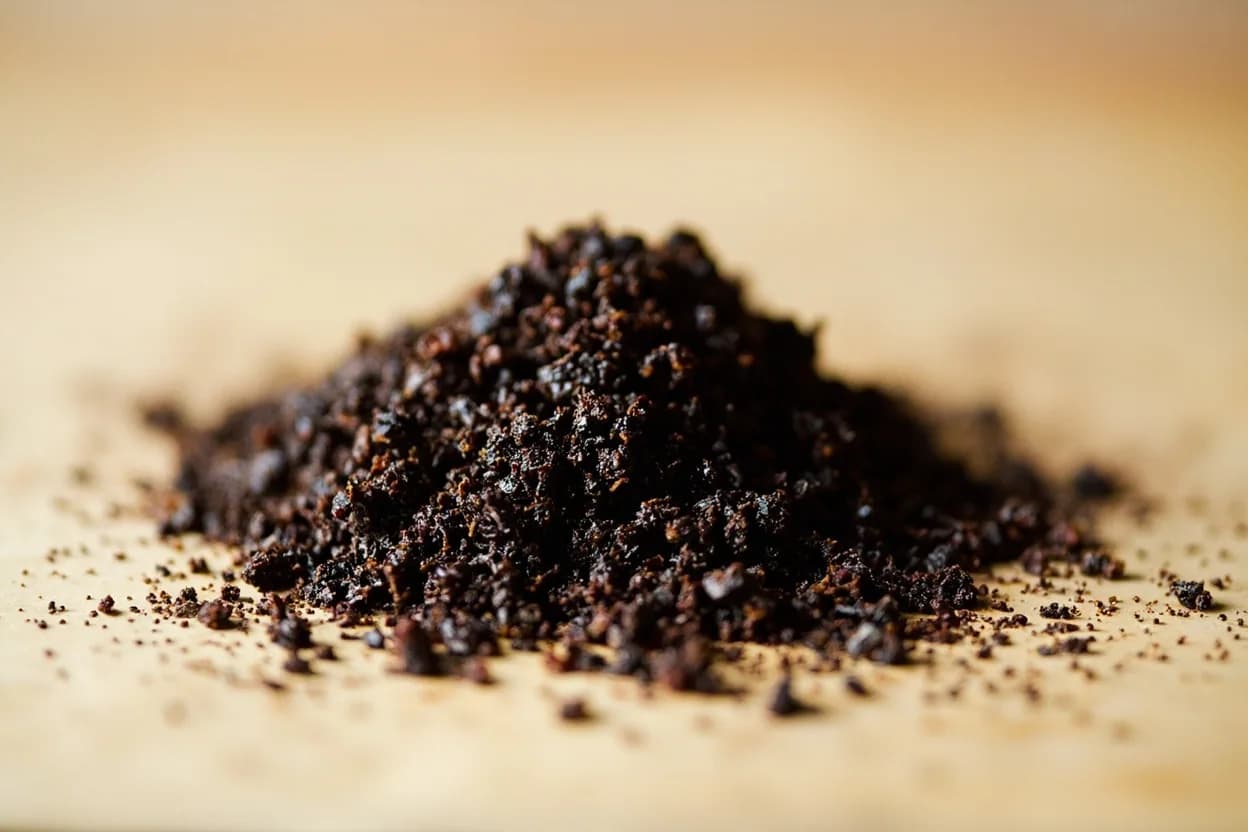
Zhenjiang (Chinkiang) black vinegar is produced in Jiangsu province, China, from glutinous rice fermented in large clay jars with wheat bran and a starter culture. Unlike Western vinegars, it undergoes a two-stage fermentation—alcoholic then acetic—plus months of aging, which generates melanoidins that give it near-opaque darkness. The flavor is less sharply acidic than white vinegar and profoundly more complex: sweet-savory malt, wood smoke, dried fruit, and a trailing umami that lingers. It is both a condiment and a cooking acid, never fully driven off by heat.
In photos
Flavour profile
Classic pairings
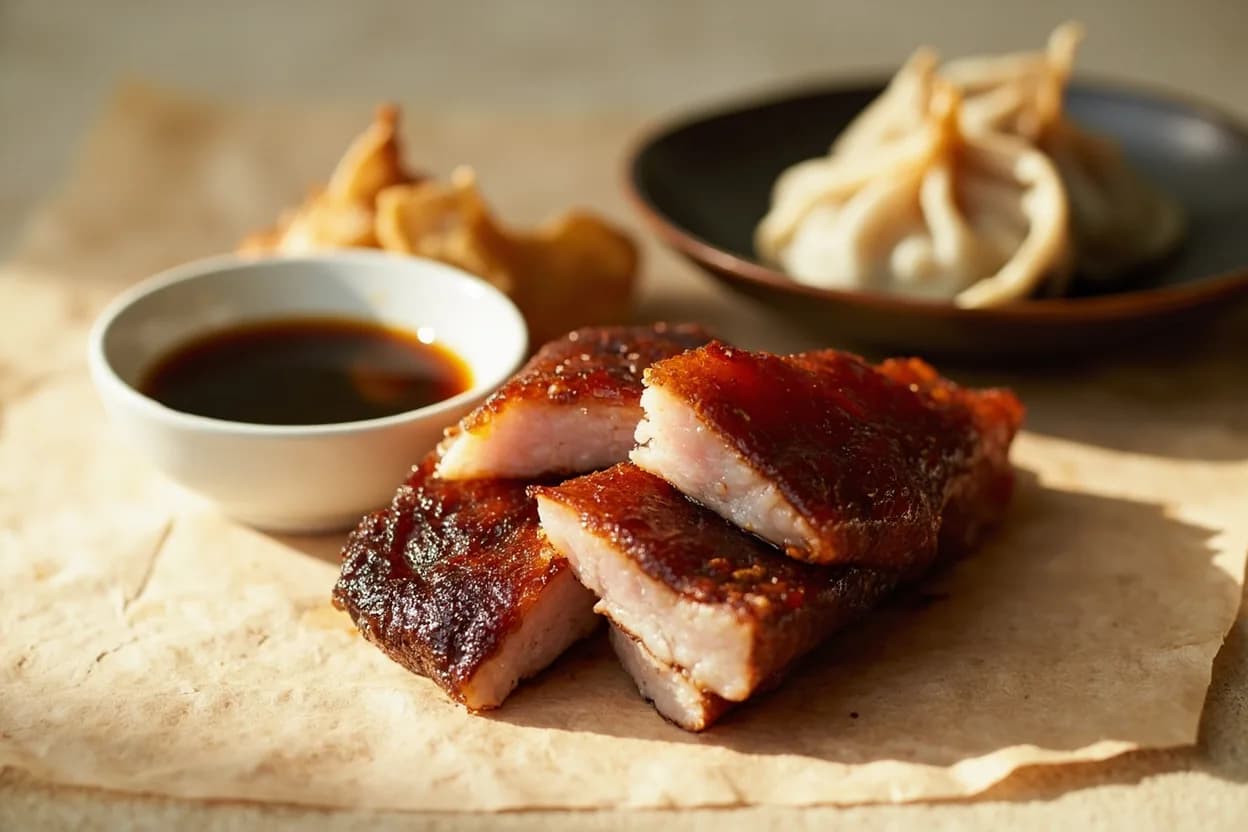
- Pork bellyChinese (Shanghainese)
The vinegar's malt and smoke cut through rendered fat while its residual sugars lacquer the meat; essential to Hong Shao Rou (red-braised pork).
- Xiaolongbao dipping sauceChinese (Shanghainese)
Julienned ginger suspended in black vinegar is the canonical condiment—acid offsets rich pork-gelatin filling and ginger counters the sharpness.
- Wontons and dumplingsChinese
A drizzle over boiled or fried dumplings adds sweet-sour contrast without the harshness of rice vinegar.
- Cold sesame noodlesChinese
Black vinegar deepens the nutty-savory sauce, adding smoke and lift that sesame paste alone lacks.
- Mapo tofuChinese (Sichuanese)
A small splash stirred in at the finish brightens the doubanjiang-heavy sauce and rounds its fermented-chili edge.
- Braised fishChinese (Huaiyang)
Vinegar tenderizes proteins and suppresses fishiness during braising; its sweetness balances soy sauce in the master sauce.
- Soy-vinegar dipping sauceChinese
Equal parts black vinegar and light soy sauce form the base dipping sauce for everything from spring rolls to potstickers across China.
Adventurous pairings
A small pour over burrata with olive oil and flaky salt turns a simple Italian starter boldly umami-acidic—the smoke reads almost balsamic but sharper.
A few drops replace mignonette; the smoke and umami amplify the oyster's brine without the harshness of lemon.
- Dark chocolate ganache
A teaspoon in a ganache reduces and concentrates; its fruity acid brightens cocoa bitterness the way balsamic does with strawberries.
- Slow-roasted lamb shoulder
Basted during the final hour, the sugars caramelize to a lacquered crust while the acid tenderizes surface proteins.
- Ripe mango
In a Burmese-inflected salad, the smoky vinegar contrasts tropical sweetness more dramatically than lime juice.
Tread carefully
- Delicate white fish crudoavoid
Its darkness stains pale fish and its heavy malt overwhelms the fish's subtle sea flavor—use rice vinegar or citrus instead.
- Dairy-based cream saucesavoid
The fermented funk clashes with neutral cream and can cause curdling at high heat.
- Light vinaigrettes over tender greensavoid
The smokiness overpowers mild lettuces; reserve it for robust vegetables or grain salads.
How to use it
- Add raw at the table as a condiment—heat reduces its aromatic volatiles
- Deglaze a wok after searing meat to build a quick pan sauce
- Add a splash in the last 2 minutes of a braise to brighten without cooking off aroma
- Combine with soy sauce and chili oil for a universal Chinese dipping sauce
- Use as a substitute for balsamic in reductions (2:1 with honey)
Appears in
Related flavours
The defining pairing partner—together they form the sweet-salty-sour backbone of countless Chinese sauces.
Ginger's sharp warmth is the canonical counterpoint, especially in dumpling dipping sauces.
- Sesame oil
Toasted sesame oil added to a black-vinegar sauce deepens the nutty, roasted register.
Fermented chili bean paste shares the vinegar's umami depth; together they define Sichuanese red-oil braises.
References
- 1.Every Grain of Rice — Fuchsia Dunlop
- 2.Land of Fish and Rice — Fuchsia Dunlop
- 3.The Food of China — E.N. Anderson
- 4.On Food and Cooking — Harold McGee
Confidence: high
Notes
Grades and substitutes
Look for 镇江香醋 (Zhenjiang Xiangcu) specifically; generic 'Chinese black vinegar' from Sichuan or Shanxi uses different grains and differs in character. In a pinch, a mix of 2 parts balsamic vinegar to 1 part rice vinegar approximates the sweet-acid balance, though the malt and smoke will be absent.