Fermented Pastes & Sauces
Soy Sauce
Also: shoyu, jiàng yóu, ganjang, kecap, tamari
The world's most versatile fermented condiment — a liquid salt with profound umami depth born from months of fungal fermentation of soybeans and wheat.
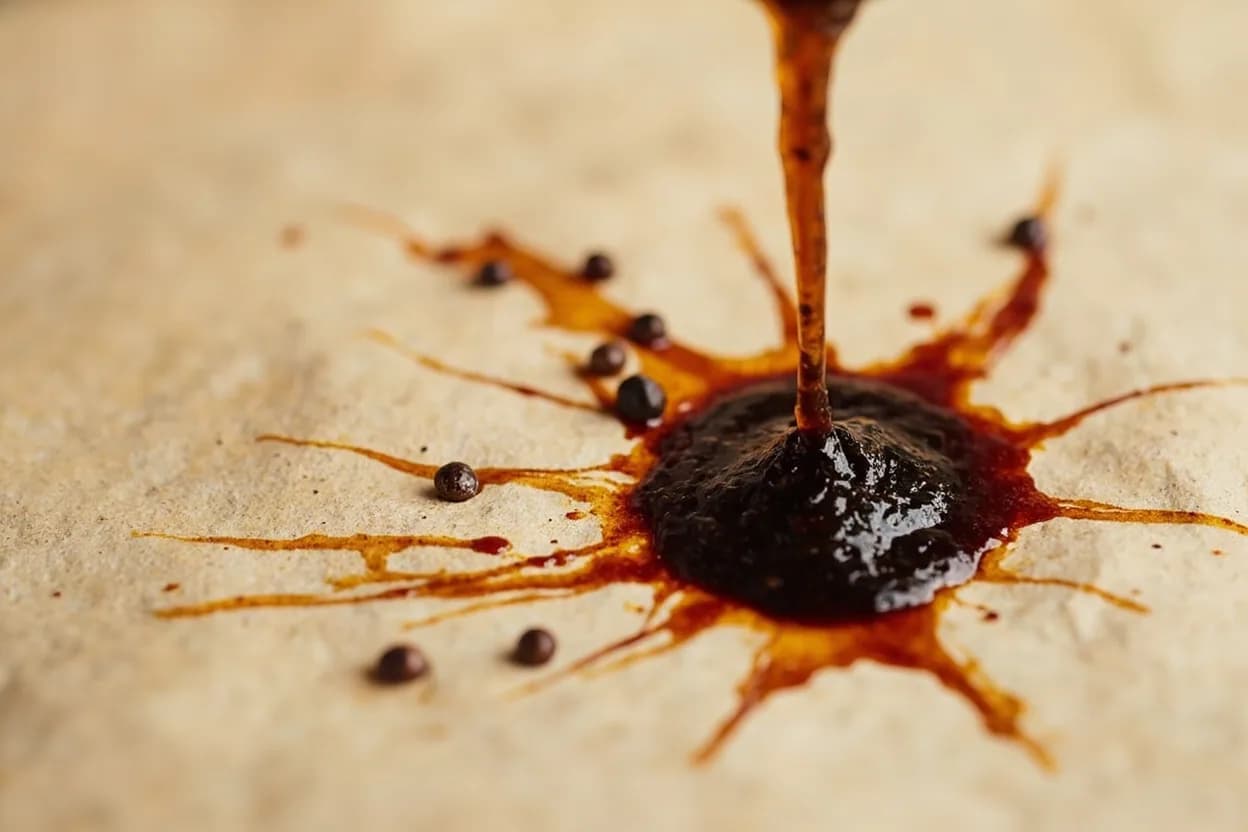
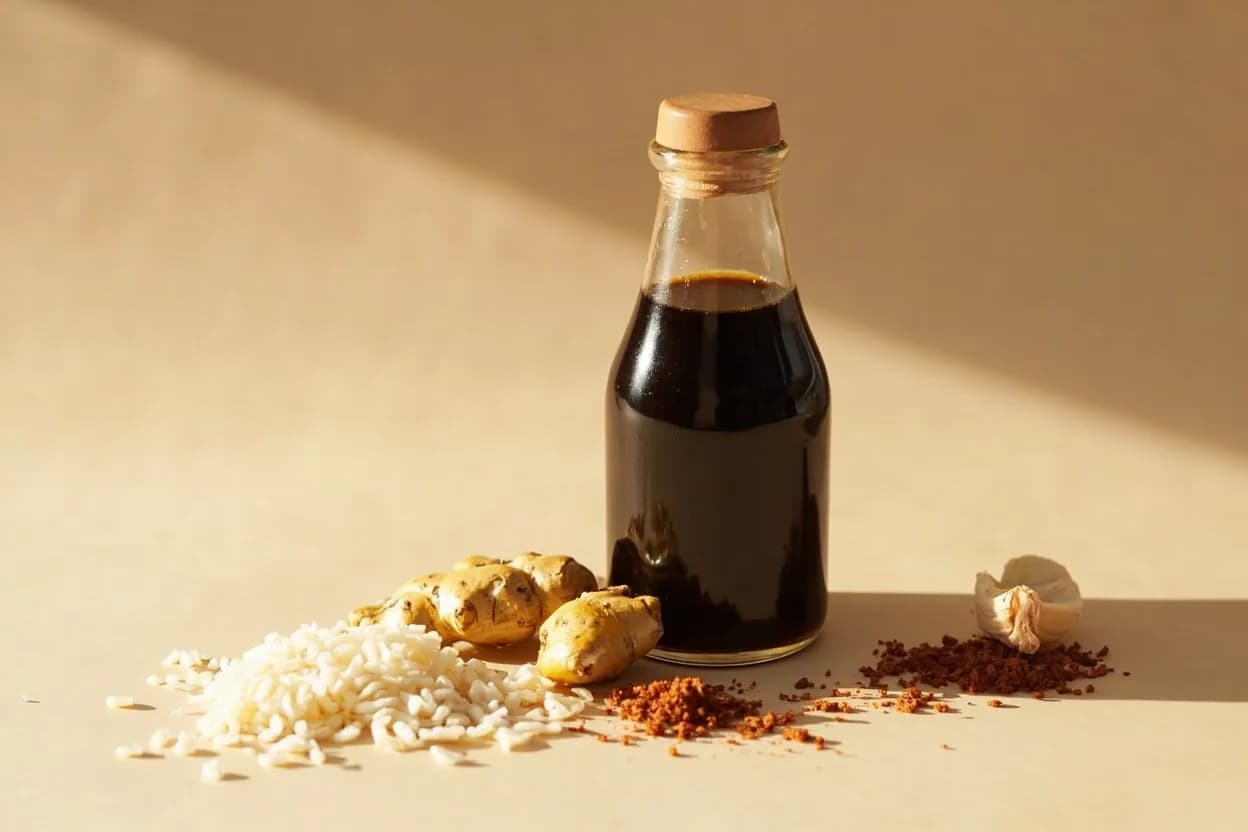
Soy sauce is a fermented liquid condiment made from soybeans (and usually wheat), salt, water, and the mold Aspergillus oryzae (koji). The mixture is fermented for months to years, producing a spectrum of glutamates, organic acids, and Maillard compounds that give soy sauce its characteristic savory depth, color, and complexity. Regional styles diverge substantially: Japanese shoyu ranges from pale, delicate usukuchi to complex, roasted tamari; Chinese soy sauces split between thin (for seasoning) and dark (for color and sweetness); Korean ganjang (hansik ganjang) is the saltiest and oldest style; Southeast Asian versions sweeten into kecap manis. Despite variation, all share a core of salt-amplified umami that makes them universal flavor enhancers.
In photos
Flavour profile
Classic pairings
- GingerJapanese / Chinese
Soy sauce and ginger are inseparable across Japanese and Chinese cuisines — ginger's pungent oils cut the sauce's salinity while soy grounds ginger's sharpness into a harmonious dipping base.
- RiceJapanese / Chinese / Korean
The most fundamental pairing in East Asian cooking — soy sauce's umami transforms plain boiled rice into a satisfying seasoned dish. Tamago gohan (egg over rice with soy) is a Japanese staple.
- GarlicChinese / Korean
Blooming garlic in oil then deglazing with soy sauce creates a Maillard compound synergy where both ingredients' savory volatiles amplify each other — the foundation of countless Chinese stir-fries.
- MirinJapanese
In Japanese cuisine, soy sauce and mirin are a pair — mirin's sugars soften soy's hard salinity while soy's depth gives mirin's sweetness a savory anchor. Together they make teriyaki, yakitori glaze, and mentsuyu.
- Sesame (oil and seeds)Japanese / Chinese / Korean
Toasted sesame oil added to soy sauce elevates both — soy grounds the nut's volatility, sesame rounds soy's edges. Essential in Korean bibimbap sauce, Chinese noodle dressings.
- Sake / Shaoxing wineJapanese / Chinese
Rice wines carry similar Maillard compounds as soy and amplify its roasted-fermented character while providing alcohol that softens raw flavors and carries aromatics.
- TofuJapanese / Chinese
Soy sauce is tofu's natural pair — both derive from soybean and the sauce's umami fills in what tofu's protein-forward blandness lacks. From agedashi to mapo, this is a pillar pairing.
- Scallions / spring onionsChinese / Korean
Raw scallion's sulfurous sharpness is tamed when cut into soy sauce — the salt softens the bite and produces a classic dipping sauce or seasoning that appears in dozens of regional cuisines.
Adventurous pairings
A few drops of soy sauce into a chocolate ganache or brownie batter amplifies cacao's own roasted umami notes via glutamate resonance — the result tastes like 'more chocolate,' not 'like soy.'
- Butter
Soy butter is a canonically Japanese flavor marriage (shoyu butter ramen, sweetcorn and soy butter) — dairy fat carries and mutes soy's salt while soy adds depth that plain salted butter lacks.
- Citrus (yuzu, lemon, orange)
Ponzu — soy sauce with citrus juice — proves that acid and salt create a brighter, more complex whole; the citrus opens up soy's bass notes and adds a soprano layer of bergamot brightness.
- Honey
Honey's floral sweetness tames soy's salinity without the bluntness of cane sugar, producing a more nuanced teriyaki-adjacent glaze that works especially well with salmon and chicken.
- Anchovies
Both are extreme umami concentrates — combining anchovy paste (or colatura) with soy sauce creates a layered savory depth that neither achieves alone, effective in pasta, braises, or dressings.
- Whisky / bourbon
Soy sauce in small doses rounds out bourbon's sweetness in cocktail applications or cooking — the oak and vanilla notes in whisky rhyme with soy's fermentation character.
Tread carefully
- Beurre blanc and classic French butter saucesavoid
Soy sauce's salt and acid can break the emulsion of classic French butter sauces and its savory character creates a flavor conflict with the refined acidity of reductions based on white wine and shallots.
- Delicate white asparagusavoid
White asparagus's subtle, almost sweet bitterness is obliterated by soy — it demands lighter, more neutral salt; the pairing is an imbalance in dominance, not an enhancement.
- Fresh goat cheeseavoid
Goat cheese's tangy lactic brightness clashes with soy's fermented savory bass, producing a muddy, discordant combination with no clear culinary tradition to anchor it.
How to use it
- Season at the end of cooking for maximum salt impact and to preserve delicate flavor volatiles (especially in Japanese preparations)
- Use as a marinade base (allow minimum 30 minutes); the salt begins protein denaturation and flavor penetration
- Add early in braises and stews to develop deep Maillard browning and color via caramelization during long cooking
- Reduce soy sauce by half with mirin and sugar to make teriyaki glaze; the concentration intensifies umami and the sugars provide glaze adhesion
- Use light soy for seasoning where color must stay pale (steamed fish, pickles); dark soy for coloring and sweetening (braised meats, master sauces)
- Emulsify with sesame oil, rice vinegar, and garlic for a dressing base that balances salt, fat, and acid
Appears in
Related flavours
Same soybean fermentation base but concentrated into paste rather than liquid — complementary in depth, often used alongside each other in Japanese cooking
A parallel fermented liquid salt from Southeast Asia — higher in fishiness, sharper in acid; in some recipes they substitute for each other in the salt role
The sweet-umami companion to soy sauce's salt-umami — always used together in Cantonese cooking to balance seasoning
Provides the acid counterpoint to soy's salt-umami in dressings, dipping sauces, and pickles — a fundamental pairing in Japanese and Chinese preparations
References
- 1.Fuchsia Dunlop — 'Every Grain of Rice' (W. W. Norton, 2012)
- 2.Shizuo Tsuji — 'Japanese Cooking: A Simple Art' (Kodansha, 1980)
- 3.Nancy Singleton Hachisu — 'Japan: The Cookbook' (Phaidon, 2018)
- 4.Sandor Katz — 'The Art of Fermentation' (Chelsea Green, 2012)
- 5.Mark Bitterman — 'Salted' (Ten Speed Press, 2010)
Confidence: high
Notes
Style matters: choose the right soy sauce
Using the wrong soy sauce is one of the most common recipe errors. Usukuchi shoyu (Japanese light soy) is saltier but paler — ideal when you need seasoning without color. Koikuchi (standard Japanese dark) is the all-purpose shoyu. Chinese light soy (生抽) is thinner and saltier; dark soy (老抽) is thicker, sweeter, and used primarily for color in master sauces and braises. Korean hansik ganjang is saltier and more pungent than Japanese shoyu and generally not interchangeable in Japanese applications. When a recipe just says 'soy sauce,' the likely intent is Japanese koikuchi.
Umami resonance: why soy amplifies everything
Soy sauce's power as a universal flavor enhancer is biochemical: it is rich in free glutamates (around 1,800 mg/100g), which activate umami receptors and make other savory flavors taste stronger. This is why a small amount of soy sauce in a tomato pasta sauce, a beef braise, or even scrambled eggs doesn't taste 'Asian' — it simply makes the dish taste more intensely of itself.