Aromatics & Roots
Ginger
Also: fresh ginger, common ginger, Zingiber officinale, shōga, adrak, jiāng
The world's most universal spice-root — simultaneously warming, pungent, and bright across every major cuisine on earth.
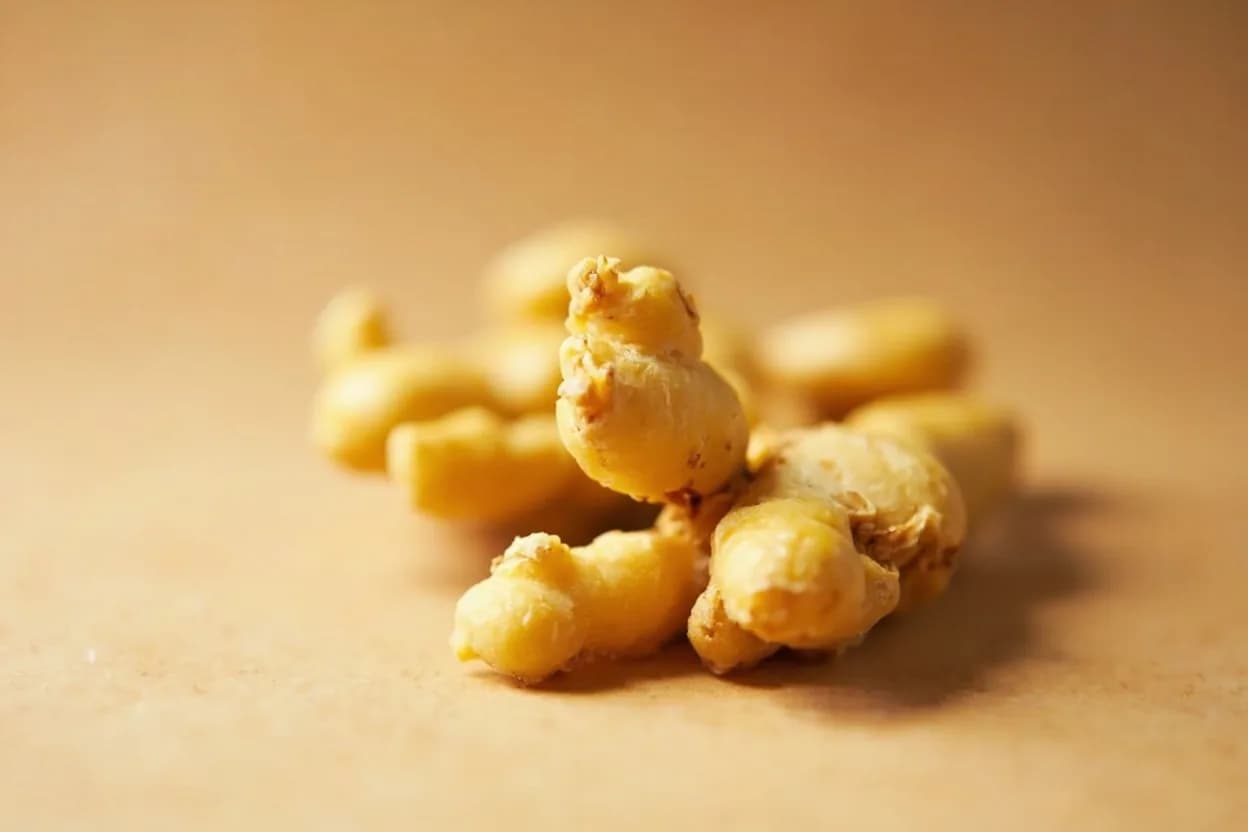
Ginger (Zingiber officinale) is a flowering plant whose rhizome is one of the most widely used spices in human history. Its heat comes primarily from gingerols (in fresh ginger) and shogaols (in dried), while its aroma is generated by a complex mix of monoterpene hydrocarbons (zingiberene, β-phellandrene, cineol) that produce warm, camphorous, and citrus-like notes. The result is a uniquely versatile ingredient: sharp and pungent when raw, sweeter and mellower when cooked, and intensely concentrated when dried or candied. Ginger appears across Chinese, Japanese, Indian, Southeast Asian, Middle Eastern, West African, Caribbean, and European baking traditions — arguably no single spice is more globally distributed.
In photos
Flavour profile
Classic pairings
- GarlicSouth Asian / Chinese
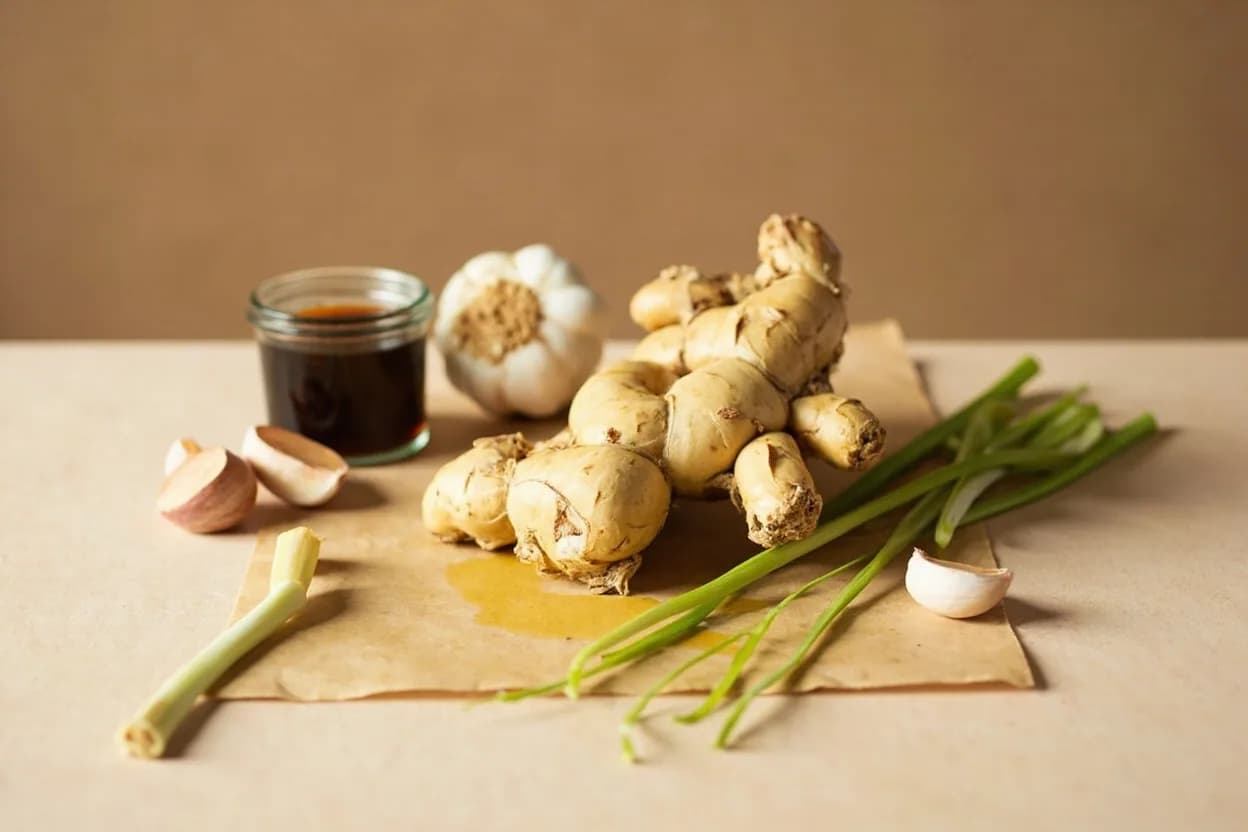
The foundational two-ingredient paste of South Asian cooking — combined at roughly equal ratios and cooked in fat to form the aromatic base of countless curries and stir-fries. Garlic provides sulfurous savory depth; ginger provides warmth and lift.
- Soy sauceJapanese / Chinese
Salty, umami-rich soy sauce is balanced by ginger's warmth and brightness in marinades, dipping sauces, and braises across Chinese and Japanese cooking. The combination defines teriyaki and ginger-soy dipping sauce.
- Scallions (spring onions)Chinese
The Chinese trio of ginger, scallion, and rice wine (shāo jiǔ) forms the basic aromatic foundation for steamed fish and poaching stocks. Scallions' fresh allium flavor softens ginger's bite.
- TurmericSouth Asian
Ginger and turmeric are botanical relatives and natural spice partners — turmeric adds earthiness and color while ginger provides heat and fragrance. Together they underpin most Indian curry masalas.
- Lemon and limeGlobal
Citrus acid tames ginger's raw sharpness and brightens its aromatic compounds into something cleaner. The combination defines ginger lemonade, ginger-lime marinades, and Kenyan chai.
- HoneyChinese / German
Honey's sweetness wraps ginger's heat into a warm, soothing harmony — the basis of ginger honey tea across Asia and the flavoring in Chinese ginger candies and Lebkuchen glaze.
- MolassesBritish / American
Dark, bitter molasses amplifies dried ginger's intensity and provides the color for gingerbread, parkin, and Jamaican ginger cake. The two are almost alchemically linked in baking.
- Seafood (crab, shrimp, fish)Chinese / Japanese
Raw ginger neutralizes the trimethylamine compounds responsible for fishy odors — a well-understood culinary chemistry. This is why ginger appears in nearly every East Asian fish recipe.
Adventurous pairings
The bitterness and floral tannin of high-cacao chocolate harmonize with ginger's spice — used in chocolate ginger truffles, modern pastry, and Mexican mole inspiration.
- Watermelon
Grated fresh ginger on watermelon is a West African-influenced combination; the heat cuts the sweetness and makes the watery fruit taste more complex and alive.
- Rhubarb
Rhubarb's extreme tartness and ginger's warmth create a sweet-acid-spice triangle when sugar is added. Rhubarb-ginger jam and compote is a classic English preserve.
- Beet
Roasted beet's earthy sweetness is lifted by ginger's brightness in salads and soups — a popular pairing in modern Nordic and Israeli kitchens.
Ginger's warmth cuts through miso's intense umami and saltiness to produce a rounded, complexly savory dressing or soup base.
Tread carefully
- Delicate herb sauces (béarnaise, gremolata)avoid
Ginger's dominant warmth bulldozes the subtle distinctions of French or Italian herb-based sauces — the aromatic frameworks are incompatible.
- Mild, creamy cow's-milk cheeses (brie, ricotta)avoid
Ginger's heat and pungency compete with rather than complement the gentle lactic sweetness of fresh soft cheeses, producing an uncomfortable clash.
How to use it
- Grate on a fine microplane for maximum juiciness and surface area — use immediately as the volatile aromatics dissipate quickly
- Mince or pound into a paste with garlic for curry bases, stir-fry aromatics, and marinades
- Julienne or slice for Chinese stir-fries where visible pieces are intended to be eaten
- Add whole slices to stocks and poaching liquids, then remove before serving
- Pickle in rice vinegar and sugar to make gari (sushi ginger) — thin slices turn pink from gingerol interaction with acid
- Candy or crystallize by simmering in sugar syrup for confections and baking garnish
- Dry and grind: dried ginger (different shogaol-dominant flavor profile) is a different ingredient from fresh
Appears in
Related flavours
Botanical cousin with a pinier, more medicinal character — not interchangeable but shares ginger's role as a foundational aromatic root in Southeast Asia
- Cardamom
Fellow member of the ginger family; cardamom's eucalyptus-floral note complements ginger's heat in chai, Scandinavian baking, and Indian biryani
- Chili
Two very different heat mechanisms (gingerols vs. capsaicin) that layer rather than cancel — together they produce a more complex, multi-stage warmth in sambals, chutneys, and hot sauces
References
- 1.Fuchsia Dunlop — Every Grain of Rice (2012)
- 2.Madhur Jaffrey — An Invitation to Indian Cooking (1973)
- 3.Harold McGee — On Food and Cooking: The Science and Lore of the Kitchen (2004)
- 4.Ian Hemphill — The Spice & Herb Bible, 3rd ed. (2014)
- 5.Yotam Ottolenghi & Sami Tamimi — Jerusalem (2012)
Confidence: high
Notes
Fresh and dried are different ingredients
Fresh ginger is dominated by gingerols; drying converts these to shogaols (roughly twice as pungent) and zingerone (sweet, spicy). This is why a gingerbread recipe calling for ground ginger cannot simply sub in fresh — the flavor profile shifts considerably. Treat them as related but distinct.
The deodorizing mechanism
Ginger's ability to neutralize fishy odors is not merely folkloric — gingerol's sulfur-binding capacity actually reduces volatile trimethylamine concentrations. This is why it appears in virtually every East Asian fish preparation and why Japanese gari is served alongside raw fish.