Spice Blends
Gochugaru
Also: Korean red pepper flakes, 고추가루, Korean chili flakes, gochugaru flakes, sun-dried Korean pepper
Korea's kitchen constant — fruity, mildly smoky red pepper flakes that color, heat, and season everything from kimchi to tteokbokki.
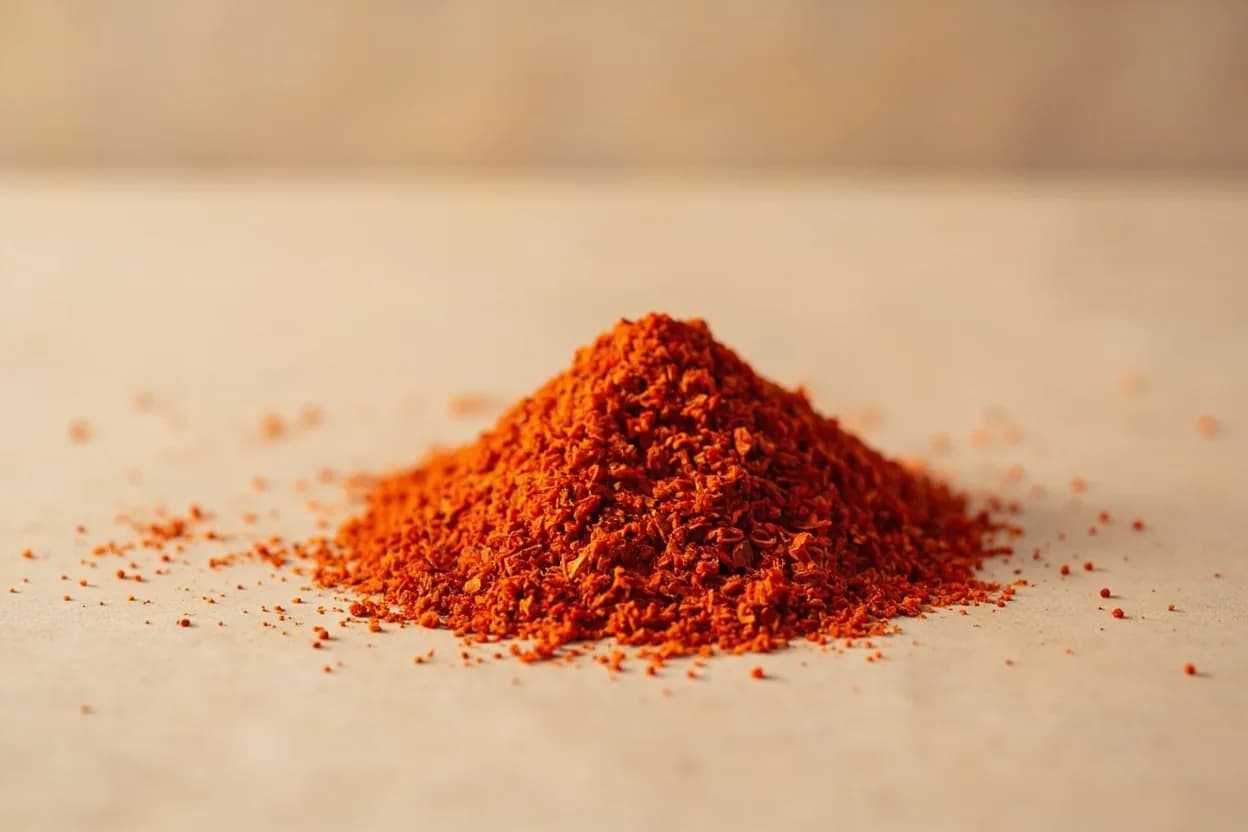
Gochugaru is the coarsely ground dried Korean red pepper (Capsicum annuum) that is foundational to Korean cuisine. Unlike Turkish pul biber or Italian chili flakes, gochugaru has a distinctive fruity, slightly smoky sweetness — the result of sun-drying the peppers before seeding and grinding them to a medium-fine flake. Heat level is moderate (approximately 4,000–8,000 Scoville units depending on variety), sitting between mild paprika and cayenne. The characteristic scarlet color, fruity aroma, and measured heat make it irreplaceable in kimchi, tteokbokki, and gochujang production. It is sold in two grinds: fine powder (used in sauces and marinades) and coarse flakes (preferred for kimchi and banchan).
In photos
Flavour profile
Classic pairings
- Napa cabbageKorean
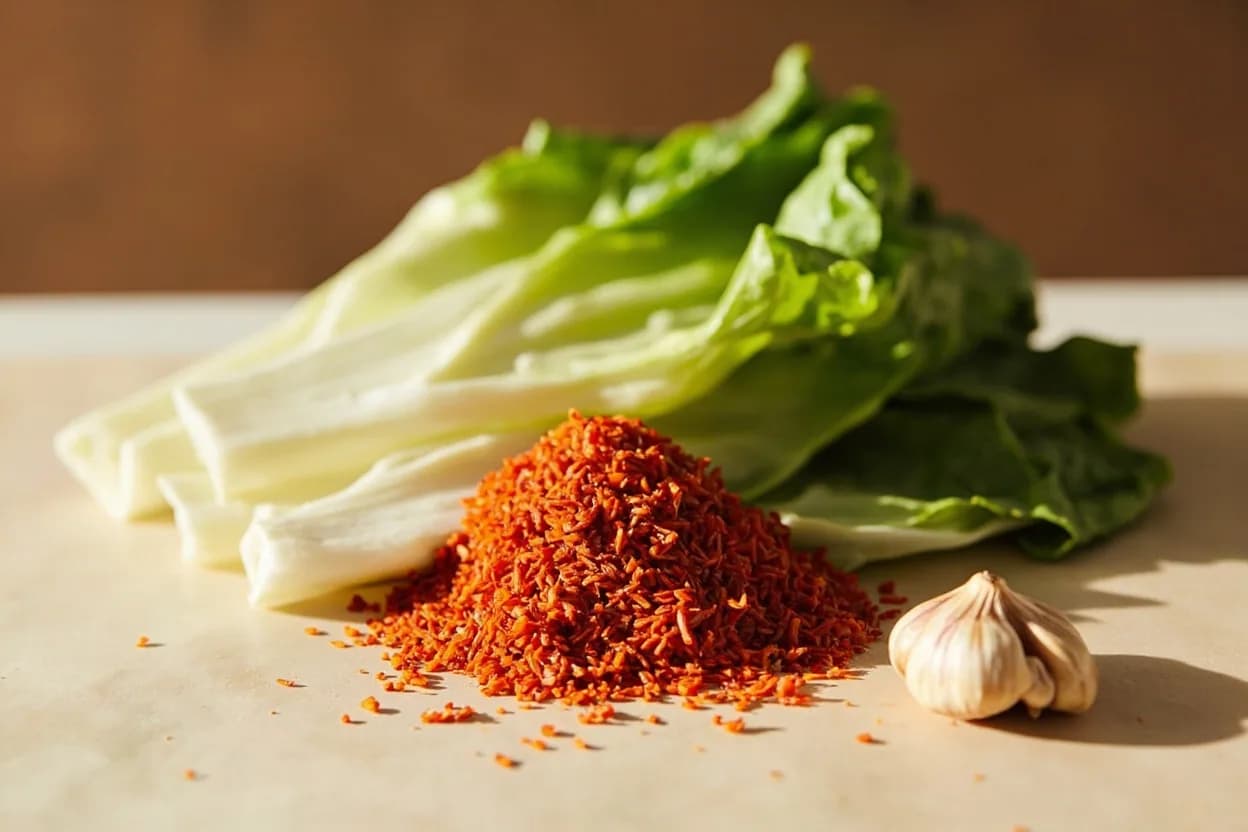
The defining pairing in kimchi — gochugaru coats every leaf of baechu-kimchi, curing it with color, heat, and fruity pungency as it ferments.
- GarlicKorean
Virtually inseparable in Korean cooking; garlic amplifies gochugaru's pungency and together they form the flavor backbone of kimchi paste and gochujang.
- GingerKorean
A critical kimchi component alongside garlic; ginger's sharp warmth complements gochugaru's fruity heat, adding brightness and digestive complexity.
- TofuKorean
Sundubu jjigae (soft tofu stew) uses gochugaru to build a fiery, brick-red broth that cradles silken tofu — the contrast of heat and cool softness is iconic.
- Rice cakes (tteok)Korean
Tteokbokki's sauce is built on gochugaru and gochujang; the chewy rice cakes absorb the spicy-sweet paste completely.
- Pork bellyKorean
Bossam and dwaeji bulgogi both use gochugaru marinades; the fruity heat penetrates the fat and caramelizes on the grill.
- Sesame oilKorean
A finishing combination across Korean cooking — sesame's nutty richness tempers gochugaru's raw heat, and together they flavor countless namul (vegetable banchan).
Adventurous pairings
Korean-Japanese bridge: gochugaru stirred into white miso for a dipping sauce or marinade captures both countries' umami-meets-heat profiles.
- Butter
Compound butter with gochugaru, garlic, and a touch of honey transforms grilled corn, fish, or pasta with Korean warmth in a Western format.
Gochugaru-tahini dressing borrows the sesame richness that makes Korean food work, adding a Middle Eastern dimension to grain bowls and roasted vegetables.
A Korean-Thai bridge: gochugaru's fruity heat bloomed in coconut milk creates a red curry base with a distinctly Korean character — less herbaceous, more direct.
- Strawberries
The fruity pepper notes in gochugaru have a genuine affinity with ripe strawberries; a gochugaru-honey-vinegar syrup over macerated strawberries is surprising and vivid.
Tread carefully
- Substitution with cayenne in kimchiavoid
Cayenne has no fruitiness or smokiness and delivers only bare heat — kimchi made with cayenne tastes harsh and one-dimensional. Kashmiri chili plus a small amount of cayenne is a closer substitute.
- Very high dry heatavoid
Gochugaru scorches and turns bitter quickly in a hot dry pan; bloom it in oil at medium heat or add it to liquid-based sauces.
- Delicate floral preparationsavoid
The earthy, fruity heat of gochugaru clashes with rose, lavender, or elderflower — it belongs in savory and fermented contexts.
How to use it
- Make kimchi paste by combining gochugaru with fish sauce, fermented shrimp (saeujeot), garlic, ginger, and a touch of sugar — the salt-ferment balance is critical
- Bloom in neutral oil with garlic and ginger to build a Korean sofrito base for jjigae and braised dishes
- Mix into gochujang-based sauces at a 1:1 ratio for tteokbokki — the flakes add texture and fresh heat alongside the paste's deep fermented flavor
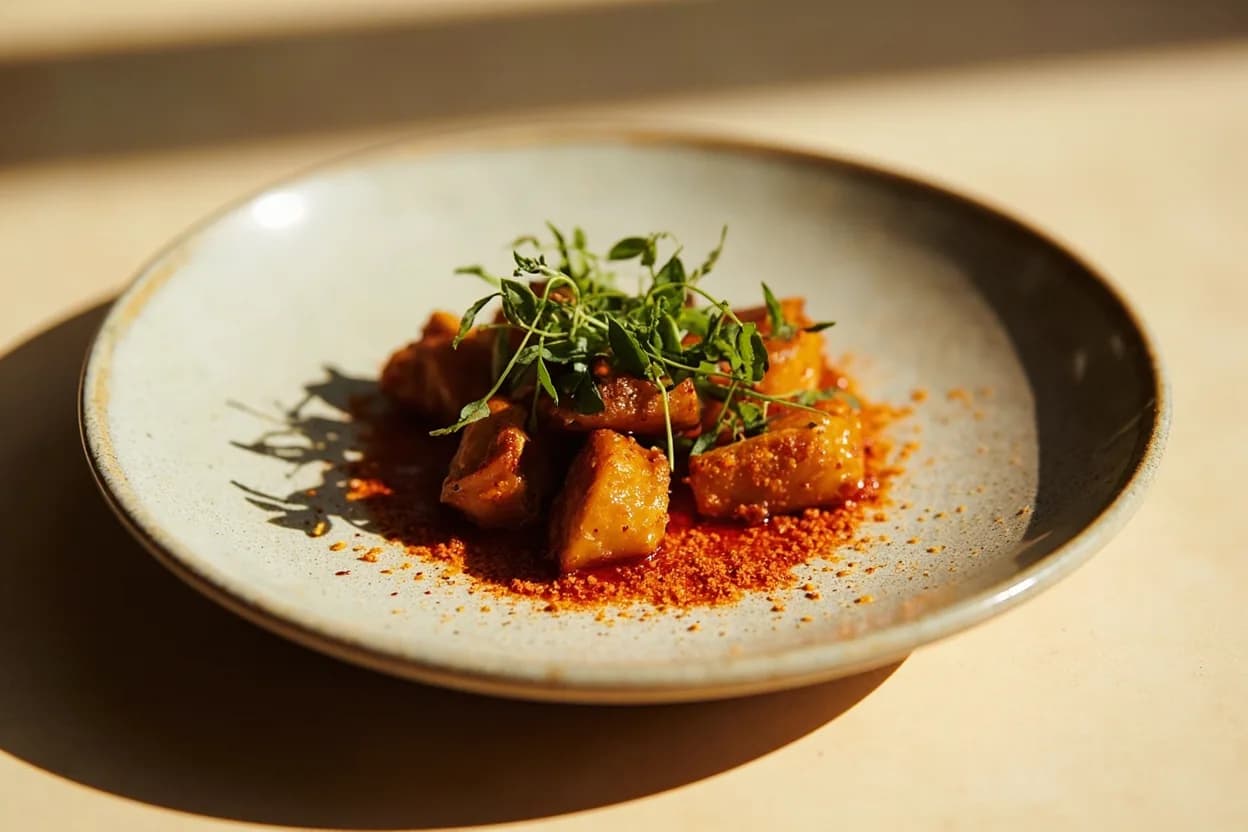
- Use as a finishing seasoning on grilled meat, fish, or vegetables right before serving for color and raw pepper aroma
- Incorporate into dry rubs for Korean-style chicken wings or pork ribs alongside brown sugar, garlic powder, and soy
- Steep in sesame or neutral oil to make gochugaru oil for drizzling on sundubu jjigae and noodle dishes
Appears in
Related flavours
Closest functional analogue — mild, fruity, vivid red, used for color as much as heat; an imperfect but acceptable gochugaru substitute.
Both are mild dried pepper spices prized for color and fruitiness, but pimentón adds smoke rather than gochugaru's clean fruity warmth.
Guajillo's berry-like fruitiness and moderate heat parallel gochugaru; both function as the mild-fruity-red backbone of their respective culinary traditions.
References
- 1.The Art of Fermentation — Sandor Ellix Katz
- 2.Korean Home Cooking — Sohui Kim
- 3.My Korea — Hooni Kim
- 4.Koreatown: A Cookbook — Deuki Hong & Matt Rodbard
Confidence: high
Notes
Coarse vs. fine grind
Korean cooks are deliberate about grind size: coarse gochugaru (굵은 고추가루) is standard for kimchi because the flakes distribute evenly without clumping and add slight texture. Fine powder is preferred in smooth sauces, stews, and gochujang. Always check which grind a Korean recipe specifies.
Freshness matters enormously
Gochugaru deteriorates quickly — the fruity aromatics are volatile. Fresh gochugaru should smell bright, fruity, and almost candy-like. If yours smells dusty or purely of raw heat, it is stale. Buy in small quantities from Korean grocery stores and freeze what you won't use in a month.