Spices & Dried Aromatics
Smoked Paprika (Pimentón de la Vera)
Also: Pimentón de la Vera, Spanish smoked paprika, pimentón ahumado, sweet smoked paprika, hot smoked paprika
The soul of Spanish cooking — wood-smoke and sweet dried pepper in one crimson dusting.
Pimentón de la Vera is a DOP-protected smoked paprika produced in the La Vera valley of Extremadura, Spain, where ñora and other peppers are slowly dried over smoldering oak wood before stone-grinding. The result is a deep brick-red powder with a pronounced campfire smokiness layered over sweet, earthy dried pepper richness. It comes in three grades — dulce (sweet), agridulce (bittersweet), and picante (hot) — but all share the same distinctive ahumado (smoky) backbone that separates Vera from unsmoked Hungarian paprikas.
In photos

Flavour profile
Classic pairings
- ChorizoSpanish
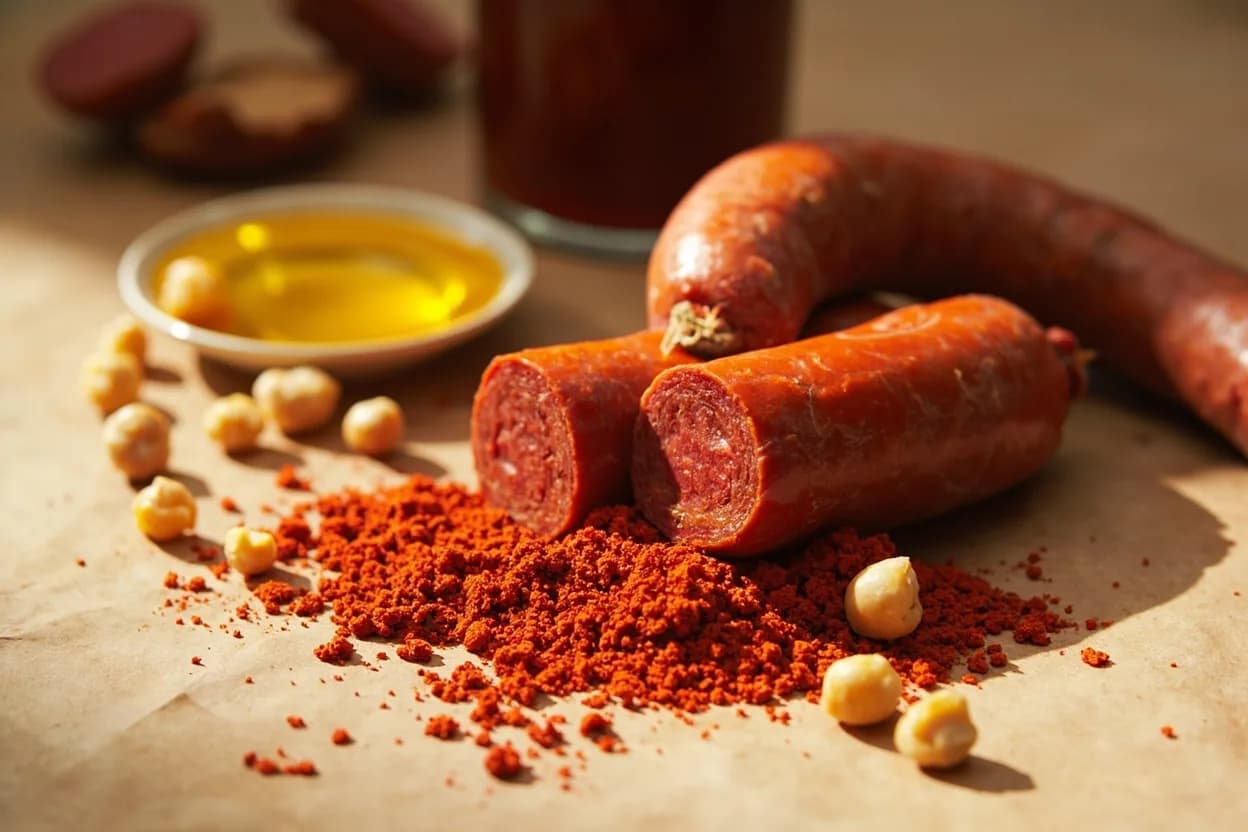
Pimentón is the defining spice in chorizo; the fat in the sausage blooms its smoke and color into every bite.
- Olive oilSpanish
Bloomed in warm olive oil for a few seconds, pimentón releases its fat-soluble pigments and smokiness into a brilliant red cooking base — the start of a sofrito or a papas a lo pobre.
- ChickpeasSpanish
Smoked paprika's earthiness wraps chickpeas in warmth without heat; together they form the backbone of potaje de garbanzos and Spanish cocidos.
- Pork shoulderSpanish
The dry-rub classic — sweet smoke penetrates slow-braised or roasted pork beautifully, and the rendered fat carries the spice deep into the meat.
- PotatoesSpanish
Patatas bravas rely on pimentón for their rust-colored sauce; the starchy neutrality of potato lets the smoky spice dominate.
- OctopusSpanish
Pulpo a la gallega — boiled octopus finished with olive oil and pimentón — is the most celebrated use; smoke cuts the oceanic richness.
- Tomato sauceSpanish
A pinch deepens tomato-based stews and romesco, adding smoked depth without requiring actual fire.
Adventurous pairings
Bittersweet chocolate shares roasted, earthy tones with smoked paprika; a mole-adjacent pairing that plays smoke against deep cocoa.
The salty, squeaky cheese chars beautifully when rubbed with pimentón and griddled — smoke meets caramelized dairy fat.
- Cauliflower
Roasted cauliflower tossed in pimentón and olive oil acquires a meaty smokiness that makes it genuinely satisfying as a vegetarian centerpiece.
- Butter
Compound butter with pimentón, garlic, and lemon transforms grilled fish or corn on the cob with Spanish smoky richness.
- Yogurt
Swirled into strained yogurt as a dipping sauce base, smoked paprika's heat bloomed in olive oil creates a Turkish-adjacent condiment with surprising depth.
Tread carefully
- Delicate raw fish (sashimi)avoid
The smoke overwhelms the subtle clean flavors that make raw fish worth eating; reserve pimentón for cooked applications.
- Very high direct heatavoid
Pimentón scorches and turns acrid quickly in a dry pan above medium heat; always bloom it in fat or add it to liquid.
- Strongly floral spices (rose, lavender)avoid
Competing aromatic registers — wood smoke clashes with floral perfume, producing a muddled, unpleasant result.
How to use it
- Bloom in warm olive oil for 30–60 seconds before adding liquid to unlock fat-soluble color and aroma compounds
- Use as the base of a dry rub for pork, chicken, or lamb, combined with garlic powder, salt, and cumin
- Stir into sofrito or tomato paste to add smoked depth to braises and stews
- Dust over finished dishes (octopus, hummus, deviled eggs) as a finishing spice for visual impact and aroma
- Incorporate into vinaigrettes with sherry vinegar and olive oil for a smoky Spanish dressing
- Mix with salt and lard or butter to make a classic Spanish paprika paste (mantequilla de pimentón)
Appears in
Related flavours
Similar fruity dried-pepper base but without the smoke; guajillo is the Mexican counterpart in red moles and adobos.
Chipotle (smoked jalapeño) parallels pimentón's smoke-plus-pepper formula but with more capsaicin heat and a less sweet pepper base.
Ancho's chocolatey sweetness complements pimentón when layered in Spanish-Mexican fusion rubs and moles.
References
- 1.The Foods and Wines of Spain — Penelope Casas
- 2.Moro: The Cookbook — Sam & Sam Clark
- 3.Denominación de Origen Protegida: Pimentón de la Vera — Spanish Ministry of Agriculture specification
- 4.The Flavor Bible — Karen Page & Andrew Dornenburg
Confidence: high
Notes
Dulce vs. picante
Most recipes calling for 'smoked paprika' mean dulce (sweet). Picante adds genuine heat and is used in chorizo and bold braises. Agridulce sits in between and is excellent for layering complexity in sauces where neither pure sweet nor full heat is wanted.
Storage
Smoked paprika loses its volatile smoke aromatics rapidly when exposed to light and heat. Store in an airtight tin away from the stove; replace after 6–12 months. Dull, brownish pimentón will have lost most of its character.