Cured Meats & Umami Proteins
Chorizo
Also: Spanish chorizo, chistorra, chorizo ibérico
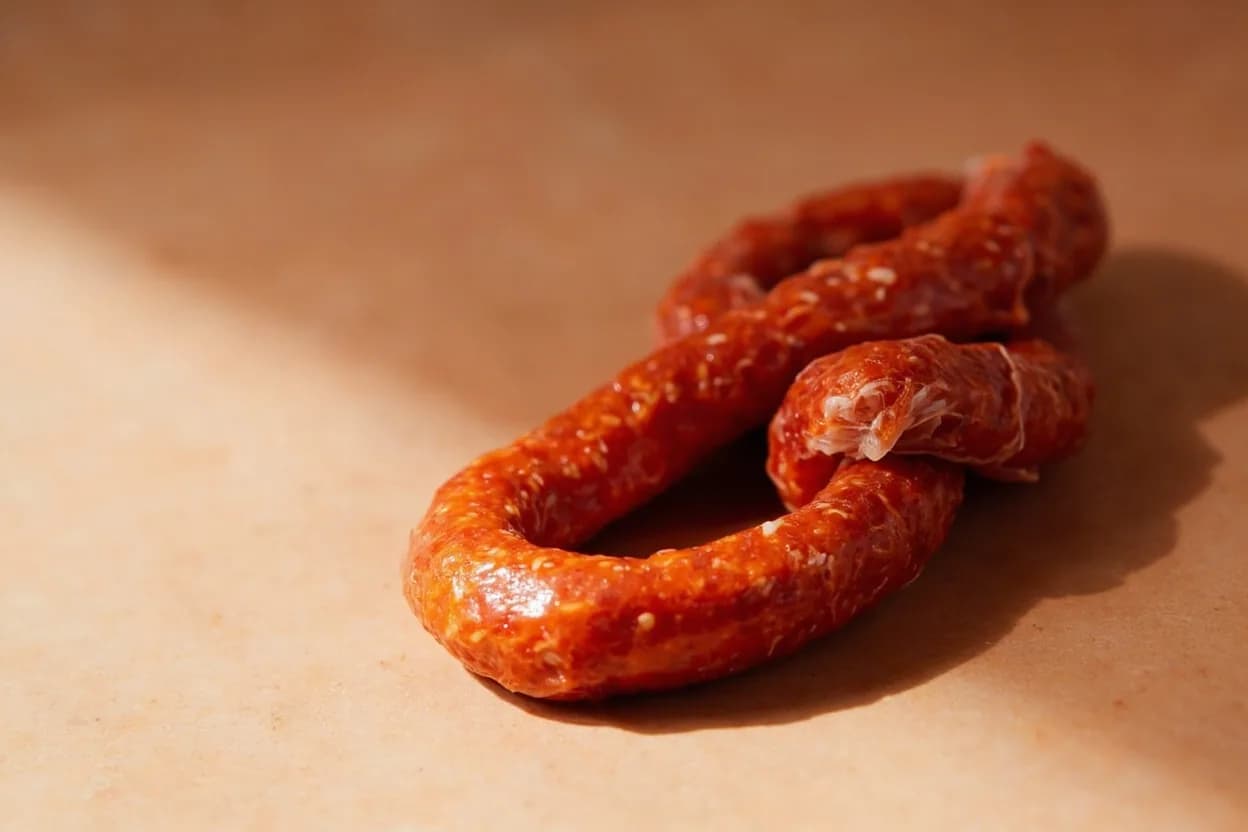
Smoky, paprika-stained cured pork that turns everything it touches amber and aromatic.
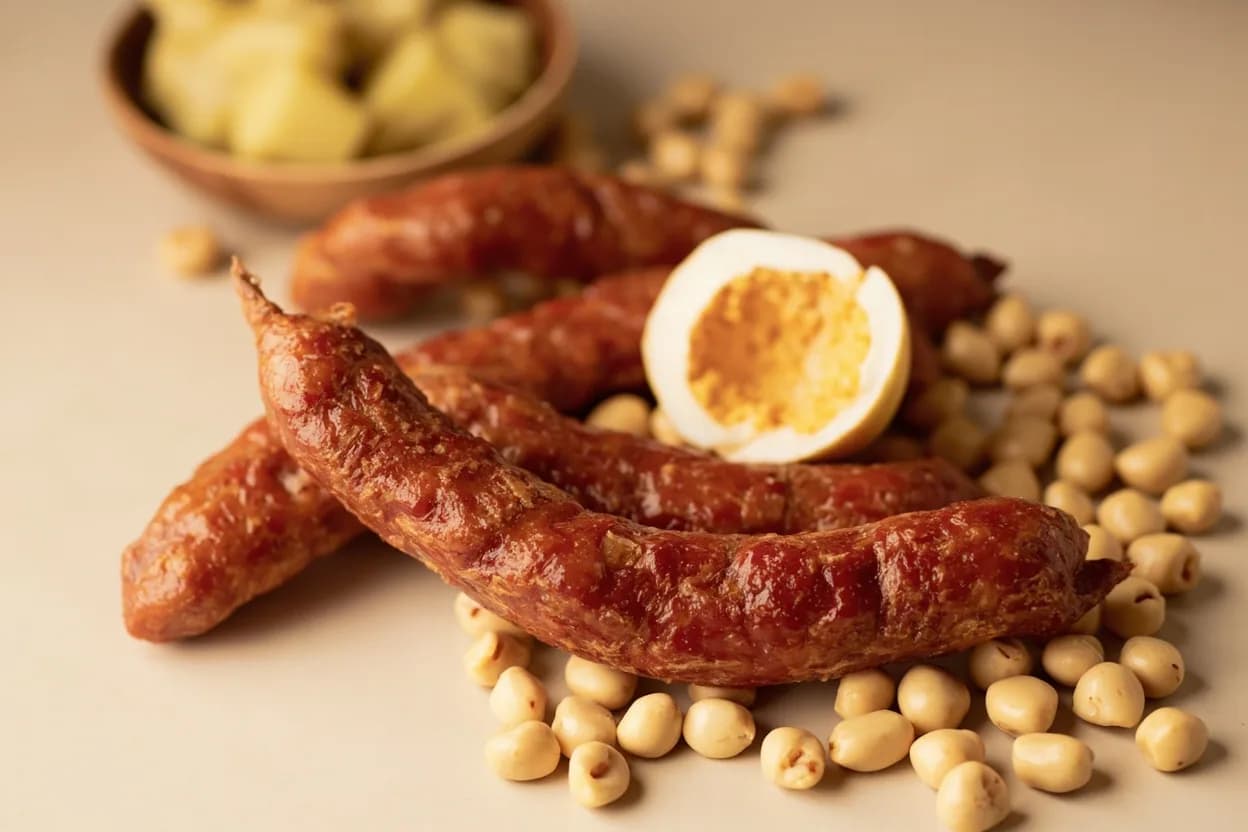
Spanish chorizo is a dry-cured or semi-cured pork sausage seasoned with pimentón (smoked paprika), garlic, and salt. The rendered fat is as prized as the meat itself — rust-red and smoke-laden, it acts as a built-in cooking medium. Flavour is assertive: smoky, earthy, mildly spicy (or fiercely so, in the picante variety), with a rounded, lactic tang from the curing process and a fatty sweetness that lengthens the finish.
In photos
Flavour profile
Classic pairings
- White beans (alubias, cannellini)Spanish
The beans drink up chorizo's orange fat, turning silky and smoky; a foundational Iberian combination in fabada asturiana and caldo gallego.
- EggsSpanish
Chorizo renders first in the pan, lacquering the eggs in paprika oil — the definitive huevos con chorizo breakfast across Spain and Mexico.
- ChickpeasSpanish
Long-simmered together the chickpeas absorb the sausage's smokiness; the canonical cocido madrileño and potaje de garbanzos.
- ClamsSpanish / Portuguese
A beloved surf-and-turf pairing in both Spain and Portugal: the brine of the clams cuts the fat while the smoke deepens the seafood broth.
- Paella riceSpanish
In mixed paella valenciana, thin slices of chorizo colour the sofrito and infuse the socarrat with paprika perfume.
- PotatoesSpanish
Patatas a lo pobre or a simple tortilla española — potato's neutral starch acts as a sponge for smoky rendered fat.
- Manchego cheeseSpanish
The salt and lanolin of aged manchego plays against the smokiness of cured chorizo; a classic tapas board pairing.
Adventurous pairings
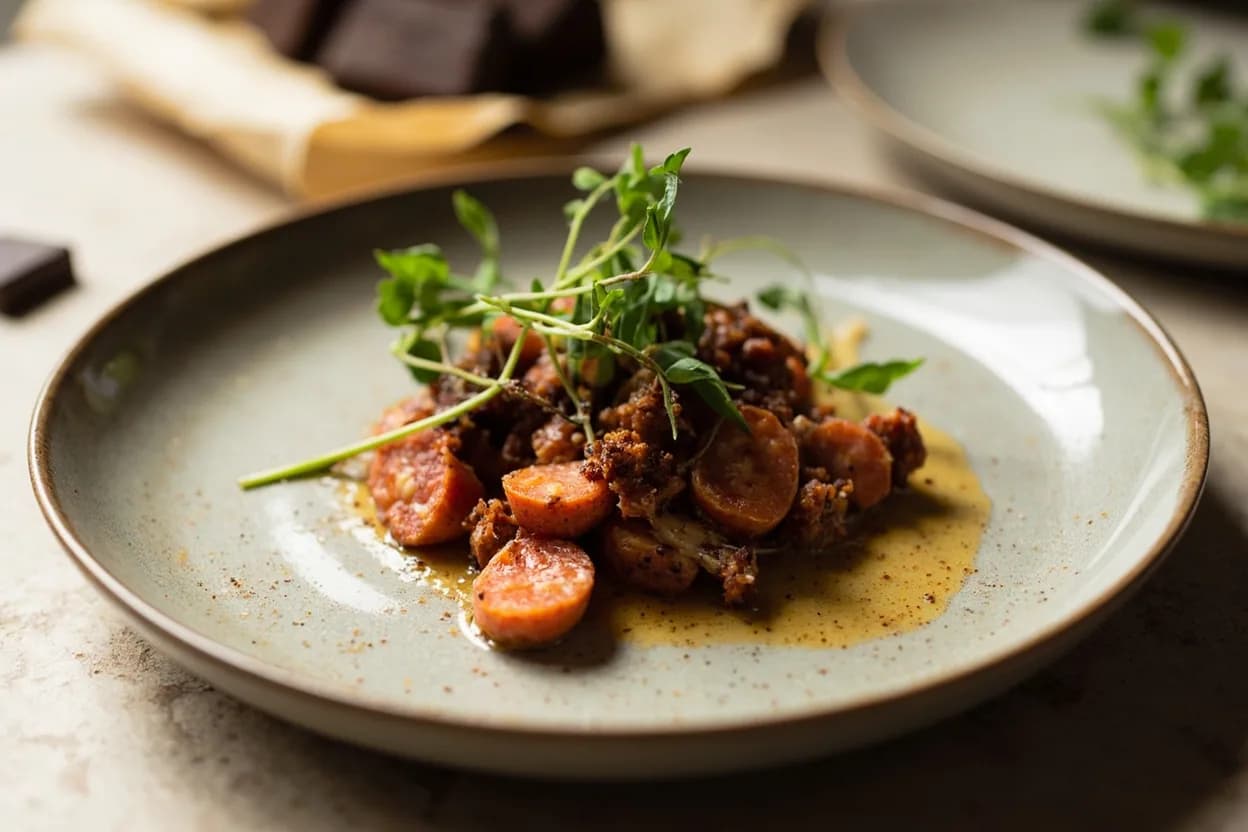
Cacao's bitterness and fat harmonise with smoked pork; small-batch Spanish chocolatiers now offer chorizo-studded tablets with compelling results.
- Medjool dates
Sweet, caramel-dense dates wrapped in thin chorizo slices offer a North African–Iberian echo: fat + smoke + toffee sweetness.
- Corn (tortilla / arepa)
Latin American cooks pair chorizo with masa — tacos de chorizo con cilantro, or crumbled into arepas — where the sweetness of nixtamalised corn balances the spice.
- Lentils with preserved lemon
Acidic preserved lemon pierces the richness of chorizo and lentils, adding a Maghrebi brightness to an Iberian staple.
- Cider (sidra natural)
Asturian cider's wild yeast, low tannin, and high acid is the regional drink of choice — it slices through chorizo fat with brilliant efficiency.
Tread carefully
- Delicate white fish (sole, turbot)avoid
Chorizo's aggressive smoke and paprika overwhelms the fine sweetness of flatfish; the pairing destroys nuance on both sides.
- Fresh, uncooked goat cheese (chèvre)avoid
The high-acidity, grassy tang of young chèvre clashes with chorizo's heavy smoke rather than complementing it.
- Jasmine rice (standalone)avoid
The floral aromatic character of jasmine rice is obliterated by pimentón; use medium-grain bomba or long-grain parboiled instead.
How to use it
- Render sliced chorizo in a dry pan first to release the paprika oil, then use that oil as the cooking fat for the rest of the dish
- Add whole links to stews and braises early — the slow simmer melds fat into the sauce without overwhelming it
- Grill over charcoal and serve with crusty bread to soak the dripping
- Crumble raw/fresh chorizo directly into sofrito to build a paprika-scented base for rice dishes
- Use paper-thin sliced dry chorizo as a pizza topping — it crisps like pepperoni under high heat
Appears in
Related flavours
- Smoked paprika
The defining seasoning of chorizo; understanding pimentón is understanding chorizo's flavour engine
A milder, Italian cured pork — similar rendering technique but without the smoky paprika heat
- Morcilla (blood sausage)
Often paired with chorizo in the same dish (fabada, cocido) — the earthiness of blood and rice complements chorizo's smoke
References
- 1.The Foods of Spain — Claudia Roden (HarperCollins, 2011)
- 2.Charcutería: The Soul of Spain — Jeffrey Weiss (Agate Surrey, 2014)
- 3.Nose to Tail Eating — Fergus Henderson (Bloomsbury, 1999)
Confidence: high
Notes
Spanish vs. Mexican chorizo
Spanish chorizo is cured and ready to eat or cook as-is; Mexican chorizo is raw, loose-ground pork seasoned with chiles and vinegar and must be cooked before eating. Their pairings overlap in some areas (eggs, corn, beans) but diverge significantly in technique — always clarify which form a recipe intends.
The fat is the point
Most pairing intuition for chorizo centres not just on the meat but on the rendered paprika fat it releases. Legumes, eggs, and starchy vegetables excel here because their porous structures absorb this fat and carry the flavour deep into the dish.