Herbs
Chrysanthemum Greens (Ssukgat)
Also: ssukgat, garland chrysanthemum, tong ho, shungiku, Glebionis coronaria, crown daisy greens, chrysanthemum leaves
East Asia's floral bitter green: a distinctive herbal leafy that perfumes hot pot, anchors cold salads, and defies easy substitution.
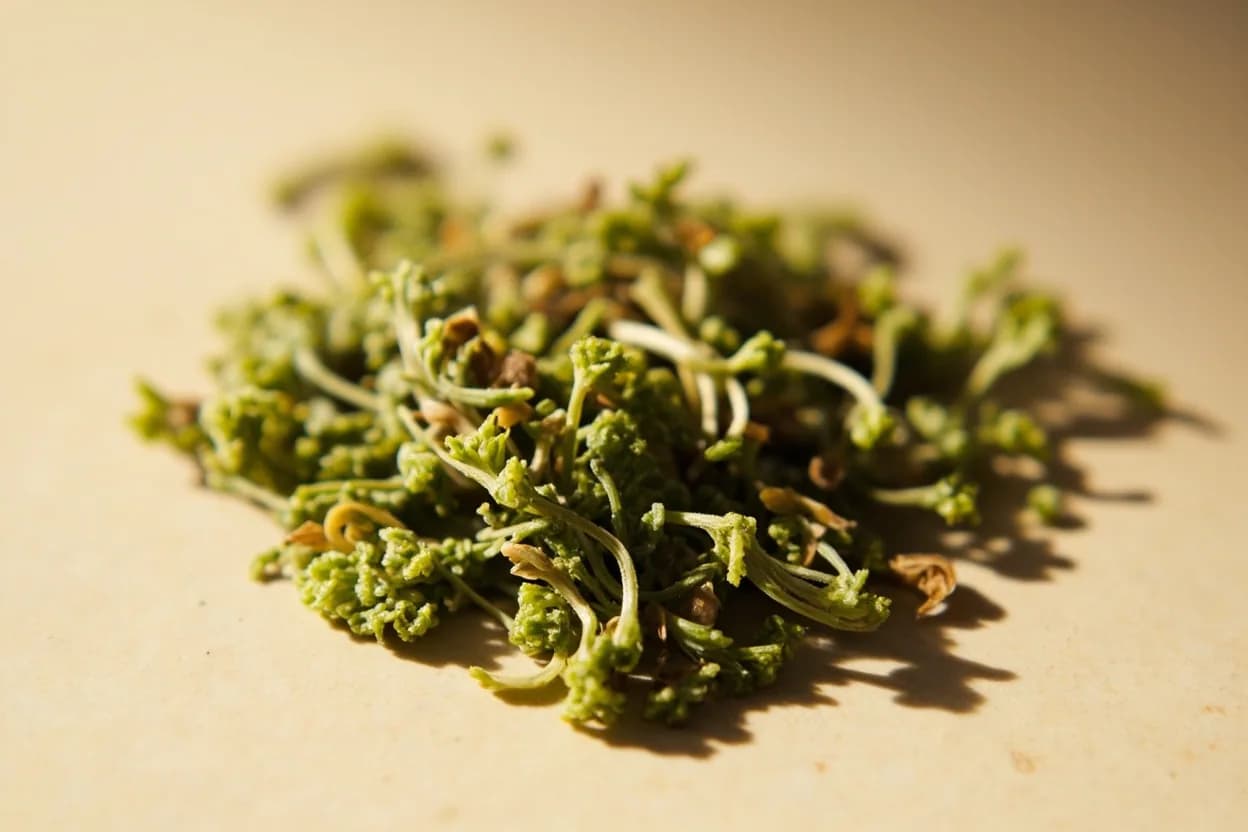
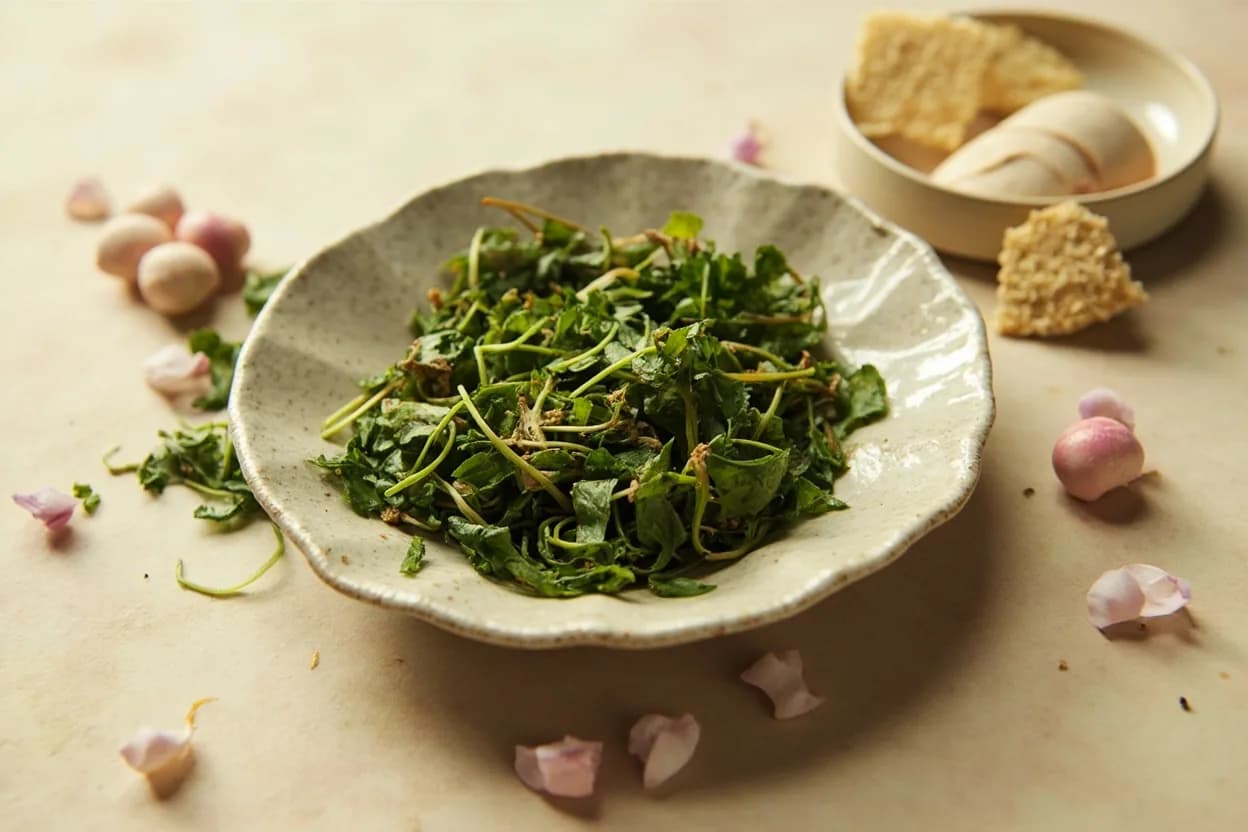
Chrysanthemum greens (Glebionis coronaria, formerly Chrysanthemum coronarium) are the edible leaves and tender stems of the garland chrysanthemum, a cool-season plant cultivated as a vegetable across Korea, Japan, and China. Known as ssukgat in Korean, shungiku in Japanese, and tong ho in Cantonese, the greens have a flavor profile that is genuinely unique: mildly bitter, with a distinctive floral, herbal aroma that evokes marigold, fennel, and earthy greens simultaneously. Younger leaves are more tender and floral; mature leaves are more bitter and robust. The texture is delicate when raw (wilting quickly), and the greens cook in seconds — making them suited to quick blanching, hot pot swishing, or raw-salad applications where their identity is preserved.
In photos
Flavour profile
Classic pairings
- Jeongol and hot pot broths (Korean, Japanese)Korean / Japanese
Ssukgat's floral bitterness holds up to rich broth and provides herbal perfume in the final moments of a hot pot; it is a non-negotiable element in budae jjigae and shabu-shabu alike.
- Sesame oil and soy sauceKorean
The canonical raw-salad (namul) dressing: blanched, squeezed ssukgat tossed with sesame oil, soy, garlic, and toasted sesame seeds — bitter-floral against nutty richness.
- TofuKorean
Ssukgat and silken tofu appear together in sundubu stews and clean vegetarian bibimbap compositions, with the greens' bitterness cutting through mild curd.
- Beef and pork in hot potJapanese
Thinly sliced shabu-shabu beef swished alongside ssukgat in dashi broth — the floral herb perfumes the fat-rich meat and cleanses the palate between bites.
- Eggs (jiranmyeon, tamago)Korean / Japanese
Quick-wilted ssukgat folded into a Korean egg soup (gyeran-guk) or Japanese tamago gohan; the floral bitterness contrasts egg richness cleanly.
- Doenjang jjigae (fermented soybean paste stew)Korean
A handful added in the final minute provides herbaceous lift to the fermented, umami-forward stew.
Adventurous pairings
- Burrata or fresh mozzarella
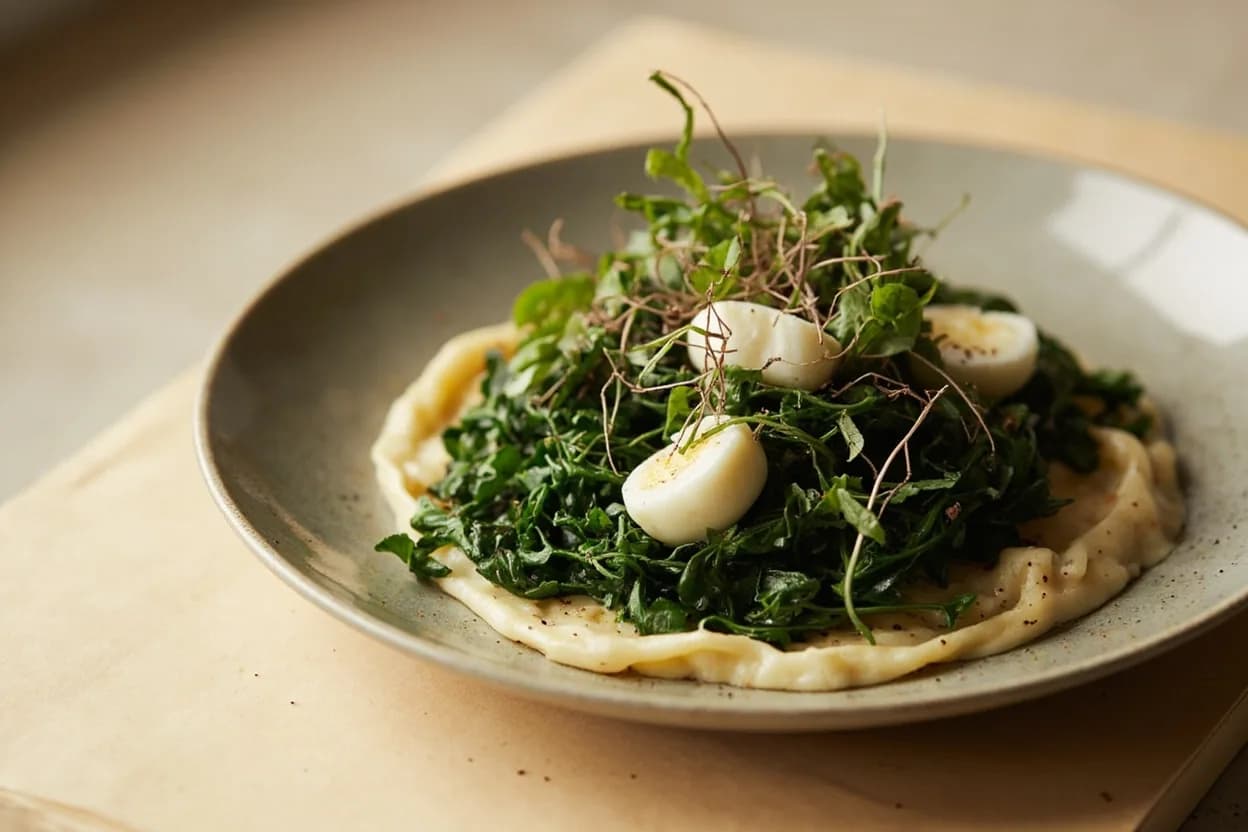
Raw young ssukgat leaves alongside burrata with white truffle oil and flaky salt — the floral bitterness cuts dairy fat in a way peppery arugula does, but with an East Asian aromatic register.
- Citrus vinaigrette salads
Ssukgat's bitterness is tamed and brightened by yuzu or mandarin juice vinaigrette; add shaved fennel to echo the leaf's anise note for a coherent salad.
- Anchovy or bottarga
The bitter green and salty-umami cured fish share the Italian puntarelle-and-anchovy logic; a sesame-miso aioli or ponzu bridges East and West.
- White chocolate and floral desserts
Ssukgat lightly infused into white chocolate ganache (steep briefly at 60°C, strain) — the floral chrysanthemum note amplifies white chocolate's vanilla register in a surprising, elegant way.
Tread carefully
- Rich cream sauces or heavy butteravoid
Ssukgat's delicate floral bitterness is obliterated by dairy fat; the green turns slimy and loses all aromatic character.
- Prolonged boiling (>3 minutes)avoid
Extended heat destroys both texture and the volatile floral aromatics; the result is muddy, bitter, and unappetizing. Always add in the last 30–60 seconds.
- Bold chili heatavoid
Heavy gochujang or large amounts of fresh chili overwhelm ssukgat's subtle floral notes; use a light gochugaru hand or avoid pairing entirely.
How to use it
- Blanch for 30 seconds in salted boiling water, shock in ice water, and squeeze dry before dressing as namul
- Swish raw in hot pot broth for 10–15 seconds — overcooking collapses the floral aroma immediately
- Dress raw young leaves with sesame oil and yuzu ponzu immediately before serving to prevent wilting
- Use as a finishing herb: scatter over finished soups and stews after removing from heat
- Dry-wilt in a hot skillet with garlic and a drop of sesame oil (30 seconds max) as a quick banchan
Appears in
Related flavours
- Watercress
Shares bitter-peppery green character and similar structural role in Asian salads; a closer Western substitute than spinach
- Sesame oil
The essential carrier for ssukgat namul; nutty fat amplifies the floral compounds and rounds the bitterness
Fermented umami depth contrasts and complements ssukgat's bitterness in soups, hot pot, and dipping sauces
- Arugula
Approximate Western botanical and culinary parallel — bitter, peppery leafy — though without chrysanthemum's floral dimension
References
- 1.The Korean Cookbook — Junghyun Park & Jungyoon Choi (Phaidon, 2023)
- 2.Japanese Farm Food — Nancy Singleton Hachisu (Andrews McMeel, 2012)
- 3.Land of Fish and Rice — Fuchsia Dunlop (W.W. Norton, 2016)
- 4.On Food and Cooking — Harold McGee (Scribner, 2004)
Confidence: high
Notes
Regional variation in cultivar
Japanese shungiku cultivars tend to have narrower, more feathery leaves with a stronger anise note. Korean ssukgat and Chinese tong ho cultivars have broader, more rounded leaves with greater bitterness. Both are Glebionis coronaria but the culinary characters diverge noticeably. Japanese shungiku is preferred in shabu-shabu for its fine texture; Korean ssukgat's wider leaves are better for namul dressing.
Cooking speed is critical
Ssukgat is extraordinarily heat-sensitive. In the time it takes to stir once in a hot wok, the leaves go from vibrant and floral to collapsed and bitter. The entire cooking window is 20–45 seconds of heat contact. This is why it is always added last in hot pot, stews, and stir-fries — after the heat source is removed or the pot is off the burner.